Our verdict
Set in Kamakura's Yuigahama district, ETE Kamakura occupies a ground-floor space where the city's coastal geography shapes the plate. The restaurant sits within a dining scene that draws heavily on Shonan-area produce and Sagami Bay seafood, placing it among a small tier of destination restaurants that have made this ancient capital a serious address for ingredient-led cooking. Check current booking details directly before visiting.

Pearl is the En Primeur Club membership app, where members save venues, book tables and use the concierge.
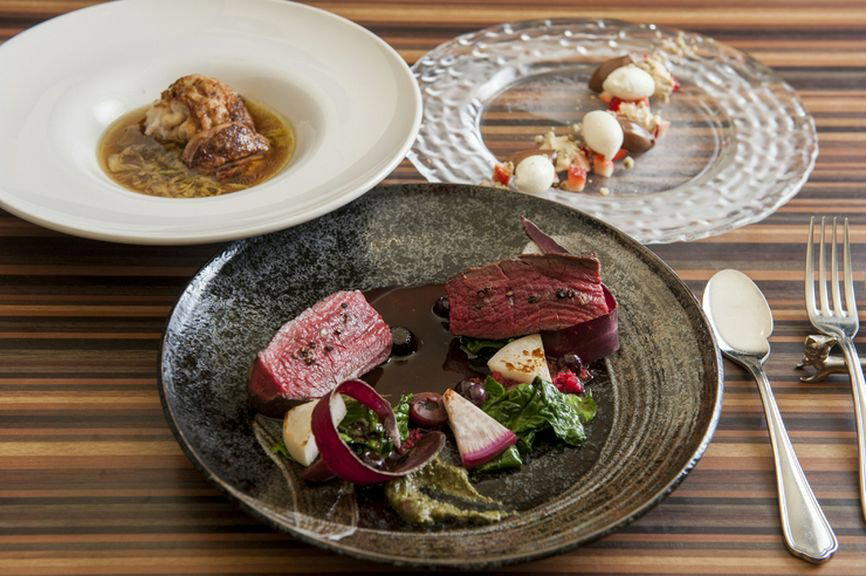
The menu
What to order
- Ezo deer course
- Foie gras hors d'oeuvres
Where the Shonan Coast Meets the Plate
Kamakura's relationship with the ocean is not incidental. The city sits at the base of the Miura Peninsula, with Sagami Bay immediately to the south and the Shonan coastline running east toward Enoshima. For restaurants operating in the Yuigahama district specifically, that proximity is a working reality: the fish market infrastructure of Yokohama is thirty minutes north, local day-boat catches from Miura and Chigasaki land close, and the farming valleys inland toward Kita-Kamakura supply vegetables that benefit from the temperate, sea-influenced climate. ETE Kamakura, positioned on the ground floor of a building in Yuigahama 2-chome, operates inside this geography, and that address is more than administrative, it says something about what arrives in the kitchen.
The broader Kamakura dining scene has shifted noticeably over the past decade. What was once a city visited for temples and tofu now holds a cluster of destination restaurants that compete credibly with addresses in Tokyo's outer neighbourhoods. Restaurant Michel Nakajima and IL NODO represent different expressions of that shift, one leaning into French technique, the other into Italian idiom, while Roastbeef Kamakurayama demonstrates that a focused, single-protein format can sustain a serious dining proposition. ETE occupies its own position within this cohort: a ground-floor space in a residential-facing district, positioned toward the quieter, more considered end of Kamakura dining rather than toward the busier tourist corridor around Komachi-dori.
Ingredient Sourcing and the Kamakura Advantage
Japan's premium restaurant culture has long operated on a principle of proximity and relationship. The kaiseki tradition codifies seasonal sourcing at its most formal, but ingredient discipline extends well beyond that genre. In coastal cities and towns, the logic sharpens further: a kitchen within reach of a specific fishing port, farming valley, or mountain forage zone carries a structural advantage that inland urban kitchens spend considerable effort trying to replicate through logistics.
Kamakura's position at the junction of coast and hill gives its serious kitchens access to a sourcing range that is wider than the city's modest size suggests. Wakame harvested from the bay, local shirasu (whitebait) that defines the Shonan coastline's food identity, mountain vegetables from the forested slopes above Kita-Kamakura, and citrus from Miura Peninsula farms all feed into restaurants that take provenance seriously. This is the ingredient context in which ETE Kamakura operates, and it positions the restaurant within a broader Japanese tradition of letting geography determine the menu rather than importing generic premium produce from a central wholesale market.
That approach connects ETE to a wider pattern visible at other ingredient-led addresses across Japan. Gion Sasaki in Kyoto draws its authority partly from proximity to the Nishiki market network and Kyoto-specific vegetable varieties. Akordu in Nara works with produce from the Yamato region's distinctive farming culture. affetto akita in Akita leans into northern Tohoku's cold-climate ingredient profile. The argument in each case is the same: a kitchen that ties itself to a specific geography produces something that a city-agnostic restaurant cannot replicate, regardless of budget or technique. ETE's Yuigahama address places it in that category of geographically anchored restaurants, where the source of the ingredient is part of the proposition.
Kamakura's Position in the Japanese Dining Map
Understanding ETE's context requires placing Kamakura correctly within Japan's dining hierarchy. The city is not Tokyo, and it does not try to be. It sits roughly an hour south of the capital by the Enoden or JR Yokosuka line, close enough for a day trip but distinct enough in character to support a resident dining culture separate from the capital's. The restaurants that have built genuine reputations here, including the addresses listed above, and Ichirin Hanare on the Chinese side of the spectrum, tend to operate with fewer covers and quieter room temperatures than their Tokyo counterparts. They trade on specificity rather than scale.
That positioning aligns Kamakura with a category of Japanese dining addresses that operate outside the major city award circuits without being diminished by that distance. Goh in Fukuoka, Aji Arai in Oita, and Akakichi in Imabari each represent the pattern of serious kitchens that have built their case on local ingredient relationships and regional dining culture rather than proximity to metropolitan critics. ETE fits that model from the Shonan end of the Kanto region.
For comparison outside Japan, the logic of a coastal-adjacent, ingredient-driven restaurant operating at some remove from the major city finds parallels at addresses like Abon in Ashiya (positioned between Osaka and Kobe, drawing on Seto Inland Sea sourcing) or Ajidocoro in Yubari District. The structural similarity is instructive: proximity to a specific, high-quality ingredient zone, combined with a room scaled for intimacy rather than volume, tends to produce a dining experience more grounded in the particular than the general.
Planning a Visit
ETE Kamakura is located at Yuigahama 2-7-20, ground floor, in the Yamakuchi building. The Yuigahama area sits between Kamakura Station and the beach, reachable on foot from the station in approximately fifteen minutes or via the Enoden line to Yuigahama Station, which is closer to the address. The neighbourhood is residential and quiet by Kamakura standards, which shapes the atmosphere of restaurants that operate here: expect considerably less foot traffic than around Komachi-dori or Tsurugaoka Hachimangu. This is a Kamakura restaurant that rewards planning; given the city's growing reputation among food-focused travellers from Tokyo and internationally, availability at the better addresses here is not guaranteed on short notice. See our full Kamakura restaurants guide for the broader context of where ETE sits among the city's dining options.
For those building a wider Japan itinerary around ingredient-led dining, the comparison set extends to HAJIME in Osaka and Harutaka in Tokyo, both operate at different price points and formats but share a philosophical commitment to sourcing specificity. For high-level reference outside Japan, Le Bernardin in New York City and Lazy Bear in San Francisco demonstrate how coastal-influenced and ingredient-narrative restaurants translate across culinary cultures.
Frequently asked questions
Is ETE Kamakura a family-friendly restaurant?
ETE Kamakura sits in a ground-floor space in the Yamakuchi building in Yuigahama, a residential neighbourhood that runs between Kamakura Station and the beach. The setting is low-key rather than high-formal, which suits small groups and older children comfortable at a considered dining pace. That said, the restaurant's emphasis on seasonal, precision-sourced cooking suggests a room oriented around the food, not around accommodating the youngest diners.
Is ETE Kamakura better for a quiet night or a lively one?
Yuigahama is one of Kamakura's calmer residential strips, and ETE's ground-floor location in a local building reinforces a quieter register. This is a room suited to conversation and focused eating rather than late-night energy. Visitors looking for a lively, high-volume evening would be better served elsewhere in the Kamakura dining map.
How does ETE Kamakura compare to restaurants in central Kamakura or Tokyo?
ETE sits in Yuigahama, a neighbourhood closer to Sagami Bay than to Kamakura Station's main restaurant cluster, which positions it physically and conceptually apart from the city's more tourist-facing dining. Kamakura itself occupies a distinct tier in Japanese dining: not competing with Tokyo's density of Michelin-recognised addresses, but drawing from a coastal and agricultural supply chain that few Tokyo kitchens can replicate at the same proximity.
What's the must-try dish at ETE Kamakura?
What is documented is the restaurant's access to Sagami Bay seafood and the surrounding Kamakura vegetable-growing tradition, ingredients that anchor the seasonal menu. Asking the kitchen what is currently at peak on arrival is the most reliable approach.
What's the address for ETE Kamakura?
ETE Kamakura is located at Japan, 〒248-0014 Kanagawa, Kamakura, Yuigahama, 2 Chome−7−20 山口ビル 1F, Kamakura.
Do I need a reservation for ETE Kamakura?
Reservation policy is not formally published, but a restaurant of this scale in Yuigahama, outside Kamakura's higher-footfall central zones, typically operates with limited covers. Contacting the venue directly before visiting is advisable, particularly on weekends when day-trippers from Tokyo extend Kamakura's dining demand significantly.
Comparison Snapshot
Comparable venues nearby, for context on price, style, and recognition.
| Venue | Cuisine | Price | Awards | Notes |
|---|---|---|---|---|
| ETE KamakuraThis venue (the venue you are viewing) | French Bistro | $50–100 | Not listed | Not listed |
| CALVA | French-Japanese patisserie & boulangerie | $10–20 | Tabelog 100 #6 | Kamakura |
| Salmanje de Yoshino | French restaurant in Kamakura | $100–150 | Tabelog 100 #86 | Kamakura |
| Poa Jie | French Bistro Prix Fixe | $30–50 | Tabelog 100 #20 | Kamakura |
| ナチュール エ サンス Nature et Sens | Seasonal French | $50–100 | Not listed | Kamakura |
| OXYMORON komachi Komachi | Japanese-style spice curry & café | $10–20 | Tabelog 100 #25 | Kamakura |
Continue exploring
More in Kamakura
Restaurants in Kamakura
All restaurants in Kamakura →

Bars in Kamakura
Browse all →




Details
- Intimate
- Elegant
- Date Night
- Special Occasion
- Sake Program
- A La Carte
Current opening hours
- Monday
- Closed
- Tuesday
- 5:30–9 PM
- Wednesday
- 5:30–9 PM
- Thursday
- 5:30–9 PM
- Friday
- 5:30–9 PM
- Saturday
- 5:30–9 PM
- Sunday
- 5:30–9 PM
Hours can change for holidays and private events. Hours as of .
Cozy and intimate single-chef operation with a cheerful atmosphere in a small 1F building space.