Our verdict
A French-inflected dining address in Kamakura's Yukinoshita district, Nature et Sens occupies a quiet residential pocket that increasingly defines the town's serious restaurant scene. Booking here requires planning, the address rewards those who arrive with intention, and places the diner inside a broader pattern of destination restaurants that have made Kamakura a credible alternative to Tokyo's more crowded fine-dining calendar.

Pearl is the En Primeur Club membership app, where members save venues, book tables and use the concierge.
Approaching Yukinoshita: What the Neighbourhood Tells You Before You Sit Down
Kamakura's Yukinoshita district does not announce itself as a restaurant quarter. The streets between Tsurugaoka Hachimangu Shrine and the surrounding residential blocks feel unhurried in a way that central Tokyo does not, and that quality has begun attracting a specific tier of chef and operator: those who prefer a considered clientele over high foot traffic. Nature et Sens, the name gestures toward French culinary vocabulary, a signal in itself, sits within this fabric at 3 Chome-6-39, Yukinoshita, a postal address that rewards visitors who have done their research before they leave the station.
The broader story here is one playing out across several mid-sized Japanese cities. Restaurants that might have defaulted to Tokyo or Osaka addresses a decade ago are opening instead in places like Kamakura, Nara, and Fukuoka, calculating that a devoted clientele will travel when the proposition is strong enough. akordu in Nara and Goh in Fukuoka sit inside the same logic. The destination itself becomes part of the appeal, and the planning required to get there acts as a filter that shapes who is sitting at the table.
The Booking Experience: What to Know Before You Go
Nature et Sens operates in a segment of the Kamakura dining scene where reservation intelligence matters more than walk-in confidence. The venue's contact details are not publicly listed in standard directories, which is a pattern common to smaller, owner-operated addresses in Japan that rely on word-of-mouth referral, repeat clientele, or specialist booking channels rather than open online reservation systems. For visitors arriving from outside the region, the practical approach is to work through a hotel concierge in Tokyo or Kamakura, or through a specialist dining service, well in advance of a planned visit.
Kamakura sits roughly an hour from central Tokyo by train, the Yokosuka Line from Tokyo Station or the Enoden and Shonan-Shinjuku Line options from Shinjuku both terminate or stop at Kamakura Station, placing the Yukinoshita address within walking distance for those who know the route. Day-trippers from Tokyo account for a significant portion of Kamakura's visitors, but the dining addresses that require advance booking tend to skew toward guests who have arranged their calendar around the meal, not those who have arranged the meal around a temple visit. That distinction matters when you are timing a trip.
For context on what the broader Kamakura dining scene looks like at this planning stage, our full Kamakura restaurants guide maps the range of options across price points and cuisines. Nearby addresses worth scheduling alongside or around a visit to Nature et Sens include ETE Kamakura, IL NODO, Restaurant Michel Nakajima, Roastbeef Kamakurayama, and Ichirin Hanare. Clustering visits across a single day or overnight stay is the sensible approach for those travelling from further afield.
Where Nature et Sens Sits in the Wider Japanese Fine Dining Pattern
Japan's serious dining scene has long operated on the principle that the address is secondary to the quality of what arrives at the table. Venues with names that draw on French or European culinary traditions, and the name Nature et Sens is squarely in that register, occupy a specific position within that pattern: they tend toward precision-driven cooking that uses French technique as a structure while remaining grounded in Japanese seasonal produce and sensibility. This is not the French-Japanese fusion of the 1980s. It is a mature synthesis that you find across a range of award-carrying addresses, from HAJIME in Osaka to smaller, less-documented rooms that attract the same category of informed traveller.
The emphasis on natural elements implied by the name also places this address in conversation with a broader current in Japanese cooking: the move toward ingredient-forward menus, reduced intervention, and seasonality as a structural principle rather than a decorative one. Whether Nature et Sens articulates that philosophy through a set-menu format, an omakase structure, or a more flexible approach is something leading confirmed directly when booking, the venue's data profile does not specify, and the format question is one of the more consequential things to establish before you arrive. For reference on what high-end omakase and set-course rooms look like at the national level, Harutaka in Tokyo and Gion Sasaki in Kyoto both represent the format at a well-documented benchmark.
Addresses at this tier of the Japanese regional dining scene often operate with small teams, limited seat counts, and menus that change with the market and the season. That operational model means that a reservation made two months out may land in an entirely different seasonal context than one made two weeks prior, which is part of what makes timing an active decision rather than a passive one. Spring visits to Kamakura coincide with cherry blossom season, which pressures bookings across the entire town; autumn, when the crowds thin and the foliage shifts, is a period that the city's more serious dining addresses tend to suit well.
For those building a wider itinerary around Japan's specialist dining rooms, it is worth noting that the pattern of discovery restaurants in smaller cities extends well beyond Kamakura. 一本杉 川嶋制 in Nanao, 古代山乃 in Sapporo, 湖畔廃墟 in Takashima, 庄羽屋 in Nishikawa Machi, and Birdland in Sakai each represent the same broader migration of serious cooking away from metropolitan centres. Internationally, the destination-restaurant logic scales to addresses like Le Bernardin in New York City and Atomix in New York City, where the planning investment expected of the guest is built into the proposition.
Planning a Visit: The Practical Shape of It
Kamakura Station is the logical arrival point for anyone visiting Nature et Sens from Tokyo. The Yukinoshita district sits to the east of the station, walkable in under fifteen minutes for those with a map. If you are staying overnight in Kamakura rather than making the return journey to Tokyo the same evening, the town's accommodation options are limited but include several ryokan-style properties that suit the pace of a meal-centred visit. Booking accommodation well ahead of your restaurant reservation, rather than after, is the smarter sequence, room availability in Kamakura compresses significantly during cherry blossom season in late March and April and during the autumn colour period in November.
Because Nature et Sens does not list a phone number or website in public directories, any guest with dietary requirements, format questions, or specific logistical needs should address those at the point of reservation, whether that is handled directly or through an intermediary. The absence of a public booking channel is not unusual for small, well-regarded rooms in Japan; it does require that visitors approach the planning stage with more lead time than they might budget for a conventionally bookable address.
Frequently asked questions
Is ナチュール エ サンス Nature et Sens good for families?
Nature et Sens is located in the Yukinoshita district of Kamakura, a neighbourhood that skews toward deliberate, unhurried dining rather than casual family outings. The format here appears to be structured and course-driven, which suits adults and older teenagers with an interest in serious cooking. Young children would likely find the pacing uncomfortable. Kamakura itself offers plenty of alternatives for families with mixed dining needs.
How would you describe the vibe at ナチュール エ サンス Nature et Sens?
The address in Yukinoshita, the quieter, residential stretch east of Tsurugaoka Hachimangu Shrine, sets the tone before you arrive: composed, away from the tourist corridor, and purposeful. Venues at this level in Kamakura tend to operate small rooms with close attention to each table. The expectation is focused dining rather than social noise.
Is Nature et Sens worth travelling to from Tokyo specifically for dinner?
Kamakura is roughly an hour from central Tokyo on the Yokosuka Line, and the Yukinoshita address at 3 Chome-6-39 puts Nature et Sens within walking distance of Kamakura Station. For a restaurant operating at this level of deliberateness in a city more associated with temples than tasting menus, it represents the kind of destination that rewards the detour, particularly if the visit is paired with a morning at Tsurugaoka Hachimangu Shrine. Confirm the reservation before building the day around it.
What should I eat at ナチュール エ サンス Nature et Sens?
The kitchen's name, Nature et Sens, meaning nature and the senses, signals a French-inflected approach that draws on seasonal produce, a philosophy common to serious restaurants in this part of Kanagawa. check the venue's official channels or check closer to your visit date for the current course structure.
Where is ナチュール エ サンス Nature et Sens located?
ナチュール エ サンス Nature et Sens is located at Japan, 〒248-0005 Kanagawa, Kamakura, Yukinoshita, 3 Chome−6−39 ナチュールエサンス, Kamakura.
A Quick Peer Check
Comparable venues nearby, for context on price, style, and recognition.
| Venue | Cuisine | Price | Awards | Notes |
|---|---|---|---|---|
| ナチュール エ サンス Nature et SensThis venue (the venue you are viewing) | Seasonal French | $50–100 | Not listed | Not listed |
| Salmanje de Yoshino | French restaurant in Kamakura | $100–150 | Tabelog 100 #86 | Kamakura |
| CALVA | French-Japanese patisserie & boulangerie | $10–20 | Tabelog 100 #6 | Kamakura |
| Poa Jie | French Bistro Prix Fixe | $30–50 | Tabelog 100 #20 | Kamakura |
| アンチョア | Modern Spanish with Local Kanagawa Seafood | $100–150 | Tabelog 100 #2 | Kamakura |
| Restaurant Michel Nakajima | Modern French Fine Dining | $150–200 | Not listed | Kamakura |
Continue exploring
More in Kamakura
Restaurants in Kamakura
All restaurants in Kamakura →
Bars in Kamakura
Browse all →


Details
- Cozy
- Elegant
- Intimate
- Special Occasion
- Date Night
- Standalone
- Local Sourcing
Current opening hours
- Monday
- 11:30 AM–3:30 PM, 5:30–10 PM
- Tuesday
- 11:30 AM–3:30 PM, 5:30–10 PM
- Wednesday
- Closed
- Thursday
- 11:30 AM–3:30 PM, 5:30–10 PM
- Friday
- 11:30 AM–3:30 PM, 5:30–10 PM
- Saturday
- 11:30 AM–3:30 PM, 5:30–10 PM
- Sunday
- 11:30 AM–3:30 PM, 5:30–10 PM
Hours can change for holidays and private events. Hours as of .
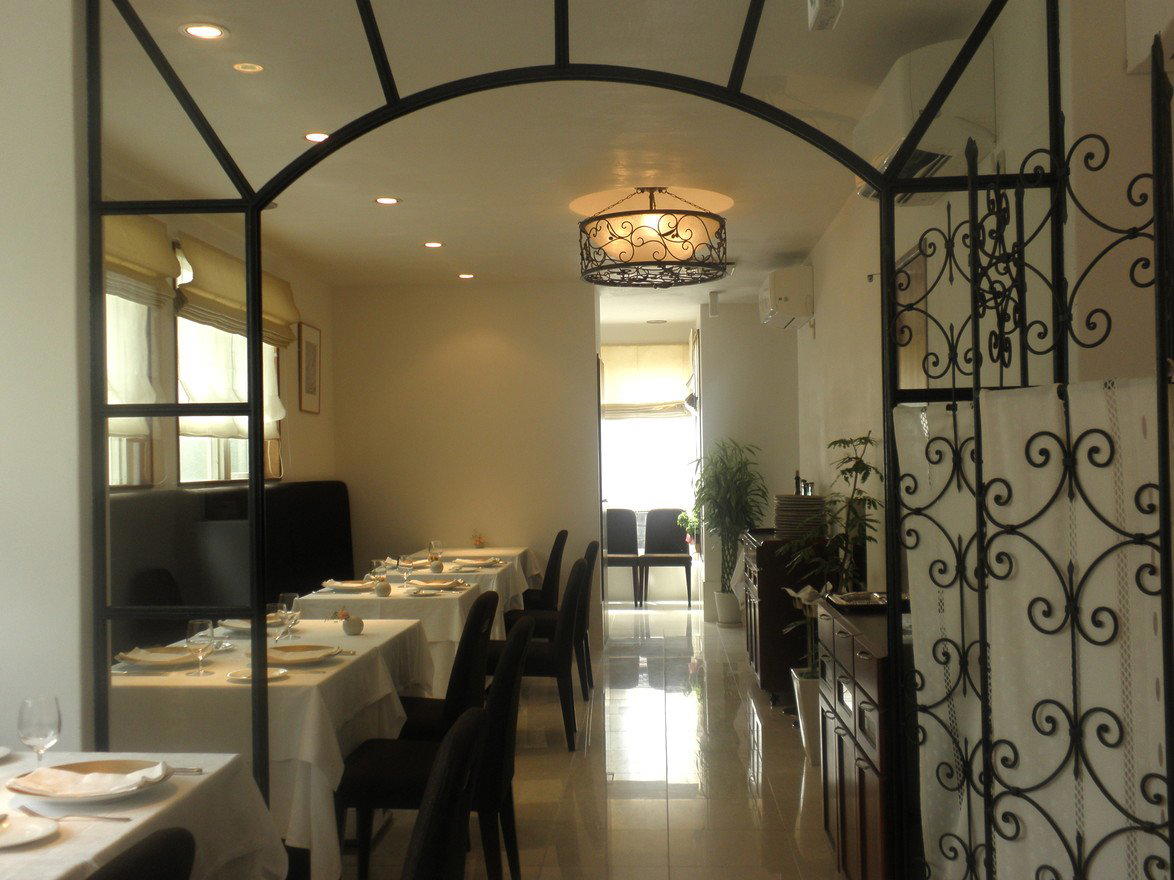
White-based interior resembling a southern French atelier, creating a calm and comfortable space.