

Tabelog 100 #6
Our verdict
A Tabelog Silver Award winner every year from 2018 through 2026, Ichirin Hanare brings Sichuan-inflected Chinese cooking to a converted house in Kamakura's Ogigayatsu district. Chef Hirofumi Saito's reservation-only format, a Tabelog score of 4.40, and dinner pricing in the JPY 20,000–29,999 range position it among the most serious Chinese tables in the Kanto region outside Tokyo.

Pearl is the En Primeur Club membership app, where members save venues, book tables and use the concierge.
The menu
What to order
- Shaoxing wine marinated crab
- Shirako Mapo tofu
Sichuan Cooking in a Kamakura Machiya
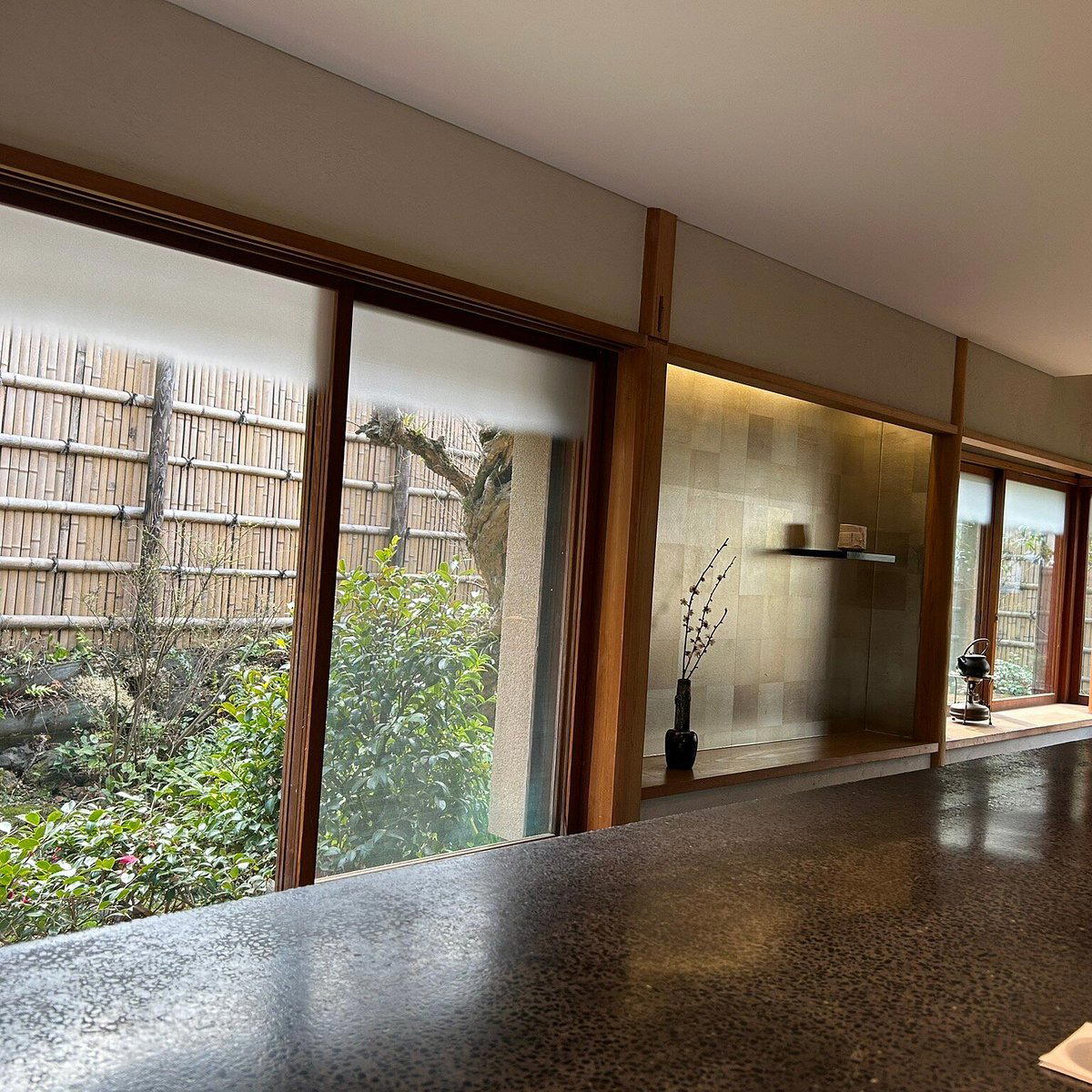
The setting alone signals something unusual. Most serious Chinese restaurants in the Kanto region operate inside Tokyo tower blocks or Yokohama's Chinatown, where scale and foot traffic sustain the business model. Ichirin Hanare operates from a converted house in Ogigayatsu, a quiet residential quarter of Kamakura roughly 15 minutes on foot from Kamakura Station. The building reads as a house restaurant, the Tabelog listing confirms this classification explicitly, and the contrast between the domestic architecture and the cooking discipline inside is part of what defines the experience. Counter seating, a tatami room, and spacious tables across 28 seats coexist in a space described as both stylish and genuinely relaxing, without the ambient noise that characterises urban Chinese dining rooms operating at volume.
That physical remove from the city is not incidental. Kamakura draws a visitor profile skewed toward the contemplative, temple circuits, coastal walking, deliberate meals. A Sichuan-oriented Chinese kitchen operating at JPY 20,000–29,999 per head at dinner fits that register better than it would in a high-turnover commercial district. The question is whether the cooking justifies the price tier relative to what you would find in Tokyo.
The Wok and the Discipline Behind It
Sichuan cuisine is defined, more than almost any other Chinese regional tradition, by the relationship between heat and timing. Wok hei, the breath of the wok, the carbonised-air quality that comes only from intense flame and fast movement, cannot be faked or recovered after the fact. Either the cook controls the fire at the moment of contact, or the dish loses the quality that makes it worth eating. This is not a forgiving technique, and it rewards kitchens where the cook-to-output ratio is high and the pace is deliberate rather than industrial.
A 28-seat house restaurant with a reservation-only format and a strict last-order policy (food at 20:00 for evening service, drinks to 22:00) is structurally suited to that kind of cooking. The kitchen at Ichirin Hanare, under Chef Hirofumi Saito, is listed as being particular about fish, an interesting emphasis for a Sichuan-leaning program, where fish-fragrant preparations and freshwater fish braises appear alongside the more widely recognised ma la (numbing-spicy) profiles. The wine program is noted as a deliberate focus, which is less common in Chinese restaurant contexts in Japan and suggests a pairing orientation rather than a purely incidental list.
The Tabelog description tags the restaurant as reimagining dishes in a timeless setting, a phrase worth holding onto. The leading Sichuan cooking in Japan is rarely a replica of Chengdu originals; it is usually a translation that absorbs Japanese ingredient standards, particularly around seafood and seasonal produce, while preserving the fundamental technique and flavour architecture. What is clear is that the peer group it belongs to, selected for Tabelog Chinese EAST 100 in 2021, 2023, and 2024, is small and competitive.
Where Ichirin Hanare Sits in the Wider Range of Japanese Chinese Dining
Japan's serious Chinese restaurant tier operates differently from its European or American equivalent. The broader culture of craft and seasonal sourcing that runs through kaiseki and high-end sushi has influenced how the most ambitious Chinese kitchens here approach ingredients. You can see this pattern at comparable award-level tables across the country, though Chinese cuisine occupies a smaller share of Japan's top-tier restaurant coverage than French, Japanese, or sushi-focused formats.
Within the Kanto region specifically, the Tabelog Chinese EAST 100 list represents the ceiling of critical recognition for Chinese cooking east of Kyoto. Ichirin Hanare has appeared on that list three times. At a dinner price point of JPY 20,000–29,999, with some reviewer-reported spend reaching JPY 30,000–39,999, it prices in line with Michelin-recognised Japanese and French tables operating at comparable seat counts, rather than against the mid-range Chinese restaurants that dominate the broader market. The 10% service charge applies in addition to the menu price, which is worth factoring when planning.
For context on where this fits within Japan's broader premium dining conversation: venues like HAJIME in Osaka and Harutaka in Tokyo operate at three-Michelin-star level with comparable or higher price points. Gion Sasaki in Kyoto, akordu in Nara, and Goh in Fukuoka represent the breadth of serious dining across Japan's regional cities. Within Kanagawa itself, 1000 in Yokohama operates at a different end of the Chinese dining spectrum. Ichirin Hanare's position in Kamakura, away from both Yokohama's concentration of Chinese restaurants and Tokyo's density, gives it a clear geographic identity. Internationally, the question of what contemporary Chinese cooking looks like outside China's borders is being asked at tables like Restaurant Tim Raue in Berlin and Mister Jiu's in San Francisco, each arriving at very different answers.
Kamakura's dining scene more broadly runs to traditional Japanese, local seafood, and the occasional well-sourced European kitchen. Chinese cooking at this level is not a category the city has historically been known for, which partly explains the draw and partly explains why the reservation demand holds up. For a broader read of where to eat, drink, and stay in the city, see our full Kamakura restaurants guide, our full Kamakura hotels guide, our full Kamakura bars guide, our full Kamakura wineries guide, and our full Kamakura experiences guide. Within the city's dining circuit, IL NODO offers a contrasting Italian perspective on Kamakura's premium table options. Other EP Club picks spread across Japan include 6 in Okinawa, Abon in Ashiya, affetto akita in Akita, and Aji Arai in Oita.
Planning Your Visit
Ichirin Hanare is reservation-only, and the cancellation policy is strict: cancellations on the day of the reservation incur 100% of the course fee, and cancellations the day before incur 50%. This is consistent with how high-demand small restaurants in Japan protect their fixed-cost structure, but it means planning ahead is not optional. Reservations are available online. The restaurant operates seven days a week across two services: lunch runs 11:30–14:30 (food last order 13:00), and dinner runs 17:30–22:30 (food last order 20:00). Lunch is priced in the JPY 10,000–14,999 range, making it the more accessible entry point to the kitchen's output. Credit cards are accepted widely (VISA, Mastercard, JCB, AMEX, Diners, UnionPay), though electronic money and QR code payments are not. The restaurant is non-smoking throughout. Private use is available for groups of up to 20 people, though private rooms are not offered as a standard booking option. Seating arrangements, counter or table, cannot be guaranteed at reservation. The address is 2 Chome-17-6 Ogigayatsu, Kamakura; the nearest station is Kamakura, approximately 15 minutes on foot.
Frequently asked questions
What should I order at Ichirin Hanare?
Ichirin Hanare does not publish a fixed public menu, and the kitchen's output is described on Tabelog as emphasising fish-focused sourcing alongside Sichuan technique. The course structure is the format to commit to: dinner runs JPY 20,000–29,999 per person, and the kitchen shapes the meal around available produce. Arriving with dietary restrictions communicated in advance is advisable given the reservation-only, course-driven format.
Where do I go for Ichirin Hanare?
Ichirin Hanare is located at 2 Chome-17-6 Ogigayatsu, Kamakura, Kanagawa 248-0011, Japan, Kamakura.
Who is the chef at Ichirin Hanare?
The chef associated with Ichirin Hanare is Hirofumi Saito.
Can I walk in to Ichirin Hanare?
No. Ichirin Hanare operates on a strict reservation-only basis. Cancellations on the day of the reservation incur 100% of the course fee, and cancellations the day prior carry a 50% charge, a policy that reflects the volume of demand against 28 seats. With nine consecutive Tabelog Silver Awards from 2018 through 2026 and a score of 4.40, tables at this Kamakura address require planning well in advance.
What has Ichirin Hanare built its reputation on?
Nine consecutive Tabelog Silver Awards (2018–2026), three selections for the Tabelog Chinese EAST 100 list (2021, 2023, 2024), and a reviewer score of 4.40 form the backbone of the restaurant's standing. It operates as a house restaurant in Kamakura's Ogigayatsu district, an unusual location for serious Chinese cooking in the Kanto region, where the format and fish-focused sourcing philosophy under chef Hirofumi Saito have driven sustained recognition.
In Context: Similar Options
Comparable venues nearby, for context on price, style, and recognition.
| Venue | Cuisine | Price | Awards | Notes |
|---|---|---|---|---|
| Ichirin HanareThis venue (the venue you are viewing) | Modern Sichuan-Chinese Fusion | $200–300 | Tabelog 100 #6 | Not listed |
| リストランテ イルノード | Italian with Local Kamakura Seafood | $100–150 | Tabelog 100 #40 | Kamakura |
| Roastbeef Kamakurayama | Japanese Roast Beef Fine Dining | $100–150 | Not listed | Kamakura |
| House of Flavors | High-end Western-style cake shop & cafe | $50–100 | Tabelog 100 #75 | Kamakura |
| フィエルテ | French Fine Dining | $100–150 | Tabelog 100 #3 | Kamakura |
| ナチュール エ サンス Nature et Sens | Seasonal French | $50–100 | Not listed | Kamakura |
Recognition history
Dated appearances from independent guides and award organizations, with the underlying list record or original source where available.
Opinionated About Dining Top Restaurants in Japan Recommended
Opinionated About Dining
Tabelog 100 #6 · No. 6
Tabelog · Tabelog 100 - Chinese cuisine - EAST - 2026
Full recognition history (5 entries)
Tabelog Silver #40
Tabelog
Opinionated About Dining Top Restaurants in Japan Ranked #433
Opinionated About Dining
Tabelog Silver
Tabelog
Continue exploring
More in Kamakura
Restaurants in Kamakura
All restaurants in Kamakura →



Bars in Kamakura
Browse all →



Details
- Elegant
- Quiet
- Minimalist
- Intimate
- Sophisticated
- Date Night
- Special Occasion
- Business Dinner
- Historic Building
- Sake Program
- Omakase
- Tasting Menu
Current opening hours
- Monday
- 11:30 AM–2:30 PM, 5:30–10 PM
- Tuesday
- 11:30 AM–2:30 PM, 5:30–10 PM
- Wednesday
- 11:30 AM–2:30 PM, 5:30–10 PM
- Thursday
- 11:30 AM–2:30 PM, 5:30–10 PM
- Friday
- 11:30 AM–2:30 PM, 5:30–10 PM
- Saturday
- 11:30 AM–2:30 PM, 5:30–10 PM
- Sunday
- 11:30 AM–2:30 PM, 5:30–10 PM
Hours can change for holidays and private events. Hours as of .
Serene, minimalist, and zen-like atmosphere in a renovated traditional Japanese house with stylish, relaxing spaces.