クラージュ occupies a quietly authoritative position in Azabujuban, one of Tokyo's most composed dining neighbourhoods. The French name signals intent: a kitchen working within a tradition that prizes discipline and precision over spectacle. For visitors moving through Tokyo's competitive fine-dining tier, it represents a considered stop in a district that rewards those who pay attention.
 Discover on Pearl
Pearl is the En Primeur Club membership app — saves, bookings, and concierge access live there. Same editors, same standards.
- Address
- 2 Chome-7-14 Azabujuban, Minato City, Tokyo 106-0045, Japan
- Phone
- +81368095533
- Website
- courageazabu.com
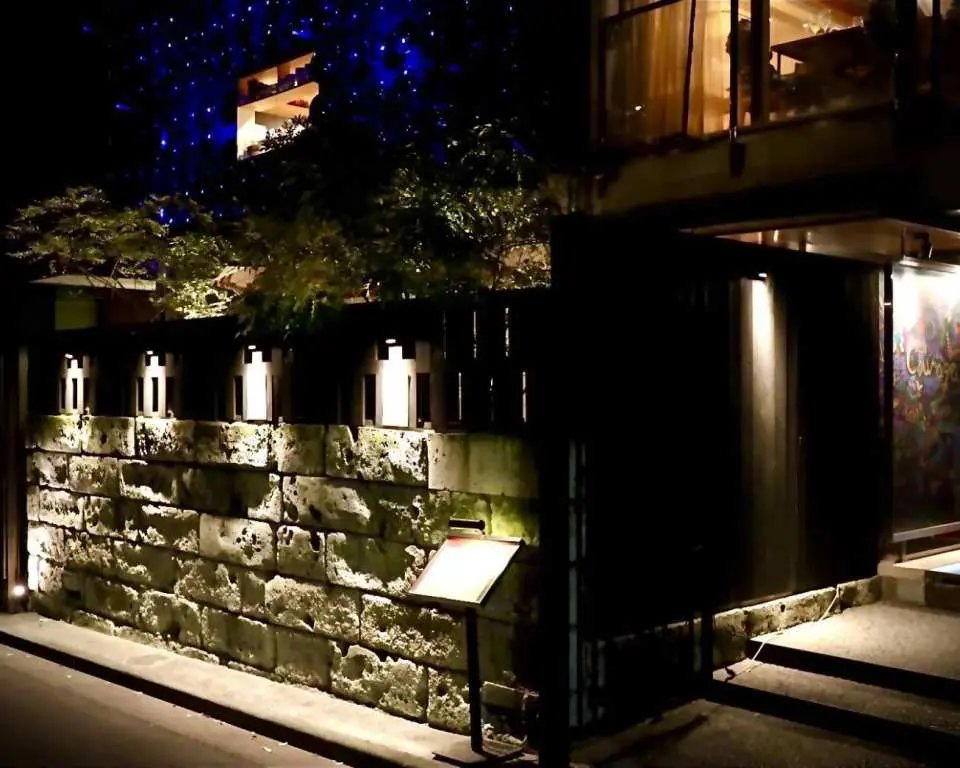
Azabujuban and the Case for Quieter Dining
Tokyo's fine-dining map has long rewarded the obvious addresses: Ginza counters with decade-long waiting lists, Roppongi towers housing international-flag restaurants, Minami-Aoyama rooms where design budgets rival kitchen ones. Azabujuban operates differently. The neighbourhood sits south of Roppongi Hills, close enough to the capital's diplomatic and corporate belt to attract serious clientele, but removed enough from the spectacle circuits that its restaurants earn their reputations through consistency rather than visibility. クラージュ, located at 2 Chome-7-14 Azabujuban in Minato City, is a restaurant serving Modern French with Japanese Ingredients at about $150 per person, and belongs to this quieter tier of Tokyo dining, where the surrounding streets are residential enough that you notice the sound of your own footsteps approaching.
The French word courage as a restaurant name is not incidental in a city where French culinary influence has structured fine dining since the postwar decades. Tokyo absorbed the brigade system, the tasting-menu format, and the Burgundy-weighted wine culture of classical French cooking earlier and more thoroughly than most Asian capitals. By the 1990s, a generation of Japanese chefs had trained in France and returned to build their own rooms, and that lineage now produces third- and fourth-generation kitchens working at a remove from their source material, refining rather than replicating. クラージュ sits in that broader tradition.
The Sensory Register of a Room Like This
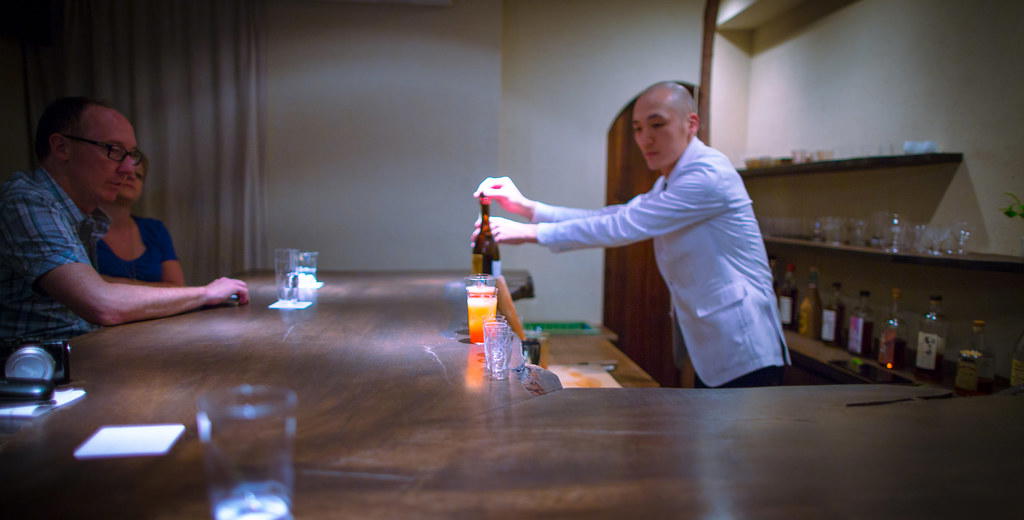
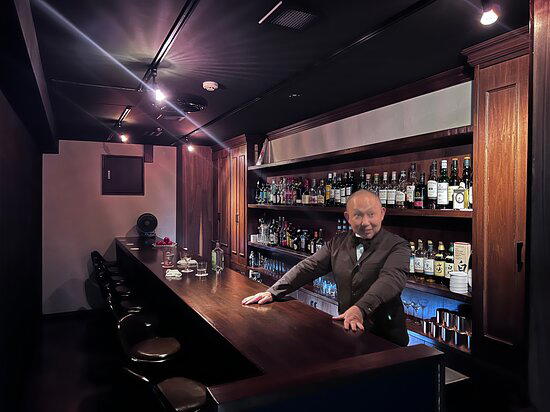
Azabujuban dining rooms in the fine-dining bracket share certain atmospheric tendencies worth understanding before you arrive. These are not the cavernous, chandelier-heavy spaces of European grand-hotel dining. Proportions tend toward the intimate: low ceilings that hold conversation, materials chosen for warmth rather than drama, lighting calibrated to flatter both food and face without performative dimming. The result is a register that feels serious without being severe, which in Tokyo carries its own meaning. A room that is serious without severity signals that the kitchen trusts its cooking to do the work.
In a neighbourhood like Azabujuban, the sound profile matters as much as the visual one. Away from the high-traffic arteries of Ginza and Shinjuku, ambient noise levels are lower, which means tableside conversation stays at the table. This is a city where the acoustic design of a dining room is as deliberate as the plating, and where that deliberateness is legible to the regular clientele who populate addresses like クラージュ. The service tempo in rooms of this type is measured: courses arrive at intervals that allow a full plate to be considered rather than consumed under pressure.
How クラージュ Sits Within Tokyo's Competitive Fine-Dining Set
Tokyo's top-tier French and French-influenced restaurants now occupy a competitive set that stretches across several price points and format philosophies. At the upper end, rooms like L'Effervescence and Sézanne operate with Michelin recognition and international profiles that place them in conversation with the world's most-discussed French restaurants. Crony represents the innovative end of the French-influenced spectrum, where the tasting-menu format becomes a vehicle for chef-driven experimentation. Across the city, RyuGin shows how kaiseki and French technique have long been in productive dialogue. Harutaka anchors the sushi end of the premium bracket, where format and lineage are the primary credentials.
クラージュ occupies a position in this field that rewards research before you book. The Azabujuban address places it in a peer group of neighbourhood-scale fine-dining rooms that rely on return clientele rather than walk-in discovery. It also means that the experience of dining here is likely to be shaped by the room's regular rhythms rather than a performance calibrated for first-time guests, a distinction that matters to some diners more than others.
For broader context on Japan's premium dining scene, it is worth noting how address functions differently across the country. HAJIME in Osaka operates at three Michelin stars in a city with its own deeply ingrained food culture. Gion Sasaki in Kyoto anchors the kaiseki tradition in its home city. akordu in Nara and Goh in Fukuoka show how serious cooking now operates well outside the Tokyo-Osaka axis. Regional addresses like 三本木 名川制 in Nanao, 夕佳亭山乃 in Sapporo, 琵琶湖庵 in Takashima, and 庭羽屋 in Nishikawa Machi represent a broader national pattern of serious cooking at a distance from the capital's noise. Birdland in Sakai and Bistro Ange in Toyohashi fill out a picture of Japanese fine dining that is more geographically distributed than its international reputation suggests. For international comparison, the sustained technical discipline of Le Bernardin in New York City and the cross-cultural precision of Atomix frame how French-influenced fine dining operates at its most rigorous outside Japan.
Know Before You Go
Address: 2 Chome-7-14 Azabujuban, Minato City, Tokyo 106-0045, Japan
Neighbourhood: Azabujuban, south of Roppongi Hills, Minato Ward
Access: Azabu-Juban Station is served by the Namboku and Oedo subway lines. The address is walkable from the station in under ten minutes.
Reservations: Reservations are recommended.
Dietary requirements: Confirm allergies and dietary restrictions directly with the restaurant well in advance of your visit. Japanese fine-dining kitchens at this level generally accommodate requests given adequate notice, but confirmation protocols vary.
Dress code: Smart casual.
A Credentials Check
Comparable venues nearby, for context on price, style, and recognition.
| Venue | Cuisine | Price | Awards | Notes |
|---|---|---|---|---|
| クラージュThis venue — the venue you are viewing | Modern French with Japanese Ingredients | $$$ | , | |
| BLUE BRICK LOUNGE | French-style cafe & dessert lounge with Japanese sweets | $$$ | , | Minato |
| La Boutique de Joël Robuchon Marunouchi burikkusukuea ten | French Bakery-Café | $$$ | , | Chiyoda |
| ヤオユ | Contemporary French Bistro | $$$ | , | Chiyoda |
| グルマンディーズ | French Bistro with Wagyu | $$$ | , | Minato |
| Floraison | Modern French with wine pairing | $$$ | , | Shinjuku |

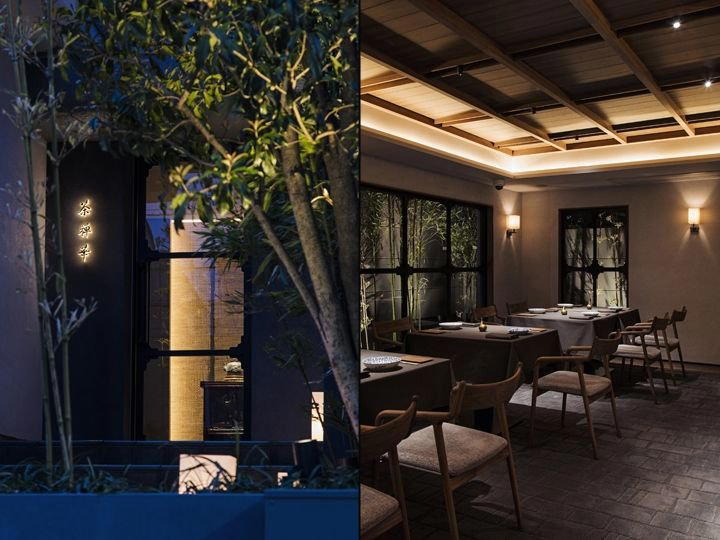
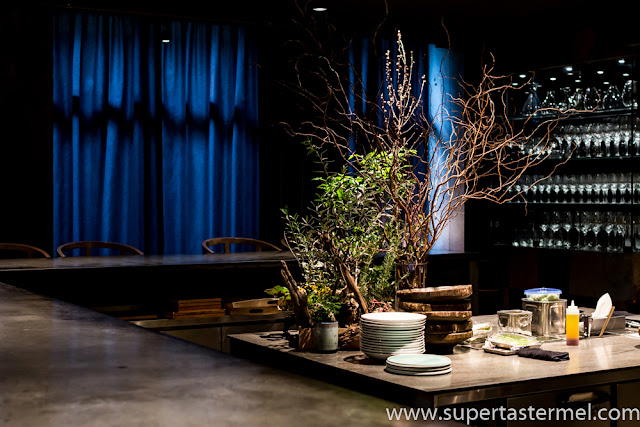
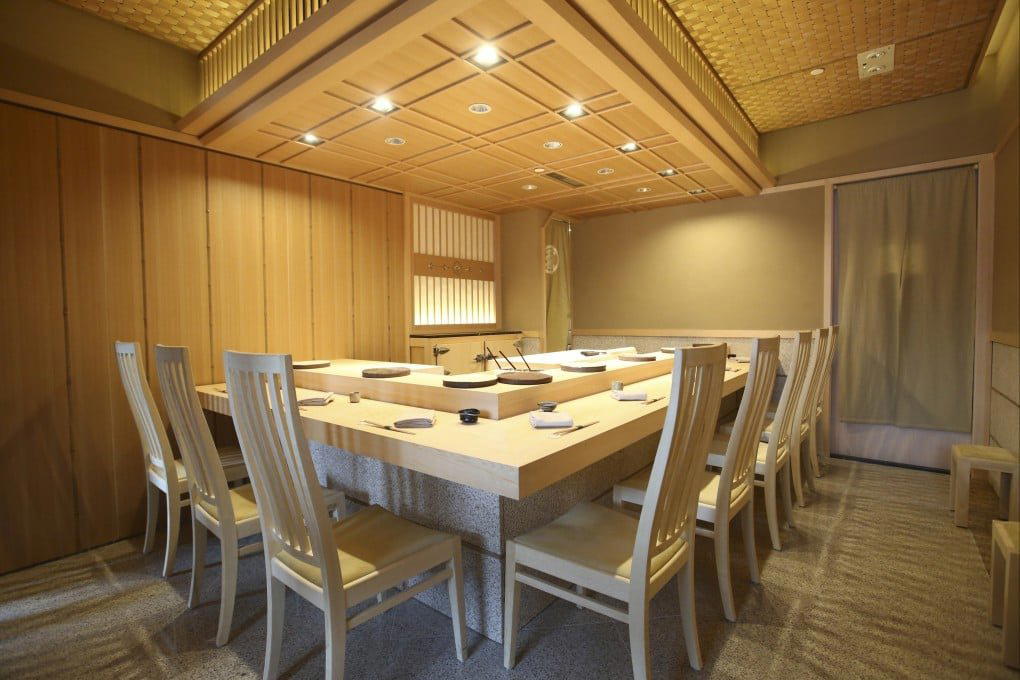






At a Glance
- Hidden Gem
- Elegant
- Sophisticated
- Intimate
- Date Night
- Business Dinner
- Group Dining
- Special Occasion
- Late Night
- Private Dining
- Corkage Allowed
- Local Sourcing
Elegant and intimate setting with carefully presented dishes; described as an adult's hidden gem with refined but approachable ambiance.