Tabelog Bronze #52
Our verdict
Shinya Yakiniku Daichan holds consecutive Tabelog Bronze Awards (2025, 2026) and a score of 4.28 at its 16-seat counter in Kyoto's Nakagyo ward. Operating on reservations only, with per-person spend running JPY 20,000–29,999, it occupies a narrow tier where premium yakiniku meets the city's exacting standards for ingredient sourcing and quiet precision.

Pearl is the En Primeur Club membership app, where members save venues, book tables and use the concierge.
The menu
What to order
- Marbled beef platter
- Charcoal-grilled short rib
- Mino sashami
- Tongue
- Harami
Yakiniku at the precision end: Kyoto's approach to the grill
Kyoto's dining identity is so thoroughly defined by kaiseki that everything else risks being read as a footnote. The city's kaiseki houses, from Gion Sasaki and Hyotei to Kikunoi Honten and Mizai, set a hospitality register that other categories are quietly measured against. That pressure does something useful: it pushes the city's premium yakiniku into a more considered posture than you typically find in Osaka or Tokyo. Shinya Yakiniku Daichan operates inside that pressure. The 16-seat room in Nakagyo ward draws a per-person spend of JPY 20,000–29,999 across both lunch and dinner, placing it in the same price bracket as some of Kyoto's most decorated Japanese dining rooms, including Isshisoden Nakamura. The Tabelog Award Bronze in both 2025 and 2026, combined with consecutive selection for both the Tabelog Yakiniku WEST 100 and the Tabelog Grill WEST 100, confirms it belongs to a different competitive set than neighbourhood yakiniku.
A late-night counter in a city that tends toward the formal
The name itself signals something: shinya means late night in Japanese. Premium yakiniku that operates under a nocturnal identity occupies a specific social register in Japanese cities. It is where serious cooks eat after service, where the purchasing decisions of the day become dinner conversation. Tabelog's own description of Daichan describes it as a place where leading chefs and food professionals gather. In Kyoto's context, that is a meaningful claim. The city's professional kitchen community is dense with kaiseki-trained cooks working at establishments like Gion Sasaki and across the kaiseki tier; when those cooks choose to eat yakiniku, the selection tends to reflect the same sourcing discipline they apply at work.
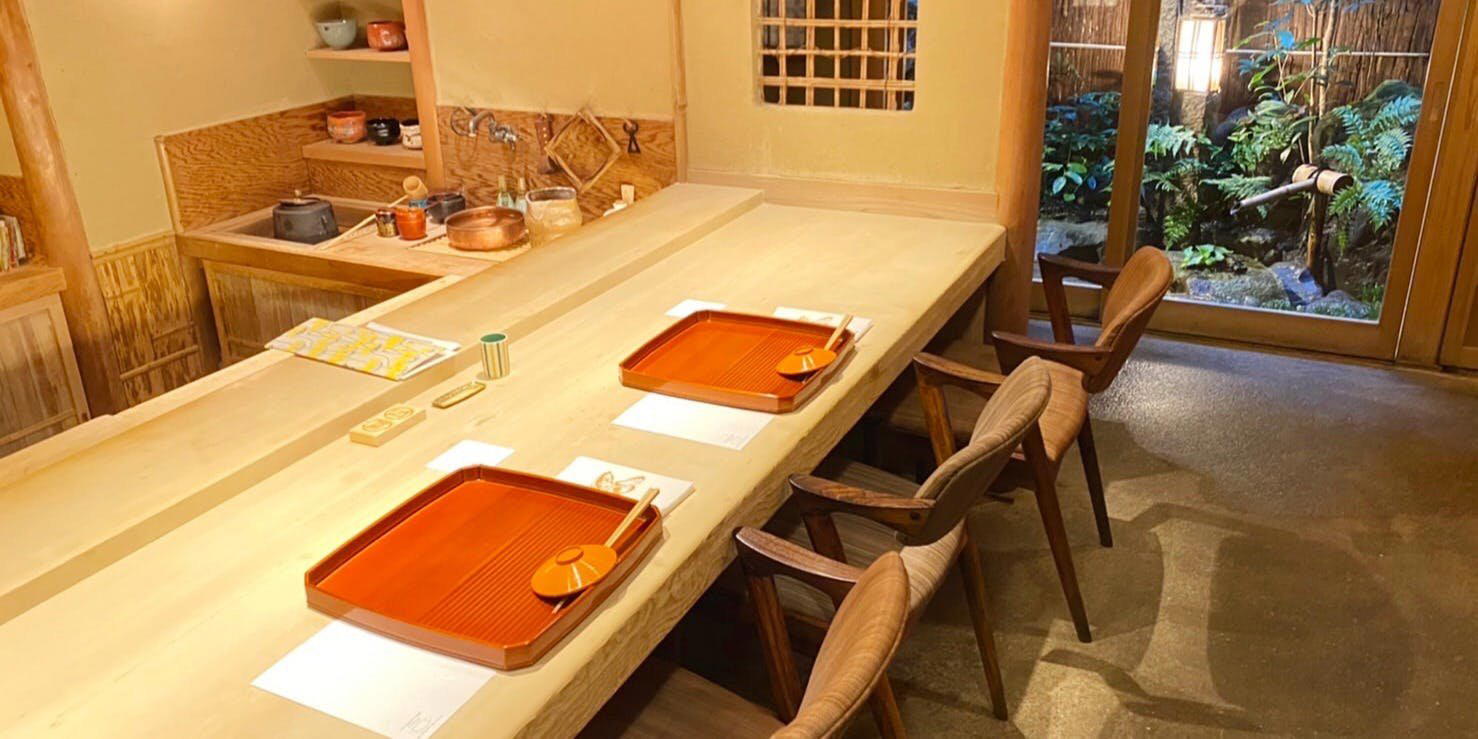
The physical format reinforces the positioning. Sixteen seats, reservation-only, no credit cards, no electronic money, QR-code payment only (PayPay). These are not operational oversights. They describe a room that functions on its own terms and has enough demand to do so. Spaces of this scale in Japanese dining typically book well ahead; the absence of walk-in access is the norm rather than the exception at this tier.
Ingredient discipline and the yakiniku format
Yakiniku, at its structural core, is a format that strips away almost every technique available to the kitchen. There is no sauce work to hide behind, no elaborate plating to reframe a weaker cut. What reaches the grill is what the diner tastes, which means sourcing carries an unusual burden. The leading yakiniku counters in western Japan treat this constraint the way a sashimi specialist treats fish: the procurement decision is the cooking decision.
Daichan lists its categories as yakiniku and tripe, which signals deliberate engagement with offal. Tripe and other organ cuts represent the part of the animal that most premium yakiniku restaurants either avoid or treat as a secondary offering. When a restaurant leads with them alongside the primary category, it suggests a kitchen that has built supply chains and preparation methods around these cuts rather than treating them as incidental. Across Japan's serious yakiniku circuit, from the counter specialists of Osaka to the cattle-focused rooms of Fukuoka like Goh, offal handling is frequently the sharpest marker of kitchen depth.
The price point, JPY 20,000–29,999, situates Daichan above the casual yakiniku tier and at a level where the ingredient sourcing model has to be substantiated on the plate. For comparison, the same spend in Kyoto secures seats at kaiseki rooms operating at high technical complexity. The implication is that guests are paying for product quality and selection, not for ceremony or room appointments.
How Daichan sits in the western Japan yakiniku tier
The Tabelog 100 lists operate on a regional basis in western Japan, grouped under the WEST designation, which covers Kyoto, Osaka, and surrounding prefectures. Selection for the Yakiniku WEST 100 (2024 and 2025) and the Grill WEST 100 (2024) places Daichan inside a recognized peer group that includes some of the most serious meat-focused counters in the Kansai region. The Bronze Award in consecutive years (4.22 in 2025, 4.28 in 2026) indicates stable scoring rather than a single-year performance spike.
Competitive geography of this peer group matters. Osaka's yakiniku scene is denser and more visible, and the city has historically dominated the Kansai grill category. The fact that a Kyoto counter scores at Tabelog Bronze level across both the yakiniku and grill categories reflects both the strength of the product and the relative scarcity of comparable rooms in Kyoto itself. Diners travelling from elsewhere in Japan or from abroad who want to experience premium yakiniku within a Kyoto trip have limited options at this scoring tier; Daichan is one of them.
Dynamic is echoed in other Japanese cities where serious meat counters operate at the margins of a dominant dining culture. Harutaka in Tokyo demonstrates how focused product sourcing can build category authority; HAJIME in Osaka shows a different kind of precision in the western Japan dining scene. At venues like akordu in Nara and 1000 in Yokohama, the pattern of small-format rooms building strong Tabelog recognition through ingredient focus is consistent. Even internationally, the idea that a minimal format demands maximum sourcing rigour runs through rooms like Le Bernardin in New York City and the Korean-influenced counter precision of Atomix. The format strips technique away and puts the product on trial. Daichan operates on exactly this principle. And at 6 in Okinawa, a similarly compact counter uses local sourcing as the primary differentiator, an approach that maps directly onto what Daichan signals through its Tabelog category placement.
Planning a visit
Daichan sits at 115 Nayamachi, Fushimi Ward, though its Tabelog record places its dining catchment in Nakagyo ward, the central district bounded by the Kamo River to the east and Nijo Street to the north, an area with strong foot traffic from Kyoto's main dining corridor. The room holds 16 seats, takes reservations only, and operates on a schedule that may change, so confirming hours directly before visiting is the expected protocol. Payment is by PayPay QR code; credit cards and electronic money are not accepted, which means arranging JPY cash or a Japanese QR payment setup in advance is advisable for guests visiting from outside Japan. Spend runs JPY 20,000–29,999 per person. Private rooms are not available, and the room is non-smoking throughout.
For broader planning across the city, our full Kyoto restaurants guide covers the range from kaiseki to specialist counters. Those staying longer may find our Kyoto hotels guide, Kyoto bars guide, Kyoto wineries guide, and Kyoto experiences guide useful for building out the full itinerary.
Frequently asked questions
Is Daichan Michelin-listed?
Daichan has received recognition including:
What's the address for Daichan?
Daichan is located at 115 Nayamachi, Fushimi Ward, Kyoto, 612-8363, Japan, Kyoto.
What should I order at Daichan?
Daichan's Tabelog listing categorises the menu under yakiniku and tripe, which signals that offal cuts are a deliberate focus rather than a sideline. Given the JPY 20,000–29,999 per-person spend and the reservation-only format, the kitchen is operating a selection rather than an à la carte spread. Confirming specific cuts in advance is advisable, as closing days and offerings may vary.
What are the operating hours at Daichan?
Hours at Daichan: Closing days may vary.
What's the defining dish or idea at Daichan?
The venue's dual Tabelog categorisation, yakiniku and tripe, points to an offal-forward approach within a premium grill format, which is the detail that separates Daichan from Kyoto's more conventional beef-focused counters. A 4.28 Tabelog score and consecutive Bronze awards in 2025 and 2026, alongside selection for the Tabelog Yakiniku WEST 100, confirm this positioning has resonance with Japan's most active reviewing community. The 16-seat room and reservation-only access reinforce that this is a tightly controlled experience, not a casual drop-in grill.
How It Stacks Up
Comparable venues nearby, for context on price, style, and recognition.
| Venue | Cuisine | Price | Awards | Notes |
|---|---|---|---|---|
| DaichanThis venue (the venue you are viewing) | Late-Night Premium Yakiniku | $200–300 | Tabelog Bronze #52 | Not listed |
| Ahbon | Modern Luxury Kushiage | $150–200 | Not listed | Minami |
| Tempura Endoh Yasaka | Kyoto-Style Tempura | $150–200 | Not listed | Higashiyama |
| Gion Sho | Modern Kaiseki with Wine Pairing | $150–200 | Star Wine List | Higashiyama |
| Sakamoto | Traditional Kyoto Kaiseki Omakase | $200–300 | Not listed | Higashiyama |
| 要庵西富家 (要庵 西富家) | Traditional Kaiseki Ryokan | $500+ | Not listed | Gion/Kawaramachi |
Recognition history
Dated appearances from independent guides and award organizations, with the underlying list record or original source where available.
Tabelog Bronze #52
Tabelog
Full recognition history (3 entries)
Tabelog Bronze
Tabelog
Tabelog 100 #40 · No. 40
Tabelog · Tabelog 100 - Yakiniku - WEST - 2025