Our verdict
Dadong at Nanxincang sits inside a restored imperial granary complex in Dongcheng, where Beijing's roast duck tradition is reframed through the lens of ingredient sourcing and Chinese ink-wash aesthetics. The restaurant occupies a prominent position in the city's premium Peking duck tier, drawing both local regulars and international visitors to a format that treats duck cookery as a considered craft rather than a crowd-pleasing formula.

Pearl is the En Primeur Club membership app, where members save venues, book tables and use the concierge.
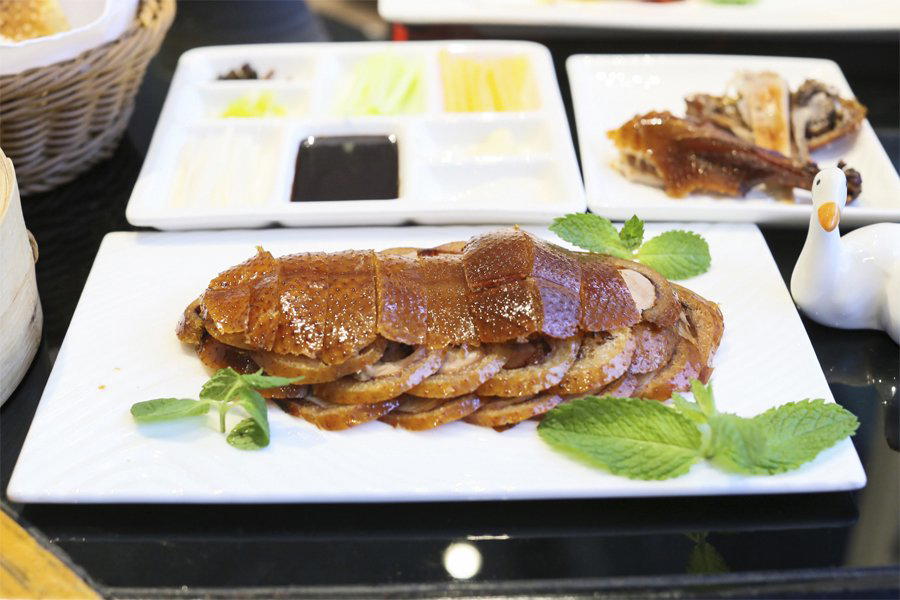
The menu
What to order
- Peking Roast Duck
A Granary Setting and What It Signals About Beijing Duck Culture
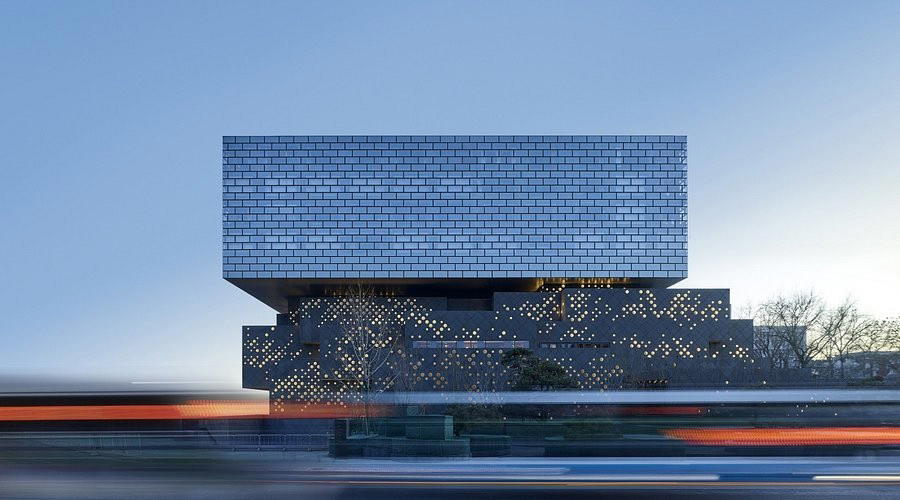
The Nanxincang location of Dadong Roast Duck occupies part of a Ming-dynasty grain storage complex in Dongcheng district, one of the few surviving imperial granary sites in the capital. That setting is not incidental. In Beijing, the physical container of a roast duck restaurant has always carried meaning: the old-guard institutions operate in sprawling, fluorescent-lit halls where volume is the logic; newer entrants have increasingly moved into heritage spaces or design-forward rooms where the implied argument is that duck cookery deserves the same environmental seriousness as any other fine-dining format. Dadong belongs firmly to the latter group, and the Nanxincang building reinforces that positioning before a single dish arrives.
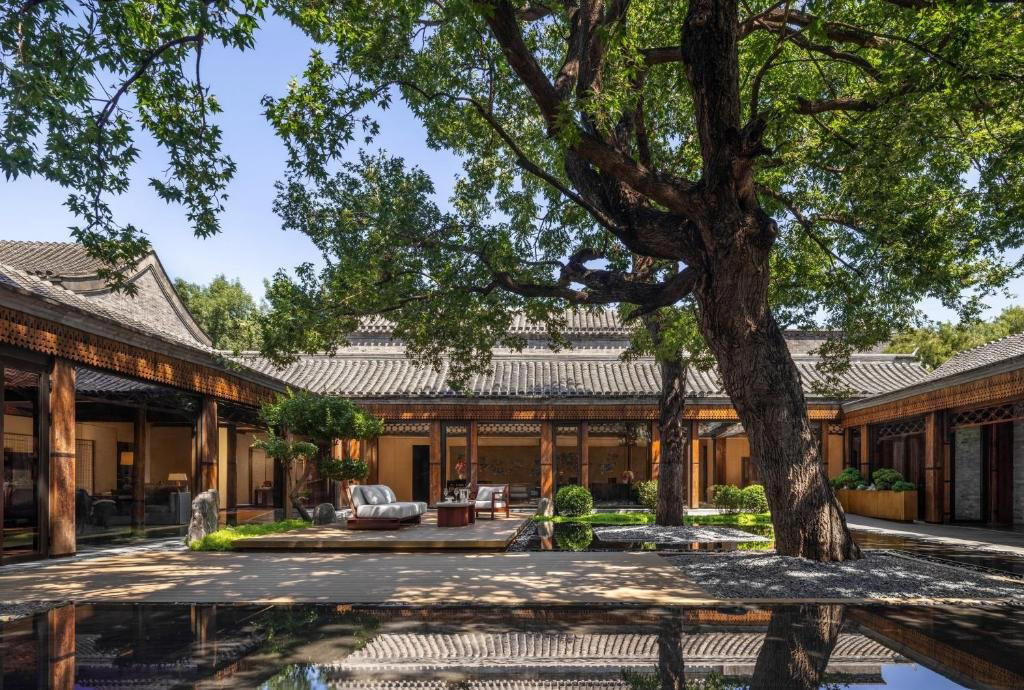
The room itself draws on Chinese ink-wash painting as a design reference, with high ceilings, ink-toned surfaces, and a visual restraint that reads as intentional contrast to the operatic scale of the duck houses that dominated Beijing dining in earlier decades. Approaching from Dongsishitiao, the transition from the street's commercial noise into the granary's courtyard creates a genuine atmospheric shift, the kind that, in cities like Shanghai or Hangzhou, premium Chinese restaurants have long used to signal that the price point and the experience are calibrated to match. Beijing has been slower to adopt that logic for its signature dish, which is part of why Dadong's format attracted as much attention as it did when the concept took hold.
Where the Bird Comes From, and Why Sourcing Defines the Tier
Peking duck's reputation in the West has long rested on a standardised image: lacquered skin, thin pancakes, spring onion, hoisin. What that image flattens is the degree to which the raw material, the breed of duck, its feed, and the period of fattening, determines the ceiling of what a kitchen can achieve. The capital's premium roast duck houses have progressively differentiated on exactly this axis, and Dadong's approach is built around a lower-fat duck breed that the restaurant has consistently associated with leaner, crisper skin relative to the traditional Beijing duck. That sourcing decision drives the kitchen's core claim: that the skin-to-fat ratio produces a result closer to the texture of lacquerwork than to the rich, yielding fat of the classical style.
This places Dadong inside a broader shift across serious Chinese restaurant kitchens, where provenance claims have moved from background detail to front-of-house talking point. The pattern is visible across the country's premium dining tier: Xin Rong Ji (Xinyuan South Road) in Beijing builds its Taizhou seafood offer around daily sourcing from specific coastal supply chains; Fu He Hui in Shanghai frames its vegetarian tasting format through ingredient-first seasonality; Ru Yuan in Hangzhou treats regional produce as the editorial centre of its menu. What Dadong has done is apply the same logic to a dish that, for most of its modern history, was discussed almost entirely through the lens of technique rather than raw material.
The duck is presented tableside in a format that separates the carving ritual from the eating, a theatrical structure borrowed from classical service traditions but recontextualised for a dining room where the visual and the conceptual carry as much weight as the flavour. Accompaniments extend beyond the standard pancake-and-condiment set to include a broader spread of cold appetisers and seasonal preparations, which situates a meal here as a multi-course event rather than a single-dish occasion.
Beijing's Premium Duck Tier and Where Dadong Sits Within It
The capital's roast duck restaurants now sort into at least three recognisable categories. The historic houses, Da Dong's ancestral competition, operate on volume, legacy brand recognition, and a tourist-friendly price point. A middle tier of well-regarded neighbourhood specialists serves local regulars with solid technical execution and no design ambition. The uppermost group, of which Dadong is a clear member, frames the dish as a full dining proposition: considered interiors, curated sourcing narratives, and a price point that reflects the totality of the experience rather than the per-bird cost.
For context across China's fine-dining tier, the comparison set extends well beyond Beijing. Made In China (长安壹号) represents another premium Chinese format operating at the intersection of heritage and contemporary presentation. Further afield, Imperial Treasure Fine Chinese Cuisine in Guangzhou, Chef Tam's Seasons in Macau, and Dai Yuet Heen in Nanjing each illustrate the wider Chinese fine-dining movement toward rooms and formats where the architecture of the meal carries as much deliberate design as the food itself. Dadong's version of that argument is localised to the dish Beijing is defined by, and that specificity gives it a clarity of purpose that more generalist fine-dining formats sometimes lack. You can find broader explorations of this dining tier in our full 北京市 restaurants guide.
Internationally, the structural ambition of presenting a single regional speciality inside a high-design, sourcing-conscious format has parallels at places like Le Bernardin in New York City, where the entire proposition is built around one ingredient category refined through obsessive technical attention, or Lazy Bear in San Francisco, where a single format choice defines the entire dining architecture. The comparison is not about cuisine overlap but about the strategic logic of committing a premium format to a clearly defined culinary mission.
Planning a Visit: Location, Timing, and Format
The Nanxincang address on Dongsishitiao in Dongcheng puts the restaurant within reach of several central Beijing landmarks and is accessible from both Line 2 and Line 5 of the subway network. Given Dadong's position in Beijing's recognised upper dining tier and the consistent demand from both domestic and international visitors, booking ahead is advisable, walk-in availability at peak meal times, particularly weekend dinners, is limited. The restaurant's multi-course format means a meal runs longer than a standard duck-house visit, so arriving with time to work through the full progression of dishes is the right approach rather than treating it as a quick stop.
If Dadong represents Beijing's premium duck format, the broader regional dining scene worth exploring alongside it includes Xin Rong Ji in Chengdu, Pingjiangsong in Suzhou, Shang Palace in Yangzhou, Wenru No.9 in Fuzhou, Fleurs Et Festin in Xiamen, Antstory in Quanzhou, Blue kylin in Changsha, and Ensue - Hotel in Shenzhen, each representing a distinct regional expression of serious Chinese dining.
Frequently asked questions
Is Dadong Roast Duck Restaurant child-friendly?
The Nanxincang branch occupies a converted Ming-dynasty granary in Dongcheng, giving it a formal, heritage-site atmosphere that suits adults more naturally than young children. The format centres on shared roast duck service with tableside carving, which works at a measured pace. Families with older children who can follow a structured meal will find it manageable, but it is not a casual drop-in setting.
What's the address for Dadong Roast Duck Restaurant (大董烤鸭店)?
Dadong Roast Duck Restaurant (大董烤鸭店) is located at 22A Dongsishitiao (At Nanxincang Int‘l Bldg), 北京市, 北京市, 100010, 北京市.
Should I book Dadong Roast Duck Restaurant (大董烤鸭店) in advance?
Reservations are recommended for Dadong Roast Duck Restaurant (大董烤鸭店) in 北京市. Confirm current policy via the venue's official channels.
What's the overall feel of Dadong Roast Duck Restaurant?
The Dongsishitiao address inside the Nanxincang International Building places the dining room within a preserved Ming granary complex, one of the few remaining imperial-era storage sites in Beijing. The architecture sets a composed, historically grounded tone rather than a festive or casual one. Service follows the conventions of Beijing's premium duck tier: deliberate, tableside-focused, and oriented toward the ritual of the bird rather than background noise.
In Context: Similar Options
| Venue | Cuisine | Price | Awards | Notes |
|---|---|---|---|---|
| Dadong Roast Duck Restaurant (大董烤鸭店)This venue (the venue you are viewing) | Modern Peking Roast Duck | $50–100 | Not listed | Not listed |
| Fu He Hui | Modern Seasonal Vegetarian Fine Dining | $200–300 | 2 Michelin Stars · World's 50 Best #11 | Vegetarian |
| Lai Heen | Michelin-Starred Cantonese | $50–100 | 1 Michelin Star · Forbes 5-Star | Cantonese |
| Xin Rong Ji | Taizhou Cuisine | $50–100 | 1 Michelin Star · La Liste Top Restaurants | Taizhou |
| Five Foot Road | Modern Sichuan Fine Dining | Not listed | 1 Michelin Star · La Liste Top Restaurants | Sichuan |
| Aji | Asian Bistronomy (Nikkei Fusion) | $50–100 | 1 Michelin Star · Wine Spectator Best of Award of Excellence | Nikkei, Innovative |
Continue exploring
More in Beijing
Restaurants in Beijing
All restaurants in Beijing →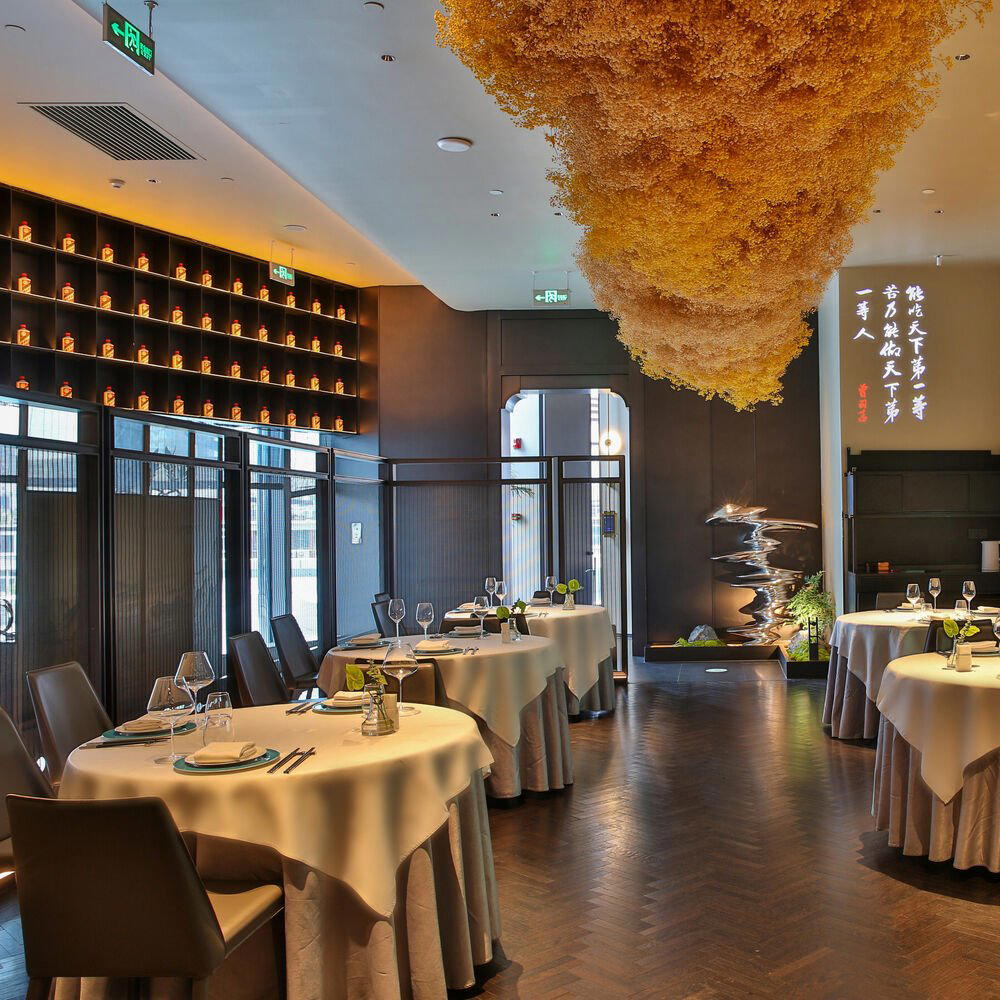
Bars in Beijing
All bars in Beijing →
Details
- Elegant
- Sophisticated
- Well Known
- Special Occasion
- Business Dinner
- Celebration
- Private Dining
- A La Carte
Upscale two-floor setting with elegant decor suitable for sophisticated dining.