
1 Michelin Star
Our verdict
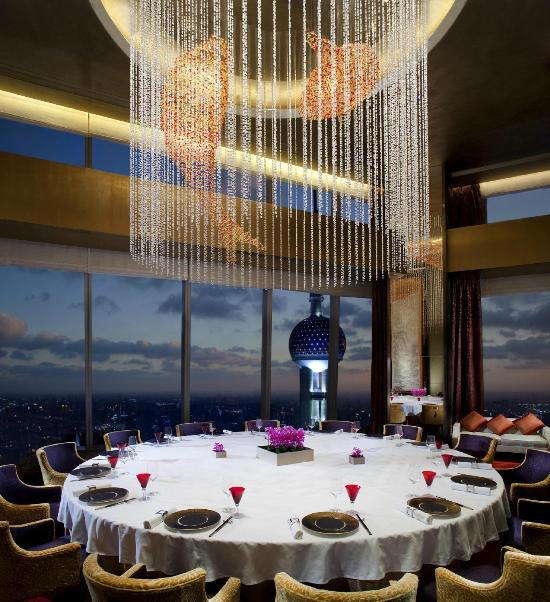
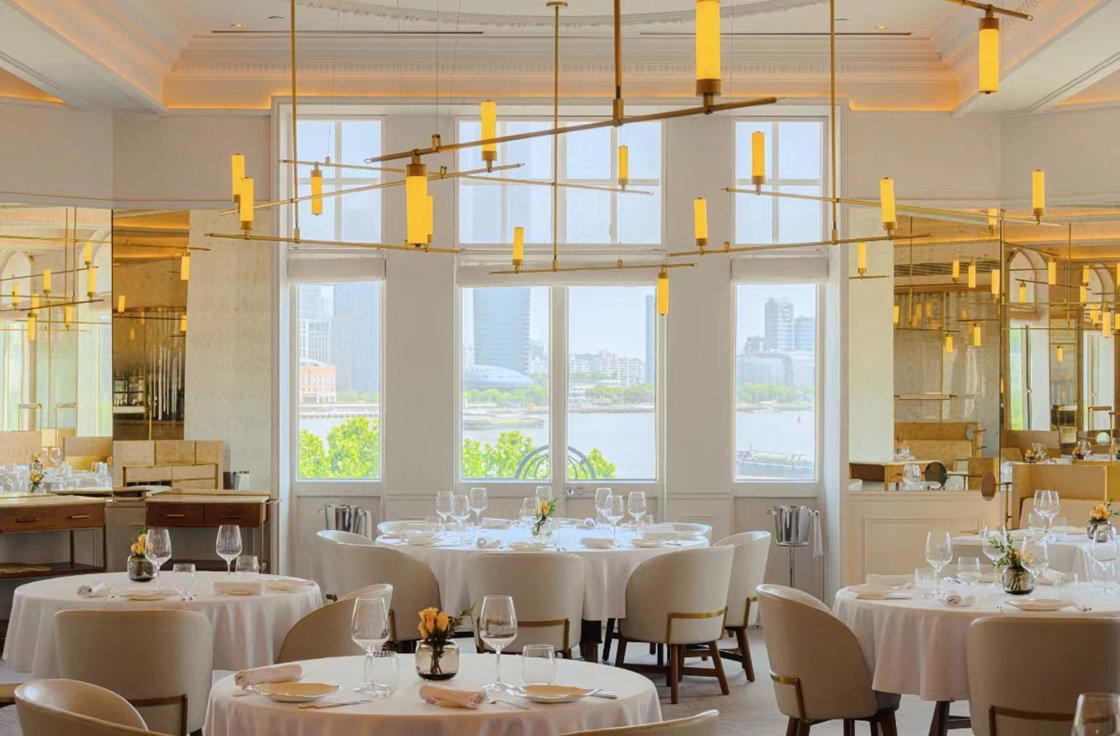
Jin Xuan holds a 2024 Michelin star and sits above the Huangpu River with panoramic views of the Pudong skyline. The menu ranges across classical Cantonese territory, from imported Australian black cod to New Zealand lobster, with dim sum that draws a loyal following. Among Shanghai's hotel Cantonese rooms at the ¥¥¥¥ tier, it occupies a strong position on both setting and culinary credential.

Pearl is the En Primeur Club membership app, where members save venues, book tables and use the concierge.
The menu
What to order
- Crispy Cereal Lobster
- Cantonese Roasted Duck
- Peking Duck
Where the River Becomes Part of the Room
Certain dining rooms earn their setting honestly. Jin Xuan, perched on an upper floor of a sky-scraping hotel beside the Oriental Pearl Tower, positions the Huangpu River and Pudong skyline as a permanent backdrop to every meal. This is not incidental. In Shanghai's competitive hotel-dining tier, where Cantonese kitchens compete on both culinary authority and physical theatre, the interplay between room and view has become a meaningful differentiator. At Jin Xuan, the two work in alignment: the elegant interior does not compete with the panorama but frames it, so the light shifting over the river at dusk becomes, in effect, the final course.
For practical planning, the ¥¥¥¥ price positioning places Jin Xuan in the upper bracket of Shanghai's Cantonese restaurant market, comparable to peers such as Bao Li Xuan and Ji Pin Court. A 2024 Michelin star provides the clearest external benchmark: this is a kitchen that inspects well, and its continued recognition reflects consistency rather than novelty. Reservations, especially for window positions with the fullest skyline exposure, are advisable well in advance for weekend service.
Cantonese Cooking in Shanghai: The Context
Cantonese cuisine has always occupied a specific role in Shanghai's dining order. The city's own culinary tradition, Shanghainese red-braising, sweet-soy glazes, hairy crab in season, is distinct and deeply local. Yet Shanghai has long hosted premium Cantonese dining as a counterpoint: cleaner flavours, a different relationship with seafood freshness, and a kitchen philosophy that prizes subtlety over the assertive seasoning of many northern styles. At the ¥¥¥¥ tier, this positioning becomes sharper. Diners arriving at rooms like Jin Xuan are not looking for the Cantonese they might find on a Hong Kong side street; they are seeking the refined technical execution and premium ingredient sourcing that defines the format's upper register.
The broader mainland Cantonese scene rewards comparison. Canton 8 in Huangpu and Imperial Treasure Fine Chinese Cuisine in Shanghai occupy adjacent territory, while the tradition finds different expression at Imperial Treasure in Guangzhou, closer to the cuisine's origin point, and at Forum in Hong Kong and Jade Dragon in Macau, where the canon is defined by longer institutional memory. Jin Xuan sits within this wider network as Shanghai's premium hotel-Cantonese representative, and its Michelin recognition in 2024 places it in the same credentialed tier as Chef Tam's Seasons in Macau and Dai Yuet Heen in Nanjing.
The Menu's Range: From Classic Dim Sum to Imported Seafood
Jin Xuan's menu does not anchor itself to a single signature register. It covers significant Cantonese ground, moving between the precision-driven craft of dim sum and the ingredient-led ambition of premium seafood cookery. The dim sum platter, built around three established crowd-pleasers, functions as both an entry point for first-time visitors and a reliable calibration of kitchen standards. In Cantonese cooking, dim sum execution is a technical benchmark: the ratio of skin to filling, the temperature at which a har gow arrives, the char on a cheung fun, these details reveal a kitchen's discipline as clearly as any main course.
The imported ingredient list extends the menu's reach considerably. Australian black cod and New Zealand lobster appear as markers of sourcing ambition, connecting Jin Xuan to the premium-import logic that now defines mainland Chinese fine dining at this tier. This is a pattern visible across the comparable houses: Xin Rong Ji in Beijing and Xin Rong Ji in Chengdu apply similar sourcing logic within their own regional frameworks. The appetite among upper-tier mainland diners for traceable international ingredients has reshaped what premium Chinese restaurant menus look like, and Jin Xuan's offer reflects that shift without abandoning Cantonese structural logic.
Tea as Table Architecture
In authentic Cantonese dining, tea is not a beverage added to a meal; it is the meal's architecture. The tradition of yum cha, literally, drinking tea, predates the elaborate dim sum culture that grew around it, and the pairing of specific teas with specific dishes remains a discipline in its own right. A Pu-erh, aged and earthy, does different work alongside roasted meats than a light Longjing would beside delicate steamed dumplings. Chrysanthemum tea, a staple at Cantonese tables across Hong Kong and Guangdong, cuts through the richness of a fried turnip cake in a way that a glass of still water simply cannot.
At a Pudong hotel dining room like Jin Xuan, the tea programme carries additional weight because it is where the kitchen's Cantonese authenticity is most visibly signalled. Hotels that treat tea as a formality, a bag dropped in a ceramic pot, read differently to those where the selection, brewing temperature, and pairing logic are managed with the same attention given to the wine list. Jin Xuan's wine list, noted for its range by the glass, suggests a front-of-house team that thinks in pairings. The question for visiting diners is worth asking directly: ask the service team to walk through tea options alongside the meal, rather than defaulting to the wine list as the primary pairing vehicle. In a Cantonese room of this standing, the tea programme is likely to reward that attention.
The Wine List as Secondary System
The wine list at Jin Xuan has been noted as well-curated, with particular strength by the glass. This matters in a room at the ¥¥¥¥ tier, where the cost of a full bottle can significantly alter the arithmetic of a meal. By-the-glass depth allows diners to pair across multiple courses without committing to a single bottle's flavour profile, a practical advantage when a meal moves from delicate steamed dim sum through to richer braised or roasted sections. The presence of a considered wine offer also signals something about the room's target diner: international visitors and locally cosmopolitan guests who move between Cantonese tea culture and Western beverage service within a single sitting.
For comparison across the Shanghai hotel-dining tier, 102 House and Bao Li Xuan represent the same general demographic ambition: rooms designed to serve Shanghai's international business and luxury-leisure visitors alongside a Chinese clientele fluent in both local and global hospitality codes. See our full Shanghai restaurants guide for a broader mapping of the city's dining tiers.
Planning a Visit
Jin Xuan sits at 15 Tuanjiehu South Road in Chaoyang, note that while the venue data lists a Beijing postal district, the restaurant is positioned in the Pudong hotel zone adjacent to the Oriental Pearl Tower, Shanghai's most recognisable skyline marker. Confirm the specific hotel address when booking to ensure correct navigation on arrival. The ¥¥¥¥ pricing reflects a full-service dinner or weekend dim sum with imported-ingredient courses; a strategically ordered lunch, concentrating on the dim sum platter and one or two seafood dishes, offers a lower entry point into the kitchen's range without the full dinner spend.
For visitors building a wider Shanghai programme, our Shanghai hotels guide covers the full accommodation tier, while our Shanghai bars guide and experiences guide map the city beyond the table. Those extending the Cantonese fine-dining thread to other mainland cities will find useful reference points at Ru Yuan in Hangzhou and Dai Yuet Heen in Nanjing.
Frequently asked questions
What dish is Jin Xuan famous for?
Jin Xuan holds a 2024 Michelin star for its Cantonese cooking, and the kitchen's range across both dim sum and premium seafood is the clearest indicator of what draws repeat visitors. The dim sum platter, structured around three established preparations, functions as the most discussed entry point. On the main menu, dishes built around imported Australian black cod and New Zealand lobster represent the kitchen's higher-register work, applying classical Cantonese technique to premium-sourced seafood, a combination that positions Jin Xuan within the mainstream of credentialed Cantonese fine dining in mainland China rather than as a specialist in any single dish.
A Tight Comparison
| Venue | Cuisine | Price | Awards | Notes |
|---|---|---|---|---|
| Jin XuanThis venue (the venue you are viewing) | Modern Cantonese | $100–150 | 1 Michelin Star | Not listed |
| Fu He Hui | Modern Seasonal Vegetarian Fine Dining | $200–300 | 2 Michelin Stars · World's 50 Best #11 | Vegetarian |
| Ming Court | Cantonese with Shanghainese Influences | $30–50 | 1 Michelin Star · Black Pearl 1 Diamond | Cantonese |
| Polux | French Bistro | $30–50 | Michelin Bib Gourmand | French |
| Royal China Club | Cantonese Dim Sum | $100–150 | Michelin Plate · The Good Food Guide GFG Good | Chinese, Cantonese |
| Scarpetta | Refined Italian Pasta & Pizza | $50–100 | Michelin Plate · Wine Spectator Best of Award of Excellence | Italian |
Recognition history
Dated appearances from independent guides and award organizations, with the underlying list record or original source where available.
Michelin 1 Star
Michelin
Full recognition history (2 entries)
Michelin 1 Star
Michelin
Continue exploring
More in Shanghai
Restaurants in Shanghai
All restaurants in Shanghai →
Bars in Shanghai
All bars in Shanghai →

Details
- Elegant
- Sophisticated
- Ornate
- Business Dinner
- Special Occasion
- Panoramic View
- Private Dining
- Hotel Restaurant
- Extensive Wine List
- Skyline
- A La Carte
- Vegetarian Friendly
Current opening hours
- Monday
- 10:30 AM–10 PM
- Tuesday
- 10:30 AM–10 PM
- Wednesday
- 10:30 AM–10 PM
- Thursday
- 10:30 AM–10 PM
- Friday
- 10:30 AM–10 PM
- Saturday
- 10:30 AM–10 PM
- Sunday
- 10:30 AM–10 PM
Hours can change for holidays and private events. Hours as of .
Sumptuous dining space blending traditional Chinese opulence with modern clean lines, gilded surfaces, vaulted ceilings, and abundant natural light from wall-to-wall windows.