Our verdict
The bighead carp fish head, sourced daily from Zhejiang's Qiandao Lake, is the pre-order that regulars know to place at booking.

Pearl is the En Primeur Club membership app — saves, bookings, and concierge access live there. Same editors, same standards.
The menu
What to order
- Steamed bighead carp head with pickled chili duo
- Hunan classics reimagined
Chaoyang's Approach to Hunan
Beijing's relationship with Hunanese cooking has never been simple. The cuisine arrived in the capital as workers and entrepreneurs moved north, and its early reputation was built on heat, directness, and a certain refusal to compromise. The city's better Hunanese kitchens have since moved on from that founding image, building more sophisticated menus without abandoning the sourcing precision and chilli-forward intensity that define the tradition. In Love, positioned near Gongti East Road in the Chaoyang district, belongs to this more considered cohort.
What the Room Signals Before the Food Arrives
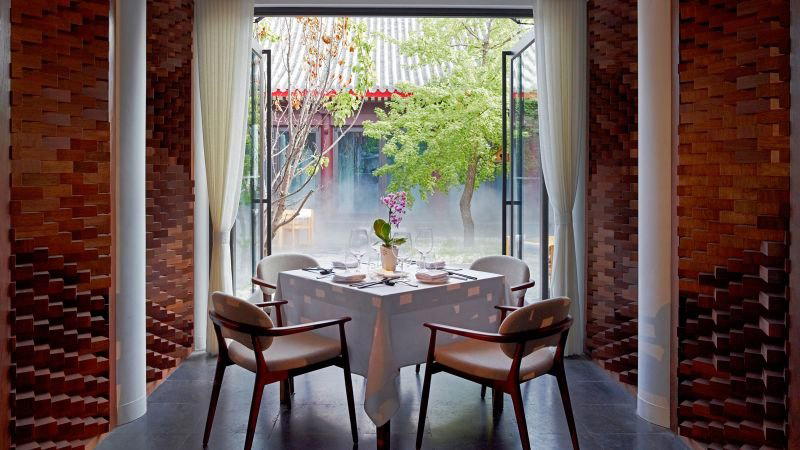
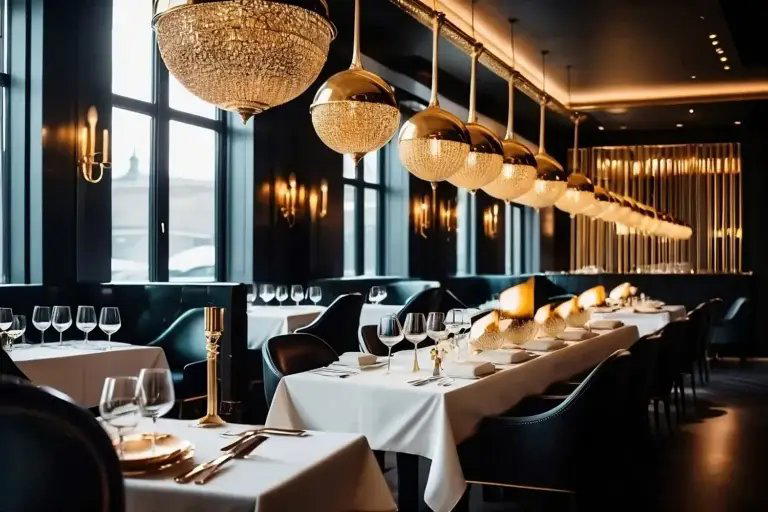
The interior reads as faux-industrial: exposed surfaces, contemporary fixtures, the kind of deliberate roughness that places a restaurant closer to a Parisian bistro than to the carved-wood formality of older Chinese dining rooms. This matters because it signals the kitchen's intent. Restaurants that dress this way in Beijing are generally not arguing for heritage preservation; they are arguing for a conversation between what a cuisine has been and what it might become. At In Love, that conversation has been running long enough that the room no longer reads as a statement. It reads as a given.
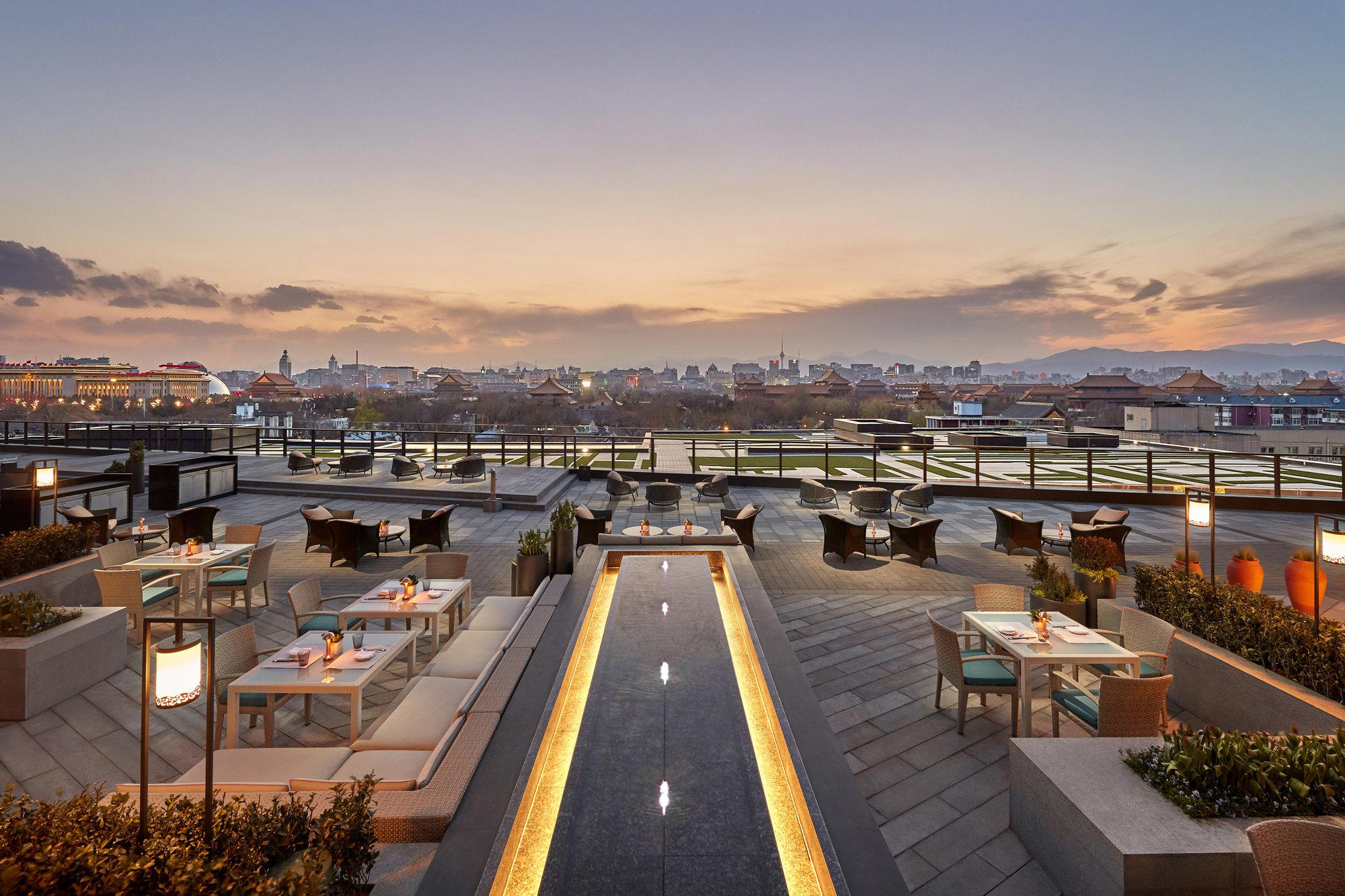
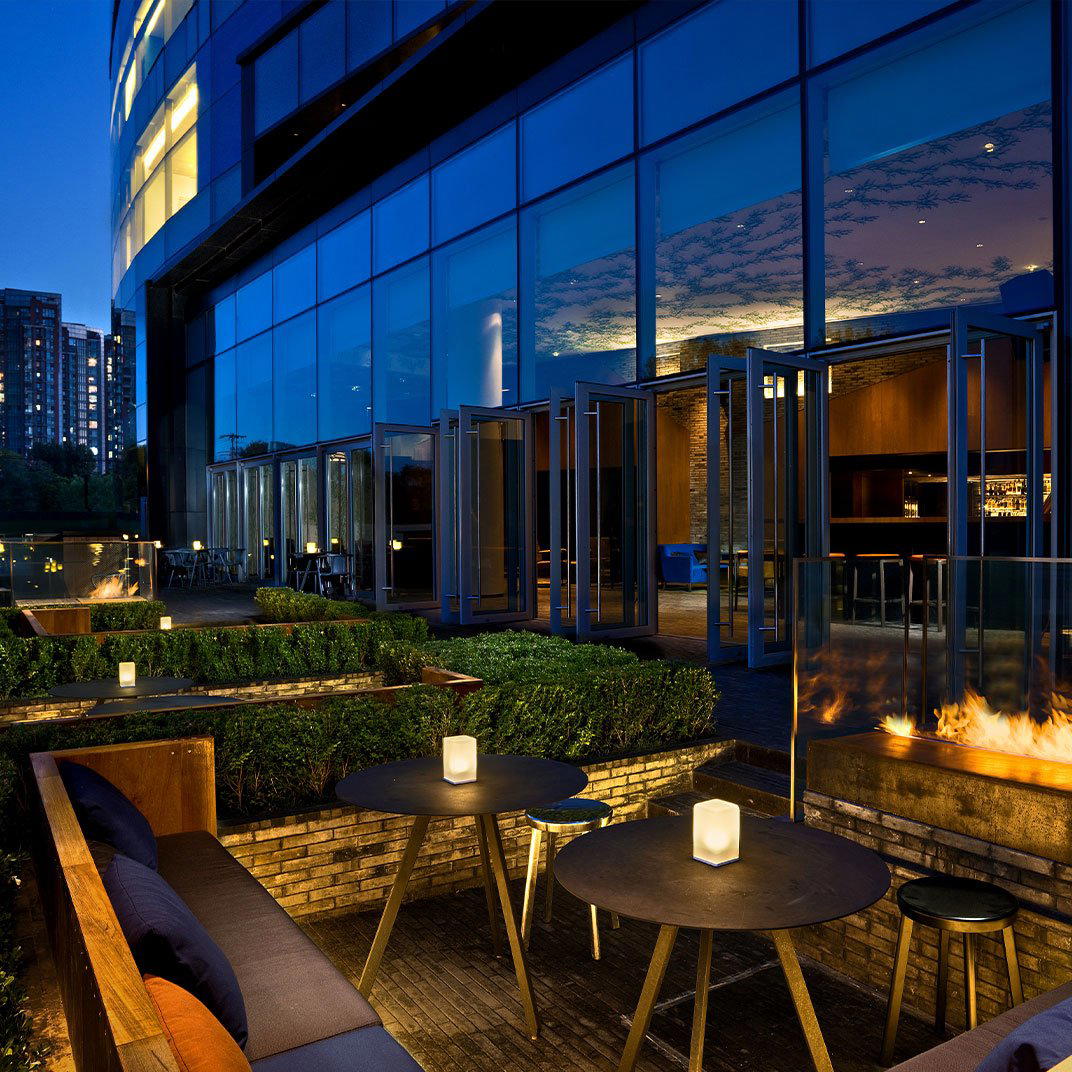
On warmer days, the terrace offers a different register entirely. Alfresco dining in Chaoyang shifts the atmosphere from considered indoor dining to something more relaxed and seasonal, and regulars who have been coming through multiple years know to request a terrace table when the weather permits. That kind of behavioural knowledge is one marker of a restaurant with a settled clientele rather than a tourist-facing one.
The Menu Logic: Hunan as a Starting Point
Hunanese cooking at its core is defined by fresh chillies rather than the dried variety dominant in Sichuan, by smoking and curing techniques that reflect the region's inland geography, and by a willingness to use bold, often confrontational flavour combinations. What In Love does is take those foundations and run lateral connections to Guangdong and Sichuan, producing a menu that is neither strictly regional nor a generic fusion exercise. The eclectic input is selective rather than comprehensive: the result reads as Hunanese cooking that has absorbed specific outside influences rather than a pan-Chinese menu with Hunan as its headline.
This positions In Love in a different competitive set from the city's more orthodox Chinese regional specialists. Chao Shang Chao (Chaoyang), also at ¥¥¥¥ with three stars, keeps to Chaozhou orthodoxy. In Love, at ¥¥¥ with one star, occupies a different register: more accessible on price, more elastic on regional identity, and rewarded for it.
The broader pattern shows up across Chinese cities. At 102 House in Shanghai and Chef Tam's Seasons in Macau, kitchens are similarly working across regional Chinese frameworks rather than committing to single-province orthodoxy. The Michelin guides in mainland China have shown a consistent willingness to recognise this kind of cross-regional dialogue, particularly when the sourcing is serious and the execution is clean.
The Dish That Defines the Visit
Among the things regulars know that first-time visitors often discover too late: the steamed fish head with pickled chilli duo requires a pre-order. The dish uses bighead carp sourced daily from Qiandao Lake in Zhejiang province, a body of water with a specific reputation among Chinese food buyers for the quality of its freshwater fish. Bighead carp from this source carries a cleaner flavour profile than fish from less controlled environments, and the daily logistics involved in getting it to a Beijing kitchen represent a level of supply chain commitment that distinguishes serious restaurants from those that talk about provenance without organising around it.
The pickled chilli preparation is a Hunanese canonical move, but the dual-chilli format signals the cross-regional layering that characterises the menu more broadly. This is the dish most directly connected to the restaurant's editorial identity: it is Hunan in its framework, precise in its sourcing, and generous enough in scale to anchor a table. The same advance booking advice applies to other seasonal dishes, which change according to availability and the kitchen's current interests. The general principle holds: booking without flagging your intentions is a missed opportunity.
Where In Love Sits in a City of Regional Chinese Cooking
Beijing is not a city where any single Chinese regional cuisine dominates. Cantonese, Sichuan, Shanghainese, and Taizhou restaurants all hold Michelin recognition in the current guide, and Hunanese cooking competes in that field with a distinct identity but without the institutional prestige that some other regions carry in fine dining contexts. In Love has carved its position by not pretending to be something it isn't: the room, the price point, and the menu all point toward a kitchen that has made clear choices and stuck to them.
For comparison within the Hunanese tradition outside Beijing, Café Hunan in Hong Kong's Western District and Cheers on Kaichuang Avenue in Guangzhou show how the cuisine travels and adapts in different urban markets. The Beijing version, as In Love practices it, has absorbed more cross-regional influence than either southern equivalent, which is partly a function of what Beijing's diverse dining public demands and partly a function of the kitchen's own inclinations.
Other recognised addresses in the city's broader Chinese dining scene worth knowing include Furong and Everlasting Happiness, along with the Hunanese specialist Xiang Shang Xiang on Jinhe East Road, which provides a useful stylistic contrast at a similar price tier. Across mainland China, Ru Yuan in Hangzhou, Xin Rong Ji in Chengdu, Imperial Treasure Fine Chinese Cuisine in Guangzhou, and Dai Yuet Heen in Nanjing represent the range of approaches currently earning recognition within Chinese regional fine dining.
Planning a Visit
In Love is located at the east gate of the Workers' Stadium in Chaoyang (北京工人体育场东门), a landmark area with good transport links and a concentration of restaurants that draw both local professionals and visitors from across the city. The ¥¥¥ price point places it in a range where a full table meal with drinks is meaningful but not prohibitive by Beijing fine dining standards.
The practical discipline that regulars apply is direct: pre-order the fish head and any seasonal dishes at the time of reservation rather than on arrival. The terrace is worth requesting for evening bookings in spring and early autumn, when Chaoyang's warm-season evenings make outdoor dining a different experience from the controlled atmosphere inside. For a fuller picture of what else the city offers, see our full Beijing restaurants guide, as well as our guides to hotels, bars, wineries, and experiences in Beijing.
Frequently asked questions
What style of cooking does In Love (Gongti East Road) do?
How much does it cost to eat at In Love (Gongti East Road)?
Pricing at In Love (Gongti East Road) is listed as ¥¥¥.
What kind of recognition has In Love (Gongti East Road) received?
In Love (Gongti East Road) has received recognition including: The modern room furnished in a faux-industrial style easily passes for a chic bistro; the menu sees Hunanese classics reimagined with eclectic input from Guangdong, Sichuan and the like. Steamed fish head with pickled chilli duo uses bighea….
What's the signature dish at In Love (Gongti East Road)?
The steamed fish head with pickled chilli duo is the dish regulars pre-order at booking — and first-timers often wish they had. It uses bighead carp shipped daily from Qiandao Lake in Zhejiang, which sets it apart from versions using locally sourced fish. The kitchen also rotates seasonal dishes that reward the same pre-order treatment, so it's worth asking when you reserve.
Booking and Cost Snapshot
| Venue | Cuisine | Price | Awards |
|---|---|---|---|
| In Love (Gongti East Road)This venue (the venue you are viewing) | Modern Hunanese | $50–100 | Not listed |
| Jing | Modern French with Asian Influences | $300–500 | 1 Michelin Star · Black Pearl 1 Diamond |
| Xin Rong Ji (Xinyuan South Road) | Taizhou Chinese Fine Dining | $300–500 | 3 Michelin Stars · World's 50 Best #84 |
| Chao Shang Chao (Chaoyang) | Modern Teochew (Chaoshan) Fine Dining | $200–300 | Michelin Plate · La Liste Top Restaurants |
| Lamdre | Modern Plant-Based Chinese Vegetarian | Not listed | 2 Michelin Stars · World's 50 Best #17 |
| Jingji | Imperial Beijing Royal Cuisine | $200–300 | 2 Michelin Stars · La Liste Top Restaurants |