
Tabelog 100 #46
Our verdict
ローグ sits in Tosa, Kochi Prefecture, at an address in Usachoryu that places it deep in one of Japan's most agriculturally productive coastal regions. With Kochi's celebrated produce tradition as context, the restaurant occupies a niche where sourcing geography does much of the editorial work.

Pearl is the En Primeur Club membership app, where members save venues, book tables and use the concierge.
Tosa's Sourcing Advantage, and Where ローグ Fits Into It
Kochi Prefecture has a specific agricultural identity that shapes every serious kitchen operating within it. The prefecture sits on the Pacific-facing side of Shikoku, receiving more annual sunshine than almost any other Japanese region, and its farmers have built that climate advantage into produce that reaches Tosa's tables earlier and with more intensity than equivalent crops grown further north. Ginger, yuzu, myoga, and a long catalogue of leafy vegetables move through Kochi's markets in volumes that exceed local consumption, meaning restaurants here have first pick of supply chains that most of Japan's urban kitchens access at second or third remove. That geography is not incidental to dining in Tosa: it is the argument for eating here at all. For context on how this compares to dining scenes in other Japanese cities, our full Tosa restaurants guide maps the broader picture.
ローグ, addressed at 599-6 Usachoryu in Tosa, operates in that context. The Usachoryu district sits outside the city centre, in a location where the physical setting shapes expectations before a single dish arrives. Arriving in this part of Kochi, you are already some distance from the urban density that frames the dining rooms of, say, HAJIME in Osaka or Harutaka in Tokyo. The approach is quieter, the surroundings more open, and the implicit premise of a meal here is different: proximity to source, not proximity to footfall.
The Ingredient Logic of Kochi's Kitchen Culture
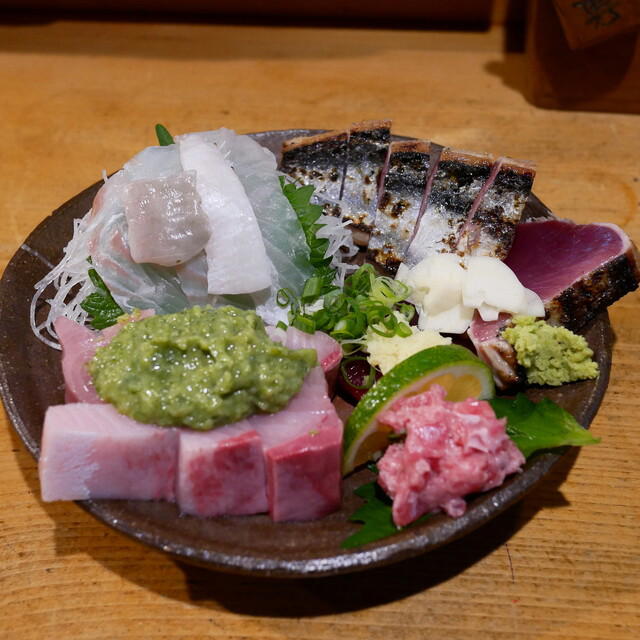
To understand what a restaurant in this position is likely doing, it helps to understand what Kochi's culinary culture has historically demanded of its chefs. The prefecture's signature dish, katsuo no tataki, is a study in restraint and ingredient confidence: bonito seared over rice straw, served with nothing more elaborate than citrus and alliums. The technique is simple because the fish, caught just offshore in the Pacific current, needs no augmentation. That logic, source-first and technique-second, extends across Kochi's serious kitchens in ways that distinguish them from the more baroque presentations you find at tasting-menu counters in Kyoto or Tokyo. Gion Sasaki in Kyoto, for instance, operates in a tradition where centuries of kaiseki refinement are the point; in Tosa, the wild catch and the morning market are closer to the centre of gravity.
This is the culinary tradition that frames ローグ's address. A kitchen at this location has access to seafood from the Pacific landing points at Tosa-Shimizu and Kochi City, to the citrus and vegetable growers operating in the warmer valleys below the Shikoku mountains, and to the network of small producers whose output rarely leaves the prefecture. That supply access is a concrete advantage, and restaurants operating in similar positions across Japan, including akordu in Nara and Goh in Fukuoka, have made it the organising principle of their menus. Whether ローグ pursues that angle with a set tasting format, an à la carte structure, or a hybrid that reads seasonally, the sourcing infrastructure surrounding its address makes that editorial framing the most credible available.
Regional Dining in Comparative Context
Japan's non-metropolitan dining scene has fragmented over the past decade into two fairly distinct camps. The other camp operates for the local and regional visitor, pricing against the local economy, keeping formats informal, and trusting that provenance and seasonality do the justifying. Across both camps, the strongest kitchens in non-urban Japan share one structural advantage: they are not competing for the same suppliers as the high-volume tasting-menu operations in the major cities.
For a sense of where quality sits across different Japanese regional traditions, restaurants like 一本杉 川島 in Nanao, 夕倶楽部 in Sapporo, and 湖麺屋 in Takashima each illustrate how regional provenance drives menu identity in ways that urban kitchens cannot replicate by sourcing alone. The same applies in Shikoku, where the fishing and farming traditions are distinct enough to produce a local cuisine that does not translate cleanly to any national metropolitan format. 鶴羽屋 in Nishikawa Machi is another reference point for how non-urban Japanese restaurants situate themselves within regional food culture rather than against a Tokyo benchmark.
Planning a Visit to ローグ
Tosa is accessible by rail from Kochi City, which is itself reached by the Dosan Line from Okayama or by the Tosa Kuroshio Railway network. Tosa City's own station sits a manageable distance from the central Usachoryu address, though the specific 599-6 location benefits from having a car or taxi to hand, as the district's geography is not optimised for pedestrian navigation. Given that confirmed booking methods, hours, and pricing for ローグ are not publicly available through current channels, the clearest approach is to contact the restaurant directly or visit in person before making firm plans around a meal there. This is not unusual for smaller regional restaurants in Shikoku, where a degree of operational informality is part of the dining character rather than an exception to it.
For comparison against what confirmed information looks like at other serious Japanese restaurants, Birdland in Sakai, Bistro Ange in Toyohashi, and Blue Ocean Steak in Nakagami District each have more publicly confirmed operational details. Further afield, bodai in 那智勝浦町 and Cafe Naoshima Konichiwa in Naoshima sit in similarly regional settings and offer useful reference points for how Shikoku and Setouchi dining positions itself for the travelling diner. For a sense of technically ambitious international comparison, Denko Sekka in Hiroshima, Le Bernardin in New York City, and Atomix in New York City mark different ends of the sourcing-and-technique spectrum that regional Japanese restaurants are increasingly benchmarked against by internationally mobile diners.
Frequently asked questions
Does ローグ work for a family meal?
ローグ sits in Usachoryu, a residential pocket of Tosa well outside the commercial centre, which points toward a neighbourhood-scale operation rather than a large format venue. Tosa's regional restaurant scene tends toward smaller, owner-operated rooms where the pace is set by the kitchen, not by a crowd.
Is ローグ better for a quiet night or a lively one?
The Usachoryu address in Tosa places ローグ away from any concentration of bars or late-night traffic, which makes a quieter, unhurried evening the more likely register. Restaurants operating in this part of Kochi Prefecture generally draw a local regular crowd rather than a passing tourist one. Anyone looking for high-energy dining would be better served in Kochi City itself; ローグ reads as a destination for those who want the meal to be the event.
What dish is ローグ famous for?
What is documented is the address: Tosa, Kochi Prefecture, a region where katsuo prepared as tataki over straw fire is the defining local preparation and where citrus varieties such as yuzu and dekopon inform seasoning at serious kitchens across the prefecture.
Comparable Venues
Comparable venues nearby, for context on price, style, and recognition.
| Venue | Cuisine | Price | Awards | Notes |
|---|---|---|---|---|
| ローグThis venue (the venue you are viewing) | Italian with Sea Views | Not listed | Tabelog 100 #46 | Not listed |
| Hagi no Chaya | Seafood and Yakiniku Japanese BBQ | $30–50 | Tabelog 100 #46 | Usa |
| Olivio | Italian Classics and Homemade Pasta | Not listed | Not listed | Kutchan, Abuta District |
| ラ・プリマヴォルタ | Kochi Local Italian Fine Dining | $100–150 | Tabelog 100 #36 | Harimaya-cho |
| はしまや | Southern Italian with Local Japanese Influences | $50–100 | Not listed | Oku-Kurashiki |
| 九十九 | Italian Wood-Fired Pizza & Craft Beer | Not listed | Not listed | 白浜町 |
Recognition history
Dated appearances from independent guides and award organizations, with the underlying list record or original source where available.
Tabelog 100 #46 · No. 46
Tabelog · Tabelog 100 - Italian - WEST - 2025
Continue exploring
More in Tosa
Details
- Elegant
- Scenic
- Modern
- Date Night
- Special Occasion
- Waterfront
- Sake Program
- Waterfront
- A La Carte
Current opening hours
- Monday
- 12–9:30 PM
- Tuesday
- 12–9:30 PM
- Wednesday
- Closed
- Thursday
- 12–9:30 PM
- Friday
- 12–9:30 PM
- Saturday
- 12–9:30 PM
- Sunday
- 12–9:30 PM
Hours can change for holidays and private events. Hours as of .
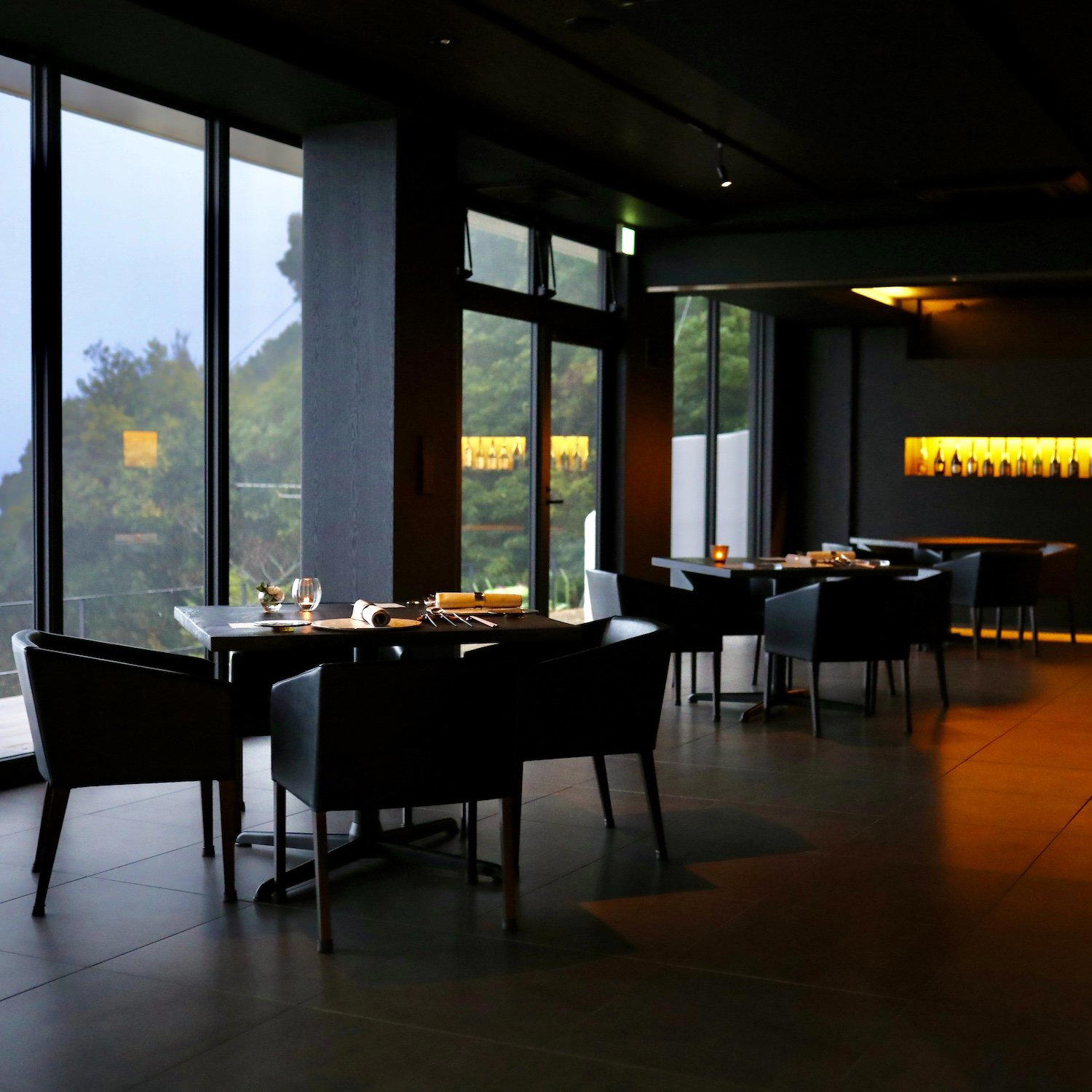
Bright and scenic with sea views from the resort setting.