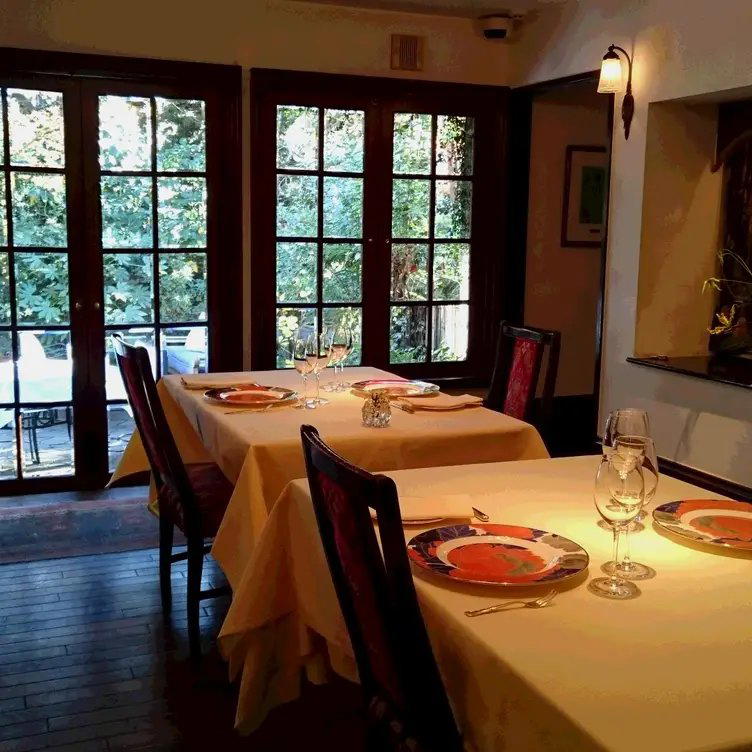
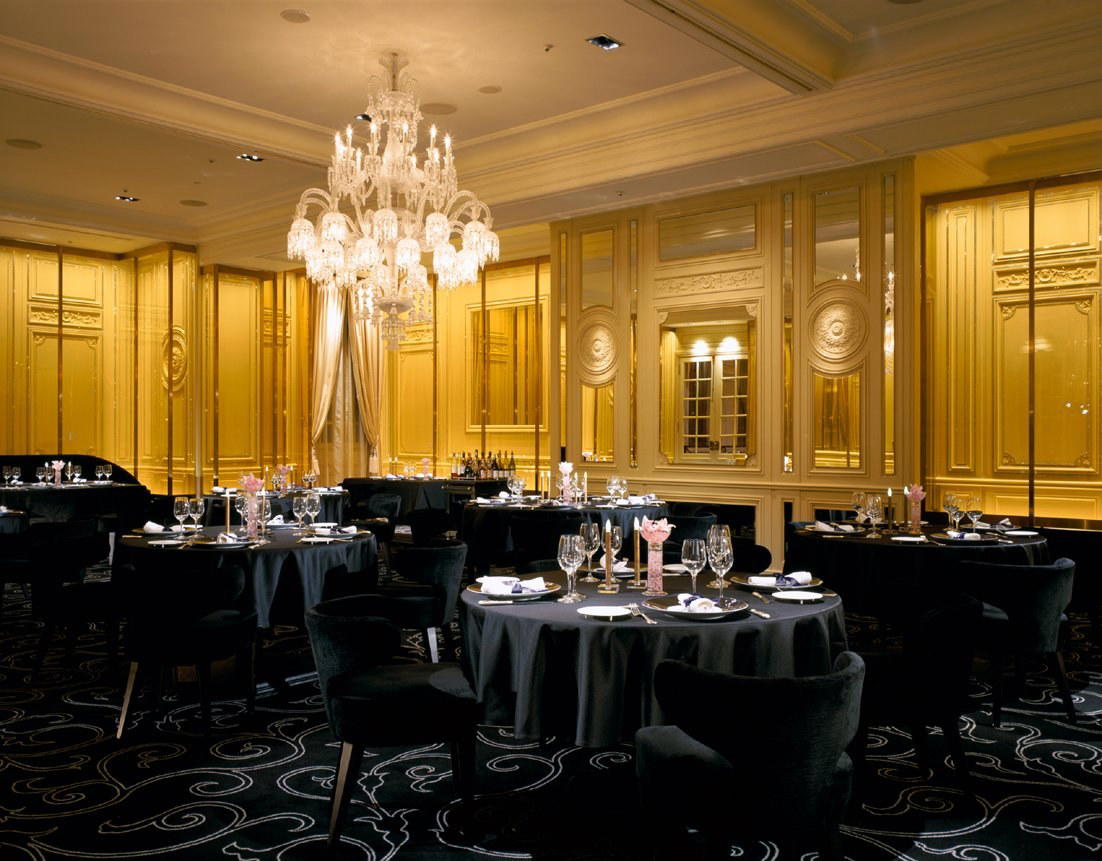
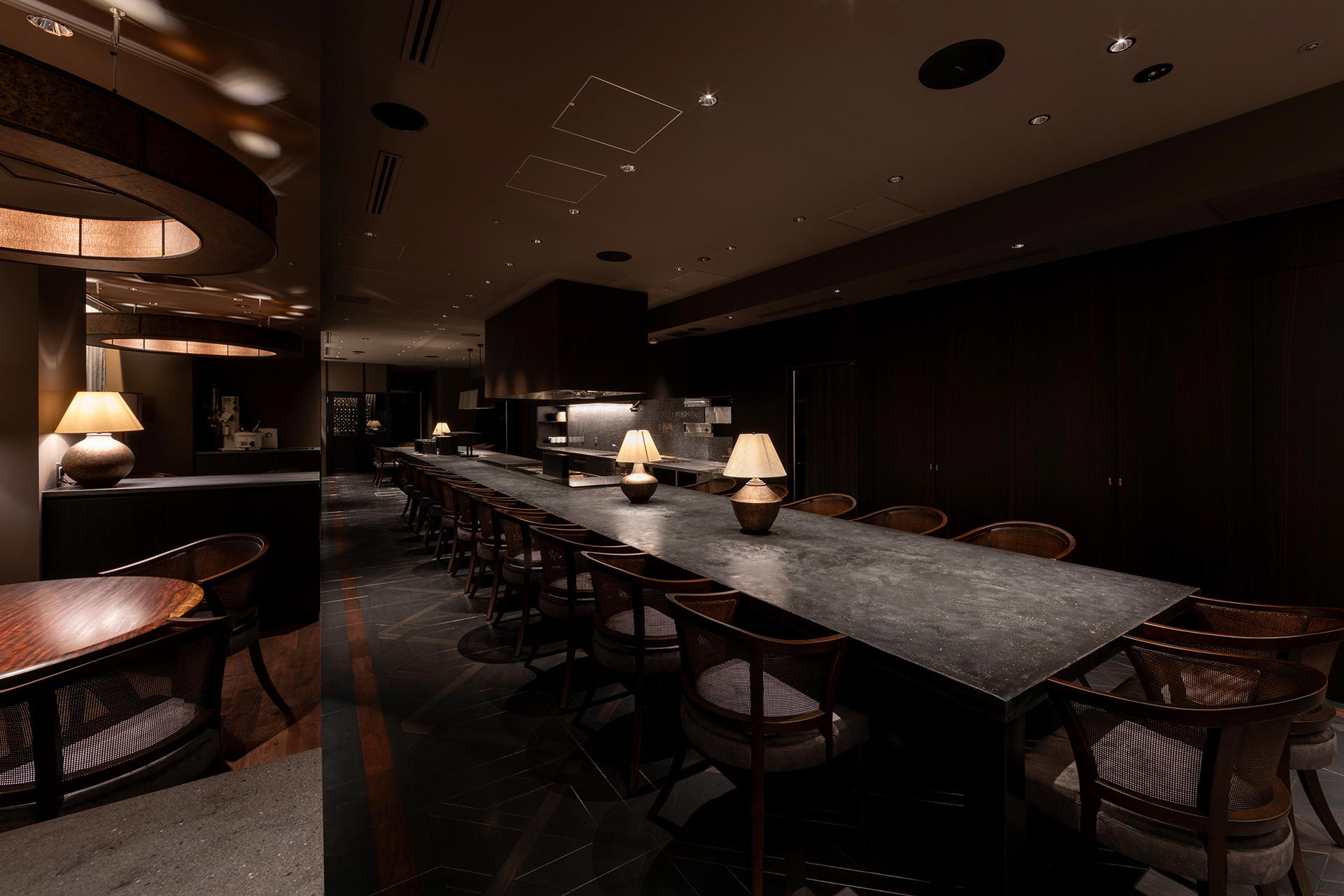
A Shoto address in Shibuya that has built a quiet, consistent record in Tokyo's French dining scene, Chez Matsuo holds an Opinionated About Dining ranking and runs a tightly scheduled service of two seatings per day. Chef Kouzo Matsuo anchors a format that fits within the longer tradition of Japan-based French cooking, where precision and restraint carry more weight than spectacle.

A Quiet Street in Shoto, and What It Tells You About Tokyo French
The residential pocket of Shoto, in Shibuya's western rise, has a particular atmosphere that separates it from the restaurant-dense corridors around Omotesando or Ebisu. Streets here are narrow and largely domestic in character, with low-slung walls, mature trees, and the occasional converted house that has been turned into something worth eating in. Arriving at Chez Matsuo, you are already inside a specific argument about what French dining in Tokyo should look like: unhurried, neighbourhood-rooted, and quietly sure of itself.
That argument has been playing out across Tokyo for decades. Japan's relationship with classical French cooking is longer and more technically rigorous than most cities outside France itself. The generation of Japanese chefs trained in Lyon, Paris, and the Rhône valley brought back not just recipes but a craft discipline, and what emerged over the following decades was a category of Tokyo French that operates with different priorities than its Western counterparts. Showmanship is low on the list. Consistency, sourcing, and seasonal attentiveness are not.
Where Chez Matsuo Sits in the French Dining Tier
Tokyo's French dining market stratifies sharply. At the apex sit three-star operations like L'Effervescence and Château Restaurant Joël Robuchon, which carry the full weight of international recognition and price accordingly. Below that tier, a denser and more interesting band of restaurants operates with tighter formats, smaller rooms, and menus that shift with the season rather than the marketing calendar. Sézanne and ESqUISSE occupy this zone from different angles, while Florilège pushes the format toward something more self-consciously ecological.
Chez Matsuo occupies a position that is less conspicuous but no less deliberate. Its Opinionated About Dining ranking has moved from a recommendation in 2023 to #440 in 2024 and #492 in 2025, a trajectory that reflects steady recognition within a peer group of evaluators who weight ingredient sourcing, kitchen coherence, and format discipline above theatrics. A Google rating of 4.6 across 291 reviews points to consistent execution at the guest-facing level. Neither figure is incidental: OAD assessors skew toward serious food professionals, and a sustained rating at 4.6 across nearly three hundred reviews in a city where diners are notably exacting carries real informational weight.
The Sustainability Thread Running Through Japanese French
The editorial angle that Tokyo's French dining scene earns most in 2025 is not about technique or lineage. It is about how seriously the better kitchens have reoriented around what they use and where it comes from. This is not a new conversation in Japan, where the concept of shun, the moment when an ingredient is at its seasonal peak, has always framed how serious cooks think about procurement. But in the French tradition applied to a Japanese context, it has taken on an additional dimension: how to honour classical structure while sourcing in ways that reflect the ecological and agrarian realities of contemporary Japan.
Kitchens at this level in Tokyo are increasingly embedded in direct relationships with specific farmers, fishers, and foragers. The logic is both ethical and culinary: ingredients handled with minimal intervention from harvest to plate behave differently in the kitchen, and the dishes that result carry a specificity of place that standardised supply chains cannot replicate. Waste reduction follows from this approach almost automatically. When you are working with an ingredient that took considerable effort to source at its ideal moment, you work with more of it, and more carefully.
The two-seating-per-day format at Chez Matsuo, twelve to one and six to eight, reinforces this orientation. That discipline constrains covers and, by extension, throughput. A kitchen running two services with defined start and end points can calibrate mise en place with precision, reducing the gap between what is prepared and what is served. It is a structural choice that quietly aligns kitchen economics with a lower-waste approach, without requiring the restaurant to announce a philosophy.
The Format and How to Use It
The operating hours are narrow by Tokyo standards, which means the planning load falls on the guest. Both lunch and dinner seatings open within a defined window: midday service runs for roughly an hour, and the evening window spans two hours. This is not the kind of restaurant that accommodates a ten o'clock arrival or a three-hour exploratory dinner in the way that some larger operations do. The format assumes punctuality and attentiveness from both sides of the pass.
For visitors comparing this to other fixed-window French experiences in the region, the contrast with more expansive formats is instructive. HAJIME in Osaka and Gion Sasaki in Kyoto operate within different culinary registers but share the same expectation of guest commitment. Across the broader Kansai and Kanto range of serious dining, the tight-window service model has become a signal of kitchen intentionality rather than a logistical limitation. Chez Matsuo reads clearly within that signal set.
Chef Kouzo Matsuo's name appears on the door and on the booking record, which in Tokyo French dining is an indicator of direct kitchen involvement rather than a branding exercise. The category of owner-chef restaurant in Japan carries a particular expectation: continuity of vision, personal accountability for every service, and a relationship between front and back of house that does not depend on layers of management. That structure matters to how the food gets made and, increasingly, to how sourcing decisions get made.
Placing Chez Matsuo in a Wider Tokyo Visit
Shoto sits a short distance from the main Shibuya retail and transport hub but registers as a different city register entirely. For visitors building a Tokyo itinerary around serious French dining, the neighbourhood offers a contrast to the more polished settings of Marunouchi or the Roppongi corridor where several higher-profile French restaurants operate. Shibuya's French options span from the commanding formality of hotel dining to the lower-profile focus of Shoto's residential streets, and Chez Matsuo falls firmly into the latter register.
Those extending their Japan itinerary beyond Tokyo might consider akordu in Nara, which applies European technique to a very different cultural and ecological context, or Goh in Fukuoka for a distinctly regional Japanese approach. Globally, the tradition Chez Matsuo operates within has clear reference points in European restaurants like Hotel de Ville Crissier in Crissier and the sustained precision of Les Amis in Singapore, the latter demonstrating how classical French cooking can embed itself with comparable seriousness in an Asian city context.
For a fuller picture of what Tokyo's dining, drinking, and hospitality scene offers across categories, see our full Tokyo restaurants guide, our full Tokyo hotels guide, our full Tokyo bars guide, our full Tokyo wineries guide, and our full Tokyo experiences guide. Within Japan, further references include 1000 in Yokohama and 6 in Okinawa for those exploring the range of serious dining across the archipelago.
Know Before You Go
- Address: 1 Chome-23-15 Shoto, Shibuya City, Tokyo 150-0046, Japan
- Hours: Monday to Sunday, 12:00–13:00 (lunch) and 18:00–20:00 (dinner)
- Chef: Kouzo Matsuo
- Cuisine: French
- Recognition: Opinionated About Dining Leading Restaurants in Japan — Ranked #492 (2025), #440 (2024), Recommended (2023)
- Google Rating: 4.6 (291 reviews)
- Booking: Advance reservation advised given the narrow two-seating format
- Neighbourhood: Shoto, Shibuya — residential, low-traffic, leading accessed on foot from Shibuya or Yoyogi-Hachiman stations
Frequently Asked Questions
What do regulars order at Chez Matsuo?
The database record for Chez Matsuo does not include confirmed signature dishes, and generating specific menu claims without a verified source would be unreliable. What the restaurant's OAD recognition and format discipline do suggest is a kitchen oriented around seasonal French technique applied to Japanese-sourced ingredients, with a menu that likely changes in step with seasonal availability rather than running fixed year-round courses. The tight service window points to a kitchen that prepares a defined set of dishes per service rather than a wide à la carte range. For current menu specifics, direct contact with the restaurant before booking is the appropriate route.
What makes Chez Matsuo worth seeking out?
The case rests on three convergent factors. First, the OAD recognition from 2023 through 2025 places it within a peer group assessed by food professionals who weight sourcing, coherence, and kitchen craft over ambience or prestige. Second, the Shoto address and narrow service format point to a restaurant operating on its own terms rather than chasing volume or visibility. Third, in a city where French cooking has been practised at high levels for several decades, a chef-owned restaurant sustaining consistent third-party recognition over multiple years in a residential neighbourhood carries the kind of credibility that does not come from one exceptional season. Among Tokyo French options, it represents a different register from the larger-platform operations, and for guests who know what they are looking for, that difference is the point.
Need a table?
Our members enjoy priority alerts and concierge-led booking support for the world's most difficult tables.
Access the Concierge