Our verdict
サングリエ sits in Meito Ward, one of Nagoya's quieter residential districts, at a remove from the city's dense dining corridors. The restaurant's name and address alone position it as a deliberate detour from the central circuit, the kind of venue that rewards advance research. Meito's dining scene favours local regulars over tourist traffic, making early reservations advisable.

Pearl is the En Primeur Club membership app, where members save venues, book tables and use the concierge.
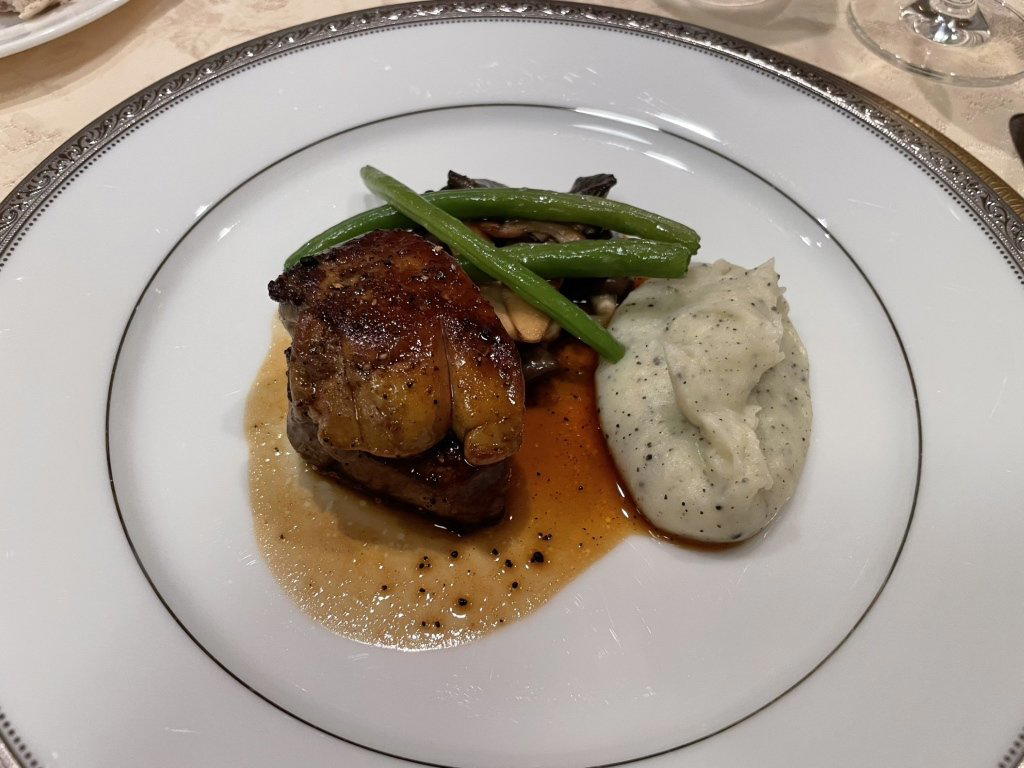
Out of the Centre, Into the Composition
Nagoya's serious dining rarely concentrates where visitors expect. While Sakae and Nagoya Station anchor the city's visible restaurant density, a different tier of establishment has long operated in the residential wards to the east and north, where rents are lower, clientele more local, and the relationship between kitchen and regular more developed. Meito Ward sits in that quieter orbit, and サングリエ, addressed at 1 Chome-166 Issha, occupies a stretch of the ward that requires intention to reach. The approach itself signals something: this is not a restaurant that depends on foot traffic or marquee visibility. In Japan's dining culture, that positioning is often deliberate, and worth reading as such.
The French word sanglier, wild boar, carries a specific culinary weight in European cooking traditions, particularly in the context of game, autumn, and the kind of cooking that takes its cues from the land rather than the season's fashion. That a restaurant in Nagoya's residential east carries this name places it, at least nominally, in a lineage of kitchens interested in produce-led or game-inflected menus.
What Menu Architecture Reveals
In Japan's mid-size cities, restaurant menus operate as compressed arguments. Unlike Tokyo, where sheer volume allows specialisation into near-infinite subcategories, a city like Nagoya demands that a serious kitchen make legible choices about what it stands for. The menus that carry the most critical weight in cities like this tend to be those built around a clear logic: a seasonal framework, a protein focus, a wine-pairing discipline, or a regional sourcing commitment. These aren't decorative choices; they determine the kitchen's competitive positioning and signal what kind of diner the restaurant is recruiting.
A name like サングリエ, in this context, suggests a menu built around specificity rather than breadth. Restaurants that signal game or European rurality in their branding tend to construct menus with fewer covers, longer preparation windows, and a higher degree of kitchen control over the sequence of a meal.
This matters in the context of Nagoya's restaurant scene, which has historically leaned toward high-throughput formats: the city's famous Atsuta Horaiken (あつた蓬莱軒 本店) and its hitsumabushi tradition are built around accessible pricing and consistent delivery at scale. Italian addresses like Bacio, cucina Wada, and Cucina Italiana Gallura demonstrate that the city sustains serious European cooking with a regular clientele. A restaurant operating under a French game-inflected name in a residential ward occupies a distinct niche within that ecosystem, closer to the specialist tier than the accessible one.
Meito Ward and the Logic of Distance
Meito Ward is primarily residential. It lacks the density of Sakae or the transit gravity of Nagoya Station, and its restaurant scene is shaped accordingly: fewer venues competing for the same tables, a higher proportion of regulars relative to walk-ins, and a dining culture that values consistency over novelty. For restaurants, this setting creates particular conditions. Without tourist overflow to fill gaps in the booking calendar, kitchens in these wards depend on earned loyalty. That tends to produce tighter menus, more personal service rhythms, and a longer-term view of the relationship between kitchen and table.
This pattern is not unique to Nagoya. Japan's regional cities frequently develop pockets of serious dining in residential or semi-commercial districts, away from the tourist corridors. Gion Sasaki in Kyoto operates within a neighbourhood logic that prioritises locality over visibility. Goh in Fukuoka similarly draws from a local base before expanding outward. The pattern holds: distance from the centre is often a marker of confidence in the kitchen's own reputation rather than a liability.
For visitors approaching サングリエ from central Nagoya, the journey into Meito is direct by subway (the Higashiyama Line connects the city centre to the ward efficiently), though the specific walk from the nearest station to Issha requires checking transit apps for the current leading route.
Situating サングリエ in a Wider Context
Nagoya sits between Osaka and Tokyo geographically and, in dining terms, occupies a position that is sometimes underestimated. Restaurants like HAJIME in Osaka and Harutaka in Tokyo represent the upper tier of Japan's formal dining recognition systems. Within Nagoya itself, the city has produced credible fine dining across European and Japanese formats, a fact reinforced by the presence of venues like Chez Kobe, which anchors the French-influenced tier.
Comparisons across Japan's regional dining scenes are instructive. akordu in Nara has demonstrated that smaller Japanese cities can sustain European fine dining at a high level of technical ambition. Similar signals come from kitchens in less-trafficked locations: 一本木 石川製 in Nanao, 朽木荘 in Takashima, and 鷹羽荘 in Nishikawa Machi all operate at a remove from major urban centres, yet sustain serious culinary programmes. The logic applies to Meito Ward as well: geography is not a constraint when the kitchen has a defined point of view.
Internationally, the contrast is worth noting. Precision-format restaurants in cities like New York, from Le Bernardin to Atomix, build their menu architectures around controlled progression and a clear tasting logic. The same instinct, applied in a Japanese regional city context, produces kitchens that are often more intimate, less visible internationally, but no less considered in their construction. Birdland in Sakai and 夕刻山乃 in Sapporo represent the same instinct applied across different Japanese cities.
For a fuller picture of where サングリエ sits within Nagoya's dining ecosystem, the EP Club Nagoya restaurants guide maps the city's serious dining across neighbourhoods and formats.
Planning a Visit
The Meito Ward address places the restaurant within reach of central Nagoya by public transit, making it a workable addition to a dining itinerary that already anchors one meal closer to the city centre.
Frequently asked questions
What should I eat at サングリエ?
What's the ideal way to book サングリエ?
What's the defining dish or idea at サングリエ?
Is サングリエ allergy-friendly?
Is サングリエ worth the price?
Does サングリエ draw on local Aichi produce in its menu?
Where It Fits
Comparable venues nearby, for context on price, style, and recognition.
| Venue | Cuisine | Price | Awards | Notes |
|---|---|---|---|---|
| サングリエThis venue (the venue you are viewing) | Classic French | $50–100 | Not listed | Not listed |
| LE PIGNON | Seasonal French fine dining in a traditional Japanese courtyard house | $100–150 | Tabelog 100 #23 | Higashi |
| ル・レストラン シンジ コガ | Modern French Fine Dining | $150–200 | Not listed | Naka |
| Reconnaissance | Natural French, fully customized course dining | Not listed | Tabelog 100 #100 | Naka |
| restaurant.m | Modern French | Not listed | Tabelog 100 #85 | Naka |
| Tempura Niitome (天風良 にい留) | Modern Tempura Omakase | Not listed | Not listed | Naka |
Continue exploring
More in Nagoya
Restaurants in Nagoya
All restaurants in Nagoya →


Details
- Elegant
- Classic
- Intimate
- Date Night
- Special Occasion
- Standalone
- A La Carte
Current opening hours
- Monday
- 6–8:30 PM
- Tuesday
- Closed
- Wednesday
- 6–8:30 PM
- Thursday
- 6–8:30 PM
- Friday
- 6–8:30 PM
- Saturday
- 6–8:30 PM
- Sunday
- 6–8:30 PM
Hours can change for holidays and private events. Last verified .
高級感ある洋館の建物で正統派フレンチの雰囲気