
50 Top Pizza Asia-Pacific #8 · Tabelog 100 #15
Our verdict
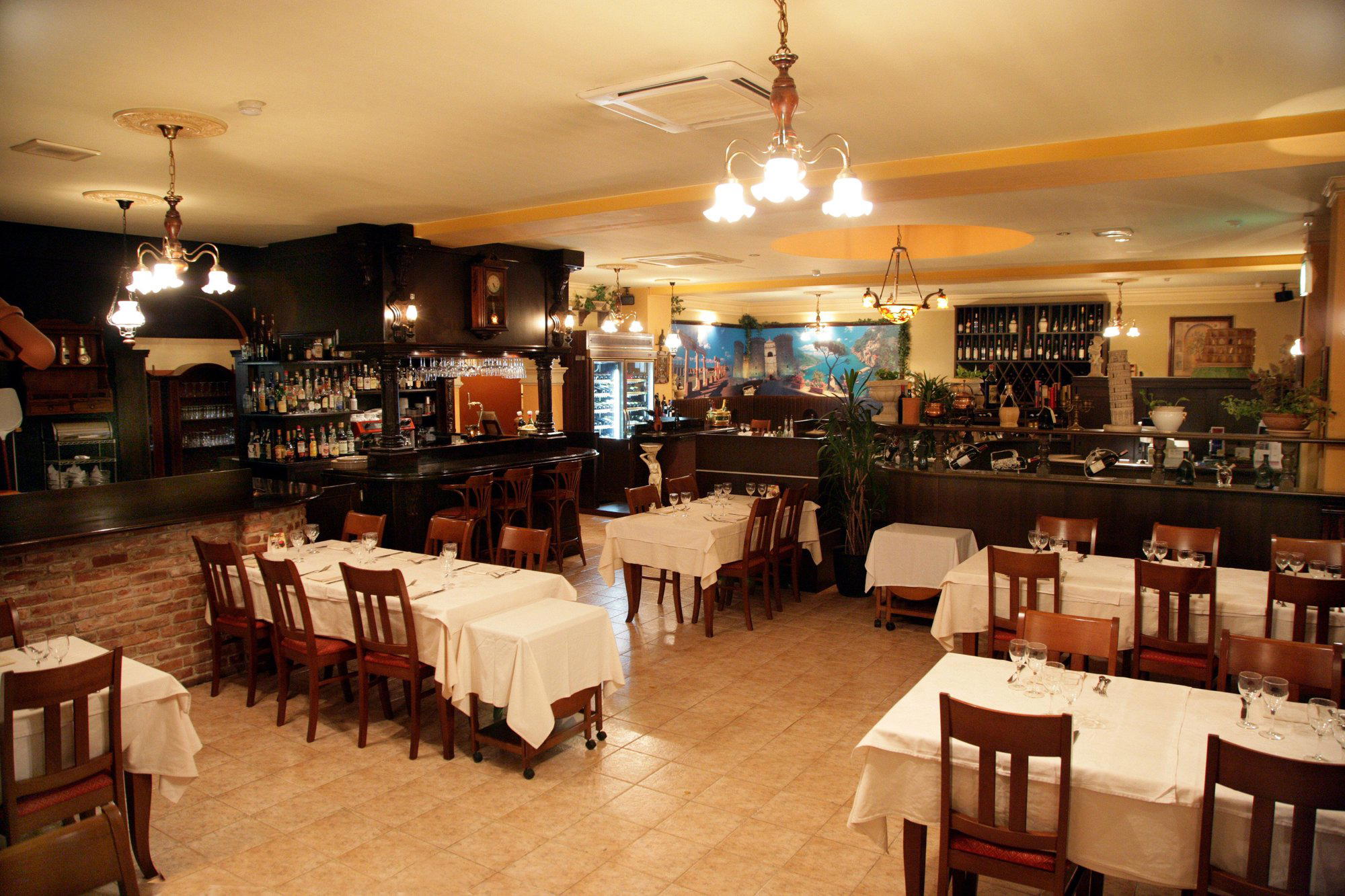
A fixture in Nagoya's Osu shopping arcade since the early 2010s, Pizzeria Braceria Cesari is anchored by pizzaiolo Pasquale Makishima, winner of the world pizza championship in 2009. The menu spans Neapolitan-style red and white pizzas topped with Italian ingredients alongside grilled meats and a wine list broad enough to cover the full spread.

Pearl is the En Primeur Club membership app, where members save venues, book tables and use the concierge.
Where Osu's Street Energy Meets a Serious Pizza Counter
Osu Kannon's covered shopping arcade runs for several hundred metres through Naka Ward, threading past secondhand electronics, vintage clothing, and street food stalls in a compressed corridor of commercial Nagoya. It is not the neighbourhood you would expect to find a long-running serious pizza operation. That contrast is part of what has made Pizzeria Braceria Cesari a reference point in the city. The arcade's foot traffic gives the restaurant a visibility that most Italian addresses in Japan do not have, and over the course of more than a decade it has converted that exposure into something closer to a civic institution.
The Competition That Shaped the Counter
Italian restaurants in Japan divide into two broad categories: those built around a Japanese chef who trained in Italy and brought a particular regional sensibility home, and those organised around a concept, a neighbourhood, or a commercial format. Cesari sits in the first category, and the credential at the centre of it is specific. Pasquale Makishima, the pizzaiolo behind the operation, won first prize at the pizzaiuoli world championship in 2009. It is a different credentialing mechanism from the Michelin or 50 Best circuits, and it appeals to a different kind of regularity. For a guest who wants to understand where the cooking comes from, the 2009 championship is the most useful piece of context available.
Competitive pizza circuits have historically been dominated by Neapolitan and southern Italian practitioners. A Japanese winner entering that system and taking first place in 2009 was a result that drew attention across the pizza trade, and it is the foundation on which the subsequent Nagoya operation, and, by the venue's own account, a broader presence across Japan, was built. In the years since, Makishima has expanded, and Cesari is described as the anchor of what has become a multi-site operation. That kind of growth from a single championship-backed counter is a pattern familiar from top-tier ramen and soba operations in Japan, where a competition credential becomes the proof point around which a scalable format is organised.
Pizza as the Anchor, Grilled Meat as the Counterweight
The menu at Cesari operates from a clear hierarchy. Pizza occupies the centre. Both red and white variants are available, and the toppings draw from Italian sourced ingredients rather than local substitutions. That commitment to Italian supply chains for key components is a meaningful distinction in the Japanese Italian category, where ingredient sourcing varies widely and local adaptation is common. The inclusion of a full grilled-meat section alongside the pizza programme is a structural choice that separates Cesari from a pure pizzeria format. In Italy, the braceria designation signals exactly this: a grill-led operation, not a pizza-only counter. The combination in Nagoya means the kitchen is running two technically distinct cooking disciplines simultaneously, which expands the audience without diluting the pizza focus.
The wine list is described as broad enough to cover different occasions rather than curated around a narrow selection of Italian producers. For a venue in a high-traffic arcade setting, that range is a practical asset: it allows the restaurant to function as a dinner destination for a table ordering grilled meats and a bottle as comfortably as it serves a quick pizza and glass combination. Nagoya has a number of Italian addresses, including Cucina Italiana Gallura, which operates in a different register, but few anchored by a competition-specific credential at this level of visibility.
Osu as a Dining Neighbourhood
Nagoya's dining scene receives less outside attention than those of Tokyo, Osaka, or Kyoto, but the city supports a range of serious cooking across multiple traditions. Hachisen represents the Kyoto cuisine end of the spectrum, while Hama Gen and Hanaichi operate in the sushi and Japanese categories. French Ryori Kochuten covers the French end. Within that context, Cesari occupies a position that none of those addresses covers: a pizza-centred Italian operation with an internationally verified technical credential, placed inside the city's most-trafficked shopping district.
The Osu arcade location is relevant not just as a foot-traffic mechanism but as a cultural signal. Osu attracts a cross-generational crowd, from students visiting the retro game shops to older residents shopping at the fabric stores that have been there for decades. A restaurant that has run for more than ten years in that environment has survived the normal churn of arcade retail, which is considerable. That longevity, in a setting where turnover is high, is its own form of evidence.
For visitors building a broader itinerary across Japanese cities, the comparison set shifts upward significantly at other stops. Harutaka in Tokyo, HAJIME in Osaka, Gion Sasaki in Kyoto, akordu in Nara, and Goh in Fukuoka each represent the top tier of their respective cities and categories. Cesari is not competing in that register. It is a neighbourhood anchor with a specific craft credential, and it performs that role with more consistency than most Italian operations of comparable positioning.
Planning Your Visit
Cesari is located at 3 Chome-36-44 Osu, Naka Ward, placing it within the main stretch of the Osu Kannon arcade, which is walkable from Osu Kannon Station on the Tsurumai Line. Current hours, reservations, and pricing are best confirmed directly before visiting, as the venue does not publish a website or phone number through standard channels. Given its decade-plus tenure in a high-visibility location, walk-in access during off-peak hours is plausible, but weekend evenings in a popular arcade location typically warrant advance planning. The full scope of what Nagoya offers across categories is covered in our full Nagoya restaurants guide, alongside our Nagoya hotels guide, bars guide, wineries guide, and experiences guide.
Frequently asked questions
Who runs the kitchen at Pizzeria Braceria CESARI!!?
The chef associated with Pizzeria Braceria CESARI!! is Pasquale Makishima.
What's Pizzeria Braceria CESARI!! known for in terms of accolades?
Pizzeria Braceria CESARI!! has received recognition including: Located in the most famous shopping arcade in Nagoya, the pizzeria grill Cesari is now an institution dating back to the second decade of the 2000s. The pizzaiolo Makishima (known as Pasquale to his friends) made a name for himself when he ….
What's the must-try dish at Pizzeria Braceria CESARI!!?
Pizza is the clear focus of the menu, and that is where Pasquale Makishima's 2009 world pizzaioli championship title carries the most weight. Both red and white variants are on offer, topped with Italian-sourced ingredients. The grilled meat dishes serve as a strong secondary draw for those who want to move beyond the pizza counter.
What's Pizzeria Braceria CESARI!!'s location?
Pizzeria Braceria CESARI!! is located at 3 Chome-36-44 Osu, Naka Ward, Nagoya, Aichi 460-0011, Japan, Nagoya.
Is Pizzeria Braceria CESARI!! reservation-only?
Cesari sits inside the Osu Kannon shopping arcade at 3 Chome-36-44 Osu, Naka Ward, a high-footfall location that suggests walk-ins are part of the operation. That said, the venue has built an institutional reputation in Nagoya since the early 2010s, so booking ahead during peak hours or weekends is advisable if you want to avoid a wait.
Cost Snapshot
| Venue | Cuisine | Price | Awards |
|---|---|---|---|
| Pizzeria Braceria CESARI!!This venue (the venue you are viewing) | Neapolitan Pizza | $20–30 | 50 Top Pizza Asia-Pacific #8 · Tabelog 100 #15 |
| Cucina Italiana Gallura | Authentic Italian with Local Seafood | $100–150 | Tabelog Bronze #50 |
| Hachisen | Kyoto-Style Kaiseki | $200–300 | Tabelog Bronze #91 |
| il AOYAMA | Japanese-Inflected Italian Cuisine | $300–500 | Tabelog Silver #42 |
| Reminiscence | Modern French with Japanese influences | $150–200 | La Liste Top Restaurants · Tabelog Silver #108 |
| Tokusen | Premium Yakiniku with Rare Wagyu | $50–100 | Not listed |
Recognition history
Dated appearances from independent guides and award organizations, with the underlying list record or original source where available.
50 Top Pizza Asia-Pacific #8
50 Top Pizza
Tabelog 100 #15 · No. 15
Tabelog · Tabelog 100 - Pizza - 2025
Full recognition history (4 entries)
50 Top Pizza World #45
50 Top Pizza
50 Top Pizza World Best Pizza #66
50 Top Pizza