
In Roppongi's basement-level French dining scene, Bouquet de France occupies a specific and underserved niche: regional French cooking rooted in the countryside rather than the palace. With a Michelin Plate in both 2024 and 2025, it delivers cassoulet, baeckeoffe, and house charcuterie in an atmosphere that reads more Languedoc farmhouse than Tokyo fine dining.
Pearl is the En Primeur Club membership app — saves, bookings, and concierge access live there. Same editors, same standards.
- Address
- Japan, 〒106-0032 Tokyo, Minato City, Roppongi, 7 Chome−10−3 小林ビル B1階
- Phone
- +81 3-3497-1488
- Website
- bouquetmme.exblog.jp
- Directions
- Get directions
 Saves & bookings on Pearl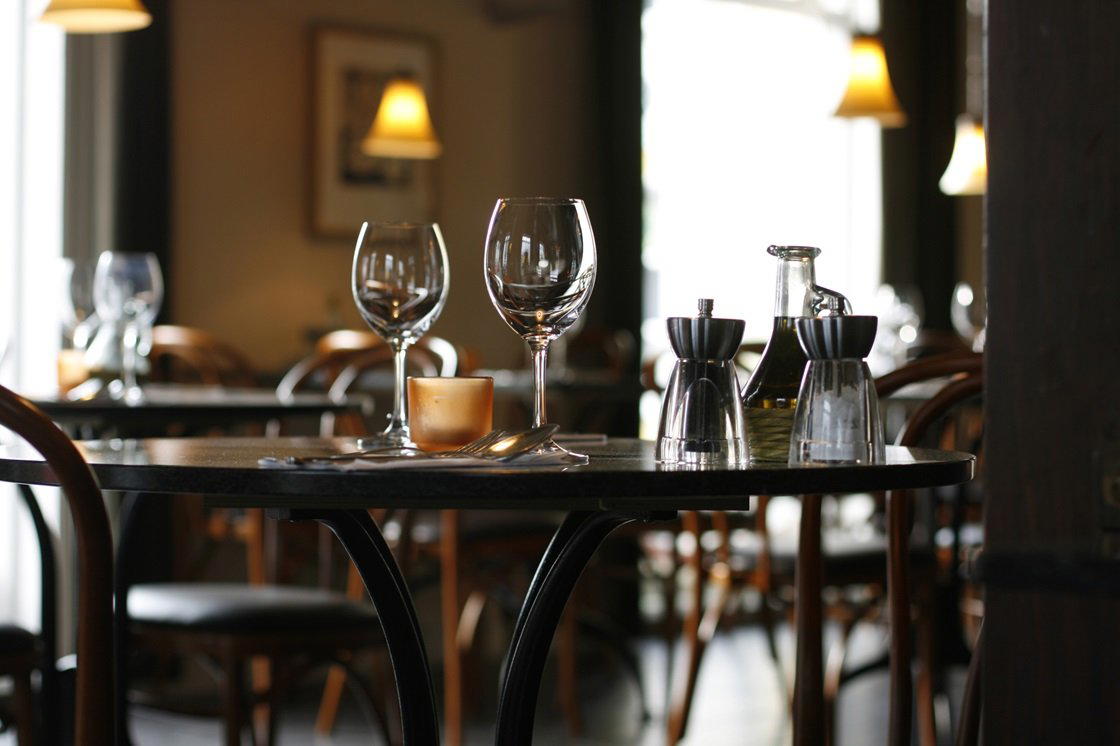
Basement Level, Rural France
Tokyo's French dining tier has long been dominated by the haute cuisine model: grand tasting menus, refined plating, and cooking that references Paris or Burgundy at their most formal. Roppongi alone contains some of the city's most decorated French tables, including the three-Michelin-starred L'Effervescence and the technically exacting ESqUISSE. Against that backdrop, a basement room on 7-chome Roppongi that foregrounds Languedoc cassoulet and Alsatian baeckeoffe represents a deliberate counter-position. Bouquet de France is not competing in the tasting-menu arms race. It is making a more specific argument: that regional cooking deserves the center of the table.
Descend into the Kobayashi Building's lower level and the shift is immediate. The room reads as warm and close rather than ceremonial, which is consistent with the cooking philosophy at work here. Regional French food, when done honestly, carries that register naturally. Cassoulet is not a dish that asks for white-glove service. Baeckeoffe, the slow-cooked Alsatian casserole of meats and root vegetables, is a dish built for communal eating in cold weather. Proprietress Yoko Harada's approach to hospitality reinforces that tone: guest accounts consistently describe the atmosphere as cheerful and homelike, a word combination that rarely appears in descriptions of Roppongi dining.
The Logic of the Menu
Multi-course French dining in Tokyo frequently operates as an exercise in chef self-expression, with each course signalling technique, sourcing philosophy, or cultural translation. The prix fixe experience at a restaurant like Sézanne or Florilège is curated around a point of view that belongs to the kitchen. Bouquet de France is working from a different logic. The menu is curated around a geography: rural France, its specific provinces, their specific dishes, their specific preservation traditions.
That curatorial frame shapes the meal from the start. Charcuterie, in the form of pork pâtés and house sausages, appears not as an amuse or a nod to French tradition but as a substantive expression of how French countryside food actually works. In Languedoc, in Alsace, in Périgord, charcuterie is not a prelude. It is a cultural statement about what a region values and how it treats the whole animal. Serving it with that weight, rather than as an elegant nibble, positions the meal differently from the outset.
The cassoulet itself is a useful test case for how seriously a kitchen takes regional cooking. A loose interpretation, made with duck confit sourced from a wholesaler and beans that haven't been cooked down to the right consistency, is easy to spot. The real version requires time and attention to proportion. The same holds for baeckeoffe, where the layering of meats (typically lamb, pork, and beef) with potatoes and aromatics, then sealed and slow-cooked, produces a result that can't be rushed without losing its character. That Bouquet de France has built its identity around dishes with this level of technical demand, rather than opting for more forgiving showpiece French classics, says something about its commitment to the source material.
Where It Sits in Tokyo's French Scene
Tokyo's French restaurant scene operates across a wide price and ambition range. At the leading end, Château Restaurant Joël Robuchon and L'Effervescence represent multi-starred formal dining with price points to match. The restaurant carries a ¥¥¥ price designation, which places it in a mid-to-upper tier below the ¥¥¥¥ tasting-menu bracket. That positioning is significant: it suggests a meal that requires commitment without the full financial outlay of a three-Michelin-star evening.
The Michelin Plate recognition in 2024 and 2025 signals consistency at a useful level. The Plate designation does not carry the prestige of a star, but it does represent Michelin's acknowledgment of good cooking at a consistent level. For a restaurant operating in a niche as specific as regional French bistro cooking in Tokyo, consecutive Plate recognition suggests the kitchen is maintaining its standard rather than cycling through phases.
For comparison, the broader Japanese dining scene at this price tier offers significant competition from French-inflected tables elsewhere in the country. HAJIME in Osaka and akordu in Nara both work at the intersection of French technique and Japanese sensibility, though in different registers. The restaurant's distinction within that broader competitive frame is its refusal to hybridise. This is French regional cooking without a Japanese inflection, which in Tokyo's current French dining scene is a more unusual position than it sounds.
For those exploring French dining traditions across borders, the comparison extends internationally. Hotel de Ville Crissier in Switzerland and Les Amis in Singapore each represent different approaches to French cuisine outside France, both operating at the formal end of the spectrum. The restaurant occupies the opposite pole of that conversation.
Planning Your Visit
Roppongi has a wide range of dining options across formats and price points, covered in our full Tokyo restaurants guide. For broader planning in the city, including accommodation and nightlife, see our full Tokyo hotels guide, our full Tokyo bars guide, and our full Tokyo experiences guide. For wine-focused visits, our full Tokyo wineries guide covers the city's growing natural wine and import scene. Beyond Tokyo, regional French-influenced dining can be found at Gion Sasaki in Kyoto, Goh in Fukuoka, 1000 in Yokohama, and 6 in Okinawa.
Know Before You Go
- Address: 〒106-0032 Tokyo, Minato City, Roppongi, 7 Chome-10-3 Kobayashi Building B1
- Price range: ¥¥¥ (mid-to-upper tier; below ¥¥¥¥ tasting-menu bracket)
- Awards: Michelin Plate 2024, Michelin Plate 2025
- Guest rating: 4.8 on Google (50 reviews)
- Cuisine focus: Regional French, with emphasis on Languedoc and Alsatian dishes
- Atmosphere: Basement room; homelike and informal relative to Roppongi norms
- Booking: Contact the restaurant directly; no booking platform confirmed
At a Glance
Comparable venues nearby, for context on price, style, and recognition.
Recognition history
Dated appearances from independent guides and award organizations, with the underlying list record or original source where available.
Michelin Plate
Michelin
Michelin Plate
Michelin
Michelin Plate
Michelin












At a Glance
- Cozy
- Elegant
- Classic
- Intimate
- Sophisticated
- Date Night
- Special Occasion
- Standalone
Current opening hours
- Monday
- 12–1:30 PM, 6–9 PM
- Tuesday
- Closed
- Wednesday
- 12–1:30 PM, 6–9 PM
- Thursday
- 12–1:30 PM, 6–9 PM
- Friday
- 12–1:30 PM, 6–9 PM
- Saturday
- 12–1:30 PM, 6–9 PM
- Sunday
- 12–1:30 PM, 6–9 PM
Hours can change for holidays and private events. Last verified .
Cozy and welcoming classical interior with relaxing space, soft lighting, and a warm, hospitable atmosphere.