
A Michelin Plate-recognised French bistro in Ebisu, ABBESSES takes its name from the Montmartre métro station and translates that reference into a shareable à la carte format with dishes including mackerel marinated in vinegar, roast wagyu, and a freshly cooked truffle soufflé omelette. Damask-patterned walls, red bench seating, and antique furnishings set the register: Paris circa several decades ago, interpreted in one of Tokyo's more relaxed dining neighbourhoods.
Pearl is the En Primeur Club membership app — saves, bookings, and concierge access live there. Same editors, same standards.
- Address
- Japan, 〒150-0013 Tokyo, Shibuya, Ebisu, 1 Chome−26−17 阿部ビル
- Phone
- +81 3-6686-4773
- Directions
- Get directions
 Saves & bookings on Pearl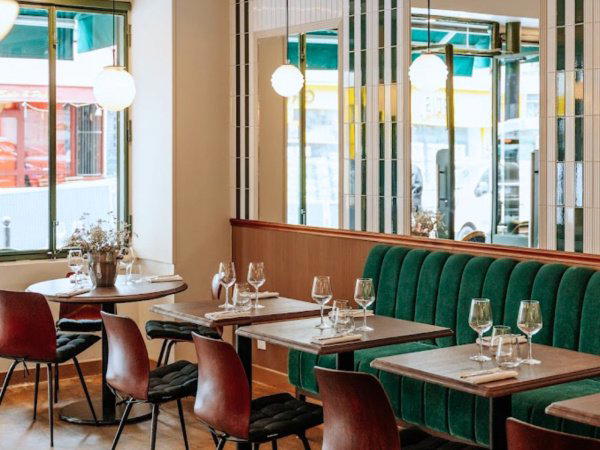
Paris in Ebisu: The Bistro Aesthetic in Tokyo's French Dining Scene
ABBESSES is a Parisian Bistro in Ebisu, Tokyo, with a ¥150 per person price point. Tokyo's French restaurant tier is unusually wide. At the leading, counters like L'Effervescence, Sézanne, and ESqUISSE operate at three and two Michelin stars with tasting-menu formats and price points that position them against the city's most serious dining. Below that, a smaller and less discussed cohort does something different: it takes the bistro format seriously. Not as a casual fallback, but as a considered register with its own set of disciplines around cooking technique, room atmosphere, and how a menu is meant to be shared. ABBESSES in Ebisu sits in that second cohort, and the distinction is worth understanding before you arrive.
The name comes from the Abbesses station on the Paris Métro, the deepest station in the network and the gateway to Montmartre, a neighbourhood associated historically with artists, neighbourhood restaurants, and an idea of Paris that resists the formal and the grand. That reference isn't incidental decoration. It frames everything about how the room is intended to feel and how the food is meant to be ordered.
The Room as Argument
Walk into ABBESSES and the design language is immediate and specific. Damask patterns cover the walls, red bench seating runs along the perimeter, and the furnishings lean antique rather than modern. The effect conjures a bistro from an earlier era of French dining, the kind of room that existed before restaurants began treating atmosphere as a branding exercise. In Tokyo, where French cooking is often delivered through either formal tasting-menu precision or loud brasserie formats, this register occupies a distinct position. The physical environment here is making an argument about what French dining should feel like at this price tier: settled, convivial, and lived-in rather than engineered.
That argument extends to how the menu is structured. À la carte items are designed for sharing, which shifts the dynamic of the meal away from individual progression and toward the table as a collective unit. This is closer to how a neighbourhood bistro in Paris actually functions than to the sequential logic of a tasting menu, and it requires a different kind of attention from the kitchen: dishes need to hold up to the table's own timing rather than being delivered in a fixed arc.
What the Kitchen Sends Out
ABBESSES has held Michelin Plate recognition in both 2024 and 2025, a signal of consistent cooking quality rather than culinary ambition at the level of, say, Florilège or Château Restaurant Joël Robuchon. The Plate designation sits below Michelin stars in the hierarchy, but in the context of Tokyo's density of French restaurants, it still represents a meaningful quality floor. It indicates that inspectors found the cooking to be consistently competent and worth attention, without necessarily making claims about innovation or transcendence.
The dishes that have become associated with the restaurant, mackerel marinated in vinegar, roast wagyu, and the truffle soufflé omelette, reflect a sensibility drawn from classical French technique applied to ingredients with strong Japanese provenance. Mackerel prepared with vinegar is a method that appears in both French and Japanese culinary traditions; its presence here suggests a kitchen comfortable with overlap rather than one trying to force a fusion statement. Wagyu served roasted, rather than in the raw or lightly seared preparations more common in Japanese-led restaurants, positions the ingredient inside a French cooking logic. The truffle soufflé omelette is the item that most clearly signals the kitchen's classical grounding: an omelette cooked to order with truffle and presented immediately, relying on timing and heat discipline rather than elaborate plating.
4 across 175 reviews suggests consistent satisfaction rather than the polarised responses that sometimes accompany more experimental restaurants. At the ¥¥ price tier, ABBESSES positions itself as accessible relative to Tokyo's French fine dining ceiling, which makes it a different kind of decision than booking a table at a starred establishment.
Where ABBESSES Sits in the Broader Picture
French cooking in Japan has a longer and more seriously developed tradition than in almost any other non-European country. Tokyo's French restaurants have absorbed Michelin attention, trained under French chefs of considerable reputation, and developed their own interpretive styles over decades. The bistro format occupies a specific and sometimes undervalued position in that tradition: it preserves the sociable, à la carte, sharing-oriented character of French neighbourhood dining that tasting-menu culture has largely displaced at the upper end. For diners who find the structured progression of a tasting menu at a venue like L'Effervescence or ESqUISSE too formal for a given evening, a well-executed bistro offers a genuinely different relationship with the meal.
Across Japan, French cooking takes different shapes by city. HAJIME in Osaka and Gion Sasaki in Kyoto represent the more ceremonial end of Japanese fine dining, while venues like akordu in Nara and Goh in Fukuoka demonstrate how European technique gets adapted to regional Japanese ingredients and contexts. In that spectrum, ABBESSES represents something more specific: a deliberate attempt to preserve a Parisian bistro atmosphere within a Tokyo neighbourhood setting, without reaching toward the fusion or the experimental. Internationally, the bistro-serious format appears at places like Hotel de Ville Crissier in Crissier and Les Amis in Singapore, where classical French rigour is the point rather than the starting point for something else.
Planning Your Visit
ABBESSES is located in Ebisu, one of Tokyo's more composed dining neighbourhoods, at 1 Chome-26-17 in the Abe Building in Shibuya. The ¥¥ price positioning means the restaurant operates in a tier accessible to most visitors who are not specifically seeking Tokyo's tasting-menu circuit. The à la carte and sharing format means a group of two or more can order broadly and calibrate the meal to appetite and interest rather than following a fixed sequence. The truffle soufflé omelette, given that it is cooked to order and served immediately, is the kind of dish that requires coordination with the rest of your order. The address places it in Ebisu, Shibuya.
What Regulars Order
What do regulars order at ABBESSES?
The dishes that have emerged as consistently popular are the mackerel marinated in vinegar, roast wagyu, and the truffle soufflé omelette. The omelette in particular is worth ordering early in the meal so the kitchen can time its preparation without it becoming an afterthought at the end of a long shared-plate session. The à la carte sharing format rewards a table willing to order across several sections rather than treating each dish as a single-person portion; the mackerel and wagyu work well alongside each other as complementary preparations, with the omelette serving as a warm, textured counterpoint.
Cuisine Lens
Comparable venues nearby, for context on price, style, and recognition.
| Venue | Cuisine | Price | Awards | Notes |
|---|---|---|---|---|
| ABBESSESThis venue — the venue you are viewing | Parisian Bistro | $$$ | Michelin Plate | Not listed |
| à table | Classic French Bistro | $$$ | Michelin Plate | Bunkyō |
| L'AMITIE | French Bistro | $$$ | Bib Gourmand | Shinjuku |
| Jfree | Modern French-Japanese Fusion | $$$ | Michelin Plate | Shinjuku |
| Ma Poule | Jura Regional French | $$$ | Bib Gourmand | Bunkyō |
| Äta | French Seafood Bistro | $$$ | Michelin Plate | Shibuya |
Recognition history
Dated appearances from independent guides and award organizations, with the underlying list record or original source where available.
Michelin Plate
Michelin
Michelin Plate
Michelin
Michelin Plate
Michelin













At a Glance
- Romantic
- Elegant
- Cozy
- Intimate
- Sophisticated
- Date Night
- Special Occasion
- Celebration
- Open Kitchen
- Sake Program
Current opening hours
- Monday
- Closed
- Tuesday
- Closed
- Wednesday
- 6–9 PM
- Thursday
- 6–9 PM
- Friday
- 6–9 PM
- Saturday
- 4–9 PM
- Sunday
- Closed
Hours can change for holidays and private events. Last verified .
Damask-patterned walls, crimson banquettes, and antique furnishings evoke the quiet elegance of a bygone Parisian bistro with soft lighting and intimate seating.