

Michelin Plate
Our verdict
PATH in Tomigaya operates as a French-inflected café by day and an intimate dinner space by night, earning a Michelin Plate in both 2024 and 2025 alongside consistent recognition from Opinionated About Dining's casual Japan rankings. Under chef Taichi Hara, the kitchen follows a market-driven approach that shifts with available produce, placing PATH among Shibuya's most closely watched neighbourhood dining addresses at the ¥¥¥ price tier.

Pearl is the En Primeur Club membership app, where members save venues, book tables and use the concierge.
The menu
What to order
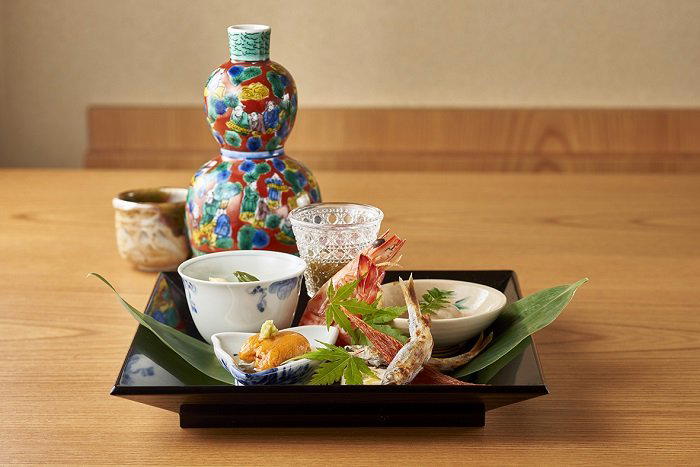
- Dutch Pancake with Prosciutto and Burrata
- Homemade Ham & Camembert Sandwich
- Croissants
- Meringue Cube Dessert
Tomigaya's Market Table: How PATH Fits Into Tokyo's Neighbourhood Dining Shift
Tokyo's dining conversation is dominated by omakase counters, kaiseki rooms, and the kind of formal French kitchens where jackets are expected and reservation windows stretch to six months. But a quieter movement has been building in the city's residential pockets, particularly around Tomigaya and Yoyogi-Uehara, where a tighter, more produce-led style of cooking has taken hold. These are not destination restaurants in the traditional sense. They are neighbourhood addresses that earn their following through consistency, sourcing discipline, and a refusal to separate morning service from evening ambition. PATH, on a low-key stretch of Tomigaya's backstreets, belongs to that category and has held its position there for several consecutive years.
The dual-format structure, café sessions from 8 am on most days, dinner from 6 pm, is a structural choice that says something about how chef Taichi Hara and the team understand cooking. In markets where seasonal and daily supply dictates what is available, a kitchen that runs two services must remain genuinely flexible. The café menu and the evening menu are not parallel tracks running independently; they draw from the same sourcing decisions made at the beginning of each week, which means the morning pastry counter and the evening plate share a logic. This kind of integration is more common in French provincial cooking than in Tokyo's more rigidly categorised restaurant scene, and it gives PATH a character that does not map cleanly onto the standard tier system.
Rankings, Plates, and What the Recognition Record Actually Signals
PATH holds a Michelin Plate for both 2024 and 2025, a designation that confirms technical competence without the star weighting that shapes expectations at venues like L'Effervescence or Sézanne. The Plate signals a kitchen operating at a reliable level within its category, and at ¥¥¥, sitting below the ¥¥¥¥ tier occupied by those formal French addresses, it positions PATH as a serious but accessible option within Tokyo's French-influenced dining range.
The Opinionated About Dining record adds a useful dimension. PATH ranked 16th in OAD's Casual Japan list in 2023, moved to 39th in 2024, and sits at 49th in 2025. A ranking decline of this kind across three years on a peer-voted survey does not necessarily signal a drop in quality; it can reflect a category becoming more competitive as more kitchens enter the casual fine-dining space. What the three consecutive appearances confirm is sustained recognition: the kitchen has remained on the radar of the survey's contributor network for three full cycles, which in a city with Tokyo's depth of dining options is a meaningful signal of consistency. For context, innovative French addresses like Crony occupy an adjacent space in Tokyo's contemporary dining conversation, though at a different price and format register.
That score, drawn from a much broader audience than OAD's contributor network, suggests PATH performs consistently for a general dining public as well as for the specialist critics who dominate the ranking surveys.
The Market-Driven Kitchen: What a Daily-Changing Approach Requires
French cooking's relationship with seasonal markets is foundational, from the classic marché tradition that structured provincial kitchens for centuries to the contemporary bistronomie movement that reconnected urban chefs with short supply chains. PATH operates within that tradition but applies it inside a Japanese context, where producer relationships and seasonal signalling tend to be handled with particular precision. The result is a kitchen that does not publish fixed menus in the conventional sense. What arrives on the plate reflects what was available, what was in leading condition, and what made sense in combination on that specific day.
This approach carries logistical implications for the diner. A visit in spring will not replicate a visit in autumn, and a Thursday dinner will not necessarily mirror a Wednesday lunch. For diners accustomed to previewing menus online before booking, PATH asks for a different kind of trust. That trust is justified by the recognition record: three years of consistent critical attention indicate that the daily flexibility serves quality rather than obscuring inconsistency.
The café-to-dinner arc also means PATH functions differently depending on when you visit. Morning and early afternoon sessions lean toward the kind of French-influenced café cooking, pastry, coffee, lighter preparations, that has become a small but defined niche in Tokyo's daytime food culture. Evening sessions shift toward a more composed, course-led format. Both operate under the same sourcing logic, which is what gives the address its coherence across the day.
Where PATH Sits in the Broader Tokyo Picture
Tokyo's French dining scene covers a broad range. At the formal end, multi-starred kitchens operate within a clear Michelin hierarchy and price accordingly. The city's kaiseki tradition, represented by addresses like RyuGin, follows a parallel structure. At the other end, the casual French-influenced café sector has expanded significantly over the past decade, partly driven by chefs returning from European training and partly by a shift in Tokyo dining culture toward less ceremonial formats.
PATH occupies a middle position in that picture: more technically ambitious than the standard café-bistro, less formal than the starred houses, and more neighbourhood-specific in character than either. Its Tomigaya address matters here. The area around Yoyogi Park has developed a concentration of independent food addresses that draw a mixed audience of local residents, food professionals, and visitors who have done enough research to look beyond the Shinjuku and Ginza circuits. For the diner building a Tokyo itinerary that goes deeper than the headline addresses, PATH represents a specific kind of access: a kitchen with credentials operating at a price point that does not require the commitment of a ¥¥¥¥ counter. Those planning a broader Japan trip may also want to consider similarly approach-driven kitchens elsewhere, including akordu in Nara, Goh in Fukuoka, or HAJIME in Osaka for a different register of ambition.
For high-precision sushi on the same Tokyo trip, Harutaka operates at the ¥¥¥¥ level in Ginza and requires advance planning. For dining intelligence beyond restaurants, our Tokyo bars guide, hotels guide, experiences guide, and wineries guide cover the broader city in the same depth. The full Tokyo restaurants guide maps the complete picture, from neighbourhood addresses like PATH through to the formal counters at the top of the city's price tiers. Internationally, diners who appreciate the discipline of a market-driven French kitchen may find useful comparison in how Le Bernardin in New York handles product-first sourcing at a very different scale, or in the Korean-French convergences at Atomix.
Know Before You Go
- Address: 1 Chome-44-2 A-Flat 1F, Tomigaya, Shibuya, Tokyo 〒151-0063
- Price range: ¥¥¥
- Cuisine: French-influenced café and dinner
- Chef: Taichi Hara
- Hours: Tuesday dinner only (6–10 pm); Wednesday to Sunday 8 am–1 pm and 6–10 pm; Monday closed
- Awards: Michelin Plate 2024 and 2025; OAD Casual Japan #16 (2023), #39 (2024), #49 (2025)
- Note: Menu changes according to market availability; no fixed menu is published in advance
Frequently asked questions
Does PATH work for a family meal?
PATH's ¥¥¥ pricing and neighbourhood café format make it approachable by Tokyo standards, but the evening sessions follow a composed, course-led structure that suits diners who are comfortable with an open menu and a kitchen-driven pace. For families with younger children, the morning café sessions, running 8 am to 1 pm Wednesday through Sunday, offer a more flexible entry point without the commitment of a full dinner.
What is the atmosphere like at PATH?
Tomigaya's character as a residential neighbourhood shapes PATH's register. This is not the high-gloss finish of Ginza's French houses or the theatrical precision of a destination kaiseki room. The consistent recognition from both Michelin and OAD's casual survey over three consecutive years confirms that the kitchen operates at a serious level, but the address reads as a neighbourhood place first. That combination of critical credibility and residential calm is specifically what draws the audience it draws: diners who want rigour without ceremony, at a price point that reflects the ¥¥¥ tier rather than the starred-house ¥¥¥¥ bracket.
What's the signature dish at PATH?
PATH's kitchen does not operate around fixed signature dishes in the conventional sense. The OAD recognition and Michelin Plate across multiple years point to consistency of craft at chef Taichi Hara's level, but the market-driven format means the menu shifts with what is available. This places PATH in a category of kitchens where the approach itself is the constant, not any individual preparation. Diners looking for the kind of fixed tasting menu where specific dishes can be previewed and researched in advance will find a different structure here than at formal French addresses like Sézanne or L'Effervescence. At PATH, the decision to visit is a decision to trust the sourcing logic of the day.
Price and Positioning
| Venue | Cuisine | Price | Awards | Notes |
|---|---|---|---|---|
| PATHThis venue (the venue you are viewing) | Modern French Bistro & Café | $20–30 | Michelin Plate | Not listed |
| Harutaka | Edo-Style Omakase Sushi | $200–300 | 3 Michelin Stars · World's 50 Best #76 | Sushi |
| RyuGin | Modern Kaiseki | $500+ | 3 Michelin Stars · World's 50 Best #41 | Kaiseki, Japanese |
| L'Effervescence | Modern French with Japanese Influences | $200–300 | 3 Michelin Stars · World's 50 Best #69 | French |
| HOMMAGE | Modern French with Japanese Influences | $150–200 | 2 Michelin Stars · World's 50 Best #78 | Innovtive French, French |
| MAZ | Innovative Peruvian-Japanese Fusion | $150–200 | 2 Michelin Stars · World's 50 Best #28 | Innovative |
Recognition history
Dated appearances from independent guides and award organizations, with the underlying list record or original source where available.
Michelin Plate
Michelin
Opinionated About Dining Casual in Japan Ranked #105
Opinionated About Dining
Full recognition history (6 entries)
Opinionated About Dining Casual in Japan Ranked #49
Opinionated About Dining
Michelin Plate
Michelin
Opinionated About Dining Casual in Japan Ranked #39
Opinionated About Dining
Opinionated About Dining Casual in Japan Ranked #16
Opinionated About Dining
Continue exploring
More in Tokyo
Restaurants in Tokyo
All restaurants in Tokyo →



Bars in Tokyo
All bars in Tokyo →





Details
- Cozy
- Trendy
- Bohemian
- Brunch
- Casual Hangout
- Date Night
- Solo
- Open Kitchen
- Design Destination
- Natural Wine
- Craft Cocktails
- Natural Wine
- Local Sourcing
- A La Carte
- Set Menu
- Small Plates
- Natural Wine
- Coffee
- Homemade Beverages
- Vegetarian Friendly
- Allergy Accommodating
Current opening hours
- Monday
- Closed
- Tuesday
- Closed
- Wednesday
- 8 a.m.–3 p.m.
- Thursday
- 8 a.m.–3 p.m.
- Friday
- 8 a.m.–3 p.m.
- Saturday
- 8 a.m.–3 p.m.
- Sunday
- 8 a.m.–3 p.m.
Hours can change for holidays and private events. Hours as of .
Dim-lit, intimate space with vintage mixed furniture, turntables playing records, shabby-chic aesthetic, and an open kitchen counter where guests can watch pastry preparation.