


1 Michelin Star · Tabelog 100 #74
Our verdict
A Michelin-starred kaiseki counter in Azabujuban where dashi is drawn and katsuo-bushi shredded at the counter in front of guests. Chef Kazuhito Fukuda sources ingredients from across Japan, building a seasonal menu that closes with clay-pot rice. Ranked in the Opinionated About Dining Top Restaurants in Japan three consecutive years, with dinner service running six evenings a week from 6 pm.

Pearl is the En Primeur Club membership app, where members save venues, book tables and use the concierge.
The menu
What to order
- Seasonal_clay_pot_rice
- Katsuobushi_dashi
- Hatsu_gatsuo
Where the Counter Is the Kitchen
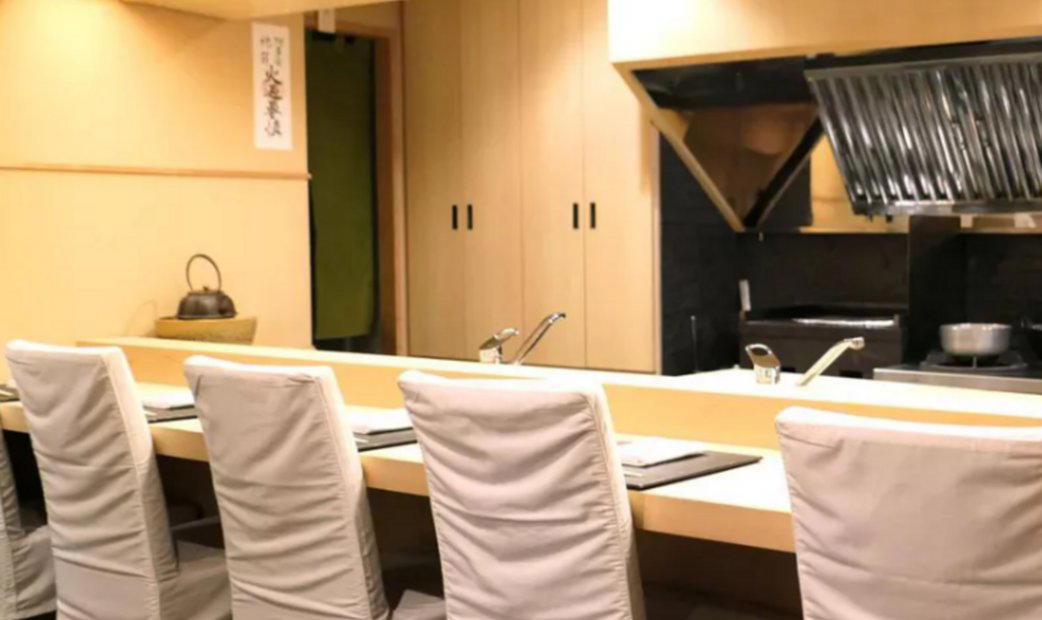
Azabujuban occupies an interesting position in Tokyo's dining hierarchy. The neighbourhood sits south of Roppongi, quieter in register and residential in character, yet dense enough with serious restaurants to hold its own against more celebrated addresses. Among the kaiseki counters and specialist Japanese restaurants in this part of Minato City, there is a particular type of room that prioritises craft made visible over architectural theatre. At Azabujuban Fukuda, on the ground floor of a low-key building at 3 Chome 7-5, the cooking happens in front of you. That is not a presentational conceit. It is how this style of Japanese hospitality has always communicated its intent.
The broader category to understand here is not omakase as performance, the kind that Tokyo's higher-priced counters have increasingly leaned into, but omakase as dailiness: the disciplined repetition of technique applied to whatever Japan's seasons have sent that week. The distinction matters when you are deciding which room deserves your attention at the ¥¥¥¥ price point, where options in this city include three-Michelin-starred kaiseki from Azabu Kadowaki and technically innovative Japanese rooms like Jingumae Higuchi.
The Logic of Simplicity at the Counter
There is a discipline specific to Japanese comfort food at its most precise that is easy to underestimate. Ramen, udon, and soba demand an understanding of stock that takes years to calibrate. Dashi, the foundational broth built from kombu and katsuobushi, is arguably the most technically demanding element in Japanese cooking to get right, not because the process is complex, but because there is nowhere to hide. The same principle applies at Fukuda's counter. Katsuo-bushi is shredded and dashi is drawn during service. Guests watch the stock form. There is no back kitchen absorbing the work.
This transparency of process is a trust mechanism that Tokyo's most serious dining rooms have long understood. When the method is visible, the quality of the ingredient becomes the entire argument. Kazuhito Fukuda draws those ingredients from across Japan, a sourcing approach common among kaiseki practitioners of this calibre but rarely executed with this degree of geographical range. The seasonal clay-pot rice dishes that close the meal are an extension of that logic: a format associated with home cooking and regional tradition, brought to counter level through the quality of what goes into the pot.
Seasonal Markers Worth Knowing
Kaiseki calendars are dictated by what Japan's fishing seasons and agricultural cycles produce, and Fukuda's menu tracks those shifts closely. In spring, hatsu gatsuo (the first bonito of the season) is grilled wrapped in straw, a technique that adds a light smoky register to the fish and signals the seasonal turn as directly as any dish in Tokyo. Unagi arrives smothered in mizansho, green Sichuan-adjacent peppercorn that cuts the richness of the eel with a citrus-herbal sharpness. These are not fusion constructions. They are traditional flavour pairings applied with precision.
The seafood is chopped at the counter rather than arriving pre-portioned, which means the pace of the meal is set by the work itself. For diners accustomed to tightly orchestrated tasting menus, this rhythm takes a moment to recalibrate to. Once it does, the format reads as a form of hospitality rather than a logistical decision.
Awards Context and Competitive Position
Azabujuban Fukuda holds a Michelin one star as of 2024 and has appeared in the Opinionated About Dining rankings for Japan across three consecutive years: Highly Recommended in 2023, ranked 343rd in 2024, and 373rd in 2025. The movement in OAD position is worth contextualising: OAD rankings reflect cumulative diner data from a specific community of serious eaters, and the narrowing of position over two years inside a top-400 national list, in a country with the highest concentration of Michelin-starred restaurants globally, indicates a room that is consistently drawing the right audience.
At the ¥¥¥¥ tier in Tokyo, Michelin one-star kaiseki counters with this kind of OAD crossover recognition occupy a specific niche. They are not competing directly with three-star rooms like Kagurazaka Ishikawa on spectacle or prestige, but they are attracting a different kind of regular: guests who return for the seasonal progression and the counter relationship rather than for a singular occasion.
For comparison across Japan's kaiseki field at various price points and formats, Gion Sasaki in Kyoto and Kashiwaya Osaka Senriyama operate in broadly related traditions, while HAJIME in Osaka represents a divergent, more technically ambitious interpretation of Japanese seasonal cooking.
The Couple in Charge
The hospitality dimension at Fukuda is shaped by the fact that it is run as a couple's operation. This format recurs at a specific tier of Tokyo counter dining and carries a recognisable set of qualities: attentiveness at a scale that larger kitchens cannot replicate, a directness in service that avoids the formalised hierarchies of brigade-run rooms, and a cumulative knowledge of regular guests that informs how the evening unfolds. The Michelin guide's description of the couple's hospitality as among the restaurant's core charms reflects something the star system tends to notice but not always weight heavily. Here, it appears to be integral to why guests return.
Planning Your Visit
Dinner service runs from 6 pm to 9 pm Monday through Saturday, with Sunday closed. The format is evening-only, which places it in a relatively small category of Tokyo kaiseki counters that operate on a single sitting per night. Azabujuban is accessible via the Azabu-Juban stations on both the Namboku and Oedo lines, making it direct to reach from central Tokyo neighbourhoods including Roppongi, Hiroo, and Shibuya. The address, Masuko Building Azabu Niban-kan 1F, is a ground-floor unit on a residential street rather than a destination block, so allowing time to locate it on first visit is sensible.
Booking at this tier of Tokyo kaiseki typically operates on a reservation-required basis, and for a counter of this standing and recognition, planning several weeks ahead is standard practice.
For broader context on Tokyo's dining scene at this level, see our full Tokyo restaurants guide. Readers planning wider Japan itineraries may also find the regional guides for Isshisoden Nakamura in Kyoto, akordu in Nara, Goh in Fukuoka, 1000 in Yokohama, and 6 in Okinawa useful for building out a multi-city dining programme. For accommodation, bars, and local experiences in the capital, our Tokyo hotels guide, bars guide, and experiences guide cover the full picture.
Two further Minato City rooms worth knowing in relation to Fukuda's positioning: Myojaku and Ginza Fukuju each represent a different point on the Tokyo Japanese-dining spectrum and help calibrate what the ¥¥¥¥ tier delivers across formats. Equally, our Tokyo wineries guide is available for those extending their Japan visit beyond the dining room.
What Should I Eat at Azabujuban Fukuda?
The menu is seasonal and omakase in structure, so the decision about what you eat is largely made for you, which is the point. The most frequently cited markers of the experience are the live dashi preparation at the counter, the straw-grilled hatsu gatsuo in spring, the unagi with mizansho, and the clay-pot rice that closes the meal. These are not à la carte choices but seasonal touchstones. If visiting in spring, the first bonito of the season is the dish most directly tied to the moment. Year-round, the clay-pot rice, built from ingredients sourced across Japan's regions, is the clearest expression of what the kitchen values: a format associated with everyday eating, executed with the seasonal precision that a Michelin-recognised counter demands.
Budget and Context
A quick peer list to put this venue’s basics in context.
| Venue | Cuisine | Price | Awards | Notes |
|---|---|---|---|---|
| Azabujuban FukudaThis venue (the venue you are viewing) | Seasonal Kaiseki | $200–300 | 1 Michelin Star · Tabelog 100 #74 | Not listed |
| Harutaka | Edo-Style Omakase Sushi | $200–300 | 3 Michelin Stars · World's 50 Best #76 | Sushi |
| RyuGin | Modern Kaiseki | $500+ | 3 Michelin Stars · World's 50 Best #41 | Kaiseki, Japanese |
| L'Effervescence | Modern French with Japanese Influences | $200–300 | 3 Michelin Stars · World's 50 Best #69 | French |
| HOMMAGE | Modern French with Japanese Influences | $150–200 | 2 Michelin Stars · World's 50 Best #78 | Innovtive French, French |
| MAZ | Innovative Peruvian-Japanese Fusion | $150–200 | 2 Michelin Stars · World's 50 Best #28 | Innovative |
Recognition history
Dated appearances from independent guides and award organizations, with the underlying list record or original source where available.
Michelin 1 Star
Michelin
Opinionated About Dining Top Restaurants in Japan Recommended
Opinionated About Dining
Tabelog 100 #74 · No. 74
Tabelog · Tabelog 100 - Japanese cuisine - TOKYO - 2025
Full recognition history (7 entries)
Opinionated About Dining Top Restaurants in Japan Ranked #373
Opinionated About Dining
Michelin 1 Star
Michelin
Opinionated About Dining Top Restaurants in Japan Ranked #343
Opinionated About Dining
Opinionated About Dining Top Restaurants in Japan Highly Recommended
Opinionated About Dining
Continue exploring
More in Tokyo
Restaurants in Tokyo
All restaurants in Tokyo →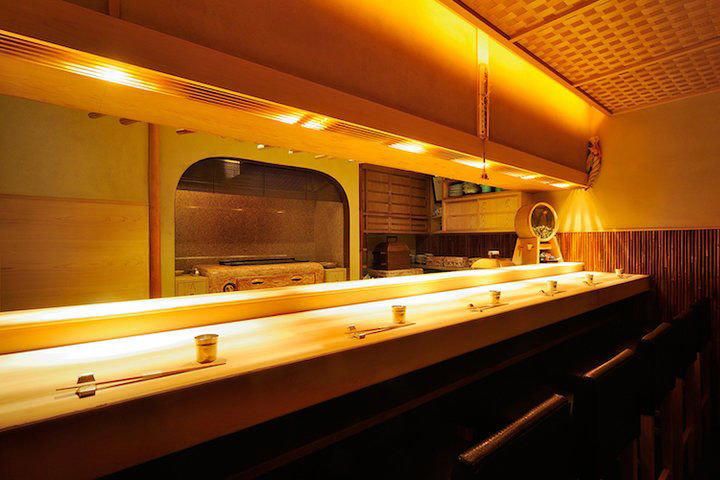



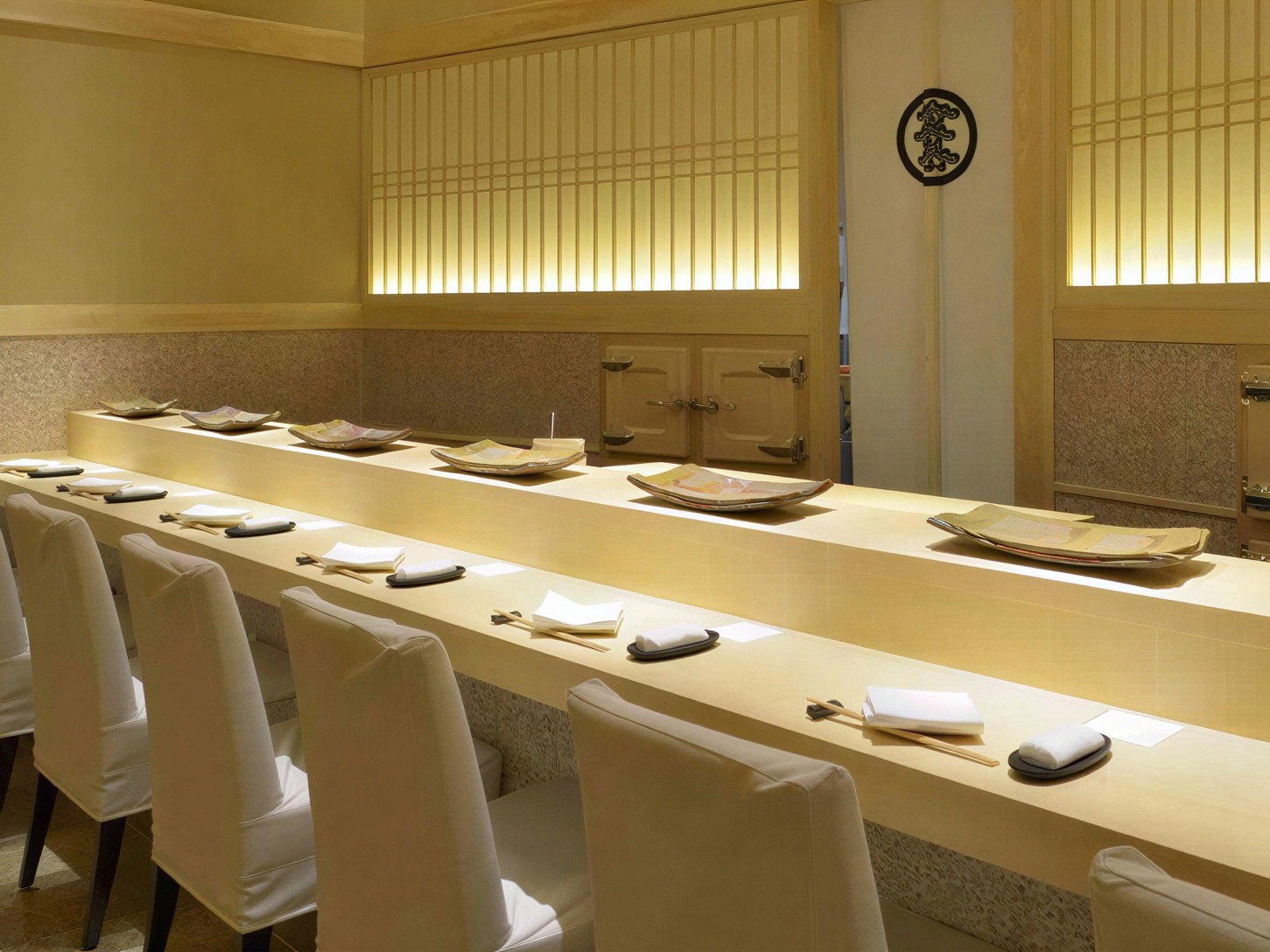
Bars in Tokyo
All bars in Tokyo →





Details
- Intimate
- Elegant
- Cozy
- Sophisticated
- Date Night
- Special Occasion
- Chefs Counter
- Open Kitchen
- Sake Program
- Tasting Menu
- Sake
Current opening hours
- Monday
- 6 PM–12 AM
- Tuesday
- 6 PM–12 AM
- Wednesday
- 6 PM–12 AM
- Thursday
- 6 PM–12 AM
- Friday
- 6 PM–12 AM
- Saturday
- 6 PM–12 AM
- Sunday
- 6 PM–12 AM
Hours can change for holidays and private events. Last verified .
Relaxed, stylish counter seating with warm hospitality, seasonal dishware, and an elegant, tension-free atmosphere.