

Michelin Plate
Our verdict
Adjacent to Myoshinji temple in Kyoto's Ukyo Ward, Ajiro serves shojin-ryori, the vegetarian cuisine of Zen Buddhism, in a format rooted in monastic tradition rather than modern plant-based trends. Signature soy-flour udon and fresh soybean curds arrive on vermilion lacquerware, earning a Michelin Plate and consistent recognition from Opinionated About Dining. For those exploring how a kitchen achieves satiety and depth without meat, this is a serious reference point.

Pearl is the En Primeur Club membership app, where members save venues, book tables and use the concierge.
Zen Proximity and the Logic of Shojin-Ryori
In Kyoto's Ukyo Ward, the temple complex of Myoshinji covers roughly 50 acres of walled gardens, sub-temples, and stone pathways. It is the head temple of the Rinzai school of Zen Buddhism, and it has shaped the neighbourhood around it in ways that most visitors moving through the city's more trafficked corridors never encounter. Ajiro sits immediately adjacent to that complex, and the physical proximity is not incidental, it is the entire editorial premise. The restaurant's founder learned the forms and spirit of shojin-ryori directly at Myoshinji, and the name itself, referring to the conical hat worn by monks in training, signals that this is a place operating within a living tradition rather than interpreting one from a distance.
Shojin-ryori is Japan's oldest codified vegetarian cooking tradition, developed by Buddhist monks as a discipline of restraint and mindfulness. What distinguishes it from contemporary plant-based cooking is not just the absence of meat and fish, but the philosophical framework governing how ingredients are selected, prepared, and presented. Richness, where it appears, comes from technique and from the inherent properties of ingredients, fermented soy, slow-cooked broths built from kombu and dried mushroom, the fat content of fresh tofu, rather than from substitution or amplification.
How the Kitchen Handles Satiety
The question serious diners bring to vegetarian restaurants is rarely ethical. It is practical: can the kitchen deliver the sense of fullness, depth, and satisfaction that protein-forward cooking provides almost automatically? At Ajiro, this is answered through two signature preparations that appear consistently across visits recorded in public reviews and the venue's own documentation.
The first is udon prepared with soy flour added to the dough. This is not a minor variation. Soy flour increases the protein density of the noodle itself, which changes both the nutritional weight of the dish and its texture, the noodle carries more body, more resistance, and a subtly earthier flavour than standard wheat udon. The effect is a dish that satisfies without relying on a rich broth or a protein accompaniment. The second signature preparation is fresh soybean curd, a delicacy of the house. Fresh tofu in this context means curds made in-house or sourced from a producer working at the artisan level, where the gap between fresh and commercial product is considerable. The curd is soft, high in fat relative to processed tofu, and carries the clean, slightly sweet flavour of the soybean rather than the neutral blandness of factory production.
These two preparations together address the satiety question from different angles: the udon through structural density, the soybean curd through fat content and flavour concentration. Neither requires a meat analogue or a caloric supplement to register as complete.
Presentation and Lacquerware Convention
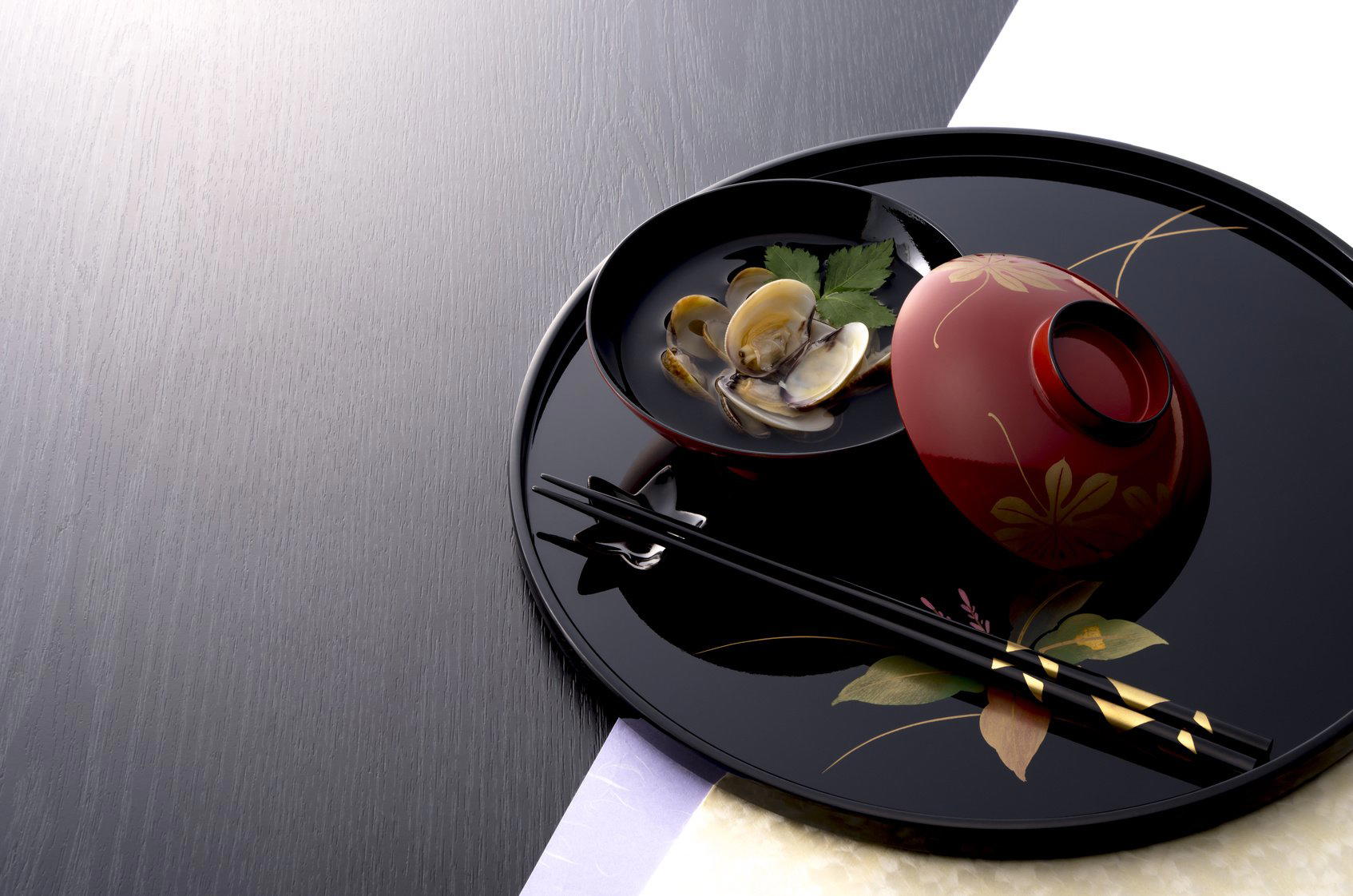
Dishes at Ajiro are served on vermilion-lacquered serving-ware, which is a convention specific to Zen Buddhist dining rather than a decorative choice. In monastic contexts, lacquerware signals both the ceremonial seriousness of the meal and the tradition of careful material stewardship, lacquer is durable, historically significant, and tied to Japanese craft heritage in ways that disposable or imported tableware is not. Against the deep red of the lacquer, the arrangements are designed for colourful, eye-catching presentation, which reflects another dimension of shojin philosophy: the visual composition of a meal is part of the discipline, not an afterthought.
This approach places Ajiro in a different visual register from Kyoto's kaiseki houses, where presentation is often more austere or seasonally muted. The kaiseki tier, represented in Kyoto by venues like Gion Sasaki, Hyotei, Kikunoi Honten, and Mizai, operates at ¥¥¥¥ price points with a different competitive logic entirely.
Recognition and Where It Sits in the Broader Scene
Ajiro holds a Michelin Plate for 2025, which in Michelin's framework signals a kitchen producing food worth seeking out, positioned below starred recognition but above the undifferentiated mass of listed restaurants. More informative for serious diners is the Opinionated About Dining trajectory: ranked 354th in Japan in 2025, 321st in 2024, and carrying a Highly Recommended designation in 2023. The direction of travel is consistent improvement in ranking, which for a restaurant of this type and price point reflects growing recognition among the informed dining community rather than a media cycle.
For context on how vegetarian cooking is developing in East Asia's serious restaurant scene, Fu He Hui in Shanghai and Lamdre in Beijing represent the contemporary fine-dining interpretation of Buddhist vegetarian cuisine in a Chinese context. Ajiro operates in a different register, more austere, more explicitly monastic, but sits within the same broader shift in how Buddhist culinary traditions are being taken seriously as reference points rather than curiosities. Elsewhere in Japan, the plant-forward dimension appears in different forms at HAJIME in Osaka and the ingredient-focused work at akordu in Nara.
Kyoto's vegetarian dining options at this price tier are not extensive. The city's culinary identity remains anchored in kaiseki and its variations, places like Isshisoden Nakamura represent the depth of that tradition, and shojin-ryori, despite being Kyoto's oldest continuous dining tradition, occupies a smaller, more specialised corner of the restaurant scene than its historical significance might suggest.
Planning a Visit
Ajiro operates Tuesday through Sunday, 11am to 7pm, with Wednesday closed. The ¥¥ price range makes it accessible relative to Kyoto's premium dining tier, and the Ukyo Ward location near Myoshinji places it in the city's northwest, away from the tourist corridors around Gion and Higashiyama. Reaching Myoshinji by train is direct from central Kyoto via the JR Sagano Line to Hanazono Station, a short walk from the temple's east gate. The combination of temple visit and lunch at Ajiro is a logical pairing, since both operate within the same hours and physical proximity. No phone or booking website was available at the time of writing, so visiting in person or confirming current booking arrangements through Kyoto tourism channels is advisable.
For broader planning across Kyoto's dining, drinking, and accommodation options, EP Club maintains full guides to Kyoto restaurants, Kyoto hotels, Kyoto bars, Kyoto wineries, and Kyoto experiences. For diners moving through Japan more widely, the restaurant coverage extends to Harutaka in Tokyo, Goh in Fukuoka, 1000 in Yokohama, and 6 in Okinawa.
Frequently asked questions
What do regulars order at Ajiro?
The two preparations most closely associated with the kitchen are the soy-flour udon and the fresh soybean curd. The udon's added soy flour gives the noodle structural density and a higher protein content than standard wheat preparations, making it the more filling of the two. The soybean curd, made with fresh curds rather than processed tofu, carries more fat and flavour than commercial equivalents. Both sit within the shojin-ryori tradition inherited from Myoshinji, where Ajiro's founder trained, and both appear consistently in the public record of what diners return for. Chef Yoshitaka Senoo oversees a kitchen where these preparations are the reference points, though the full menu operates within the classical shojin framework rather than around a single signature item.
Just the Basics
A quick peer list to put this venue’s basics in context.
| Venue | Cuisine | Price | Awards | Notes |
|---|---|---|---|---|
| AjiroThis venue (the venue you are viewing) | Shojin Ryori Temple Cuisine | $50–100 | Michelin Plate | Not listed |
| Gion Sasaki | Modern Kaiseki | $300–500 | 3 Michelin Stars · La Liste Top Restaurants | Kaiseki, Japanese |
| cenci | Innovative Italian-Japanese Fusion | $100–150 | 1 Michelin Star · World's 50 Best #76 | Italian |
| Ifuki | Sumibi Kappo Kaiseki | $200–300 | 2 Michelin Stars · La Liste Top Restaurants | Kaiseki |
| Kyokaiseki Kichisen | Kyoto Kaiseki | $200–300 | 2 Michelin Stars · La Liste Top Restaurants | Japanese |
| Kyo Seika | Modern Chinese Fine Dining | $150–200 | 1 Michelin Star · Tabelog Bronze #216 | Chinese |
Recognition history
Dated appearances from independent guides and award organizations, with the underlying list record or original source where available.
Michelin Plate
Michelin
Opinionated About Dining Top Restaurants in Japan Recommended
Opinionated About Dining
Full recognition history (6 entries)
Michelin Plate
Michelin
Opinionated About Dining Top Restaurants in Japan Ranked #354
Opinionated About Dining
Opinionated About Dining Top Restaurants in Japan Ranked #321
Opinionated About Dining
Opinionated About Dining Top Restaurants in Japan Highly Recommended
Opinionated About Dining
Continue exploring
More in Kyoto
Restaurants in Kyoto
All restaurants in Kyoto →

Bars in Kyoto
All bars in Kyoto →

Hotels in Kyoto
All hotels in Kyoto →

Wineries in Kyoto
Browse all →
Details
- Quiet
- Serene
- Elegant
- Intimate
- Sophisticated
- Special Occasion
- Private Dining
- Sake Program
- Local Sourcing
- Tasting Menu
- Vegetarian Friendly
Current opening hours
- Monday
- 11 AM–7 PM
- Tuesday
- 11 AM–7 PM
- Wednesday
- Closed
- Thursday
- 11 AM–7 PM
- Friday
- 11 AM–7 PM
- Saturday
- 11 AM–7 PM
- Sunday
- 11 AM–7 PM
Hours can change for holidays and private events. Hours as of .
Serene and hushed atmosphere with cedar and washi elements, private tatami rooms providing a tranquil, spiritual dining experience.