Located in Roppongi's Minato ward, トレフ ミヤモト occupies a ground-floor space in the 明泉ビル building on one of Tokyo's most competitive dining streets. The restaurant sits within a neighbourhood where French-influenced and Japanese fine dining formats coexist at high price points, placing it in a demanding comparable set. Booking details and current format should be confirmed directly with the venue.
Pearl is the En Primeur Club membership app — saves, bookings, and concierge access live there. Same editors, same standards.
- Address
- Japan, 〒106-0032 Tokyo, Minato City, Roppongi, 7 Chome−17−20 六本木 明泉ビル 明泉ビル 1F
- Phone
- +81357727755
- Website
- 3fff-miyamoto.com
- Directions
- Get directions
 Saves & bookings on Pearl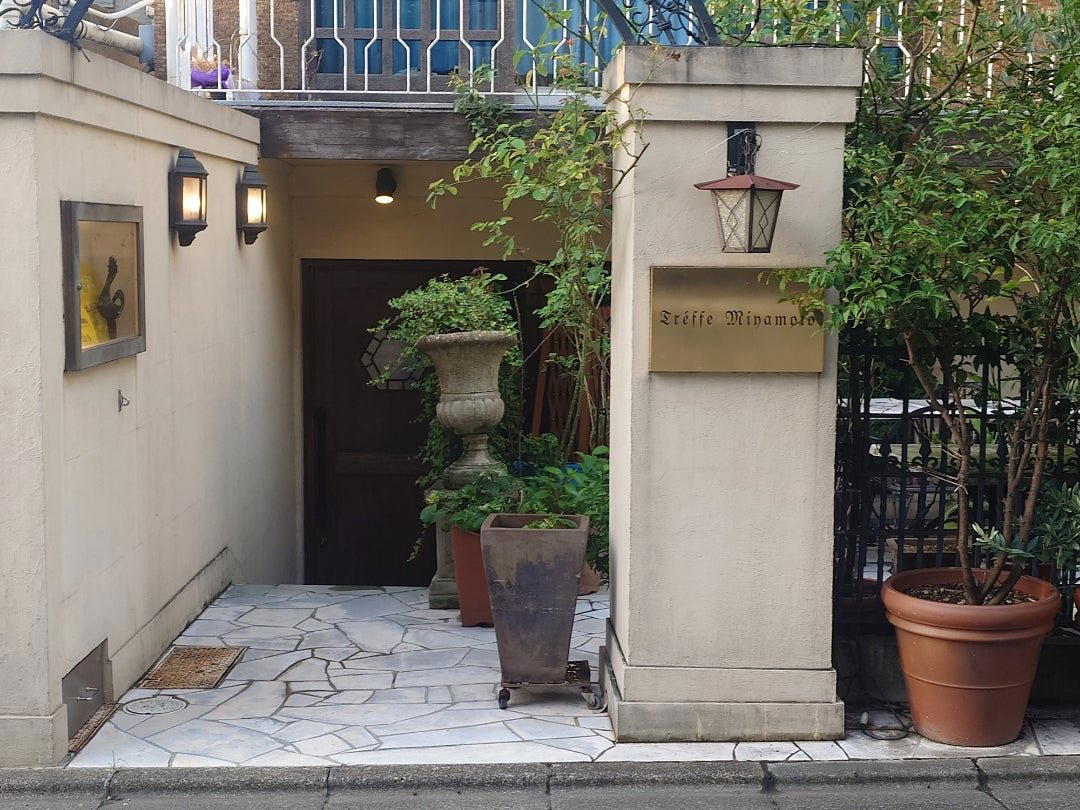
Roppongi's Fine Dining Grid and Where トレフ ミヤモト Fits
Roppongi has carried a complicated reputation in Tokyo dining for decades. Through the 1980s and 1990s, the district drew international crowds and high-margin restaurants built around spectacle rather than precision. What followed was a slower, more deliberate correction: Michelin's Tokyo guide, first published in 2008, applied particular scrutiny to the area's claims, and the restaurants that emerged from that scrutiny tended to be smaller, more focused, and less reliant on the neighbourhood's international foot traffic. By the 2010s, Roppongi had quietly developed a credible fine dining corridor running through Minato ward, anchored by addresses in the ¥¥¥¥ tier that compete less with the area's nightlife economy and more with comparable counters in Ginza, Azabu, and Minami-Aoyama.
トレフ ミヤモト sits within this corrected version of Roppongi, at 7 Chome-17-20 in the 明泉ビル building. The ground-floor placement, common among Tokyo restaurants that prefer street-level accessibility over the refined-floor prestige favoured in Ginza towers, signals a particular kind of venue: one that draws on neighbourhood regulars and reservation-led visitors rather than walk-in tourism. In a district where RyuGin has long set the kaiseki benchmark and where French technique has found serious expression at addresses like L'Effervescence, the competitive standard is not modest.
Atmosphere and the Sensory Register of a Minato Ward Dining Room
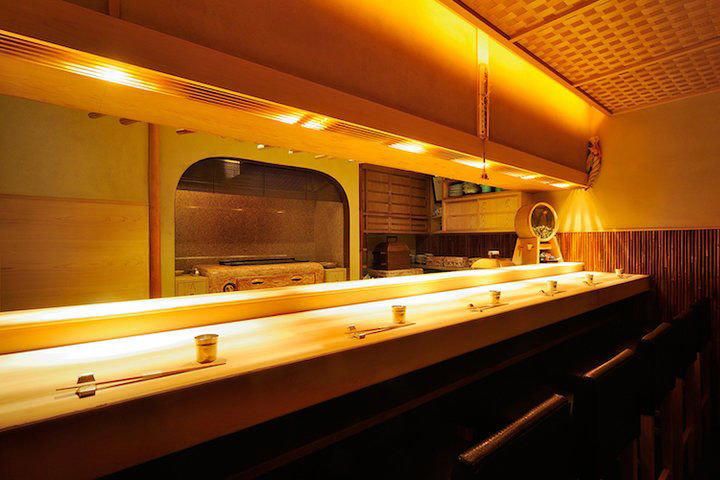
Tokyo's premium restaurant interiors in the Minato ward tend to share a set of sensory commitments that have little to do with ostentation. The dominant register is restraint: muted materials, controlled lighting, acoustics managed through soft furnishings rather than ambient music, and a pace of service that creates silence as a deliberate feature rather than an absence. These choices reflect a broader understanding in the city's fine dining circuit that distraction, visual, sonic, or olfactory, competes with the food itself. The dining room at トレフ ミヤモト, on the ground floor of a low-rise commercial building in Roppongi's quieter residential fringe, operates within this tradition.
The kitchen aromas that characterise Japanese-influenced or French-adjacent cooking in this tier tend to be precise rather than pervasive: stocks reduced slowly, proteins rested correctly, sauces finished at the last moment. These are not smells that announce themselves across a room but ones that arrive with the plate, which is itself a kind of editorial statement about the relationship between kitchen and table. In Roppongi's better rooms, the transition from street-level noise to interior quiet is one of the more reliable markers of a serious operation, and the 明泉ビル ground-floor position reinforces that contrast.
The Roppongi Dining Tier in Broader Japanese Context
Osaka's HAJIME and Kyoto's Gion Sasaki both operate within regional traditions that have their own internal hierarchies, shaped by centuries of kaiseki culture and, more recently, Michelin validation. Roppongi, specifically, has historically been the point of entry for that international influence, which is why the addresses that have built credibility there have tended to do so by working against the neighbourhood's louder tendencies rather than with them.
Beyond the major cities, Japan's fine dining geography extends to addresses like akordu in Nara and Goh in Fukuoka, both of which demonstrate that the country's most interesting cooking is no longer concentrated in the three main cities. Regional addresses in Nanao, Sapporo, Takashima, and Nishikawa Machi, represented by venues like 一本杉川島, 古代山乃, 湖南荘, and 庄内屋, have added further texture to a national dining conversation that Tokyo no longer dominates as completely as it once did.
Within Tokyo itself, the sushi counter at Harutaka in Ginza represents the omakase tier's upper bracket, booking months in advance against a ¥¥¥¥ price point. Roppongi's fine dining addresses, including the restaurant, occupy a parallel but distinct register: they are not competing for the same reservation as a Ginza sushi counter, but they are priced and positioned to attract the same category of diner. That positioning matters for anyone building a Tokyo itinerary across multiple meals.
Planning Your Visit
One reliable approach is direct contact with the venue at its Roppongi address.
Logistics at a Glance
| Venue | Neighbourhood | Cuisine | Price Tier | Booking Lead Time |
|---|---|---|---|---|
| The restaurant | Roppongi, Minato | Confirm directly | Confirm directly | Confirm directly |
| RyuGin | Roppongi, Minato | Kaiseki | ¥¥¥¥ | 4 to 8 weeks |
| L'Effervescence | Nishi-Azabu | French | ¥¥¥¥ | 4 to 6 weeks |
| Crony | Minami-Aoyama | Innovative French | ¥¥¥¥ | 3 to 5 weeks |
Pricing, Compared
Comparable venues nearby, for context on price, style, and recognition.
| Venue | Cuisine | Price | Notes |
|---|---|---|---|
| トレフ ミヤモトThis venue — the venue you are viewing | Minato, Aromatic French Fine Dining | $$$$ | Not listed |
| フィリップ・ミル 東京 | Minato, Modern French Fine Dining | $$$$ | Not listed |
| エクアトゥール | Minato, Innovative French | $$$$ | Not listed |
| アピシウス | Chiyoda, Classic French Fine Dining | $$$$ | Not listed |
| La Maison du Chocolat Marunouchi ten | Not listed | $$$$ | Chiyoda, French Chocolate Boutique & Patisserie |
| ナオト ケイ | Chiyoda, Modern French Omakase | $$$$ | Not listed |













At a Glance
- Elegant
- Sophisticated
- Classic
- Date Night
- Special Occasion
- Business Dinner
- Open Kitchen
- Sake Program
Current opening hours
- Monday
- Closed
- Tuesday
- 6–9:30 PM
- Wednesday
- 6–8:30 PM
- Thursday
- 6–9:30 PM
- Friday
- 6–9:30 PM
- Saturday
- 12–3:30 PM, 6–9:30 PM
- Sunday
- 12–3 PM, 6–9:30 PM
Hours can change for holidays and private events. Last verified .
Elegant old-established ambiance with refined, traditional French dining atmosphere.