
Tabelog 100 #13
Our verdict
フィリップ・ミル 東京は、モダンフレンチを東京ミッドタウン ガーデンテラス4Fで出す、スカイラインとガーデンを望む静かな一軒。ワインと日本酒があり、昼夜の長い食事向き。

Pearl is the En Primeur Club membership app, where members save venues, book tables and use the concierge.
The menu
What to order
- Ama-ebi prawn tartare homage to Reims cathedral
- Winter truffle dish
French Cuisine in a Tokyo Garden Tower
When Tokyo Midtown Garden Terrace opened its dining tier in Akasaka, it consolidated a particular type of premium restaurant: internationally pedigreed, architecturally distinct, and positioned above the street-level noise of the surrounding Minato ward. フィリップ・ミル 東京 (Philippe Mille Tokyo) occupies the fourth floor of that tower, and its address alone signals the competitive set it belongs to. This is not the low-lit basement bistro beloved by Tokyo's off-radar dining crowd; it is a formal French room planted inside a mixed-use development that itself functions as an extension of the adjacent Hinokicho Park.
French cuisine in Tokyo has never occupied a single tier. The city runs from neighbourhood brasseries in Ebisu to Michelin-decorated counters in Ginza, and the mid-range has thinned considerably as diners have consolidated around either value-forward options or high-commitment tasting menus. Philippe Mille Tokyo sits closer to the latter end of that spectrum, drawing a lineage from the Champagne region of France and presenting it inside a space that the building's design language informs as much as any kitchen decision.
The Space as Editorial Statement
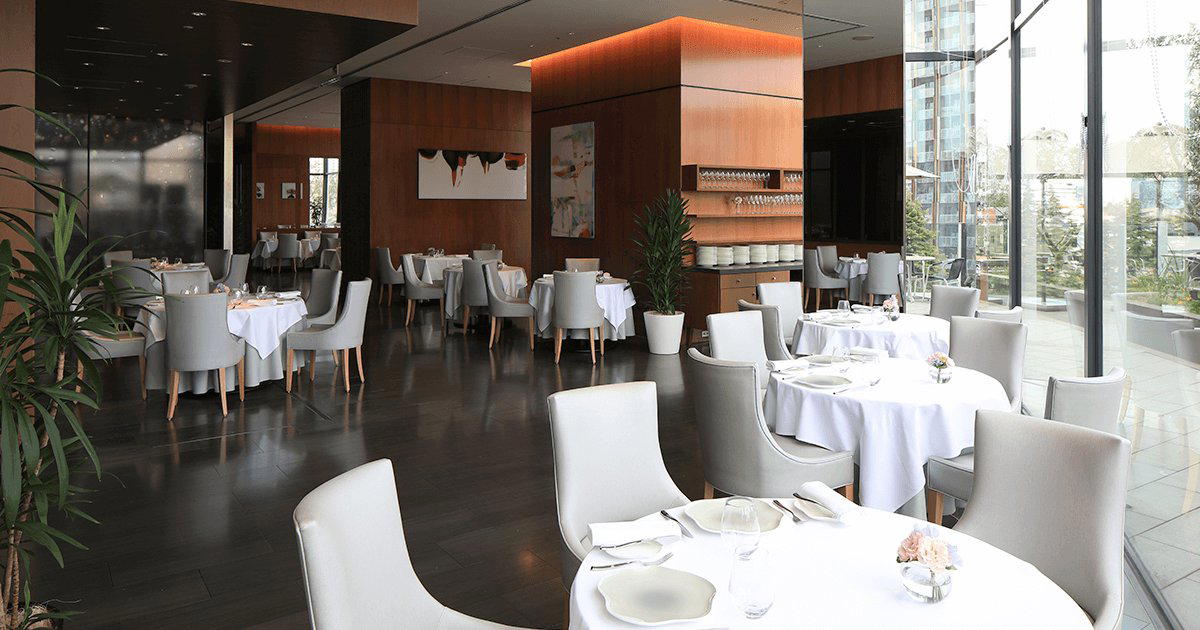
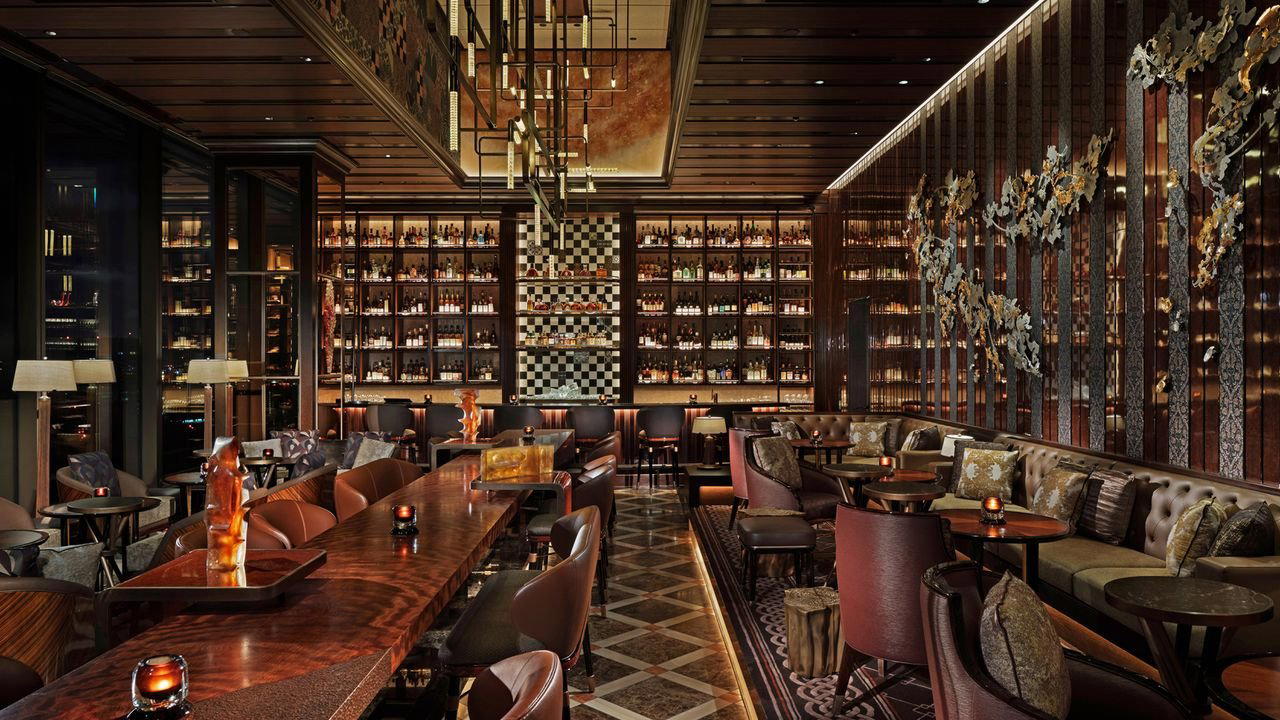
In many Tokyo fine-dining rooms, the interior is treated as a neutral container. Tables are spaced generously, lighting is dimmed toward intimacy, and the room recedes to let the food speak. Philippe Mille Tokyo takes a different architectural position. The fourth-floor location, with its proximity to the parkside garden terrace below, means natural light plays a role that basement or lobby-level rooms cannot replicate. Glass lines the perimeter where it faces the greenery, and the effect during lunch service is a dining room that reads more like a conservatory than a sealed formal chamber.
This matters editorially because Tokyo's French restaurants have increasingly differentiated on spatial experience rather than menu format alone. L'Effervescence in Nishiazabu built its identity partly around its townhouse scale and garden adjacency. Sézanne at the Four Seasons operates in the sharper, more geometric idiom of a luxury hotel dining room. Philippe Mille Tokyo's Garden Terrace position gives it an outdoor-adjacent quality that is difficult to replicate in the tighter urban grids of Ginza or Marunouchi. The room is not performing minimalism; it is performing a specific French idea of bringing the outside in, translated into a Japanese mixed-use tower context.
Seating arrangements in this kind of space typically favour smaller tables and wider spacing, with the garden view functioning as the room's dominant decorative gesture. The architecture does what tablecloths and floral centrepieces might accomplish in a more traditional Parisian dining room: it signals occasion without requiring excess ornamentation.
Philippe Mille and the Champagne Region Reference Point
The restaurant's name references Philippe Mille, the chef associated with Le Crayères in Reims, a hotel and restaurant embedded in the champagne house culture of the Champagne region. That regional identity matters in Tokyo's French dining context. Champagne-area French cooking operates differently from Lyonnaise or Parisian haute cuisine: it tends toward precision, mineral-forward flavour profiles, and a classicism that runs counter to the more rustic southwestern French traditions that have also found Tokyo audiences. Positioning a Tokyo outpost within that lineage places it in a specific conversation with rooms like Crony, which operates in the innovative French register, or L'Effervescence, which has built a sustained critical reputation around a more avant-garde French sensibility.
For reference on how French training translates across geographies, Tokyo's dining scene offers useful comparisons beyond the city itself. HAJIME in Osaka and akordu in Nara both represent French technique applied within deeply Japanese contexts. Philippe Mille Tokyo operates from the opposite direction: a French identity applied to a Tokyo address, in a space designed to feel continuous with its Japanese garden setting.
Akasaka and the Midtown Dining Cluster
Tokyo Midtown in Akasaka is a well-documented high-density dining node. The complex draws office workers at lunch, hotel guests from the Ritz-Carlton tower above, and destination diners in the evening. This foot traffic pattern shapes how restaurants in the building position their service: lunch tends to attract more business diners and shorter-format meals; dinner skews toward occasion dining and multi-course commitments.
Akasaka as a neighbourhood has historically supported formal dining at a level that neighbouring Roppongi sometimes undercuts with its higher proportion of international casual chains. The area's density of embassies and government offices generates a particular clientele: diners accustomed to formal European restaurant conventions and less interested in the theatrical counter formats that dominate in Ginza. Philippe Mille Tokyo's room-forward approach, with its architectural gesture toward the garden, fits this clientele profile more naturally than a stark minimalist counter would.
For those building a broader Tokyo itinerary, our full Tokyo restaurants guide maps the city's dining tiers across neighbourhoods. Peer venues in the formal French category worth cross-referencing include Sézanne and L'Effervescence; for Japanese fine dining in the same occasion tier, RyuGin and Harutaka represent the kaiseki and sushi alternatives respectively.
Planning Your Visit
Philippe Mille Tokyo sits at Tokyo Midtown Garden Terrace 4F, Akasaka 9-7-4, Minato City. The closest access points are Roppongi Station (Hibiya and Oedo lines) and Nogizaka Station (Chiyoda line), both within a short walking distance of the Midtown complex. The restaurant's position within a major commercial development means it is considerably easier to locate than many of Tokyo's more tucked-away fine-dining addresses.
Peer Comparison at a Glance
| Venue | Cuisine | Price Tier | Setting |
|---|---|---|---|
| フィリップ・ミル 東京 | French (Champagne-region) | Data not confirmed | Garden-terrace tower, 4F |
| Sézanne | French | ¥¥¥¥ | Hotel dining room |
| L'Effervescence | French | ¥¥¥¥ | Townhouse, garden setting |
| Crony | Innovative French | ¥¥¥¥ | Counter-forward |
| RyuGin | Kaiseki | ¥¥¥¥ | Formal dining room |
For French dining at comparable ambition levels in other Japanese cities, Bistro Ange in Toyohashi and Gion Sasaki in Kyoto offer useful points of contrast. Further afield, Le Bernardin in New York City demonstrates how Champagne-adjacent French fine dining performs at a different urban scale, while Atomix in New York shows how Korean precision and French technique intersect in a comparable price tier. Regional Japanese fine dining options worth mapping alongside any Tokyo trip include Goh in Fukuoka and several notable addresses in less-visited prefectures: 一本木 皆川製 in Nanao, 大仙山乃 in Sapporo, 湖畔庵 in Takashima, 品羽屋 in Nishikawa Machi, and Birdland in Sakai.
Frequently asked questions
What do regulars order at フィリップ・ミル 東京?
Can I walk in to フィリップ・ミル 東京?
What makes フィリップ・ミル 東京 worth seeking out?
What if I have allergies at フィリップ・ミル 東京?
Should I splurge on フィリップ・ミル 東京?
Is Philippe Mille Tokyo suitable for a business dinner with international guests unfamiliar with Japanese dining formats?
Recognition, Side-by-Side
Comparable venues nearby, for context on price, style, and recognition.
| Venue | Cuisine | Price | Awards | Notes |
|---|---|---|---|---|
| フィリップ・ミル 東京This venue (the venue you are viewing) | Modern French Fine Dining | $150–200 | Tabelog 100 #13 | Not listed |
| アルシミスト | Modern French-Japanese Fusion | $200–300 | 1 Michelin Star · Black Pearl 1 Diamond | Minato |
| SOMBREUIL TOKYO | Classic French fine dining in a Tokyo mansion | $150–200 | Tabelog 100 #1 | Chiyoda |
| ル・ジャルダン・デ・サヴール | Classic French Fine Dining | Not listed | Not listed | Chūō |
| Sens & Saveurs | Modern French Fine Dining | $200–300 | We're Smart World 3 Radishes | Chiyoda |
| モノリス | Neo-Classical French | $100–150 | 1 Michelin Star · Tabelog 100 #53 | Shibuya |
Recognition history
Dated appearances from independent guides and award organizations, with the underlying list record or original source where available.
Tabelog 100 #13 · No. 13
Tabelog · Tabelog 100 - French - TOKYO - 2025
Continue exploring
More in Tokyo
Restaurants in Tokyo
All restaurants in Tokyo →








フィリップ・ミル 東京
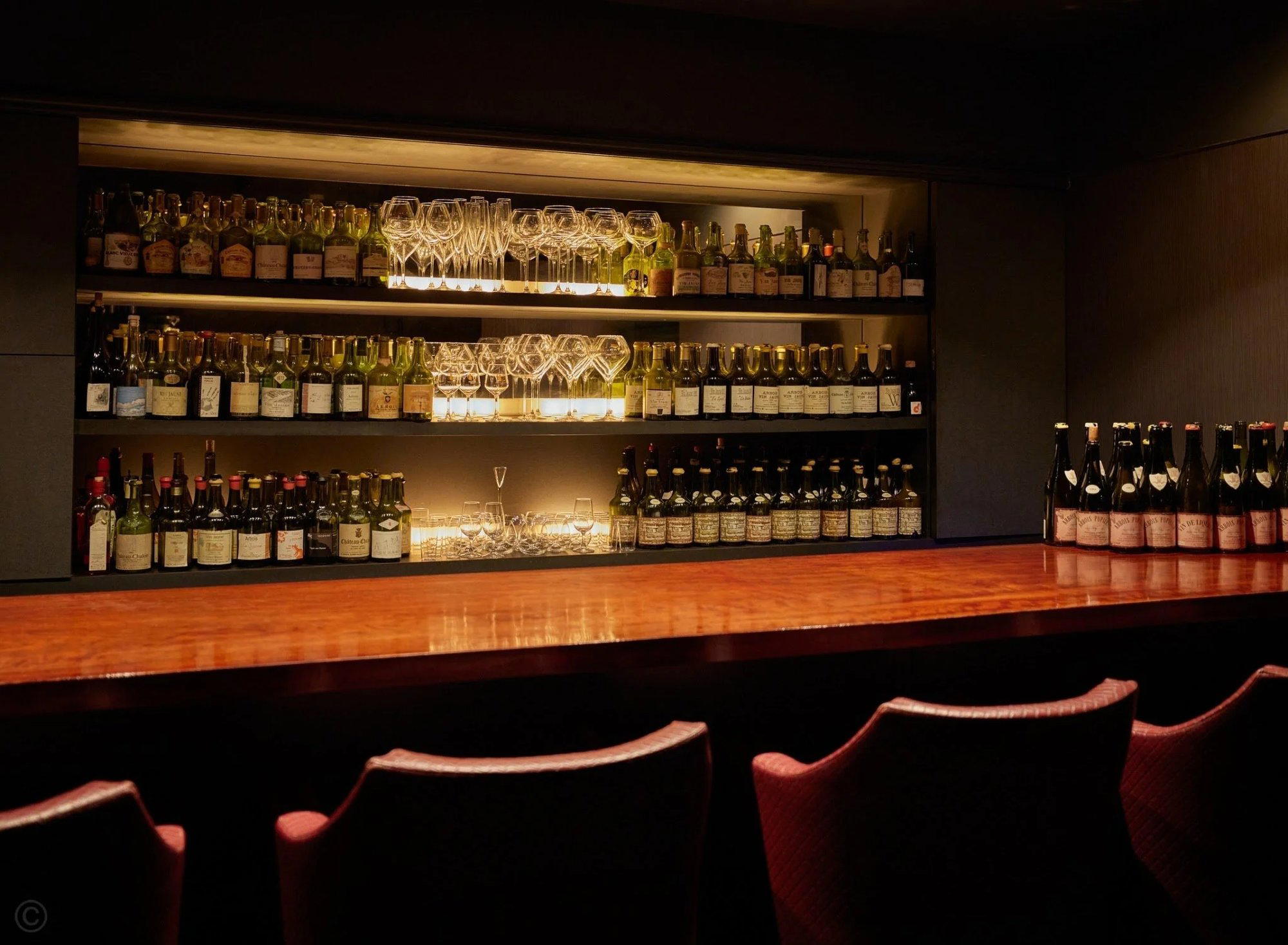
The wine
- Wine program
- Deep wine list
- Extensive wine list
- Sake program
Details
- Elegant
- Sophisticated
- Intimate
- Modern
- Date Night
- Special Occasion
- Business Dinner
- Open Kitchen
- Private Dining
- Sake Program
- Extensive Wine List
- Skyline
- Garden
- Tasting Menu
- Prix Fixe
- Champagne
Current opening hours
- Monday
- 11 AM–3:30 PM, 5:30–11 PM
- Tuesday
- Closed
- Wednesday
- 11 AM–3:30 PM, 5:30–11 PM
- Thursday
- 11 AM–3:30 PM, 5:30–11 PM
- Friday
- 11 AM–3:30 PM, 5:30–11 PM
- Saturday
- 11 AM–3:30 PM, 5:30–11 PM
- Sunday
- 11 AM–3:30 PM, 5:30–11 PM
Hours can change for holidays and private events. Last verified .
Serene urban oasis on the top floor surrounded by green terraces with quiet city views and elegant, comfortable atmosphere.