Our verdict
李南河 sits in Kyoto's Nakagyo Ward, a district where the city's appetite for quiet, considered dining runs deep. With limited public-facing data available, the venue occupies the more opaque end of Kyoto's reservation-driven dining circuit — the kind of address that circulates through personal recommendation rather than open listings. Visitors researching Kyoto's mid-to-upper dining tier should approach with direct inquiry and patience.

Pearl is the En Primeur Club membership app — saves, bookings, and concierge access live there. Same editors, same standards.
- Address
- 中京区下樵木町2-205-2-205-3, 京都市, 京都府
- Directions
- Get directions
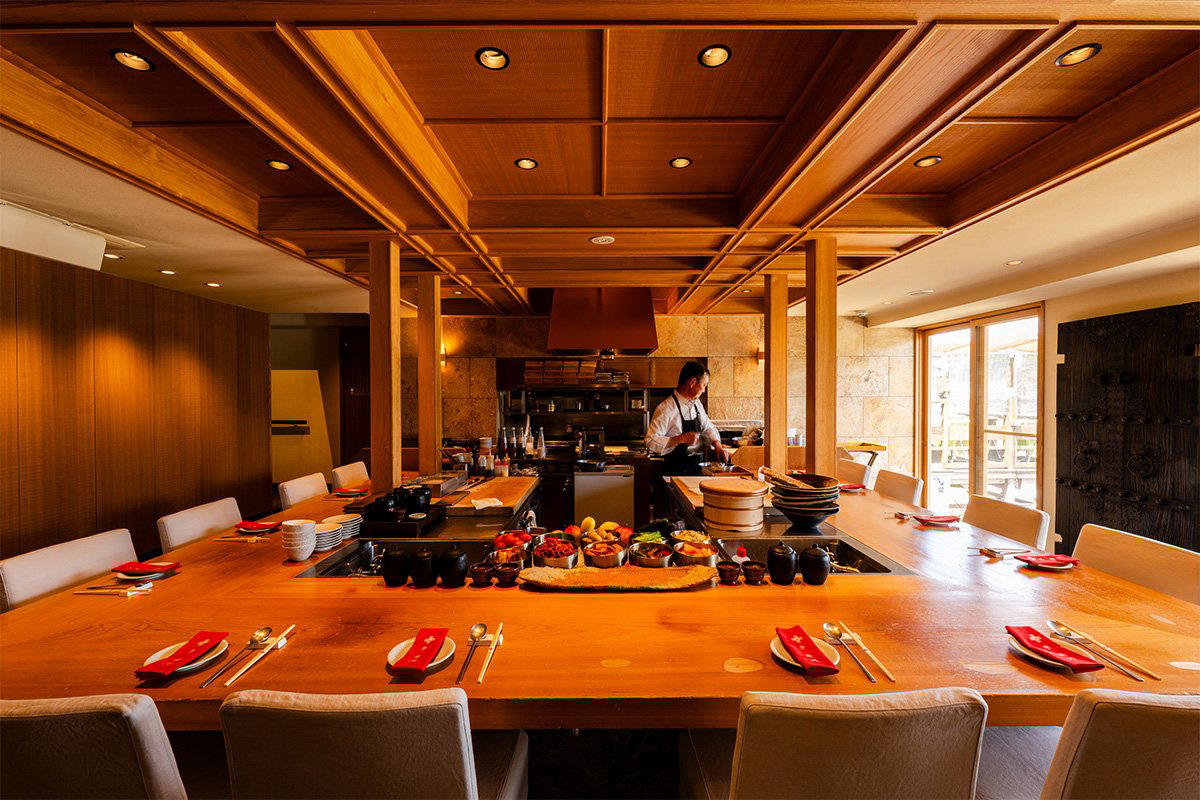
The menu
What to order
- Stone-grilled Japanese Black Wagyu
- Seasonal Korean pancakes
Nakagyo Ward and the Quieter Register of Kyoto Dining
Kyoto's dining culture operates on a frequency that rewards patience. The city has long maintained a two-speed restaurant scene: the well-documented kaiseki institutions that draw international attention, and a second, harder-to-read layer of smaller addresses that function almost entirely on local word-of-mouth and personal introduction. 李南河, located in the Nakagyo district at Shimokijimachi, belongs to the latter register. Its address places it away from the tourist-dense corridors of Gion or Pontocho, in a part of central Kyoto where restaurants serve a neighbourhood clientele rather than an itinerary.
That distinction matters more than it might first appear. In a city where Kikunoi Honten and Hyotei have built globally recognised identities around kaiseki tradition, and where venues like Gion Sasaki and Mizai command extended booking windows and formal critical attention, there is a separate class of Kyoto restaurant that does not compete on those terms at all. These venues are not lesser — they are simply operating in a different register, one where access depends less on a reservations platform and more on knowing who to ask.
What the Sparse Record Signals
The public-facing information available for 李南河 is minimal. In most dining contexts, that level of opacity would be a warning sign. In Kyoto, it can signal the opposite: a venue whose clientele is sufficiently established that public marketing has never been necessary.
Kyoto has a long tradition of restaurants that operate this way. Isshisoden Nakamura, for instance, carries centuries of institutional history without needing to broadcast it loudly. The city's most enduring dining addresses have often been the quietest in their self-presentation.
What can be said with confidence is geographic: the Nakagyo address places it in a ward that contains some of Kyoto's most interesting non-kaiseki dining, alongside long-established Japanese restaurants serving a residential and business clientele. The street reference — Shimokijimachi, sits in a part of Nakagyo that runs between the commercial bustle of Shijo and the quieter northern reaches of the ward, a zone that sees fewer foreign visitors than Higashiyama or Arashiyama.
The Wine Question in a City Built Around Tea
Editorial angle on wine is, in most Kyoto contexts, a complicated proposition. The city's food culture is grounded in the aesthetic logic of kaiseki, where the beverage pairing has historically meant sake, shochu, or carefully chosen Japanese whisky rather than a European cellar. The wine programs that do exist at Kyoto's upper-tier venues tend to be deliberately curated: small, purposeful lists rather than the deep Franco-centric cellars you would find at comparable price points in Tokyo or at internationally oriented venues like Le Bernardin in New York City.
What the broader Kyoto context suggests is this: if the venue operates in a traditional Japanese dining format, the beverage program is more likely built around sake and Japanese spirits than around European wine. If it operates in a more contemporary or cross-cultural format, a short, focused wine selection is the more common model in this part of the city. Venues at the level of HAJIME in Osaka or Atomix in New York City demonstrate how deeply ambitious beverage programs can anchor a modern tasting-menu format, but those are fully documented operations with international critical profiles. Applying that framework to 李南河 without supporting data would be overreach.
What any visitor approaching this venue should do is treat the beverage question as something to clarify directly, whether through the venue itself or through whatever intermediary facilitates the booking. In Kyoto's less-documented dining tier, that kind of direct inquiry is standard practice rather than an imposition.
For context on where 李南河 might sit relative to the city's wider dining spectrum, it is useful to understand the tiers. At the leading end, venues like Gion Sasaki and Hyotei operate at the ¥¥¥¥ level with Michelin recognition and international booking demand. A tier below, addresses such as Isshisoden Nakamura carry deep institutional credibility with a slightly less formal register. Further out from the centre of the kaiseki tradition, venues in Nakagyo and adjacent wards serve a more varied clientele at a range of price points.
Comparable in their opacity, if not in their specific format, are venues elsewhere in Japan that have built strong local followings without extensive public documentation: 某本家 川魚料 in Nanao, 老舗仙之 in Sapporo, and 庄羽屋 in Nishikawa Machi each represent the kind of address that rewards local knowledge over internet research. 湖畔荘 in Takashima and Birdland in Sakai similarly operate in regional registers that don't translate easily to international search traffic.
For visitors building a broader Japan itinerary, the contrast between 李南河's low-profile position and the well-documented profiles of Harutaka in Tokyo, Goh in Fukuoka, or akordu in Nara illustrates the range of access models that define serious dining across the country. Some venues publish everything; others publish almost nothing. Neither approach correlates directly with quality.
Our full Kyoto restaurants guide covers the city's documented dining tier in detail, with booking intelligence, neighbourhood breakdowns, and critical context for the venues where that information is available.
Know Before You Go
- Address: 中京区下樵木町2-205-2-205-3, Nakagyo Ward, Kyoto
- Cuisine:
- Price range:
- Booking: No online booking portal listed; direct inquiry recommended
- Phone / Website: Not in public record, approach via hotel concierge or local contact
- Awards: None on public record
- Leading approach: Treat as a local-circuit venue; verify current operation before planning around it
Frequently asked questions
What should I order at 李南河?
Given the venue's location in Nakagyo Ward and the broader patterns of Kyoto dining, a traditional Japanese format focused on seasonal produce is plausible, but that is context rather than confirmed fact. The practical guidance is to ask directly when making contact with the venue, in Kyoto's less-documented dining circuit, that conversation is standard.
Do I need a reservation for 李南河?
In Kyoto, any serious restaurant operating at a mid-to-upper price point almost certainly requires advance booking, and venues without open online listings, which describes 李南河 as currently documented, tend to operate on a tighter, more controlled capacity model. If you are visiting Kyoto specifically, build your reservation well in advance and treat this venue as requiring the same lead time as the city's documented kaiseki addresses.
What do critics highlight about 李南河?
Without a documented cuisine type, chef, or format, it sits outside the coverage frame of the major guides. That is not unusual for venues in Kyoto's quieter, more locally oriented dining tier, Michelin and the major food publications concentrate their attention on the city's kaiseki tradition and the handful of contemporary venues that have built international profiles.
Is 李南河 good for vegetarians?
No menu information is publicly available for 李南河, which makes it impossible to confirm dietary accommodation without direct contact. In Kyoto broadly, shojin ryori (Buddhist temple cuisine) is a well-established vegetarian tradition, but not all restaurants in the city follow or adapt to it.
Is 李南河 worth it?
Without confirmed price, format, awards, or critical documentation, a cost-versus-value assessment is not possible in any grounded sense. What can be said is that Kyoto's quieter, less-documented venues occasionally represent the city's most interesting dining precisely because they operate outside the international spotlight. Whether 李南河 falls into that category requires direct investigation. If you are building a serious Kyoto itinerary, the EP Club Kyoto guide covers the venues where that assessment can be made with confidence.
Is 李南河 connected to a particular Japanese culinary tradition or regional style?
The name 李南河 does not map to a documented culinary lineage or regional style in the available public record, and no chef biography or training history has been published. Located in Nakagyo Ward, the venue sits in a part of Kyoto associated with both traditional Japanese dining and a growing number of venues working in contemporary formats. For visitors interested in how Kyoto's dining scene positions itself against other regional centres, including the Korean-Japanese culinary crossover that some Kansai venues explore, Bistro Ange in Toyohashi and akordu in Nara offer documented reference points for how non-standard formats operate within traditional Japanese dining regions.
Price Lens
Comparable venues nearby, for context on price, style, and recognition.
| Venue | Cuisine | Price | Awards | Notes |
|---|---|---|---|---|
| 李南河This venue — the venue you are viewing | Korean Wagyu Yakiniku | $50–100 | Not listed | Not listed |
| ラ ブッシュ | Wood-Fired French with Ohara Terroir | $100–150 | 1 Michelin Star · Tabelog 100 #92 | Ohara, 薪焼き自然派フレンチ |
| Sobaya Nikola | Modern soba restaurant with sake & wine pairing | $50–100 | Tabelog 100 #37 | Kamigyō, Modern soba restaurant with sake & wine pairing |
| 祇園 一道 | Kyoto Kaiseki Omakase | Not listed | Tabelog 100 #50 | Higashiyama, Kyoto Kaiseki Omakase |
| KYOTO BISTRO | Modern Japanese-International Bistro | $30–50 | Not listed | Higashiyama, Modern Japanese-International Bistro |
| Morita Ya Shijo inokuma honten | Traditional Wagyu Sukiyaki & Shabu-Shabu | $50–100 | Tabelog 100 #75 | Shimogyō, Traditional Wagyu Sukiyaki & Shabu-Shabu |
Continue exploring
More in Kyoto
Restaurants in Kyoto
Browse all →
Bars in Kyoto
Browse all →
Hotels in Kyoto
Browse all →
Wineries in Kyoto
Browse all →
Details
- Cozy
- Scenic
- Elegant
- Date Night
- Casual Hangout
- Special Occasion
- Waterfront
- Private Dining
- Sake Program
- Waterfront
- Street Scene
- A La Carte
- Small Plates
- Sake Program
Cozy atmosphere with scenic Kamo River views, offering an elegant yet approachable setting for enjoying Korean anju and grilled meats.