
Tabelog 100 #50
Our verdict
Kamanza Ichino sits in Kyoto's Higashiyama Ward, steps from the stone-paved lanes that define Gion's southern edge. The address places it within one of Japan's most concentrated corridors of formal dining tradition, where the question for any serious restaurant is not whether to engage with kaiseki's conventions, but how far to push against them. For visitors timing a Kyoto itinerary around the city's seasonal rhythms, this is a room worth understanding before you book.

Pearl is the En Primeur Club membership app, where members save venues, book tables and use the concierge.
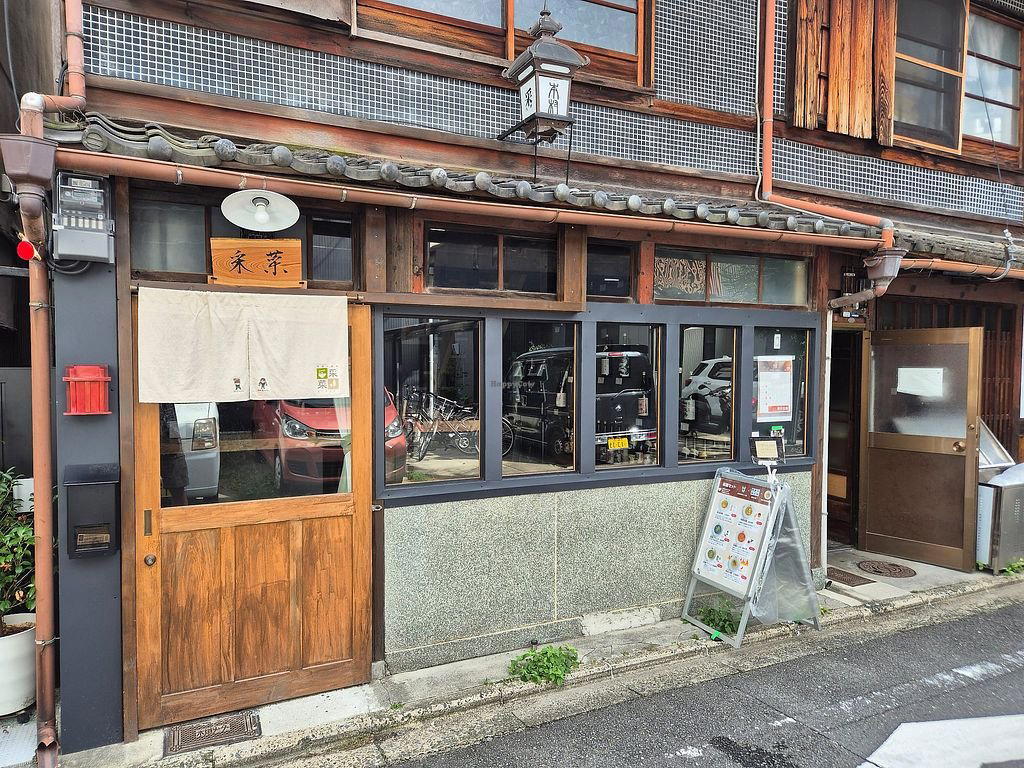
Where Higashiyama's Dining Tradition Sets the Bar
The southern stretch of Gionmachi, running along the base of Higashiyama, is one of the few dining corridors in Japan where a single address can anchor an entire evening's orientation. The machiya townhouses here are narrow, deep, and old enough that the stone thresholds have worn smooth. Walking toward Kamanza Ichino in the early evening, when the lanterns along Hanamikoji begin to glow and the last tourist groups thin out, the neighbourhood shifts into something quieter and more deliberate. That physical transition matters: Higashiyama dining operates at a different register from the midday crowds, and the restaurants here are structured accordingly.
Kyoto's formal dining scene divides, broadly, into two operating models. The first is the grand, multi-generation kaiseki house with documented lineage and predictable seasonal cycles. The second is a newer wave of smaller rooms where global technique intersects with hyper-local Kyoto produce. Kamanza Ichino's address in Gionmachi Minamigawa places it inside this second category's territory, the stretch of Higashiyama where both models coexist within a few hundred metres. Neighbours in ambition, if not always in format, include Gion Sasaki, which applies contemporary rigour to kaiseki's seasonal framework, and Mizai, another room where the kaiseki structure is observed but not treated as sacred constraint.
The Intersection of Imported Method and Kyoto Ingredient
Across Japan's premium dining tier, the most interesting tension is not between tradition and modernity, that framing has become almost too familiar, but between the specificity of regional ingredients and the universality of technique. Kyoto's larder is unusually codified: Kyo-yasai vegetables grown in the city's northern districts, tofu made with local well water, carefully sourced river fish from the Kamo and its tributaries. These ingredients carry cultural weight that any serious kitchen in the city must either honour or consciously redirect.
What has emerged in Higashiyama and adjacent Gion is a cohort of restaurants willing to bring external technical frameworks into contact with that Kyoto specificity. French sauce architecture, Nordic fermentation logic, the precision plating conventions of contemporary Japanese fine dining, these methods appear not as replacements for kaiseki's vocabulary but as additional instruments. The results, when they work, produce food that reads as neither fusion nor pastiche. Akordu in Nara pursues a comparable approach from a Basque-inflected starting point; HAJIME in Osaka takes it furthest into conceptual territory. Kamanza Ichino operates in this broader regional conversation about what a Japanese fine dining room can do when it treats local ingredients as the fixed variable and technique as the adjustable one.
This framing has particular relevance in spring and autumn, when Kyoto's seasonal produce cycles are at their most pronounced. The city's restaurant culture is deeply indexed to the calendar in ways that visitors from less seasonal culinary traditions sometimes underestimate. A room in Gionmachi in late March, when bamboo shoots arrive from Nishiyama and the cherry blossoms attract the city's densest visitor numbers, is working with a different set of ingredients and a different ambient pressure than the same room in October, when matsutake mushrooms define the high-end menu discussion. Timing a visit to Kamanza Ichino around these windows is worth planning in advance rather than leaving to chance.
Higashiyama in Competitive Context
Kyoto's premium dining tier is competitive in a way that doesn't always register from outside Japan. The city has a high concentration of Michelin-recognised restaurants relative to its size, and the kaiseki form has deep institutional roots through houses like Hyotei, which carries three Michelin stars and a history stretching back centuries, and Kikunoi Honten, another multi-starred address with significant lineage. Isshisoden Nakamura occupies a similar position in the city's formal dining hierarchy.
Against that backdrop, a smaller room in Gionmachi Minamigawa competes not on institutional weight but on precision and point of view. For broader context on where Kamanza Ichino sits within Kyoto's dining map, see our full Kyoto restaurants guide.
Internationally, the tension between local ingredient specificity and imported technique that defines this cohort appears in recognisable form at Le Bernardin in New York City, where French classical discipline meets the specificity of sourcing at the highest level, and in the collaborative tasting format of Lazy Bear in San Francisco. The questions these kitchens are working through are not identical, but they are parallel. Closer to home, Harutaka in Tokyo demonstrates how a single-protein focus combined with technical depth can produce a dining experience that sits outside the conventional category boundaries, another reference point for understanding what Gion's more ambitious smaller rooms are reaching toward.
Planning a Visit
Gionmachi Minamigawa is accessible on foot from Gion-Shijo Station on the Keihan Line, a walk of roughly ten minutes through the neighbourhood's main approaches. For visitors coming from central Kyoto hotels, taxi is often the more direct option given the area's pedestrian lanes and limited vehicle access near the Higashiyama shrines. The neighbourhood is most navigable in the early evening before the lantern-lit crowds from Yasaka Shrine thin entirely.
Specific booking arrangements, hours, and pricing for Kamanza Ichino are best confirmed through direct contact or a local concierge service, as these details are subject to change and were not available at the time of writing. What can be said with confidence is that dining in this part of Higashiyama at the premium tier generally requires advance reservation, often weeks rather than days ahead, particularly during the spring cherry blossom period and the November foliage season. Rooms in this category in Gionmachi, also documented for venues like affetto akita and Ajidocoro in their respective regional contexts, tend to operate small, which means availability is a constraint that planning solves better than spontaneity.
Frequently asked questions
Can I bring kids to 神坐一禅?
Gionmachi Minamigawa restaurants in Higashiyama generally maintain a quiet, considered atmosphere that suits adult diners. The neighbourhood's dining culture tends toward formal or semi-formal settings where young children may find the pace challenging.
How do I find ç¥å ä¸é?
ç¥å ä¸é is located at Japan, ã605-0074 Kyoto, Higashiyama Ward, Gionmachi Minamigawa, 589 ãããæ¾æ¬ãã« ï¼é, Kyoto.
Can I walk in to ç¥å ä¸é?
Reservations are recommended for ç¥å ä¸é in Kyoto. Confirm current policy via the venue's official channels.
What's the vibe at 神坐一禅?
The address sits on the southern stretch of Gionmachi Minamigawa, one of the most historically layered dining streets in Kyoto's Higashiyama Ward. That location sets an expectation: restrained, deliberate, oriented toward the meal rather than spectacle.
Comparable Options
Comparable venues nearby, for context on price, style, and recognition.
| Venue | Cuisine | Price | Awards | Notes |
|---|---|---|---|---|
| 祇園 一道This venue (the venue you are viewing) | Kyoto Kaiseki Omakase | Not listed | Tabelog 100 #50 | Not listed |
| Yakiniku Yazawa Kyoto | Premium Wagyu Yakiniku | $50–100 | Tabelog 100 #74 | Shimogyō |
| Morita Ya Shijo inokuma honten | Traditional Wagyu Sukiyaki & Shabu-Shabu | $50–100 | Tabelog 100 #75 | Shimogyō |
| Tempura Tokoro Kyorynsen | Kyoto-style Tempura by Kyoyamato | $50–100 | Tabelog 100 #59 | Shimogyō |
| Sukiyaki Iroha Kita ten | Traditional Kyoto sukiyaki | $50–100 | Tabelog 100 #11 | Nakagyō |
| 前田 | Modern Kaiseki | $300–500 | Tabelog Bronze #245 | Higashiyama |
Recognition history
Dated appearances from independent guides and award organizations, with the underlying list record or original source where available.
Tabelog 100 #50 · No. 50
Tabelog · Tabelog 100 - Steak / Teppanyaki - WEST - 2025
Continue exploring
More in Kyoto
Restaurants in Kyoto
All restaurants in Kyoto →
Bars in Kyoto
All bars in Kyoto →
Hotels in Kyoto
All hotels in Kyoto →
Wineries in Kyoto
Browse all →
Details
- Elegant
- Intimate
- Classic
- Special Occasion
- Sake Program
- Omakase