Our verdict
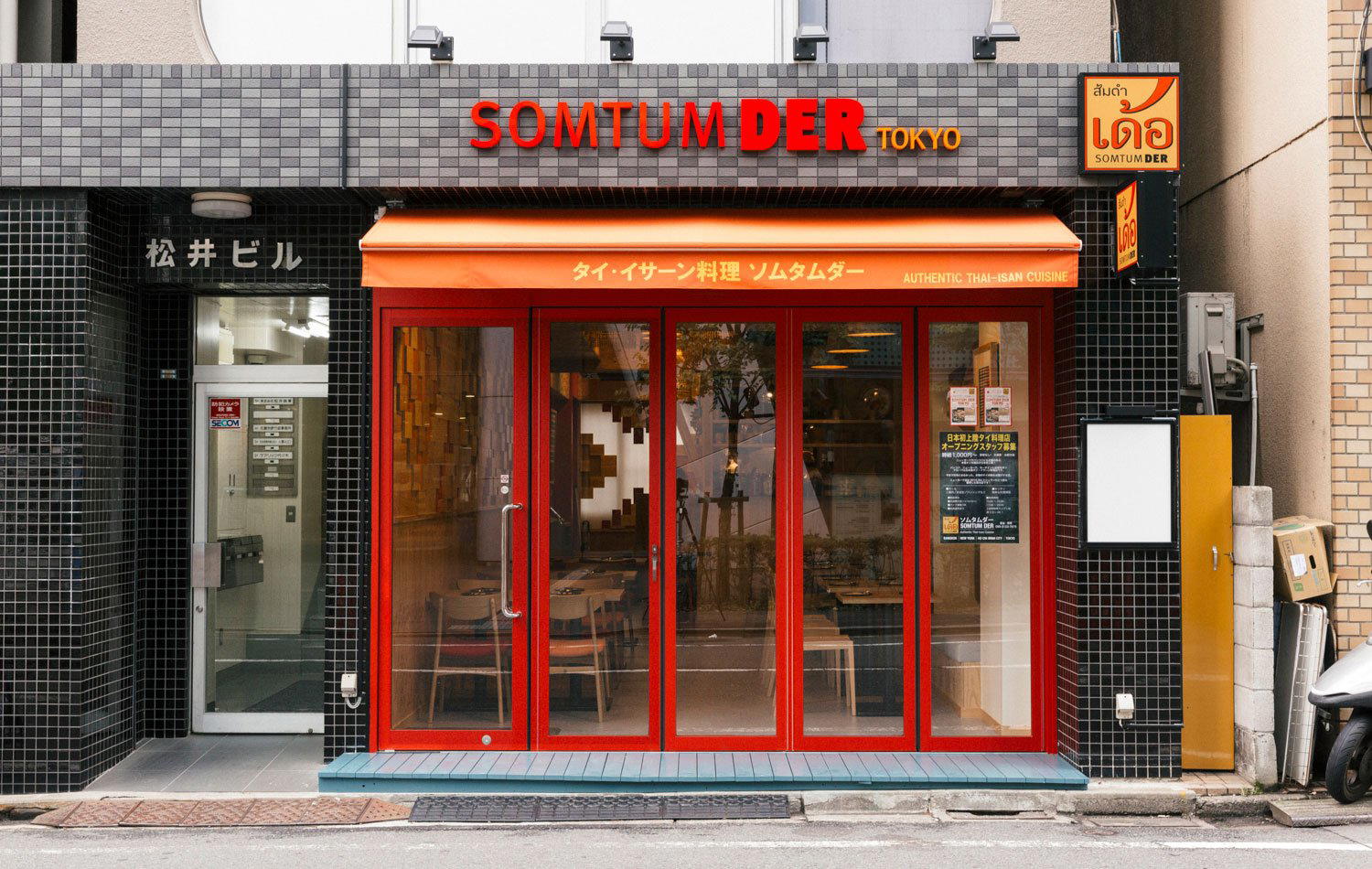
ソムタムダー sits in Yoyogi, one of Tokyo's quieter residential corridors, delivering the punchy, fermented, and herb-driven cooking of northeastern Thailand at a price point well below the city's fine-dining tier. Where Thai food in Tokyo often softens toward Japanese palates, this address holds its edge. It occupies a niche that the city's richer Thai restaurant scene, largely concentrated in Shinjuku and Shibuya proper, leaves underserved.

Pearl is the En Primeur Club membership app, where members save venues, book tables and use the concierge.
The menu
What to order
- Som Tam
- Larb
- Tam Poo Palaah
- Tam Pla Duk Foo
- Tom Saep Gra Dook On
Yoyogi's Thai Outpost and What It Says About the Neighbourhood
Yoyogi sits in an interesting position within Tokyo's dining geography. Sandwiched between the commercial intensity of Shinjuku to the north and the fashion-coded streets of Harajuku to the south, it operates as a residential exhale, lower rents, longer-established local businesses, and a dining culture shaped more by neighbourhood regulars than by destination seekers. This is the kind of address where a Thai restaurant built around genuine northeastern Thai cooking can exist without the pressures of a high-visibility corner. The address at 1 Chome-58-10 Yoyogi, Shibuya, places ソムタムダー squarely in that corridor, within walking distance of Yoyogi Station, accessible from both the JR Yamanote Line and the Odakyu Line.
The broader Shibuya ward has become one of Tokyo's most contested dining territories, with the ¥¥¥¥ tier, occupied by counters like Harutaka, L'Effervescence, and RyuGin, drawing an international audience willing to plan months in advance. ソムタムダー operates in an entirely different register, both in price and in the expectations it sets at the door. It is not competing with those counters. It is filling a gap that they leave open: everyday cooking with regional specificity, served without ceremony.
The Case for Isan Cooking in a City That Does Thai on Its Own Terms
Tokyo's Thai restaurant scene is larger than many visitors expect. Shinjuku alone has a cluster of Thai operations ranging from budget noodle shops to polished mid-range rooms. But the majority trend toward central Thai cooking, pad thai, green curry, tom kha gai, adjusted for Japanese preferences, which typically means reduced fish sauce intensity, more restrained chili heat, and a cleaner presentation register. Isan cooking, the cuisine of Thailand's northeastern plateau bordering Laos, operates from a different flavor logic entirely. Som tam, the green papaya salad the restaurant's name references directly, is built around fermented shrimp paste, fish sauce, palm sugar, lime, and dried shrimp, pounded together in a clay mortar. The heat is not decoration. The funk is not an accident. The sourness arrives before the sweetness does.
Restaurants that hold to that flavor profile in Tokyo occupy a smaller niche. Some are found in the areas around Nishi-Kasai, where Thai residents have historically clustered. Yoyogi is a different draw, closer to the central city, embedded in a neighbourhood with a broader residential mix. For Tokyo diners accustomed to the restraint of Japanese cuisine, or the architectural precision of the ¥¥¥¥ French rooms like Sézanne or Crony, this kind of cooking represents a deliberate gear-shift. Dishes arrive not as composed presentations but as functional assemblies of competing intensities.
Format, Atmosphere, and What Arriving Here Feels Like
The OS-1 mandate for this review asks about physical arrival and atmosphere, and that matters here because Yoyogi's residential scale means the approach to ソムタムダー is nothing like approaching a Ginza counter or a Roppongi hotel dining room. The street-level context is local and low-key. The restaurant reads as a neighbourhood fixture rather than a destination property. That framing is useful: the experience starts before you sit down, in the adjustment from the slickness of Shinjuku's main drag to the quieter human scale of this side of the ward.
Given the format and neighbourhood positioning, walk-ins appear to be a viable approach for off-peak times, but this is a judgment call rather than confirmed policy.
Placing This Within Japan's Wider Dining Map
Tokyo is the gravitational centre of Japanese dining, but the country's broader restaurant ecology is rich enough that any single city visit gives only partial context. The kaiseki tradition practiced in Kyoto rooms like Gion Sasaki represents one pole of Japanese culinary seriousness. Osaka's restaurants, including HAJIME, represent another. Further afield, akordu in Nara and Goh in Fukuoka demonstrate how seriously Japan's secondary cities take their dining programs. Against that backdrop, ソムタムダー is not competing for a position in that hierarchy. It is doing something structurally different: providing access to a cuisine tradition that is genuinely underrepresented in the city's mid-range tier, at a price point calibrated to the neighbourhood rather than to the destination dining market.
That positioning has its own logic. Japanese cities have long absorbed Southeast Asian cooking with varying degrees of fidelity. The question worth asking of any Thai restaurant in Tokyo is not whether it tastes good in the abstract, but whether it holds to the flavor logic of its source region without flattening itself for local comfort. The name ソムタムダー, referencing the dish most associated with Isan cooking, sets a clear declaration of intent. Whether the execution matches that declaration is a matter of visiting rather than reading.
For broader orientation within the city's dining options, our full Tokyo restaurants guide covers the range from destination counters to neighbourhood fixtures across multiple cuisine categories. Internationally, the structural challenge of delivering regional Southeast Asian cooking in a foreign city, holding to source-region specificity rather than softening for the local market, is a benchmark that New York has wrestled with as well, across Korean, Thai, and other Southeast Asian traditions, as seen in discussions around restaurants like Atomix and the broader question of what authenticity means in a transplanted context. Even Le Bernardin in New York raises the same question from a different direction: how much does a cuisine shift when it moves across cultures, and who decides how much shifting is acceptable?
Japan's own regional restaurant traditions offer a parallel: addresses like 湖魚庵 in Takashima, 庄羽屋 in Nishikawa Machi, Birdland in Sakai, Bistro Ange in Toyohashi, Blue Ocean Steak in Nakagami District, and bodai in 那智勝浦町 all operate as regionally grounded fixtures serving local markets without pretension to destination status. ソムタムダー occupies an analogous position in Tokyo, but with the added dimension of being a cuisine tradition imported from outside Japan's own food culture.
Practical Planning
Frequently asked questions
Where is ソムタムダー in Tokyo?
ソムタムダー is located at 1 Chome-58-10 Yoyogi, Shibuya, Tokyo 151-0053, Japan, Tokyo.
How does ソムタムダー fit into Tokyo's broader Thai restaurant scene, and why is Yoyogi the location?
Tokyo supports a Thai restaurant ecosystem far larger than most visitors expect, with concentrations in Shinjuku, Shin-Okubo, and Shibuya. Yoyogi's placement within Shibuya ward puts ソムタムダー at a quieter residential remove from those clusters, which tends to attract a neighbourhood-loyal clientele rather than destination diners. The Isan focus, rather than a pan-Thai menu, positions it within a smaller, more specific subset of Tokyo's Thai dining options, where the cooking tradition itself is the credential.
What's the signature dish at ソムタムダー?
The name itself is the answer: som tam, the green papaya salad central to Isan cooking in northeast Thailand. At a restaurant built around this dish in Yoyogi's residential stretch of Shibuya, the som tam is the reference point against which everything else on the menu is measured. Specific current preparations are best confirmed on arrival.
How hard is it to get a table at ソムタムダー?
Yoyogi sits off the main tourist circuit between Shinjuku and Harajuku, which tends to keep the crowd more local and regular than transient.
What's the defining dish or idea at ソムタムダー?
The defining idea is Isan regionalism: a cooking tradition from northeast Thailand that prizes fermented fish paste, raw papaya, and dried chilli over the coconut-rich dishes that dominate most Japanese interpretations of Thai food. In Tokyo's crowded Thai restaurant field, that regional specificity is what separates this Yoyogi counter from the generalist operations clustered around Shinjuku.
Is ソムタムダー allergy-friendly?
Isan cooking relies heavily on fermented shrimp paste, fish sauce, and dried seafood as foundational seasoning, which makes shellfish and fish allergies a genuine concern at any restaurant in this tradition. Gluten is less central to the cuisine, but cross-contact is always possible in a kitchen of this style. Given that no English-language menu or allergy documentation is publicly available for this Yoyogi address, arriving with a written note in Japanese detailing specific allergies is the practical approach.
The Essentials
Comparable venues nearby, for context on price, style, and recognition.
| Venue | Cuisine | Price | Awards | Notes |
|---|---|---|---|---|
| ソムタムダーThis venue (the venue you are viewing) | Authentic Isan (Northeastern Thai) Cuisine | $20–30 | Not listed | Not listed |
| タイ国専門食堂 | Authentic Thai Specialist Cafeteria | $20–30 | Not listed | Shibakoen, Authentic Thai Specialist Cafeteria |
| STREAMER COFFEE COMPANY SHIBUYA | Shibuya, Specialty coffee café | $10–20 | Tabelog 100 #3 | Not listed |
| Mahakala | Kushikatsu Izakaya | $30–50 | Not listed | Meguro, Kushikatsu Izakaya |
| Mitsumasa | Traditional Japanese Yakitori and Motsuyaki | $30–50 | Tabelog 100 #90 | Minato, Dining |
| Kurumi Do Kissa Ten | Japanese kissaten & café with bookstore | $10–20 | Tabelog 100 | Kokubunji, Japanese kissaten & café with bookstore |
Continue exploring
More in Tokyo
Restaurants in Tokyo
All restaurants in Tokyo →
Bars in Tokyo
All bars in Tokyo →



Details
- Rustic
- Energetic
- Casual Hangout
- Group Dining
- After Work
- Open Kitchen
- Standalone
- A La Carte
- Family Style
- Vegetarian Friendly
- Allergy Accommodating
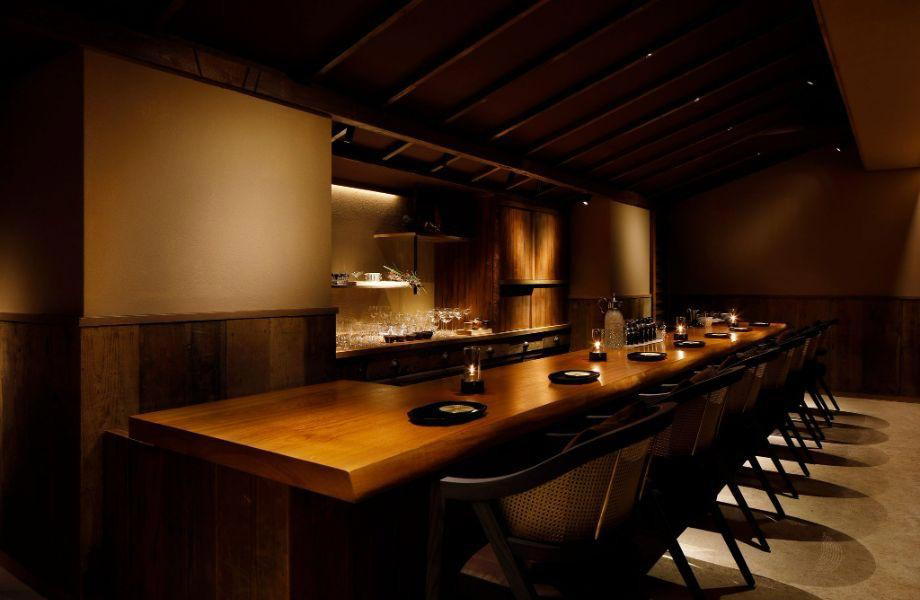
Rustic and culturally immersive with Isan design elements that evoke the lifestyle and traditions of northeastern Thailand, creating an authentic regional dining experience.