フナシェフ occupies a quiet address in Osaka's Kita Ward, placing it within reach of the city's most competitive dining corridor. The venue's name and Kurosakicho location situate it in a neighbourhood where counter restaurants and chef-led formats have taken firm root.
Pearl is the En Primeur Club membership app — saves, bookings, and concierge access live there. Same editors, same standards.
- Address
- 6-4 Kurosakicho, Kita Ward, Osaka, 530-0023, Japan
- Phone
- +81664508565
- Website
- funachef.com
- Directions
- Get directions
 Saves & bookings on Pearl
Kita Ward and the Counter Dining Current Running Through Osaka
Osaka's Kita Ward has, over the past decade, become the city's most contested ground for chef-led restaurant formats. The area around Kurosakicho sits close enough to Umeda's transit density to draw wide foot traffic, yet the side streets retain the residential scale that smaller operators prefer. It is in this environment that フナシェフ has established its address at 6-4 Kurosakicho, a location that places it squarely inside one of Japan's most competitive urban dining corridors.
Osaka as a whole operates under a culinary reputation built on directness: the city's food culture has historically prized value, volume, and flavour intensity over ceremony. The past several years, however, have seen a parallel track develop, where intimate, reservation-dependent formats quietly co-exist alongside the city's louder street-food identity. Counter restaurants, omakase sequences, and chef-patron operations have proliferated across Kita and Minami wards alike, and フナシェフ's positioning in Kurosakicho places it within that quieter, more considered tier of the market. Comparable establishments in the area, including Ajihei Sonezaki and Ajikitcho Bunbuan, illustrate how this neighbourhood rewards venues that trade on precision and consistency over spectacle.
Atmosphere and the Physical Register of the Space
Kurosakicho's built environment is characteristic of inner Osaka's older Kita fabric: narrow building plots, mixed-use floors, and the ambient low hum of a neighbourhood that functions around its residents as much as its visitors. Arriving at フナシェフ on foot from Nakatsu or Namba-bashi stations, you pass through streets where signage is restrained and discovery is part of the experience. This is a format common across Osaka's more considered dining addresses: the entrance rarely announces itself, and the transition from street to interior is typically abrupt in one deliberate way.
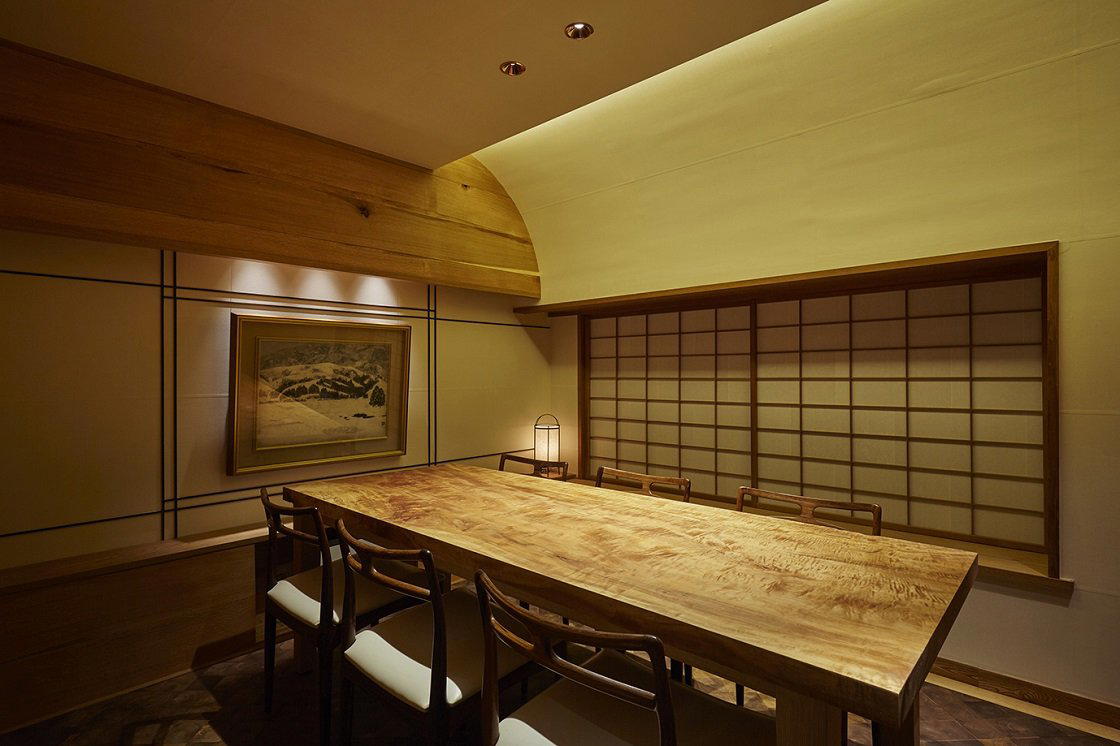
Inside, the spatial logic of chef-led Osaka restaurants tends to prioritise proximity to the kitchen. Whether the format here runs to a counter arrangement, a small number of tables, or something in between, the coordinates of Kurosakicho suggest a venue scaled for focused service rather than high-volume covers. The sensory register that defines these spaces in Osaka's Kita Ward is particular: the smell of dashi or stock built through the afternoon, ceramic and lacquerware arranged at close range, and the rhythm of a kitchen operating without the buffer of a large front-of-house team. Aka to Shiro and Calendrier operate in a similar register within the same city, each using spatial restraint as an amplifier of culinary focus.
Where フナシェフ Sits in the Osaka Dining Conversation
Osaka's restaurant scene is not monolithic. At the summit of the market, three-Michelin-star operations like HAJIME set a benchmark for formal, technically ambitious dining. Below that, a wide mid-tier operates with varying degrees of seasonal discipline and chef visibility. フナシェフ's current absence from major award lists means it functions in the space where reputation is built gradually through word of mouth, consistent execution, and the loyalty of a local clientele, a pattern common to many Osaka restaurants before they attract wider critical attention.
For context on the broader Kansai region, the dining culture across Osaka, Kyoto, and Nara rewards patient, repeated engagement. Gion Sasaki in Kyoto and akordu in Nara each built credibility through a similar accumulation of trust before achieving wider recognition. The trajectory is familiar, and フナシェフ's Kita Ward address puts it in a neighbourhood where the audience is attentive enough to notice when a kitchen delivers with consistency. Further afield, the model has parallels in how Goh in Fukuoka and Harutaka in Tokyo built reputations through precision and repetition before entering formal award cycles.
Across Japan's wider regional scene, this pattern repeats. Venues in cities like Nanao, Sapporo, Takashima, and Nishikawa Machi, including 一本木 名川製, 旧仁山乃, 湖畔荘茶, and 鳥羽屋, demonstrate that Japan's most interesting chef-led dining increasingly happens away from the obvious metropolitan circuits. フナシェフ's Kurosakicho position is not a disadvantage; it is consistent with a model that values proximity to a dedicated local audience over high-visibility tourist positioning.
The Osaka Frame: What the City Demands of Its Restaurants
Dining in Osaka carries a particular weight of expectation. The city's food culture is demanding in a way that differs from Tokyo's: where Tokyo diners often reward formal prestige and lineage, Osaka's regulars tend to calibrate more on value and flavour delivered per sitting. This is a city where a restaurant that does not hold its ground on product quality loses its local base quickly. The competitive pressure is horizontal rather than vertical, meaning that surviving and building in Osaka requires sustained execution rather than a single headline moment.
This frame places venues like Az and Birdland in Sakai in useful comparative relief: each has built on Osaka-area credibility through a clear offer and consistent delivery. Internationally, the model has something in common with how Le Bernardin in New York City or Atomix in New York City maintain credibility through rigour rather than novelty, a standard that applies across culinary cultures when a venue stakes its reputation on precision.
Know Before You Go
| Detail | Notes |
|---|---|
| Address | 6-4 Kurosakicho, Kita Ward, Osaka, 530-0023, Japan |
| Booking | No website or phone number is publicly listed at time of publication. Advance research via local reservation platforms or concierge contact is recommended. |
| Price Range | Comparable Kita Ward chef-led formats range widely; budget accordingly and verify directly. |
| Access | Kurosakicho sits within Kita Ward, accessible from Umeda, Nakatsu, and nearby Osaka Metro stations. |
| Further Reading | See our full Osaka Shi restaurants guide for broader context and comparable venues. |
Cost and Credentials
Comparable venues nearby, for context on price, style, and recognition.
| Venue | Cuisine | Price | Notes |
|---|---|---|---|
| フナシェフThis venue — the venue you are viewing | Kita, Modern French Tasting Counter | $$$$ | Not listed |
| Shimanami French MURAKAMI | Not listed | $$$$ | Kita, Modern French with Ehime Influences |
| La Baie | Not listed | $$$$ | Kita, Modern French Fine Dining with Seafood Focus |
| ラシーム | Not listed | $$$$ | Chūō, Modern French with Japanese Ingredients |
| Tenjinbashi Aoki | Kita, Michelin-Starred Kaiseki | $$$$ | Not listed |
| ç©ºå¿ ä¼½èå | Kita, Seasonal Kaiseki Omakase | $$$$ | Not listed |
Continue exploring
More in Osaka
Restaurants in Osaka
Browse all →

Bars in Osaka
Browse all →
Hotels in Osaka
Browse all →


Wineries in Osaka
Browse all →
At a Glance
- Intimate
- Elegant
- Modern
- Date Night
- Special Occasion
- Chefs Counter
- Open Kitchen
- Sake Program
Current opening hours
- Monday
- 12–2:30 PM, 6–8:30 PM
- Tuesday
- 12–2:30 PM, 6–8:30 PM
- Wednesday
- 12–2:30 PM, 6–8:30 PM
- Thursday
- 12–2:30 PM, 6–8:30 PM
- Friday
- 12–2:30 PM, 6–8:30 PM
- Saturday
- 12–2:30 PM, 6–8:30 PM
- Sunday
- 12–2:30 PM, 6–8:30 PM
Hours can change for holidays and private events. Last verified .
Quiet, focused kitchen energy with warm hospitality and a private, intimate counter atmosphere.