ラシーム pairs Modern French with Japanese Ingredients with an open kitchen and chefs counter, making it a formal, quiet dinner spot for an extended evening with a sommelier-led wine list.
Pearl is the En Primeur Club membership app — saves, bookings, and concierge access live there. Same editors, same standards.
- Address
- 3 Chome-2-15 Kawaramachi, Chuo Ward, Osaka, 541-0048, Japan
- Phone
- +81662222010
- Website
- la-cime.com
- Directions
- Get directions
 Saves & bookings on Pearl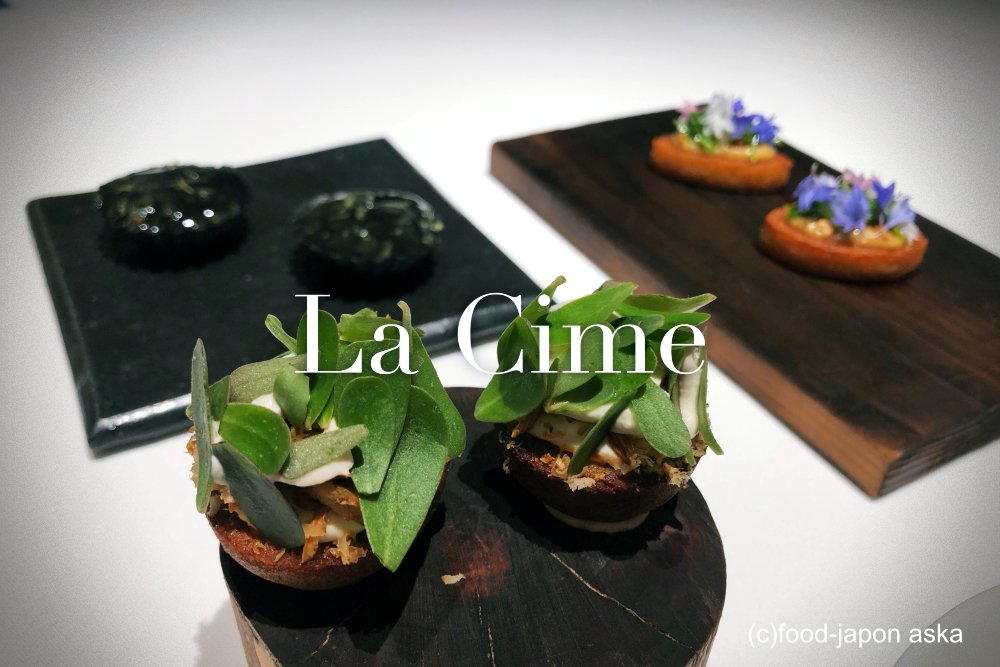
A Room That Sets the Terms
In Osaka's Chuo Ward, the streets around Kawaramachi carry a particular kind of culinary density. This is a neighbourhood where proximity to Dotonbori's commercial noise gives way, block by block, to quieter premises with serious intentions. The physical experience of arriving at ラシーム (Racine) follows that logic: the transition from street to interior is abrupt enough to separate the city outside from the dining room within.
Osaka's upper-tier French-inflected dining has long occupied a specific architectural register. Counters built for focus rather than spectacle, lighting calibrated to concentrate attention on what sits in front of you, materials chosen to age rather than impress on first contact. ラシーム works within that tradition. The space at 3 Chome-2-15 Kawaramachi does not perform warmth through surface-level decorative gestures; it earns atmosphere through proportion and restraint, the way serious Japanese restaurants across every genre tend to understand that silence and considered dimension are themselves forms of hospitality.
That spatial philosophy reflects a Japanese preference for rooms that support the food rather than compete with it. The architecture of attention, the sense that the room exists to make food more legible rather than to compete with it, runs through both forms. For visitors arriving from abroad, this can feel unfamiliar at first: there is no grand entry statement, no theatrical reveal. The room simply begins to work on you.
Where ラシーム Sits in Osaka's Premium Dining Tier
Osaka operates as Japan's second great dining city, though that ranking obscures how different its restaurant culture is from Tokyo's. The city's premium French scene has historically produced kitchens that translate classical European technique through a Japanese sensibility for precision and product sourcing, rather than simply replicating Paris in Asia. HAJIME in Osaka represents one pole of that tradition, with its three Michelin stars and overtly conceptual framing. ラシーム occupies a position in the same tier but with its own competitive coordinates.
The comparable set for restaurants at this level in Osaka includes counters and small dining rooms where the chef-to-diner ratio is deliberately narrow and booking pressure runs months ahead. Compared to Ajikitcho Bunbuan, which sits inside the kaiseki tradition, or Calendrier, which works a different register of contemporary French, ラシーム draws from a shared pool of Osaka diners who prioritize product integrity and format discipline over novelty. That pool is small, the competition within it is serious, and the restaurants that retain standing over multiple seasons tend to do so through consistency rather than reinvention.
For context from outside Osaka, the dynamic is not unlike what plays out at Gion Sasaki in Kyoto or akordu in Nara: premium regional restaurants in Japan's Kansai belt that operate with a clarity of purpose more characteristic of the region's hospitality culture than of the capital's prestige economy.
The Logic of the Menu Format
French haute cuisine in Japan, at the level ラシーム occupies, almost universally operates through a set-menu structure. This is not a concession to control-freak kitchen culture; it is the format that allows the kitchen to maintain the sourcing relationships and preparation timelines that justify the price point. Seasonal produce from specific Japanese prefectures, proteins handled through techniques that require advance scheduling, sauces built across multiple days: none of these can absorb the unpredictability of à la carte volume at a small-format restaurant.
The seasonal calendar matters here. Autumn in the Kansai region brings matsutake mushrooms, sanma, and the first cold-weather root vegetables that shift the flavour register of French-Japanese menus toward deeper, more mineral territory. Spring menus lean differently: asparagus, sakura shrimp, young greens that allow for lighter preparations with higher acidity. A visit in either season to a restaurant at this level produces a materially different experience, and diners who return across seasons are effectively eating at two distinct menus connected only by the kitchen's underlying technique.
That seasonal calibration is one of the reasons restaurants in this tier, including Aka to Shiro and Az in Osaka's broader competitive set, attract the kind of repeat visitors who build an annual dining calendar rather than treating a single visit as complete. The format rewards planning and punishes impulse.
Osaka Against the National comparable set
Placing ラシーム within Japan's broader fine-dining context requires acknowledging how the country's regional restaurant culture operates. Tokyo dominates sheer volume and international attention, with counters like Harutaka in Tokyo drawing global reservation pressure. But Osaka, Kyoto, Fukuoka, and the smaller cities of the Kansai arc each maintain restaurant cultures with their own internal logic. Goh in Fukuoka demonstrates how a regional city can sustain a kitchen with national relevance; the same pattern applies in Osaka.
Further afield, the comparison points extend to places like a restaurant in Nanao or one in Takashima, which demonstrate that premium Japanese dining is not exclusively an urban phenomenon. But the concentration of high-end French-inflected restaurants in Osaka's Chuo Ward reflects the city's particular appetite for European technique filtered through Japanese discipline, a combination that has sustained serious kitchens in this neighbourhood for decades.
International comparisons are instructive but limited. Le Bernardin in New York City and Atomix in New York City operate in a different regulatory, cultural, and economic environment, but both share with ラシーム a commitment to format discipline as the primary vehicle for quality assurance. The mechanism is the same; the expression is specific to place.
Planning a Visit
Restaurants at this level in Osaka's Chuo Ward require advance planning. Reservations are essential, especially for weekend seatings. Visiting outside peak autumn and spring seasons can open availability, though it also means encountering a menu in transition rather than at peak seasonal alignment.
Dress is formal. Related Osaka options worth considering alongside ラシーム include Ajihei Sonezaki and Birdland in Sakai for contrasting formats at a similar commitment level.
Know Before You Go
- Address: 3 Chome-2-15 Kawaramachi, Chuo Ward, Osaka, 541-0048, Japan
- Getting there: Chuo Ward is served by multiple Osaka Metro lines; Kawaramachi is accessible from Hommachi and Shinsaibashi stations
- Booking: Reservations are essential.
- Format: Set-menu format standard for French haute cuisine at this price tier in Osaka
- Leading season: Autumn (matsutake, sanma) and spring (asparagus, sakura shrimp) deliver particularly seasonally defined menus
- Dress: Smart to formal; in line with Osaka's French haute cuisine conventions
Nearby-ish Comparables
Comparable venues nearby, for context on price, style, and recognition.
| Venue | Cuisine | Price | Notes |
|---|---|---|---|
| ラシームThis venue — the venue you are viewing | Modern French with Japanese Ingredients | $$$$ | Not listed |
| ミチノ・ル・トゥールビヨン | Contemporary French | $$$$ | Fukushima |
| フナシェフ | Modern French Tasting Counter | $$$$ | Kita |
| ラ・ベカス | Contemporary French Fine Dining | $$$$ | Chūō |
| ピエール | Modern French-Japanese Fusion | $$$$ | Kita |
| Calendrier | Seasonal French Cuisine | $$$ | Chūō |
Continue exploring
More in Osaka
Restaurants in Osaka
Browse all →




Bars in Osaka
Browse all →




Hotels in Osaka
Browse all →




Wineries in Osaka
Browse all →
At a Glance
- Elegant
- Intimate
- Minimalist
- Sophisticated
- Modern
- Celebration
- Special Occasion
- Date Night
- Business Dinner
- Open Kitchen
- Chefs Counter
- Design Destination
- Extensive Wine List
- Sommelier Led
- Local Sourcing
Current opening hours
- Monday
- 6–10 PM
- Tuesday
- 6–10 PM
- Wednesday
- 6–10 PM
- Thursday
- 6–10 PM
- Friday
- 6–10 PM
- Saturday
- 12–3 PM, 6–10 PM
- Sunday
- Closed
Hours can change for holidays and private events. Last verified .
Minimal, dark grey dining room with serene, refined atmosphere designed to showcase each dish as a work of art.