Shimanami French MURAKAMI serves modern French with Ehime influences, plus a sake program and quiet, formal pacing that suits lunch or dinner.
Pearl is the En Primeur Club membership app — saves, bookings, and concierge access live there. Same editors, same standards.
- Address
- 102 1 Chome-13-15 Tenjinbashi, Kita Ward, Osaka, 530-0041, Japan
- Phone
- +81668092820
- Website
- shimanami-french.com
- Directions
- Get directions
 Saves & bookings on Pearl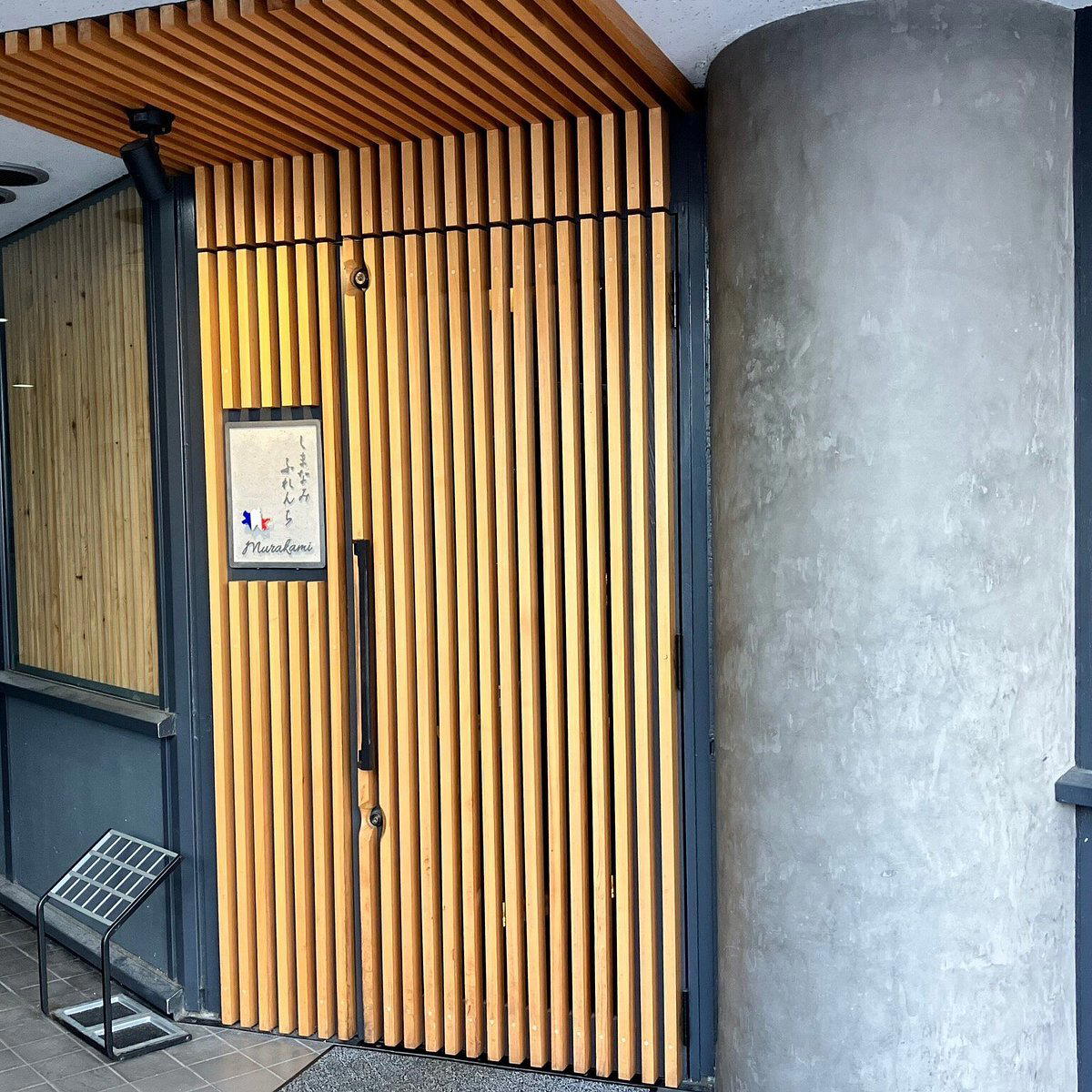
Tenjinbashi, French Technique, and the Osaka Instinct for Precision
Tenjinbashi-suji, one of Osaka's longest covered shopping arcades, does not immediately read as fertile ground for French cuisine. The street runs north from Tenjinbashi through Kita Ward, thick with takoyaki counters, second-hand clothing, and the particular energy of a neighbourhood that feeds working people rather than visiting ones. Shimanami French MURAKAMI sits in this context at 1 Chome-13-15 Tenjinbashi, and that address is itself a kind of editorial statement. French restaurants in Osaka's premium tier tend to cluster around Minami, Shinsaibashi, or the hotel dining rooms near Umeda. Shimanami French MURAKAMI is a restaurant in Osaka, serving modern French with Ehime influences at about $150 per person. A French table in Tenjinbashi occupies a different position, one that prioritises neighbourhood rootedness over postcode prestige.
Osaka's relationship with French cooking is longer and more considered than the city's reputation for street food and kuidaore excess might suggest. The city supports a serious cohort of French restaurants at multiple price points, from high-volume brasserie formats near the station corridors to small, chef-driven counters where the menu rotates on the chef's terms rather than seasonal convention. Venues like Calendrier and Az represent the more visible end of that French presence in Osaka. Shimanami French MURAKAMI operates in the same broader category while occupying a geographically and tonally distinct position within it.
What the Name Tells You Before You Sit Down
The name Shimanami references the Nishiseto Expressway corridor connecting Onomichi in Hiroshima Prefecture to Imabari in Ehime, a route famous for its island-hopping character and the produce and seafood pulled from the waters of the Seto Inland Sea. In the context of a French restaurant, that reference is a menu signal rather than a decorative one. The Seto Inland Sea produces sea bream, octopus, and citrus at a standard that supplies particularly credentialed kitchens in western Japan. When a French restaurant in Osaka incorporates that geography into its name, it is making a claim about sourcing philosophy and regional identity that precedes any dish arriving at the table.
This is a pattern visible across Japan's French restaurant generation that came of age after 2000: the integration of hyper-specific Japanese geography into otherwise classically structured French menus. At HAJIME in Osaka, the sourcing precision operates at a global scale. At smaller neighbourhood-facing restaurants, the sourcing logic tends to contract to a specific prefecture or coastal corridor, which can produce a more legible and seasonally honest menu. The Shimanami reference suggests Murakami is working in the latter mode.
Menu Architecture: How the Structure Makes the Argument
French menus in Japan's mid-to-high tier follow recognisable formats: a set-course structure (often a choice between lunch and dinner courses at different price points), with amuse-bouche, appetiser, fish, meat, cheese, and dessert sequences that mirror classical French progression. What differentiates restaurants within that format is where they concentrate their culinary argument. Some kitchens make the case in the sauce work. Others invest most in the primary ingredient sourcing. Some collapse the classical sequence into a shorter, tighter format that trades range for intensity.
A restaurant naming itself after the Shimanami Kaido is signalling that the primary ingredient is the argument. The French technique, in this reading, is the frame rather than the subject. That orientation places Murakami in a recognisable subset of Japan-based French kitchens, one that includes restaurants like akordu in Nara, where local ingredient logic shapes the menu architecture rather than being subordinated to it. It is a more disciplined position than the more common approach of applying French luxury ingredients (foie gras, truffle, langoustine) to a Japanese format, because it requires the chef to build a compelling argument from locally specific, often less internationally legible produce.
For diners coming from the broader Kansai French circuit, the comparison set is instructive. Gion Sasaki in Kyoto operates with a Japanese kaiseki logic inside a broadly Western format. Murakami appears to be working in the inverse direction: French structure, Japanese ingredient specificity. That distinction matters for what to expect from the sequencing, the portion weight, and the register of the meal.
Osaka's French Tier and Where Murakami Sits Within It
Osaka's French restaurant scene stratifies clearly. At the leading, a small number of Michelin-recognised rooms command the highest price points and attract both domestic fine-dining regulars and international visitors. Below that, a wider tier of chef-owned small restaurants operates on tighter margins, shorter teams, and more personal menus. These restaurants rarely generate the kind of international press coverage that follows Michelin stars, but they are where Osaka's most characterful French cooking often happens.
Murakami's Tenjinbashi address, the specificity of the regional sourcing reference, and the format implied by the name all suggest this second tier. That is not a diminishment. In Osaka, as in Tokyo, particularly technically precise and personally authored French cooking happens at counters without awards recognition, run by chefs who have trained seriously and chosen neighbourhood-scale operations over visibility. Aka to Shiro and Ajihei Sonezaki represent the broader range of serious, chef-driven dining in the Kita Ward area. For diners building a Osaka itinerary around French and French-influenced cooking, see also Ajikitcho Bunbuan for the kaiseki counterpart to what Murakami is doing with French structure.
For context on how Japanese regional French cooking sits relative to French fine dining elsewhere in Asia and internationally, Le Bernardin in New York City and Atomix in New York City offer useful reference points for how technique-first and ingredient-first arguments play out at the highest levels of the format. In Japan's regional French scene, the ingredient-first argument is increasingly the dominant one, and Murakami appears to be working within that current.
Planning a Visit
Shimanami French MURAKAMI is located in Kita Ward at 1 Chome-13-15 Tenjinbashi, Osaka 530-0041, within walking distance of Tenjinbashi-suji Rokuchome Station on the Sakaisuji and Tanimachi lines. The Tenjinbashi-suji arcade area is easily reached from central Osaka in under twenty minutes by subway from Namba or Shinsaibashi. For a restaurant at this address and in this format, advance reservation is the standard expectation; walk-in availability at French restaurants of this type in Osaka is uncommon, particularly for dinner. Advance reservation is essential, and the restaurant is open Monday, Tuesday, Thursday through Sunday from 12 to 3 PM and 6 to 10 PM, with Wednesday closed.
Diners interested in exploring the wider regional French and contemporary fine-dining circuit from Osaka might also consider Goh in Fukuoka and Harutaka in Tokyo for how ingredient-driven precision plays out at different scales and in different regional contexts across Japan.
What It’s Closest To
Comparable venues nearby, for context on price, style, and recognition.
| Venue | Cuisine | Price | Notes |
|---|---|---|---|
| Shimanami French MURAKAMIThis venue — the venue you are viewing | Modern French with Ehime Influences | $$$$ | Not listed |
| ルイーズ | Modern French with Japanese Influences | $$$$ | Nishi |
| ピエール | Modern French-Japanese Fusion | $$$$ | Kita |
| フナシェフ | Modern French Tasting Counter | $$$$ | Kita |
| ラシーム | Modern French with Japanese Ingredients | $$$$ | Chūō |
| ミチノ・ル・トゥールビヨン | Contemporary French | $$$$ | Fukushima |
Continue exploring
More in Osaka
Restaurants in Osaka
Browse all →




Bars in Osaka
Browse all →




Hotels in Osaka
Browse all →




Wineries in Osaka
Browse all →
At a Glance
- Elegant
- Sophisticated
- Intimate
- Date Night
- Special Occasion
- Standalone
- Sake Program
- Local Sourcing
Current opening hours
- Monday
- 12–3 PM, 6–10 PM
- Tuesday
- 12–3 PM, 6–10 PM
- Wednesday
- Closed
- Thursday
- 12–3 PM, 6–10 PM
- Friday
- 12–3 PM, 6–10 PM
- Saturday
- 12–3 PM, 6–10 PM
- Sunday
- 12–3 PM, 6–10 PM
Hours can change for holidays and private events. Last verified .
Refined and intimate atmosphere in a hidden location near Osaka Tenmangu Shrine, emphasizing a natural and thoughtful dining experience.