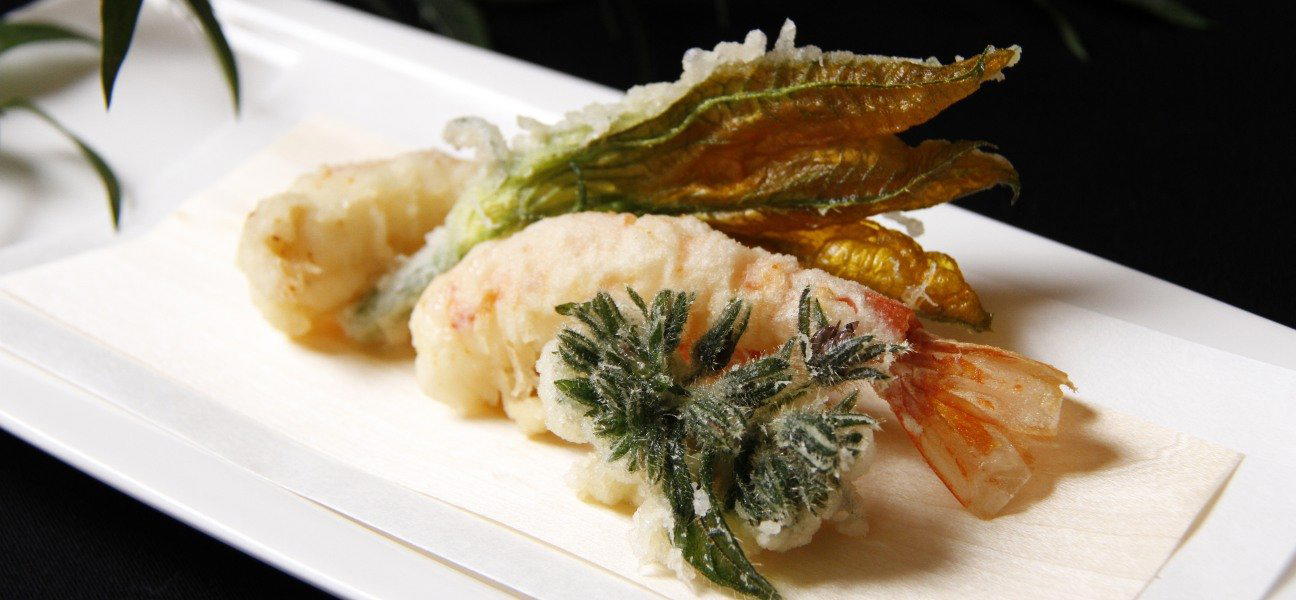
Tempura in Kushiro operates at the intersection of Hokkaido's seafood abundance and a cooking tradition that demands precise temperature control and restraint. 天ぷら彩, located in the Kawakamicho district, represents the regional face of a format that Tokyo refined to haute cuisine. For visitors exploring eastern Hokkaido's dining scene, it offers a grounded alternative to the city's more prominent seafood restaurants.
Pearl is the En Primeur Club membership app — saves, bookings, and concierge access live there. Same editors, same standards.

Where Hokkaido's Larder Meets a Demanding Technique
Kushiro sits at the eastern edge of Hokkaido, facing a stretch of the Pacific known for cold-water productivity. The Oyashio Current pushes nutrient-rich water along this coastline, and what surfaces from it — shrimp, crab, sea urchin, smelt, and a rotating cast of seasonal fish — forms the ingredient foundation for the city's restaurants. Tempura, as a format, has an unusual relationship with this kind of larder. It asks the cook to intervene only briefly: a thin batter, hot oil, exact timing. The ingredient cannot hide. In cities like Tokyo, that logic drove tempura into a rarefied tier, with counters like those in Ginza charging omakase prices that rival the highest kaiseki rooms. In a city like Kushiro, the same logic applies to humbler, fresher, and often more interesting raw material.
天ぷら彩 occupies the ground floor of the Royal City Court building in Kawakamicho, a residential-commercial neighbourhood that sits away from the tourist-facing clusters around the harbor. Arriving, you are in working Kushiro rather than showcase Kushiro , a meaningful distinction in a city where the fishing industry is not decorative but structural. That setting is not incidental to what tempura means here. Hokkaido's eastern coast produces ingredients that rarely reach Osaka or Tokyo restaurant counters in the condition they leave the water. The short distance from catch to kitchen is the editorial point; 天ぷら彩 makes its case through proximity.
The Sourcing Logic Behind Tempura in Eastern Hokkaido
Tempura's format , single pieces, cooked to order, served immediately , strips out any supply-chain buffer. Oil temperature drops the moment batter-coated seafood enters it, and the window between correctly cooked and overdone is measured in seconds rather than minutes. That precision requirement means the technique rewards exceptional raw material and punishes mediocrity. In Hokkaido, where shrimp species like botan ebi and hokkai shrimp are harvested close to shore, and where seasonal fish cycles are sharp and well-documented, a tempura restaurant has access to ingredients that change meaningfully across the calendar year.
The editorial comparison is worth making explicitly. At venues like Harutaka in Tokyo or the leading kaiseki tables such as Gion Sasaki in Kyoto, the argument for premium pricing rests partly on sourcing: fish flown in from specific markets, vegetables from named farms, shellfish held under controlled conditions. In a port city like Kushiro, the sourcing argument runs in a different direction. Distance from the catch is minimal. The ingredient reaches the kitchen faster, and the cook's job becomes expressing that freshness rather than compensating for transit. This is a less glamorous pitch than the Tokyo counter model, but it is not a lesser one. Restaurants like Goh in Fukuoka and akordu in Nara have built serious reputations by leaning into regional supply rather than national prestige sourcing networks.
Hokkaido's tempura scene is less codified than its sushi or ramen formats. There is no dominant style or famous practitioner who has defined what Hokkaido tempura should be. That absence of a template is both a challenge and an opening. Restaurants like 天ぷら彩 operate in a category where the competition comes from within the city rather than from a nationally benchmarked peer set. The quality ceiling is set by ingredient access and kitchen discipline, not by a historical canon.
Kushiro's Dining Character and Where Tempura Fits
Kushiro's restaurant culture skews toward seafood in forms that require minimal intervention , fresh sashimi, simply grilled fish, ramen built on fish-based broths. Tempura occupies a middle position: it applies technique, but the technique is designed to enhance rather than transform. That places it in a different register from the elaborate kaiseki multi-course format, and closer to the approachable end of the quality-focused dining spectrum in the city. Visitors arriving in Kushiro to eat well will find the harbour area restaurants the most visible option, but the Kawakamicho address situates 天ぷら彩 in a neighbourhood used by residents rather than configured for passing visitors.
For context on how regional Japanese dining of this type compares across the country, our full Kushiro restaurants guide maps the city's broader dining options. Peer venues in other Hokkaido and regional Japanese contexts include 夫仁山乃介 in Sapporo and 湖畔荘庵 in Takashima. Beyond Hokkaido, the tempura and precision-ingredient tradition runs through venues like 一本木 能登川制 in Nanao and the more experimental approaches seen at HAJIME in Osaka. For international reference on ingredient-led technique at the highest level, the fish-focused discipline of Le Bernardin in New York City and the Korean-influenced precision of Atomix in New York City illustrate how seriously sourcing-led cooking can be taken across different culinary traditions.
Other regional Japanese venues worth reading alongside this one include 奥羽山荘 in Nishikawa Machi, Birdland in Sakai, Bistro Ange in Toyohashi, Blue Ocean Steak in Nakagami District, bodai in 那智勝浦町, and Cafe Naoshima Konichiwa in Naoshima. These are venues where regional identity and ingredient sourcing define the proposition as much as technique or presentation. Also of interest in the category of Japanese ingredient-focused dining: 炙伸, also in Kushiro, which applies a different technique tradition to similarly sourced eastern Hokkaido produce.
Planning a Visit
天ぷら彩 is located at 4 Chome-2-1 Kawakamicho, Kushiro, Hokkaido, on the ground floor of the Royal City Court building. The venue's phone, website, and hours are not published in our database, which makes advance planning more difficult than at venues with a confirmed online presence. In practical terms, that means arriving without a booking carries risk, particularly during Kushiro's summer months when the city draws visitors for its fog-season atmosphere and the Kushiro Marsh. A direct approach to the restaurant in person, or through hotel concierge inquiry, is the most reliable path to confirming availability. Because price range and format data are not confirmed in our records, it is advisable to carry cash and to clarify the menu structure on arrival, as smaller regional tempura restaurants in Japan frequently operate on set-course formats rather than à la carte pricing.
How It Stacks Up
These are the closest comparables we have in our database for quick context.
| Venue | Cuisine | Price | Awards | Notes |
|---|---|---|---|---|
| 天ぷら彩 | This venue | |||
| HAJIME | French, Innovative | ¥¥¥¥ | Michelin 3 Star | French, Innovative, ¥¥¥¥ |
| Harutaka | Sushi | ¥¥¥¥ | Michelin 3 Star | Sushi, ¥¥¥¥ |
| L'Effervescence | French | ¥¥¥¥ | Michelin 3 Star | French, ¥¥¥¥ |
| RyuGin | Kaiseki, Japanese | ¥¥¥¥ | Michelin 3 Star | Kaiseki, Japanese, ¥¥¥¥ |
| Crony | Innovative, French | ¥¥¥¥ | Michelin 2 Star | Innovative, French, ¥¥¥¥ |
Continue exploring
More in Kushiro
At a Glance
- Elegant
- Sophisticated
- Special Occasion
- Date Night
- Sake Program
- Local Sourcing
Intimate counter dining with focused attention on the artistry of tempura frying.