




Set on the shores of Lake Chuzenji inside a UNESCO World Heritage site, The Ritz-Carlton, Nikko occupies the only luxury hotel position in Oku-Nikko — roughly 2.5 hours from Tokyo via the Iroha mountain road. The 94-room property holds Michelin 2 Keys (2024) and a La Liste Top Hotels score of 93.5 points (2026), with rooms, dining, and an onsen spa oriented toward the national park surroundings.
Pearl is the En Primeur Club membership app — saves, bookings, and concierge access live there. Same editors, same standards.
- Address
- 2482 Chūgūshi, Nikko, Tochigi 321-1661
- Phone
- +81 288-25-6666
- Website
- ritzcarlton.com
- Directions
- Get directions
 Saves & bookings on Pearl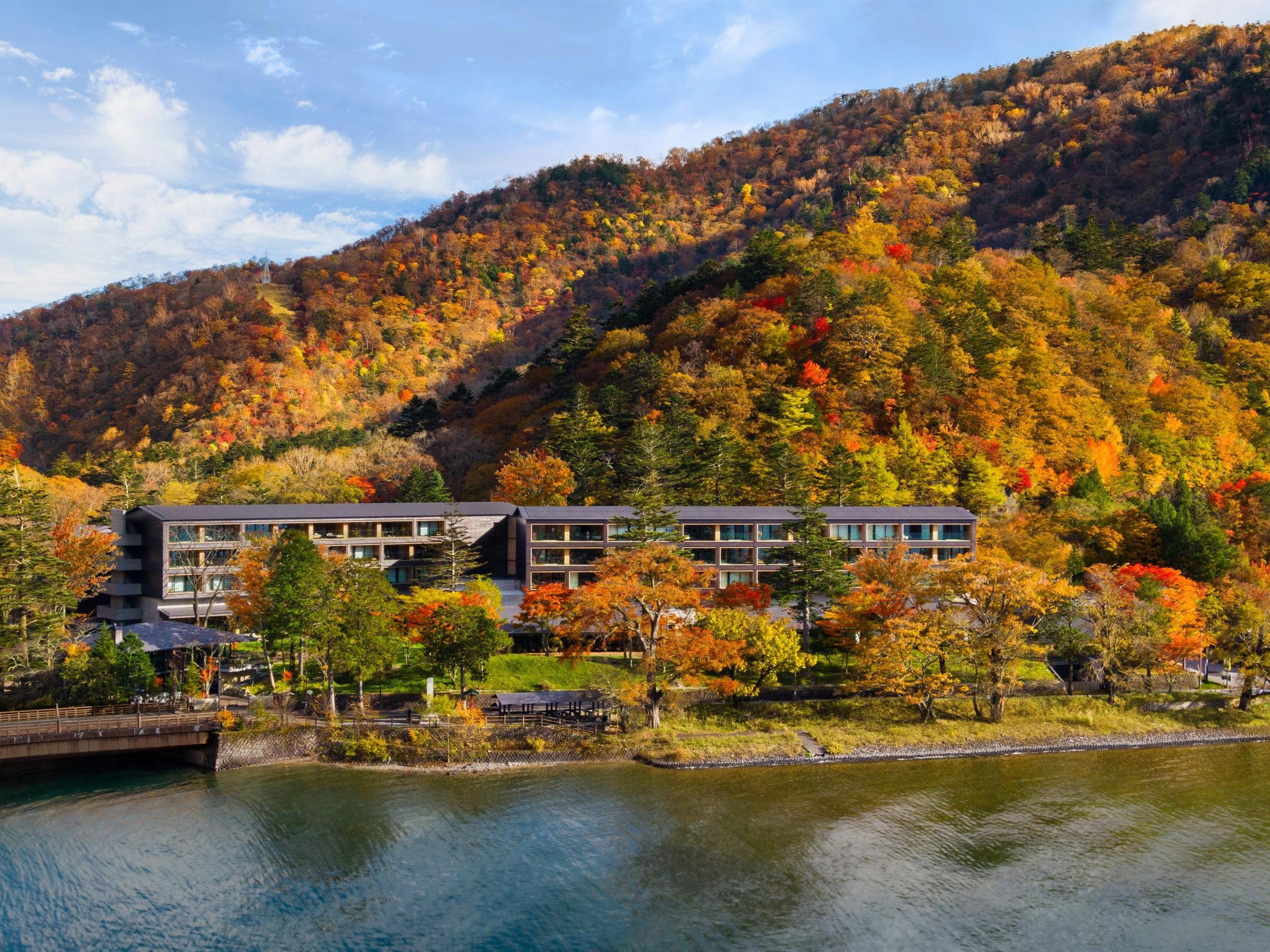
Where Japan's Northern Kanto Meets Considered Luxury
Arriving at Lake Chuzenji by road is an experience in itself. The Iroha Hills route that connects Nikko city to the plateau above involves 48 hairpin bends across a single stretch of mountain pass — a deliberate deceleration built into the geography long before the hotel exists to enforce it. By the time the lake appears and the contemporary glass facade of The Ritz-Carlton, Nikko comes into view against the flank of Mount Nantai, the transition from urban pace to mountain stillness feels complete. That calibrated shift from the urban to the natural is, in effect, the property's opening statement.
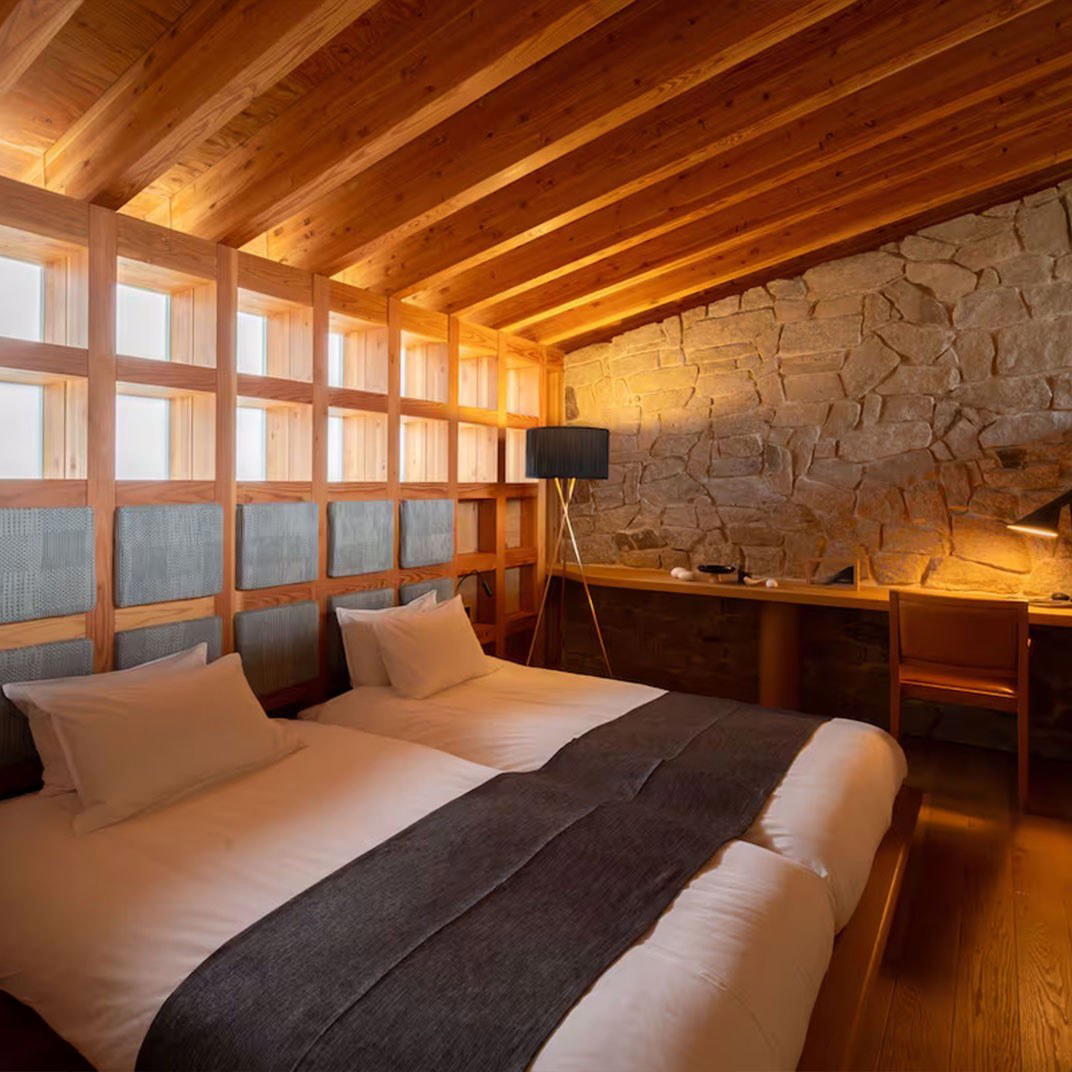
Luxury hotels in Japan's mountain resort areas tend to divide between historic ryokan formats — multi-generation inns built around kaiseki dining and communal bathing ritual, and international-brand properties that bring a different kind of infrastructure to remote terrain. The Ritz-Carlton, Nikko represents the latter category, though it does not import a generic international template. The architecture and interiors absorb local reference: cedarwood textures, sliding doors, fretwork panels derived from Tochigi latticework, and Nikko-bori wood carvings in the spa. The effect is contemporary rather than imitative, more interested in material continuity with the region than in period reproduction.
Service as Spatial Practice
In Japan's luxury hospitality tier, service philosophy rarely announces itself. The benchmark, drawn from ryokan tradition, is anticipatory attention delivered without theatre. Guests rarely ask for something twice; the request, once made, tends not to recur. The Ritz-Carlton operates within a brand culture built around a similar premise: the company's credo of genuine care and service standards is applied here within a setting that reinforces restraint over demonstration. The result is a style of hospitality where the environment does much of the communicative work.
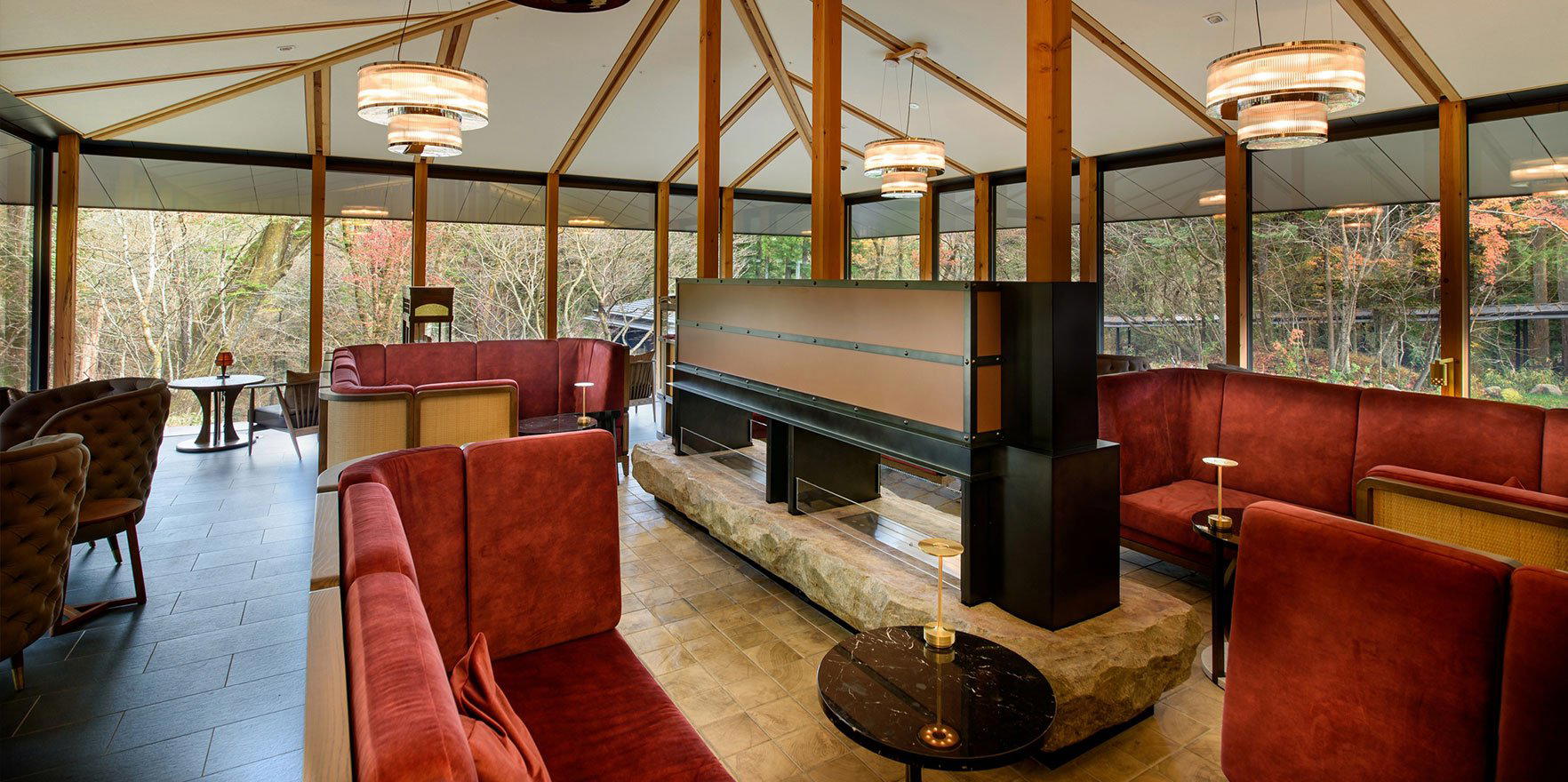
The lobby, oblong and glass-fronted, manages light and volume in a way that invites stillness rather than spectacle. Warm fabrics and a fireplace in The Library create a residential register that larger resort properties often fail to achieve. These spatial choices are service choices: they set the conditions under which guests recalibrate their expectations and, by extension, their experience of staff interaction. In this sense, the building and the team operate as a single hospitality instrument.
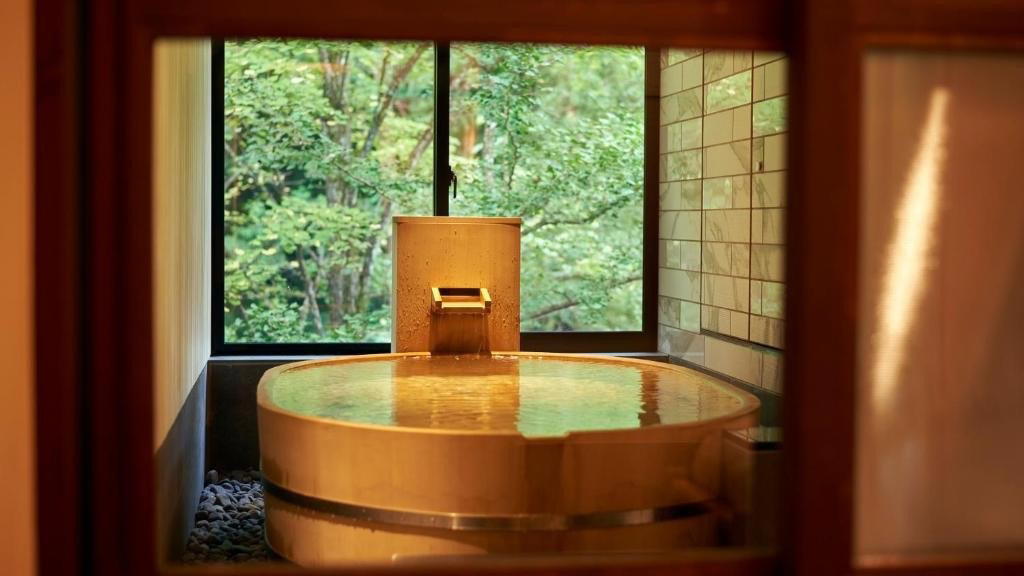
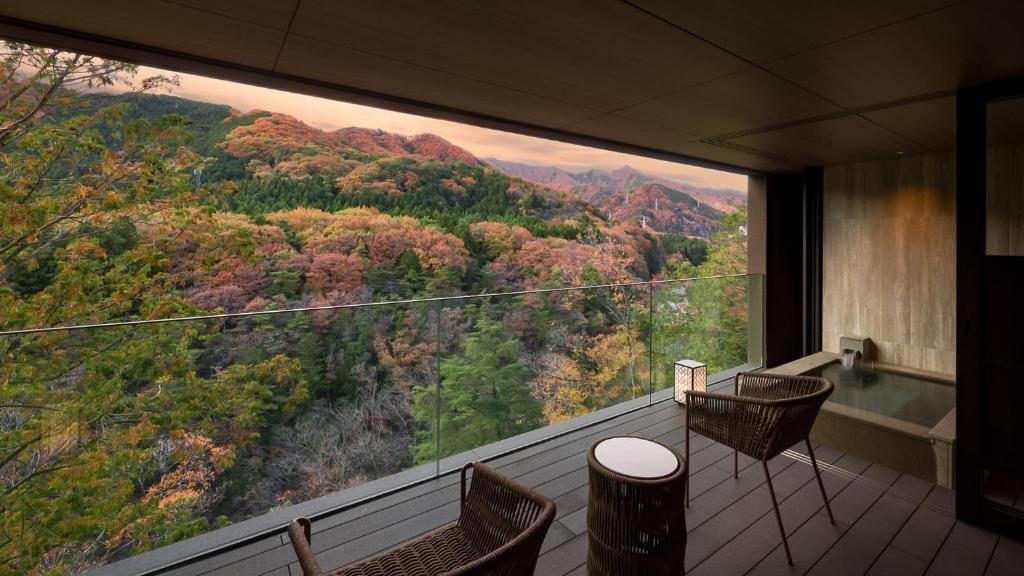
Rooms across the 94-key inventory continue this logic. Western-style beds sit inside spaces that read as Japanese through texture and proportion rather than decoration: silently sliding doors, granite onsen baths, balconies positioned to capture both the lake surface and the cormorant and Black Kite activity above it. At a rack rate entering at approximately $1,706 per night, the property competes in a tier where room count, setting exclusivity, and spa depth are the operative variables, not price alone. At 94 rooms, the scale is large enough to support full resort infrastructure, two restaurants, a spa, multiple wellness formats, while remaining smaller than the international chain properties in Japan's metropolitan centres.
Dining and the National Park as Context
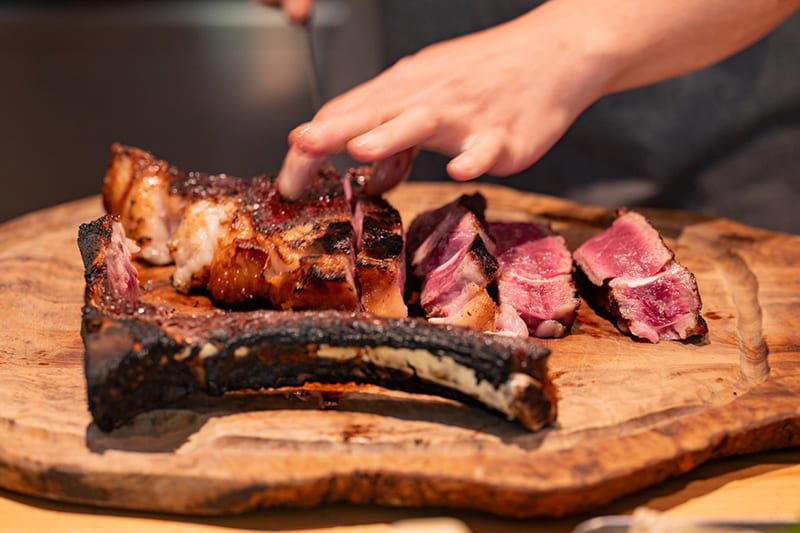
The restaurant pairing at the property, a high-end Japanese dining room alongside a Western-format Lakehouse restaurant, reflects the dual-track approach that premium resort hotels in Japan increasingly adopt. Business travellers and couples on short breaks from Tokyo tend to arrive with different dining expectations, and a dual-format offering provides flexibility without forcing guests into a single register. Both spaces share the fireplace-warmed character of the common areas, and both position their tables against the lake view where the geometry of the building allows it.
The national park setting extends the dining experience beyond the walls: paddleboarding on the lake, cycling through Oku-Nikko, and walking trails through temple approaches are all available in proximity. The UNESCO World Heritage designation that covers the broader Nikko area, encompassing Tosho-gu shrine and the surrounding ancient forest, gives the setting a cultural density that distinguishes it from mountain resort properties where scenery is the only asset. Guests can move between a morning in front of a 17th-century mausoleum complex and an evening in front of the lake from a granite onsen bath without those experiences feeling incongruous. That range of register, sustained over a two- or three-night stay, is what justifies the distance from Tokyo.
Michelin 2 Keys recognition received in 2024 places The Ritz-Carlton, Nikko within the upper segment of Michelin's hotel assessment framework, a system distinct from the restaurant star programme, focused on the overall hotel experience including accommodation, dining, and atmosphere. Together, these credentials confirm what the setting implies: this is the reference luxury property for the Nikko area, operating without a direct local competitor in the same tier.
Comparable properties elsewhere in Japan's luxury resort circuit, Gora Kadan in Hakone, Asaba in Izu, Amanemu in Mie, each occupy dominant positions within their respective regions. The Ritz-Carlton, Nikko holds the same structural position in Oku-Nikko: the only property of its scale and credential in a nationally significant natural and cultural site. Within Nikko itself, alternatives such as Fufu Nikko and Kinugawa Keisui operate at different formats and price points, making cross-property comparison relevant only for travellers choosing between distinct accommodation philosophies.
For travellers building a Japan itinerary around design-led and culturally situated properties, the broader context matters. Properties such as HOTEL THE MITSUI KYOTO in Kyoto, Bvlgari Hotel Tokyo in Tokyo, Zaborin in Kutchan, Benesse House in Naoshima, and ENOWA Yufu in Yufu each represent a distinct node in a country where the gap between average and exceptional accommodation is wide and the geography rewards deliberate planning. Elsewhere in the luxury ryokan and resort tier: Nishimuraya Honkan in Kinosaki-cho, Araya Totoan in Kaga, Sekitei in Hatsukaichi-shi, Azumi Setoda in Onomichi, Beniya Kofuyuden in Awara, Bettei Otozure in Nagato, ANA InterContinental Beppu Resort & Spa in Beppu, Atami Izusan Karaku in Atami, Fufu Kawaguchiko in Fujikawaguchiko, Halekulani Okinawa in Okinawa, and Jusandi in Ishigaki. Beyond Japan: Aman Venice in Venice, Aman New York in New York City, and The Fifth Avenue Hotel in New York City each anchor comparable positions in their respective cities.
Planning a Stay
The practical access question at Nikko is the most important one. A direct Tobu limited express from Asakusa in Tokyo reaches Nikko city in around two hours; from there, buses serve the Chuzenji-ko plateau, including stops near the hotel. Driving from Tokyo takes roughly 2.5 hours via the Nikko Utsunomiya Road, with the final mountain section through the Iroha hairpin bends adding perhaps 20 minutes of concentrated road. The plateau road closes periodically in severe winter conditions, so seasonal timing matters. Spring (late April through May, when the cherry and azalea cycles reach altitude) and autumn (October through November for the maples) represent the periods of highest demand; booking well ahead of either window is advised. The spa, onsen baths, and indoor dining provide sufficient depth of programme for winter visits, when occupancy is lower and the landscape carries snow on the lake edge and the slopes of Mount Nantai. Guests booking through Marriott International's platform can apply Bonvoy programme benefits, which at this property tier can include room category upgrades and late checkout, depending on availability.
For a broader view of where to eat and drink while in the area, our full Nikko restaurants guide covers the wider local scene.
How The Ritz-Carlton, Nikko compares with similar nearby venues.
| Venue | Awards |
|---|---|
| The Ritz-Carlton, Nikko | Michelin 2 Keys |
Recognition history
Dated appearances from independent guides and award organizations, with the underlying list record or original source where available.
Forbes 5-Star
Forbes
La Liste Top Hotels
La Liste
Virtuoso Luxury Hotel Partner
Virtuoso
Conde Nast Gold List
Conde Nast
Michelin 2 Keys
Michelin
Michelin 2 Keys
Michelin
At a Glance
- Elegant
- Sophisticated
- Scenic
- Quiet
- Classic
- Honeymoon
- Romantic Getaway
- Wellness Retreat
- Anniversary
- Weekend Escape
- Panoramic View
- Destination Spa
- Historic Building
- Wi Fi
- Spa
- Pool
- Fitness Center
- Room Service
- Concierge
- Valet Parking
- Mountain
- Wi Fi
- Spa
- Pool
- Fitness Center
- Room Service
- Concierge
- Valet Parking
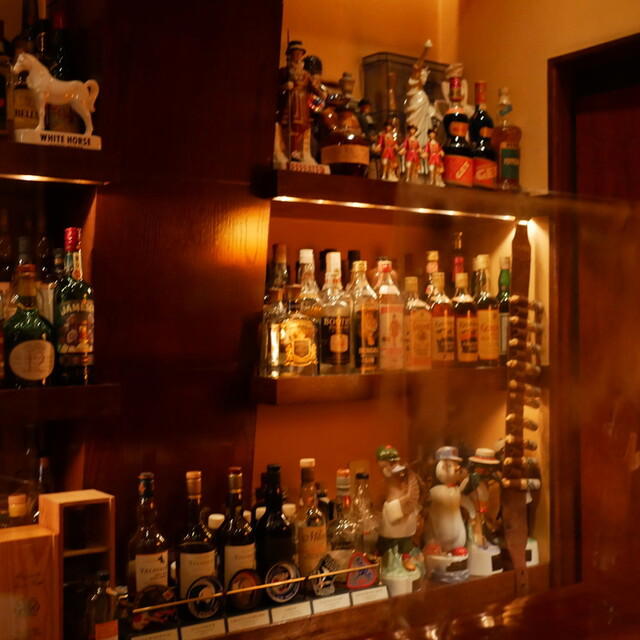
Tranquil and elegant with natural light from floor-to-ceiling windows, cozy fireplaces, and a serene atmosphere blending minimalist Japanese design and luxury.
Know Before You Go
- Getting there
- 2482 Chūgūshi, Nikko, Tochigi 321-1661