
Kinugawa Keisui is a ten-room modern ryokan beside the Kinugawa river in Nikko, priced from $1,073 per night. In-room hot spring baths, a communal onsen complex, and semi-open sunrooms with river-green views define the stay. Its concept restaurant takes wood-fired cooking as its central discipline, applying it across genres rather than within a single tradition.
Pearl is the En Primeur Club membership app — saves, bookings, and concierge access live there. Same editors, same standards.
- Address
- 334-1 Kinugawaonsen Ōhara, Nikko, Tochigi 321-2522
- Phone
- +81288701234
- Website
- resorthotels109.com
- Directions
- Get directions
 Saves & bookings on Pearl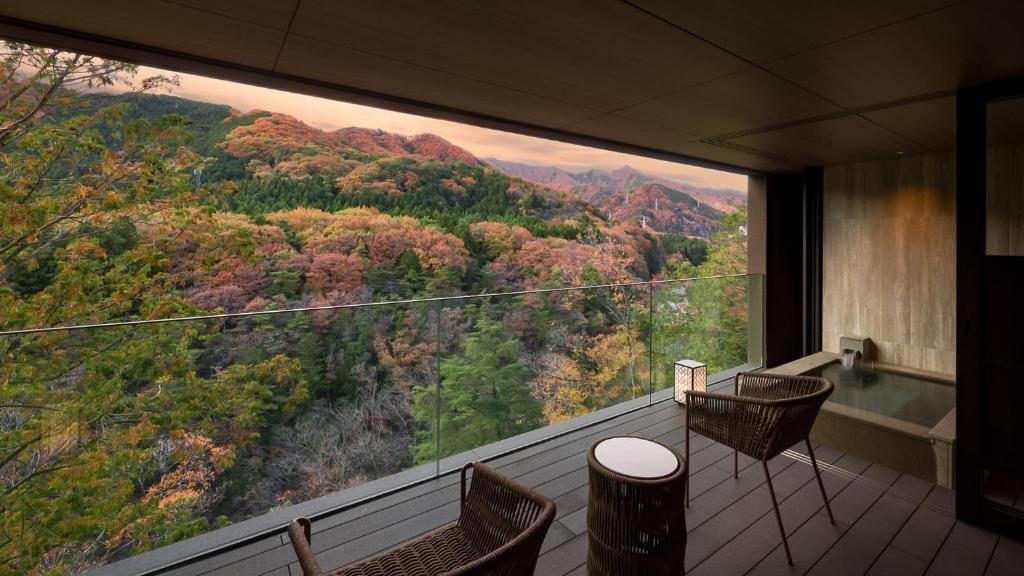
Where the Kinugawa River Sets the Terms
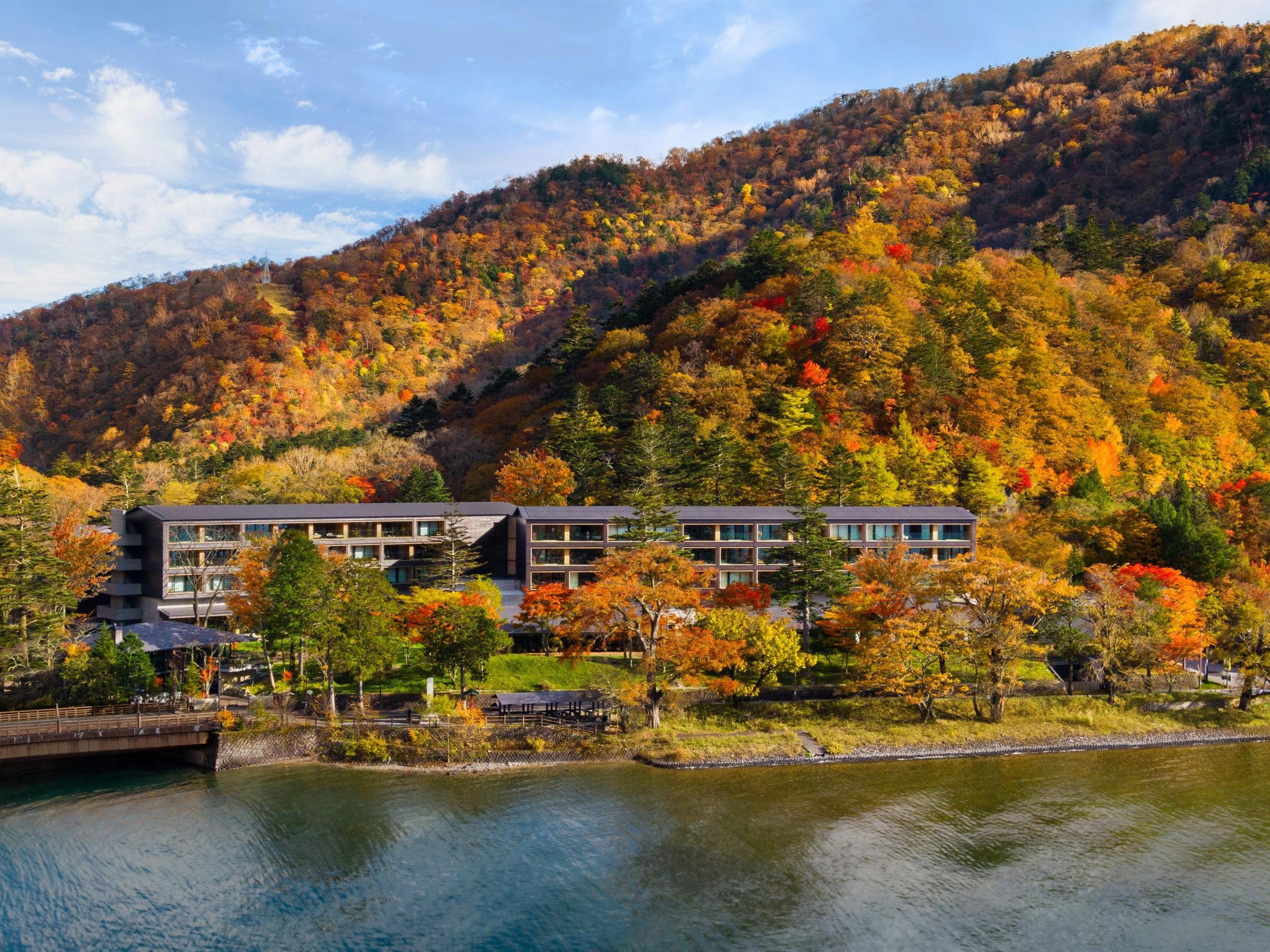
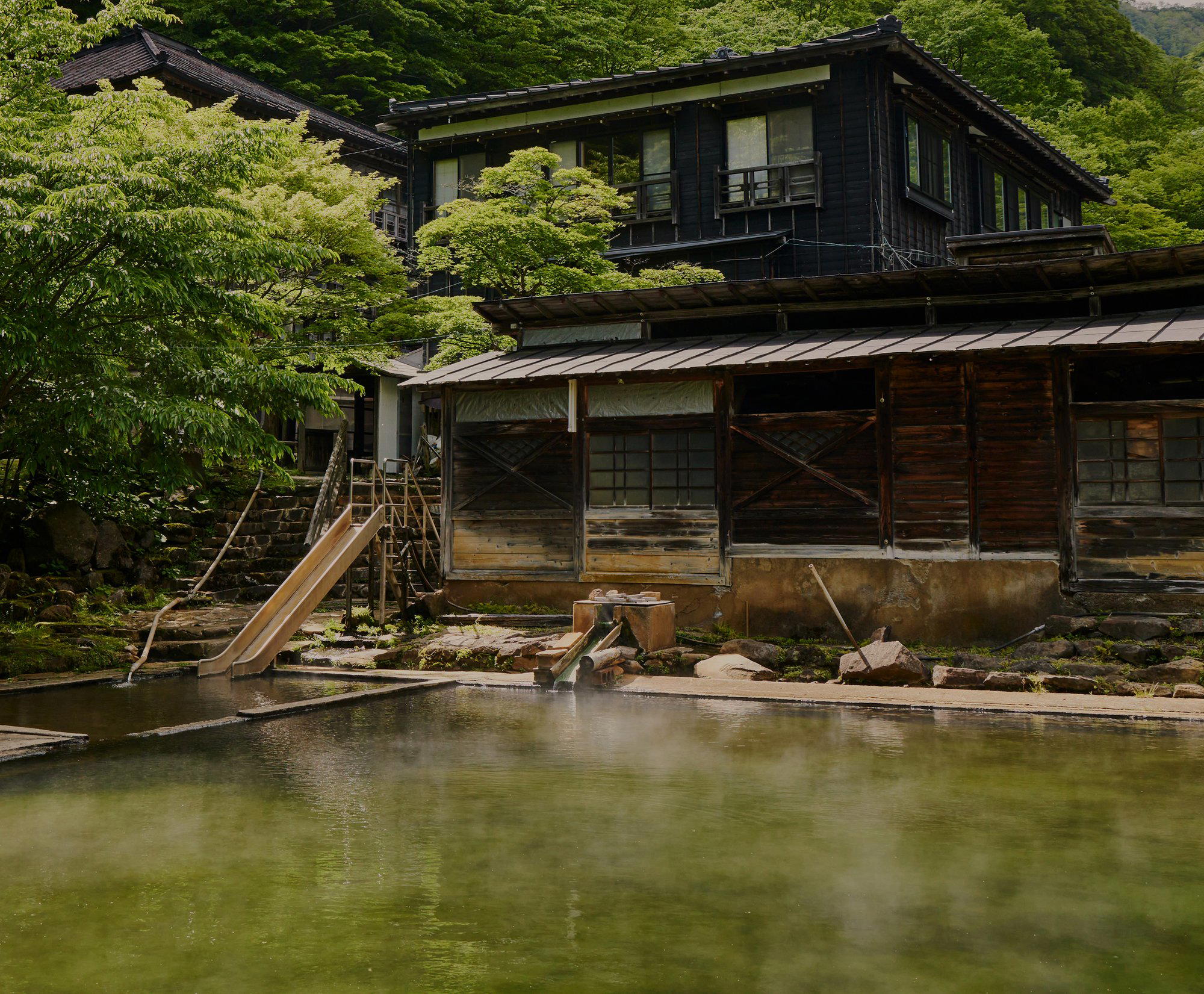
Arrive at Kinugawa Keisui and the river does most of the work before you reach the entrance. The Kinugawa runs fast through this stretch of Tochigi Prefecture, and the property is positioned close enough to the bank that the sound carries through open balcony doors. Nikko itself is one of Japan's most documented holiday destinations, drawing visitors to its Toshogu shrine complex and dense cedar forests since the Edo period, but the Kinugawa gorge corridor operates on a quieter register: spa towns, thermal waters, and the particular rhythm of a stay built around unhurried immersion rather than temple itineraries.
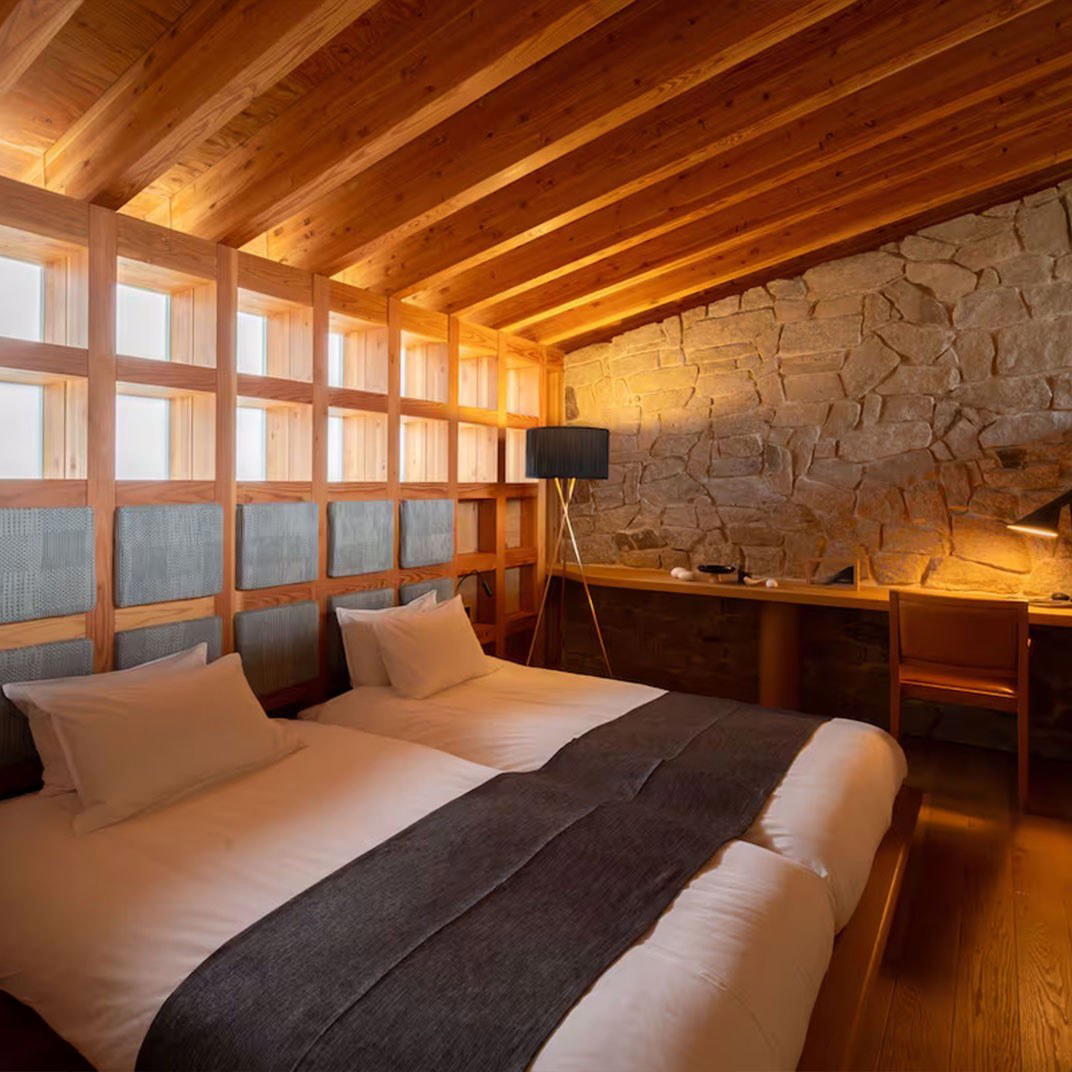
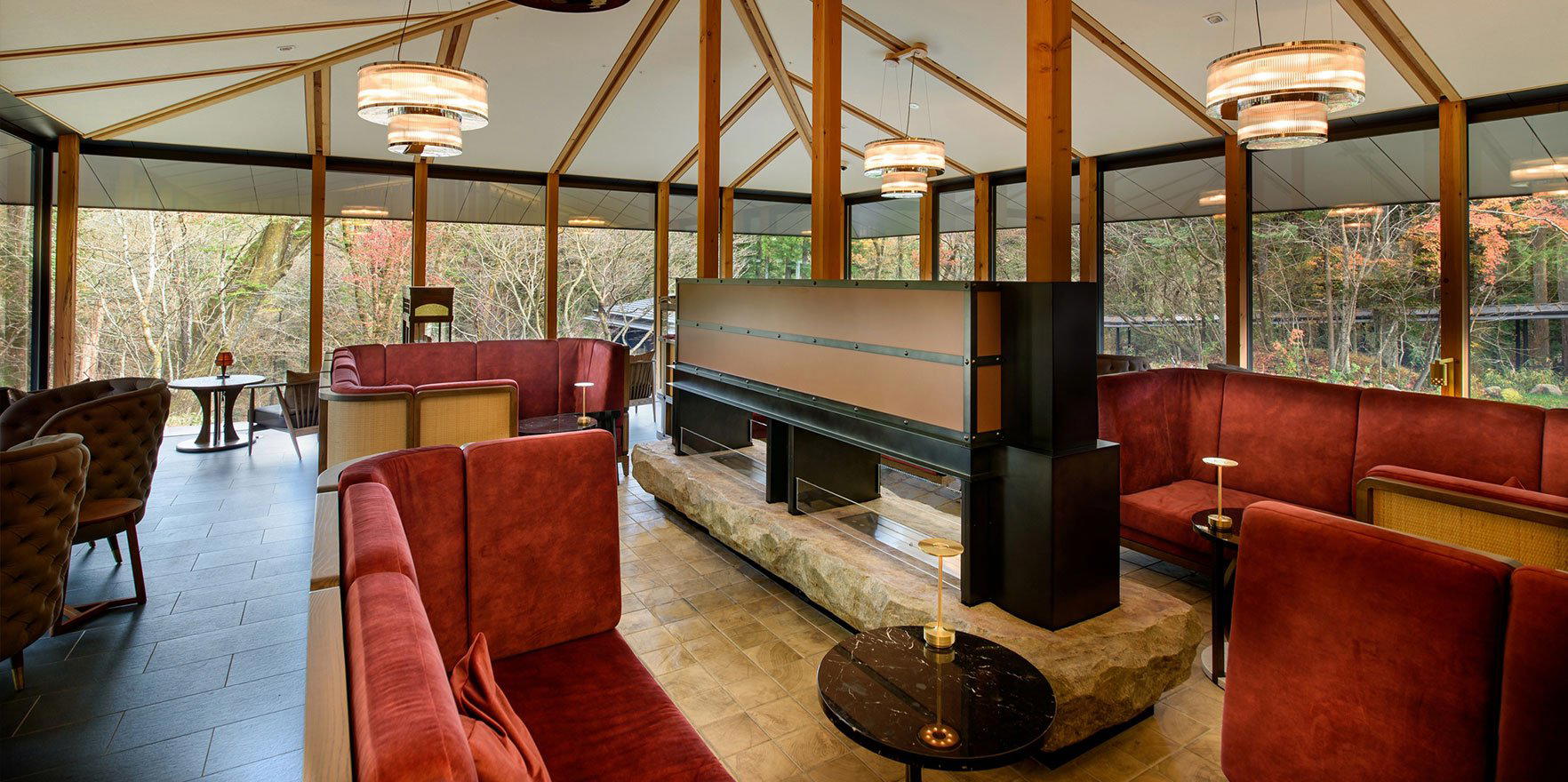
Within that corridor, a clear split has emerged between large resort-format properties and smaller, architecturally considered ryokan that keep room counts deliberately low. Kinugawa Keisui sits in the latter category, with ten rooms and a design language that refuses to choose between traditional warmth and contemporary restraint. Clean lines, organic materials, and carefully edited interiors characterise modern-ryokan properties across Japan's premier onsen destinations, from Zaborin in Kutchan to Asaba in Izu, and Keisui reads as part of that lineage rather than an outlier within it.
The Restaurant as the Property's Central Argument
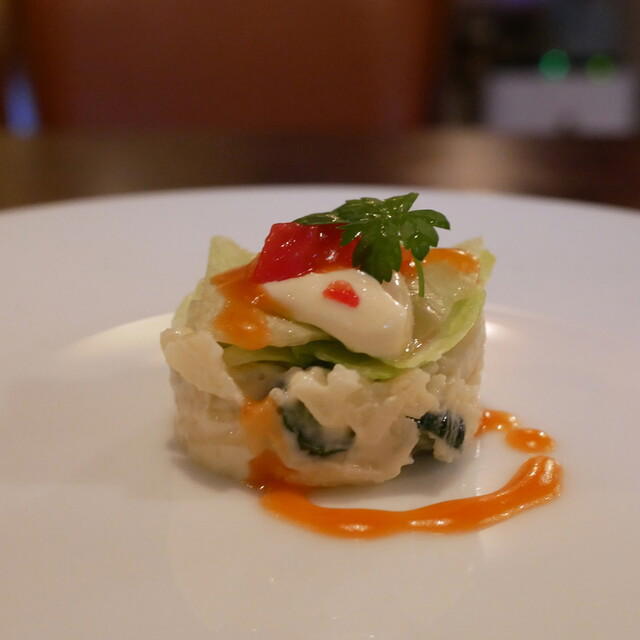
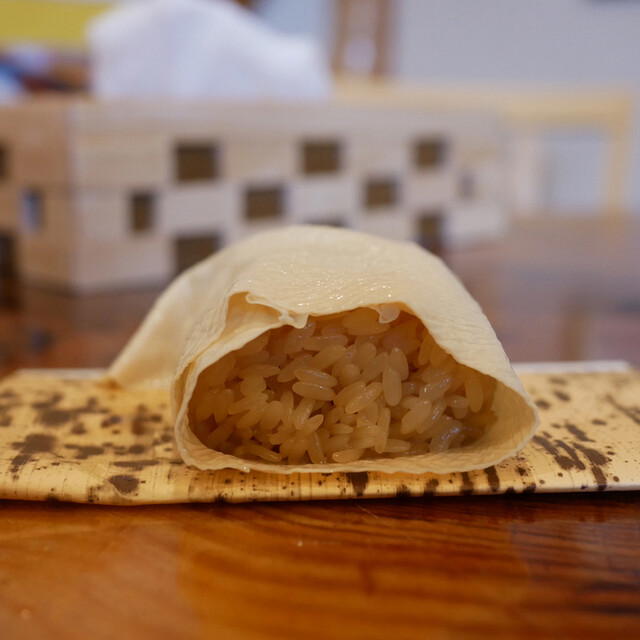
The dining programme at Kinugawa Keisui is not supplementary to the onsen experience; it functions as the property's most assertive editorial statement. Wood-fired cooking sits at the centre of the concept restaurant's identity, and the decision to organise a menu around a method rather than a cuisine type is a deliberate one. Genre-transcending wood-fire formats have gathered momentum across Japan's luxury hospitality sector over the past decade, appearing at properties where the kitchen wants to work with a strong unifying discipline without locking itself into kaiseki conventions or a single regional tradition.
The approach places Keisui in an interesting competitive position within Nikko's accommodation market. Fufu Nikko and The Ritz-Carlton, Nikko are the other properties that operate at a comparable tier in the city, and both lean more directly into Japanese formal dining structures. Keisui's wood-fire format creates a different register: more technique-forward, less bound by the seasonal kaiseki rhythm that governs much of Japan's luxury ryokan dining calendar.
Wood fire as a central culinary discipline carries specific demands. It requires sourcing relationships with suppliers who can provide consistent fuel quality alongside ingredient provenance, and it rewards kitchens that understand how to read heat across different proteins, vegetables, and cooking durations. The fact that Keisui's restaurant frames its programme around this technique rather than defaulting to the safer kaiseki template suggests a deliberate positioning decision. For guests who have already covered kaiseki extensively at properties like Araya Totoan in Kaga or Nishimuraya Honkan in Kinosaki-cho, the Keisui dining programme offers a genuinely different entry point.
Ten Rooms, Thermal Waters, and the Logic of Small Scale
A ten-room count is a deliberate constraint in the modern-ryokan format, not a limitation. Properties at this scale in Japan's premium onsen market, from Gora Kadan in Hakone to ENOWA Yufu in Yufu, use low capacity to maintain service ratios that larger resort hotels structurally cannot match. At Keisui, the ten-room configuration supports both the onsen infrastructure and the restaurant, ensuring that neither experience feels diluted by volume.
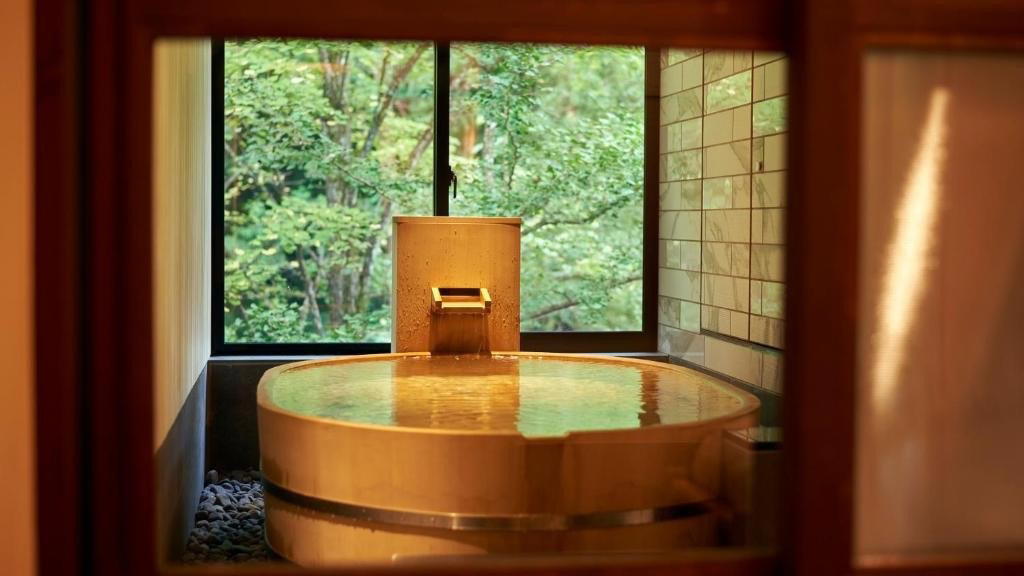
Hot spring access operates on two tracks here. In-room baths are private and fed from the thermal source, which is the baseline expectation at a property priced from $1,073 per night. The communal onsen complex adds a separate dimension: the shared bath tradition in Japanese hospitality is not simply an amenity but a practice with its own social and temporal logic, typically used at specific hours in the morning and evening to structure a stay's rhythm. Properties that maintain both formats offer guests the option to move between private and communal without forcing a choice.
Each room also includes a semi-open sunroom alongside the balcony, which extends the usable space into the landscape without fully exposing guests to the elements. In a property where the surrounding greenery and river views are primary assets, this intermediate zone matters architecturally. It allows the landscape to enter the room on the guest's terms, particularly in Nikko's variable mountain weather, which shifts more dramatically across seasons than coastal destinations.
Nikko as a Base: Seasonal and Logistical Context
Nikko sits approximately two hours from Tokyo by limited express from Asakusa station, and the Kinugawa onsen area is a further twenty minutes from central Nikko. This positions Keisui comfortably as a weekend destination from Tokyo rather than a mid-trip add-on requiring complex routing. Autumn is the densest season for Nikko overall, when the mountain foliage draws significant traffic to the shrine areas, and early spring carries its own draw in the cedar forests. The Kinugawa riverside location sits slightly removed from the main shrine circuit, which means the property benefits from Nikko's broader draw without being directly inside its peak congestion.
For travellers assembling a Japan itinerary that moves between thermal destinations, Keisui fits logically before or after properties in the Hakone corridor, or as a standalone extension to a Tokyo base. Those comparing it against similar-tier alternatives should look at Fufu Kawaguchiko in Fujikawaguchiko for a different mountain-thermal combination, or Atami Izusan Karaku in Atami for a coastal onsen alternative at comparable positioning. Across a wider Japan sweep, Amanemu in Mie and Benesse House in Naoshima represent other modes of the high-design, low-key Japanese hospitality format, though with very different settings and programmatic priorities.
Booking at this price point and room count requires early planning. Properties with ten rooms and a concept restaurant fill faster than their larger counterparts, particularly for autumn and spring weekend dates. There is no published booking window in available data, but the structural dynamics of properties at this scale in Japan's premium onsen market consistently reward reservations made well in advance of target dates. See our full Nikko restaurants guide for broader context on the city's dining and hospitality scene.
Planning Your Stay
Rates at Kinugawa Keisui start from $1,073 per night, positioning the property inside the upper tier of Nikko accommodation. The price includes access to both in-room and communal onsen facilities alongside the full room configuration of sunroom, balcony, and river-facing views. The concept restaurant operates within the property but functions as a distinct programmatic element rather than a standard hotel dining room; guests should treat the dining experience as a core part of the stay's logic rather than an optional addition. Full practical details including booking availability are best confirmed directly with the property.
A Pricing-First Comparison
| Venue | Price |
|---|---|
| Kinugawa KeisuiThis venue — the venue you are viewing | This venue |
| Bvlgari Hotel Tokyo | Michelin 3 Key, World's 50 Best |
| Aman Kyoto | Michelin 2 Key, World's 50 Best |
| Aman Tokyo | Michelin 2 Key, World's 50 Best |
| Amanemu | Michelin 3 Key |
| Four Seasons Hotel Tokyo at Otemachi | Michelin 3 Key |
Recognition history
Dated appearances from independent guides and award organizations, with the underlying list record or original source where available.
Michelin 1 Key
Michelin
At a Glance
- Quiet
- Elegant
- Scenic
- Modern
- Sophisticated
- Romantic Getaway
- Honeymoon
- Wellness Retreat
- Anniversary
- Panoramic View
- Wi Fi
- Spa
- Pool
- Restaurant
- Room Service
- Concierge
- Free Parking
- Mountain
- Waterfront
- Wi Fi
- Spa
- Pool
- Restaurant
- Room Service
- Concierge
- Free Parking
Serene and relaxing atmosphere with clean-lined modern design, natural light from large balconies, and warm organic aesthetics fostering profound relaxation.
Know Before You Go
- Getting there
- 334-1 Kinugawaonsen Ōhara, Nikko, Tochigi 321-2522