

Michelin Selected · Small Luxury Hotels of the World Member
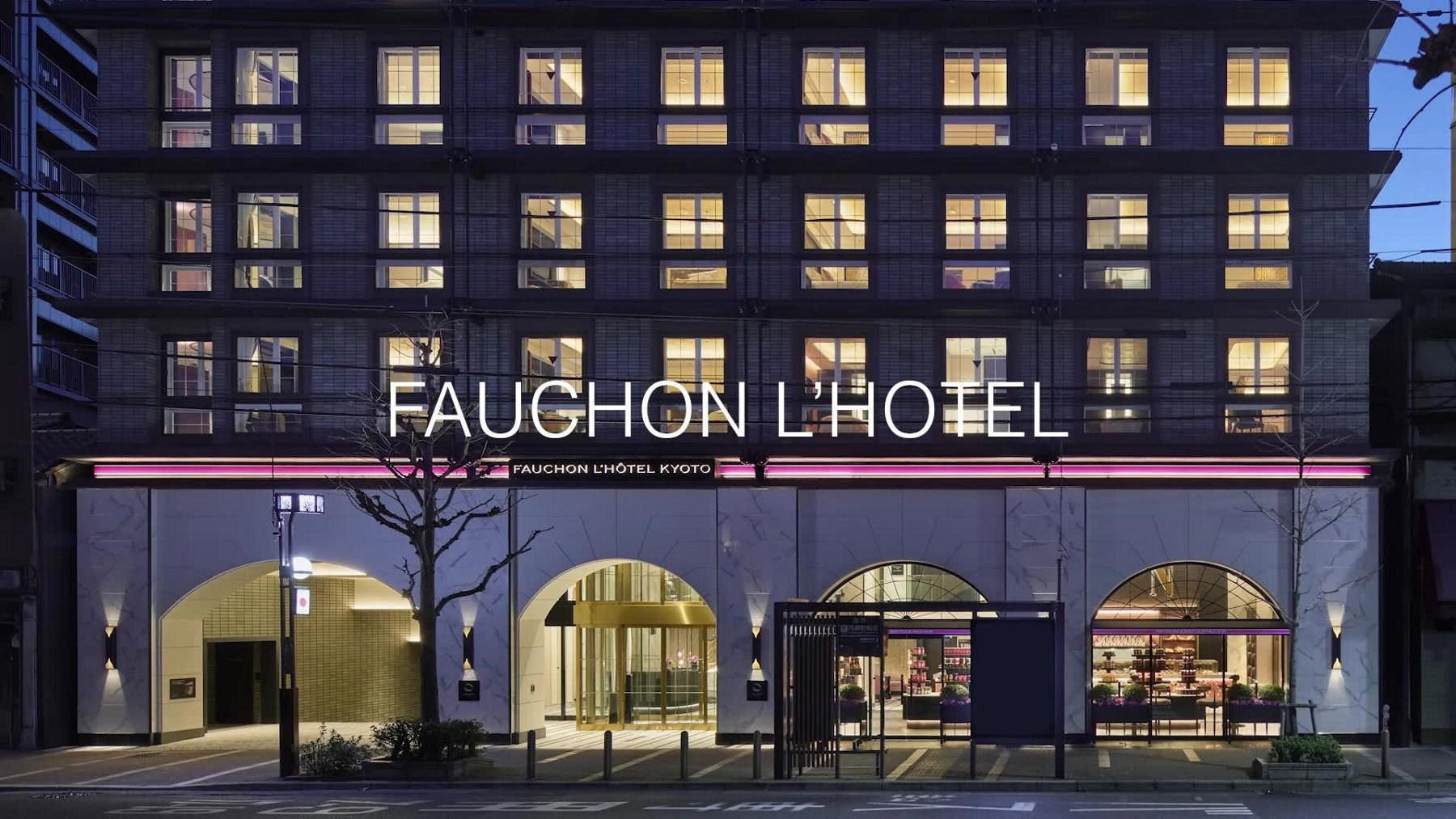
FAUCHON L'Hotel Kyoto sits at the intersection of Parisian patisserie culture and Kyoto's centuries-old aesthetic discipline, placing it in a small tier of Western luxury brands that have committed to genuine local dialogue rather than simple transplantation. From the ground-floor patisserie counter to panoramic upper-floor views, the property makes a coherent case for Franco-Japanese hospitality as a distinct format.

Pearl is the En Primeur Club membership app, where members save venues, book tables and use the concierge.
Where French Luxury Meets Kyoto's Restraint
Kyoto's luxury hotel market has split along a clear fault line in recent years. On one side sit the properties that treat the city as backdrop, international formats that could be lifted and placed in Singapore or Paris with minimal adjustment. On the other sit hotels that have entered into genuine dialogue with the city's spatial and aesthetic traditions, where the architecture, the food, and the sensory register of a corridor or lobby carry some trace of where they actually are. FAUCHON L'Hotel Kyoto occupies a third and rarer position: a Western brand with a strong visual identity of its own, the Paris maison's signature pink-and-black palette, its confidence in display patisserie and Franco-Japanese gastronomy, that has planted itself inside one of Japan's most codified cities and leaned into the collision rather than softening it.
That collision is visible from the moment you arrive. The address, 406 Nanbachō in Shimogyo Ward, places the hotel in the southern reaches of central Kyoto, a district that sits between the commercial energy of Kyoto Station and the older fabric of Gion. The surrounding blocks carry the compressed, layered quality that characterises much of central Kyoto: traditional townhouse facades alongside mid-century concrete, the occasional glimpse of a shrine gate, convenience stores operating with the efficiency of civic infrastructure. Against that grain, FAUCHON's visual language, vivid, deliberately French, unapologetically decorative, reads as a considered statement rather than an accident of planning.
The Room as Primary Argument
In Kyoto's competitive luxury tier, the room experience increasingly carries the weight of the brand argument. Properties like Park Hyatt Kyoto and Aman Kyoto have staked positions on material restraint and spatial calm, rooms that operate as quiet counterpoints to the city's sensory density. HOTEL THE MITSUI KYOTO and Four Seasons Hotel Kyoto approach it through heritage properties and garden anchors. FAUCHON takes a different route entirely: the rooms are deliberately and confidently decorative, shaped by the maison's Parisian identity rather than by the minimalist language that dominates this competitive set.
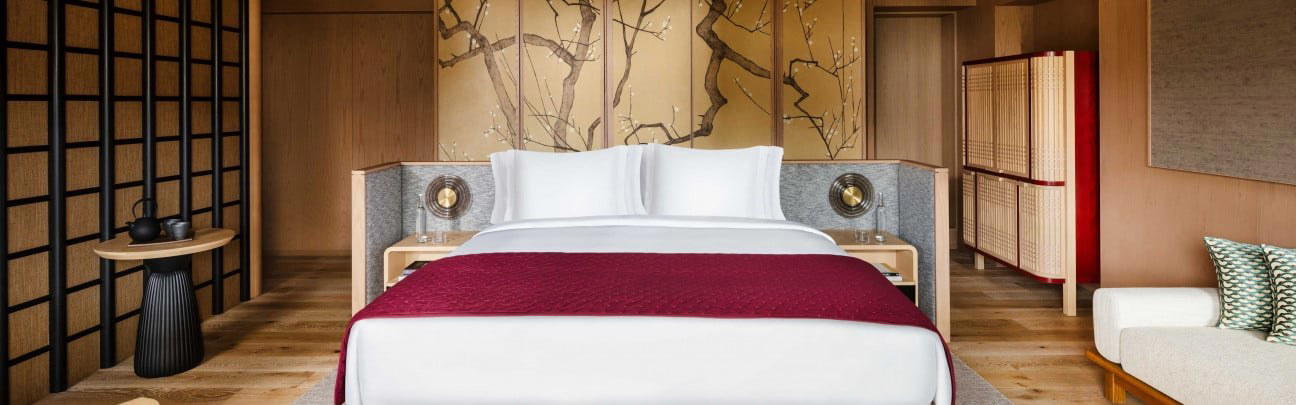
Where many Kyoto luxury hotels suppress pattern and palette in favour of linen, stone, and natural timber, FAUCHON's interiors introduce colour, pattern, and the kind of visual warmth associated with grand Parisian hotel rooms. The effect is not incongruous, the execution is careful enough that it reads as a deliberate aesthetic position rather than cultural indifference. For guests who have come to Kyoto specifically seeking the stripped-back ryokan register, properties like SOWAKA or The Shinmonzen offer a more aligned experience. But for those who want the city's cultural gravity paired with a room that feels unmistakably European in its sensory logic, FAUCHON makes a compelling case.
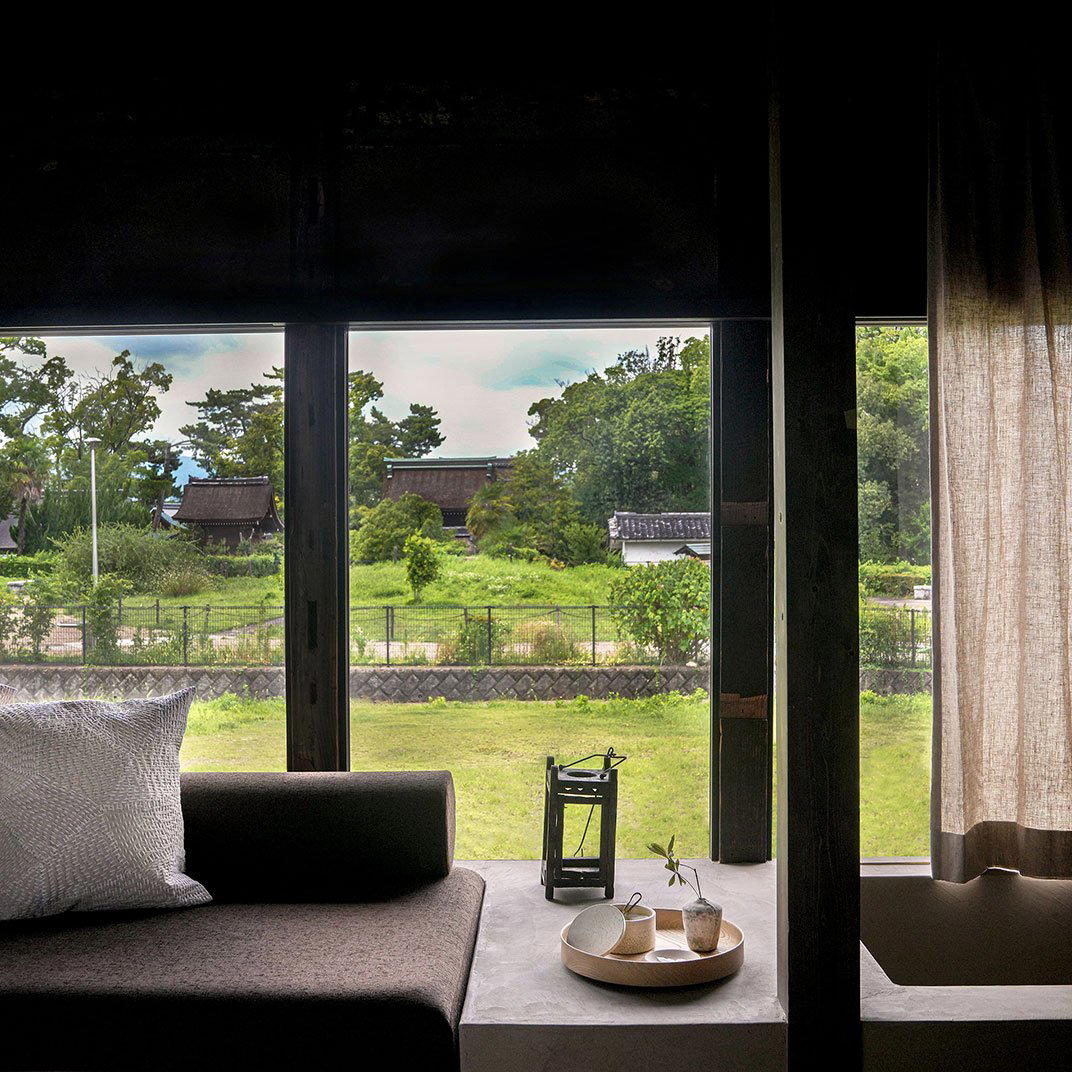
Upper-floor rooms carry the additional argument of panoramic views across Kyoto's low roofline, a cityscape that, unlike Tokyo or Osaka, still reads as predominantly human-scale, punctuated by pagoda roofs and mountain ridgelines rather than high-rise towers. At night, that view shifts into something quieter and more particular to Kyoto's character. The positioning of the hotel in Shimogyo Ward means the northern views toward Higashiyama and the eastern hills are available from the right room categories, giving guests a spatial orientation in the city that extends the in-room experience beyond the four walls.
The Ground Floor as Cultural Statement
The ground-floor patisserie is where FAUCHON L'Hotel Kyoto makes its most legible argument to the city around it. Kyoto has a serious wagashi tradition, the precision confectionery that accompanies the tea ceremony, shaped by centuries of craft and seasonal attunement, and placing a Parisian patisserie counter in direct dialogue with that context is either a provocation or a conversation, depending on the quality of execution. FAUCHON's approach here is to treat Kyoto-French gastronomy as a genuine synthesis rather than a import exercise, which positions the hotel's food operation differently from the more straightforwardly European dining rooms found at some international brands in the city.
The gastronomy runs from that ground-floor counter upward through the property's dining formats, with the upper levels offering the panoramic setting that the building's height makes possible. This vertical logic, patisserie and café culture at street level, more formal dining ascending with the views, is a format that rewards guests who treat the hotel as a place to eat across different dayparts rather than simply a room with a restaurant attached.
Placing FAUCHON in Kyoto's Wider Luxury Set
Ace Hotel Kyoto and Dusit Thani Kyoto represent different international brand logics applied to the city. Across Japan more broadly, comparable positioning questions arise at properties like Bvlgari Hotel Tokyo, another European luxury brand operating a hotel format in a Japanese city with strong aesthetic traditions of its own. The questions those properties raise are similar: does the brand's visual and experiential identity create productive tension with the host city, or does it simply ignore it? FAUCHON's explicit commitment to Kyoto-French gastronomy as a framing concept suggests the former.
For guests whose Japan itinerary extends beyond Kyoto, the surrounding region offers significant alternatives at different scales and registers. Amanemu in Mie and Gora Kadan in Hakone operate in the onsen-resort tradition, while Benesse House in Naoshima offers the art-island alternative. Properties like Asaba in Izu, Zaborin in Kutchan, Nishimuraya Honkan in Kinosaki-cho, and Fufu Kawaguchiko each represent the deeply Japanese end of the luxury spectrum. FAUCHON occupies a genuinely different position in that map, an argument for Franco-Japanese synthesis in the heart of Japan's most historically codified city. See our full Kyoto restaurants and hotels guide for broader context on the city's current hospitality tier.
Planning Your Stay
The hotel's address in Shimogyo Ward puts it within practical distance of Kyoto Station, which functions as the city's main transport hub for bullet train arrivals from Tokyo, Osaka, and further afield. Kyoto's most heavily visited temple and shrine precincts, Fushimi Inari, Tofukuji, and the eastern Higashiyama corridor, are accessible by taxi or the city's bus network, though the distances and traffic conditions during peak autumn and spring seasons are worth factoring into day planning. Booking well in advance is advisable for autumn foliage season (mid-October through November) and cherry blossom season (late March through early April), when Kyoto's hotel occupancy reaches its highest points and the city operates at considerably higher visitor density than at other times of year.
Comparable Spots, Quickly
Comparable venues nearby, for context on price, style, and recognition.
| Venue | Cuisine | Price | Awards | Notes |
|---|---|---|---|---|
| FAUCHON L'Hotel KyotoThis venue (the venue you are viewing) | Luxury boutique hotel merging French Parisian design with Japanese minimalism and contemporary aesthetics | $300–500 | Michelin Selected · Small Luxury Hotels of the World Member | Not listed |
| Imperial Hotel Kyoto | Boutique heritage hotel in restored cultural landmark | Not listed | 1 Michelin Key · Leading Hotels of World Member | Higashiyama |
| Hyatt Regency Kyoto | Traditional Japanese luxury with modern facilities | $300–500 | Michelin Selected · Virtuoso Luxury Hotel Partner | Higashiyama |
| Suiran, A Luxury Collection Hotel, Kyoto | Traditional Japanese ryokan with modern luxury | Not listed | 1 Michelin Key · La Liste Top Hotels | Ukyō |
| Kanamean Nishitomiya | Traditional family-owned ryokan blending 19th-century wooden architecture with contemporary luxury. | $500–750 | 2 Michelin Keys · Relais Chateaux Award | Nakagyō |
| THE HIRAMATSU Kyoto | Historic machiya townhouse blending 120 years of Kyoto architecture with contemporary comfort | Not listed | Michelin Selected | Nakagyō |
Recognition history
Dated appearances from independent guides and award organizations, with the underlying list record or original source where available.
Michelin Selected
Michelin
Small Luxury Hotels of the World Member
Small Luxury Hotels of the World
Continue exploring
More in Kyoto
Hotels in Kyoto
All hotels in Kyoto →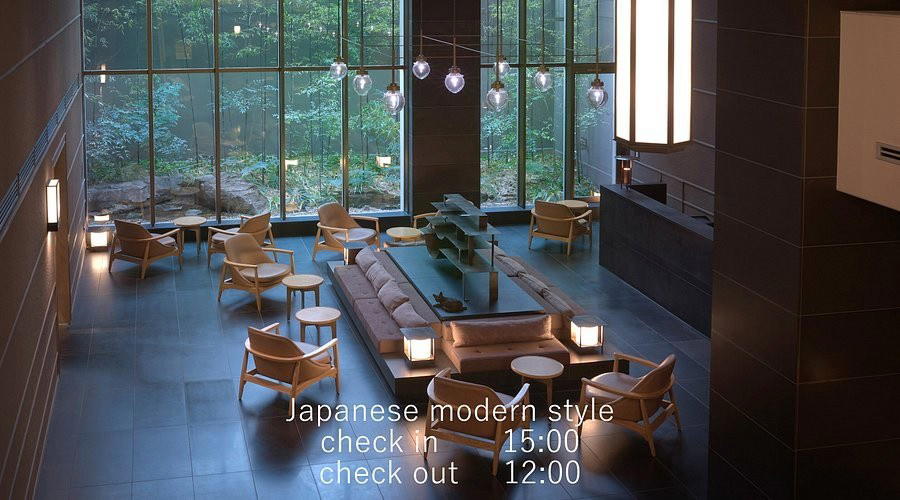
Bars in Kyoto
All bars in Kyoto →

Restaurants in Kyoto
All restaurants in Kyoto →

Wineries in Kyoto
Browse all →
Details
- Elegant
- Sophisticated
- Romantic
- Modern
- Romantic Getaway
- Anniversary
- Wellness Retreat
- Celebration
- Destination Spa
- Panoramic View
- Private Dining
- Design Destination
- Wi Fi
- Spa
- Fitness Center
- Room Service
- Concierge
- Restaurant
- Bar
- Mountain
- Elevator
- Wheelchair Accessible
Sophisticated and inviting with elegant design throughout; rooms feature soft lighting reminiscent of French pastry aesthetics, while common areas exude refined luxury with attention to thoughtful details and warm hospitality.