The Dawn Luxury Hotel

Small Luxury Hotels of the World Member
The Dawn Luxury Hotel occupies a centuries-old building in Nanzhao Town, Sichuan, where four courtyard gardens anchor suites designed around the rhythms of the changing seasons. The property sits in the Wanda Plaza district and positions itself as a considered alternative to the large-footprint luxury hotels that dominate the region. For travellers seeking a slower, design-led engagement with ancient Weishan, it argues its case through architecture rather than amenities.

Pearl is the En Primeur Club membership app, where members save venues, book tables and use the concierge.
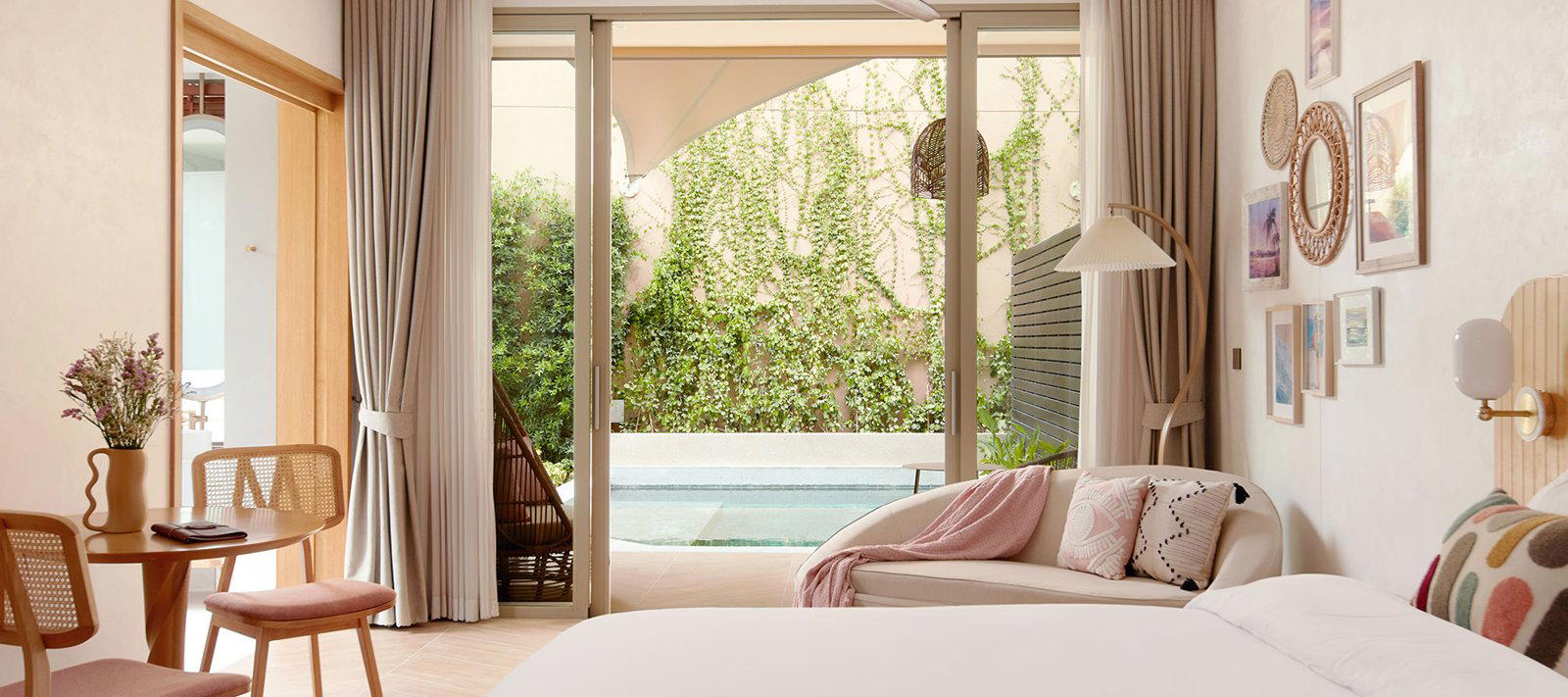
Where Ancient Weishan Meets Contemporary Chinese Design
The courtyard hotel format has deep roots in Chinese architectural tradition, and in recent years it has become the structural logic of choice for a particular tier of property: those seeking to anchor luxury in place rather than in amenity lists. Across China, from the converted hutong compounds near Beijing's Second Ring Road to the timber-framed retreats outside Lijiang, the most serious design-led properties have returned to the courtyard as their organizing principle, treating it not as decoration but as the building's actual heart. The Dawn Luxury Hotel in Nanzhao Town, Sichuan, works within that tradition, organized around four serene courtyards that respond to seasonal change rather than imposing a static aesthetic on the guest.
Nanzhao Town sits within Pidu District in greater Chengdu, a zone that carries a longer history than its suburban address might suggest. The area holds associations with the ancient Weishan culture, and it is this layered past that gives The Dawn its primary editorial context. Properties that occupy centuries-old buildings in historically significant locations are a specific and increasingly pressured category in Chinese luxury hospitality. Restoration and adaptive reuse here require navigating heritage constraints that purpose-built hotels avoid entirely, and the results, when handled carefully, produce something that new construction cannot replicate: a physical archive of time embedded in the walls themselves.
The Courtyard as Design Argument
Four courtyards is not an incidental number. In traditional Chinese residential and civic architecture, the courtyard compound, or siheyuan in its northern form, operates as a spatial grammar: each enclosed garden mediates between interior and exterior, regulates light and air, and provides a visual anchor that shifts with the hour and the season. A property built around four such spaces is making a specific architectural commitment to multiplicity and progression, giving guests different moods and orientations depending on which courtyard they face and at what time of day.
This design logic places The Dawn in a peer conversation with properties like Amanfayun in Hangzhou, where a collection of restored village structures creates an experiential sequence rather than a single destination moment, or Amandayan in Lijiang, which uses traditional Naxi courtyard architecture to embed guests in cultural context. The common thread is that these properties treat their historical fabric as load-bearing, not cosmetic. The architecture is the amenity.
What distinguishes The Dawn within this conversation is the explicit commitment to blending tradition with contemporary Chinese design rather than pure preservation. That distinction matters. Straight restoration can produce museum-like stillness; contemporary intervention, when calibrated correctly, creates spaces that feel inhabited and alive. The sleek suites described as central to the property suggest interiors that hold the tension between old fabric and current craft, a balance that the most accomplished Chinese luxury properties have spent the last decade learning to strike.
Sichuan as Context for Luxury Hospitality
Sichuan Province operates on two registers in the global travel consciousness: as a culinary reference point of considerable authority, and as a geography of dramatic contrasts, from the high-altitude terrain near the Tibetan Plateau to the dense urban energy of Chengdu's city core. Pidu District and Nanzhao Town represent a third register, quieter and more archaeologically oriented, where the pace of visitor traffic is lower and the residential texture of daily Sichuan life remains legible.
For luxury hospitality, this positioning creates both an opportunity and a demand. The opportunity is clear: a property in this location faces less competition from the international chain hotels concentrated in Chengdu proper. Properties like the Banyan Tree Chongqing Beibei in Chongqing or the Conrad Jiuzhaigou in Jiuzhaigou demonstrate that Sichuan and southwestern China have sustained appetite for design-led luxury outside major urban centres. The demand that location creates is equally clear: guests traveling to Nanzhao Town are not passing through on business itineraries. They are choosing this destination deliberately, which raises the expectation that the property can deliver a sense of place that justifies that detour.
The Dawn's grounding in Weishan history is the primary answer to that expectation. A centuries-old building in a historically layered town is the most direct form of place-making available, more durable than curated programming and more credible than locally sourced F&B marketing. It is, in architectural terms, the argument made in stone and timber before any guest service question even arises.
Comparing Approaches Across China's Design-Led Tier
China's premium hospitality offer has split into recognizable camps over the past decade. On one side sit the international branded towers, properties like the JW Marriott Hotel Shanghai at Tomorrow Square or the Mandarin Oriental Qianmen in Beijing, which compete on service consistency, location, and brand recognition within a global context. On the other side, a growing cohort of independently positioned properties competes on specificity: heritage fabric, design narrative, and cultural depth that chain-scale operations cannot replicate.
The Dawn belongs to the second cohort. Its address in Wanda Plaza, Pidu District, is not a central Chengdu luxury address by conventional measure, and that is partly the point. Properties like Elite Spring Villas in Anxi or the Xiamen Yunding Resort in Xiamen operate on the same logic: the location is the credential, not the liability. For travelers who approach China's provincial depth with genuine curiosity rather than urban-efficiency itineraries, this is a direct value proposition. For those who measure luxury primarily by brand equity or city-centre convenience, the calculus is different.
Across the broader Chinese luxury circuit, comparable courtyard-anchored properties in secondary or heritage cities have demonstrated that the format can sustain strong occupancy when the cultural draw is well-supported. See also: Green Lake Hotel Kunming, which has maintained long-term relevance in Yunnan through its lakeside setting and historical connections, or Vanke Lake Songhua Yunlu Hotel in Jilin, which uses a natural environment as its primary design argument. The pattern is consistent: specificity of place, held with architectural conviction, sustains premium positioning outside China's tier-one cities.
Planning Your Stay
The Dawn Luxury Hotel is located at No. 125 East Wang Cong Road, Wanda Plaza, Pidu District, placing it within Nanzhao Town's urban fabric rather than in a remote resort setting. Access from central Chengdu is practical given Pidu District's connectivity to the city's metro and expressway network, making the property approachable for travelers combining a Weishan cultural itinerary with broader Chengdu programming. Given the heritage positioning and limited nature of courtyard-format properties in this area, advance booking is advisable, particularly for stays that align with major Chinese travel seasons including National Golden Week in October and the Spring Festival period. For wider Sichuan and Chengdu dining and hospitality context, see our full Nanzhao Town restaurants guide. Travelers building longer China itineraries with a design-led emphasis may also find relevant comparisons in properties such as Andaz Shenzhen Bay in Shenzhen, Altira Macau in Macau, or, for those extending to international heritage-hotel equivalents, Aman Venice in Venice.
Comparison Snapshot
Comparable venues nearby, for context on price, style, and recognition.
| Venue | Cuisine | Price | Awards | Notes |
|---|---|---|---|---|
| The Dawn Luxury HotelThis venue (the venue you are viewing) | cultural immersion in ancient city architecture with modern interiors | $200–300 | Small Luxury Hotels of the World Member | Not listed |
| Green Lake Hotel Kunming | Historic luxury landmark with modern renovations | Not listed | 5-Star | Wuhua District |
| The Lalu Qingdao | Contemporary ultra-luxury resort designed by renowned architect Kerry Hill, blending Zen philosophy with high-concept minimalism on a secluded coastal peninsula. | $300–500 | Michelin Selected | Huangdao District |
| InterContinental Haikou Seaview | Luxury beachfront resort with seaside gardens and marina proximity | Not listed | Michelin Selected | Meilan District |
| Chengdu Expo Waterfall - MGallery | Boutique hotel celebrating Sichuan culture and natural abundance with mountain and water elements. | $1–100 | Michelin Selected | Chengdushi |
| W Xiamen | Trendy luxury hotel fusing local Fujian culture with high-energy W Hotels design. | Not listed | Michelin Selected | East Business District |
Recognition history
Dated appearances from independent guides and award organizations, with the underlying list record or original source where available.
Small Luxury Hotels of the World Member
Small Luxury Hotels of the World
Continue exploring
More in Nanzhao Town
Hotels in Nanzhao Town
All hotels in Nanzhao Town →
Details
- Elegant
- Quiet
- Scenic
- Intimate
- Sophisticated
- Romantic Getaway
- Wellness Retreat
- Weekend Escape
- Garden
- Historic Building
- Wi Fi
- Spa
- Fitness Center
- Room Service
- Concierge
- Restaurant
- Bar
- Garden
Calm and tactile with floor-to-ceiling wood, cool stone floors, natural fabrics, warm lighting, and curated plantings evoking a quiet local residence.