Occupying floors 38 to 60 of the Tomorrow Square tower on Nanjing Road West, JW Marriott Hotel Shanghai sits at one of the most recognisable addresses in People's Square. The property belongs to the upper tier of international business-luxury hotels in the city, positioned directly above the civic and commercial axis where Puxi's grid converges. For guests oriented around the French Concession, Xintiandi, and the Bund, the location functions as a central hub with altitude.

Pearl is the En Primeur Club membership app, where members save venues, book tables and use the concierge.
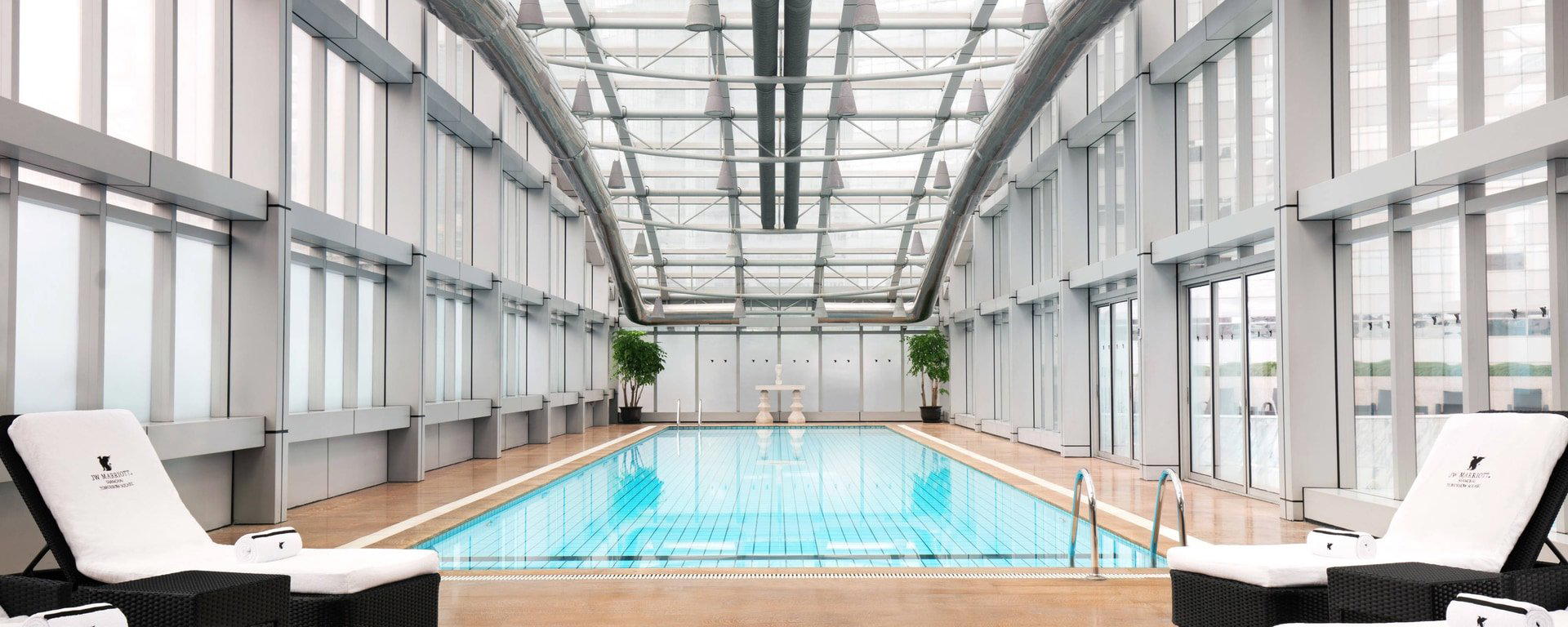
A Tower Address on Nanjing Road West
Shanghai's hotel market has long sorted itself by geography as much as by brand. The Bund corridor draws properties aiming for heritage drama; Xintiandi attracts design-led boutiques like Capella Shanghai, Jian Ye Li and Andaz Xintiandi, Shanghai; and a handful of towers along Nanjing Road West claim the city's commercial and civic centre. JW Marriott Hotel Shanghai at Tomorrow Square belongs firmly to the last category. The hotel occupies floors 38 through 60 of Tomorrow Square, the 55-storey mixed-use tower at 399 Nanjing Road West, People's Square, placing it at the western edge of Huangpu district where the city's retail spine meets its administrative heart.
For a certain type of traveller, the address is the proposition. People's Square sits at the geometric centre of the old city grid, flanked by the Shanghai Museum, the Grand Theatre, and the urban park that replaced the colonial racetrack. The hotel's elevation turns that geography into a vertical advantage: guest floors begin where most Shanghai rooftop bars end, and the city's horizontal spread becomes a constant frame of reference.
The Architecture of Tomorrow Square
Tomorrow Square, completed in 2003, belongs to a specific moment in Shanghai's skyline ambition, the decade after Pudong's tower cluster announced the city's arrival, when developers began filling Puxi's grid with similarly assertive structures. The building's form is angular and tapered, its profile shifting from rectangular base to an octagonal crown fitted with a distinctive double-helix spire. That rooftop geometry, visible from much of central Shanghai, is part of what makes the address legible from a distance.
The decision to position a luxury hotel in the upper two-thirds of a commercial skyscraper was consistent with a broader hospitality model that took hold in Chinese tier-one cities during the 2000s: international chain brands acquiring altitude in mixed-use towers, using the building's visual presence as a marketing asset. Comparable examples exist across Shanghai, Beijing, and Shenzhen, where the tower-hotel format lets brands claim a city-centre address that ground-level sites no longer offer. Among Shanghai's alternatives in this category, properties such as Bvlgari Hotel Shanghai and Amanyangyun have taken the opposite route, prioritising low-rise compounds and horizontal intimacy; the JW Marriott Tomorrow Square model trades that intimacy for panoramic scale and central density.
Position in Shanghai's Upper-Mid Luxury Tier
Within Shanghai's competitive hotel set, JW Marriott sits in an interesting middle altitude, above the four-star business hotel mass, but below the ultra-luxury bracket occupied by properties like Bvlgari and Capella with their tightly curated key counts and heritage-site settings. The JW Marriott brand globally targets senior business travellers and premium leisure guests who want chain reliability with a material step up in finish and service from standard Marriott properties. In Shanghai specifically, that positioning means competing against other tower-format internationals, Ritz-Carlton Portman, Four Seasons on Weihai Road, and the Westin Bund Centre, rather than against the boutique segment.
For guests comparing options across Puxi, the People's Square address carries specific practical weight. Metro lines 1, 2, and 8 converge directly below the tower, meaning most of the city, Xintiandi, the French Concession, Jing'an Temple, Hongqiao transport hub, is reachable without a taxi. That infrastructure density is less common than it sounds: even well-located hotels like Andaz Xintiandi or Alila Shanghai sit one or two blocks from direct metro access. The JW Marriott's position directly above People's Square station is a logistical argument that matters on a practical level, particularly for guests combining business meetings across the city with evening dining outside the hotel.
The View as Architecture
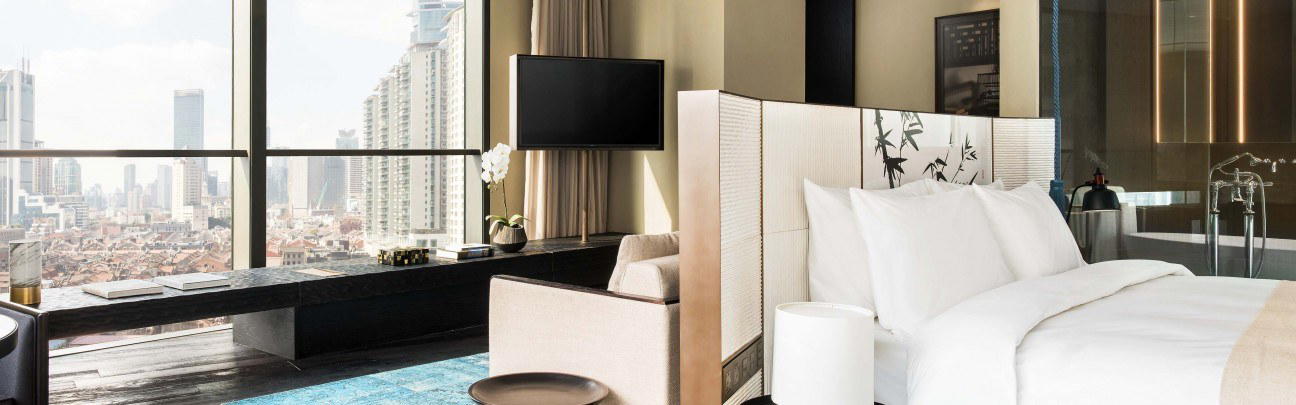
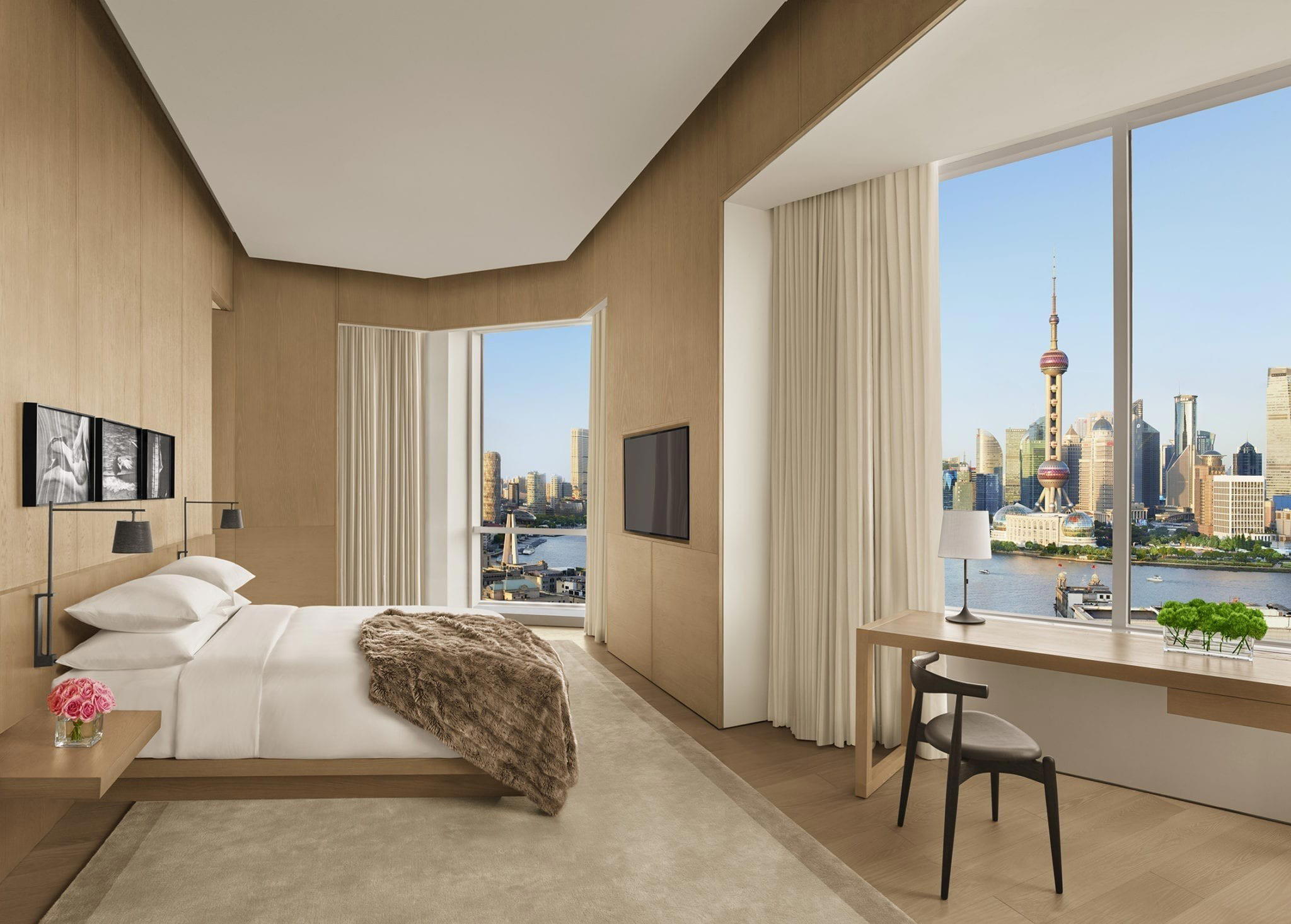
At floor 38 and above, the hotel's rooms engage with Shanghai's skyline in a way that ground-level properties structurally cannot. The city's visual logic shifts at altitude: Pudong's tower cluster recedes into a coherent panorama rather than dominating the foreground; the Bund's neoclassical row appears as a thin horizontal line against the river; and the dense residential blocks of western Puxi spread in a grid broken only by the plane trees of the Concession-era streets. Hotels in the Xintiandi zone or along the Bund offer proximity to those landmarks at street level; the Tomorrow Square position offers distance and framing instead.
This is a meaningful distinction in how the hotel functions as a Shanghai experience. Properties like Bellagio Shanghai or Cachet Boutique Shanghai embed guests in specific neighbourhood textures. Tomorrow Square places guests above those textures, which suits a different kind of visit: the compressed itinerary, the returning business traveller who knows the city well enough to read what they see from the window, or the guest whose principal engagement with Shanghai happens at the business-district scale rather than the lane-level.
Planning a Stay
The hotel is most directly reached via People's Square metro station (lines 1, 2, and 8), which places arrivals from Hongqiao Airport via line 2 a straight shot from the terminal. Pudong Airport arrivals on the Maglev can connect at Longyang Road to line 2 for the same direct route. For guests arriving by taxi or car service from either airport, the Nanjing Road West address is one of the city's more navigable hotel drop-offs, with clear approach lanes along the commercial boulevard rather than the lane-threading that complicates some Concession-area properties.
Reservations for international-brand hotels at this address tier are generally available through the brand's own platform, and the People's Square location means walk-in enquiries at the lobby level are physically accessible, though advance booking is advisable during trade-fair seasons, which in Shanghai cluster around spring (March to May) and autumn (September to November). Those periods also coincide with the city's most manageable weather, with moderate temperatures that make the walk between metro exits and the tower entrance a reasonable proposition rather than a weather-dependent calculation.
For a fuller map of where the JW Marriott sits within Shanghai's hotel options by neighbourhood and style, see our full Shanghai restaurants and hotels guide. Travellers comparing high-altitude business-luxury formats across Chinese cities may also find reference value in Mandarin Oriental Qianmen in Beijing, which occupies an analogous civic-centre position in its own city's geography.
How It Stacks Up
| Venue | Price | Awards |
|---|---|---|
| JW Marriott Hotel Shanghai at Tomorrow SquareThis venue (the venue you are viewing) | $200–300 | Not listed |
| Amanyangyun | Not listed | 2 Michelin Keys · Vogue 2026 Vogue Best Hotels in Shanghai |
| Andaz Xintiandi, Shanghai | $100–200 | Michelin Selected · Forbes Recommended |
| Bvlgari Hotel Shanghai | $750–1,000 | 2 Michelin Keys · La Liste Top Hotels |
| Capella Shanghai, Jian Ye Li | Not listed | 2 Michelin Keys · Michelin Guide New Hotels New Hotel |
| Fairmont Peace Hotel | $200–300 | Michelin Selected · La Liste Top Hotels |
Continue exploring
More in Shanghai
Hotels in Shanghai
All hotels in Shanghai →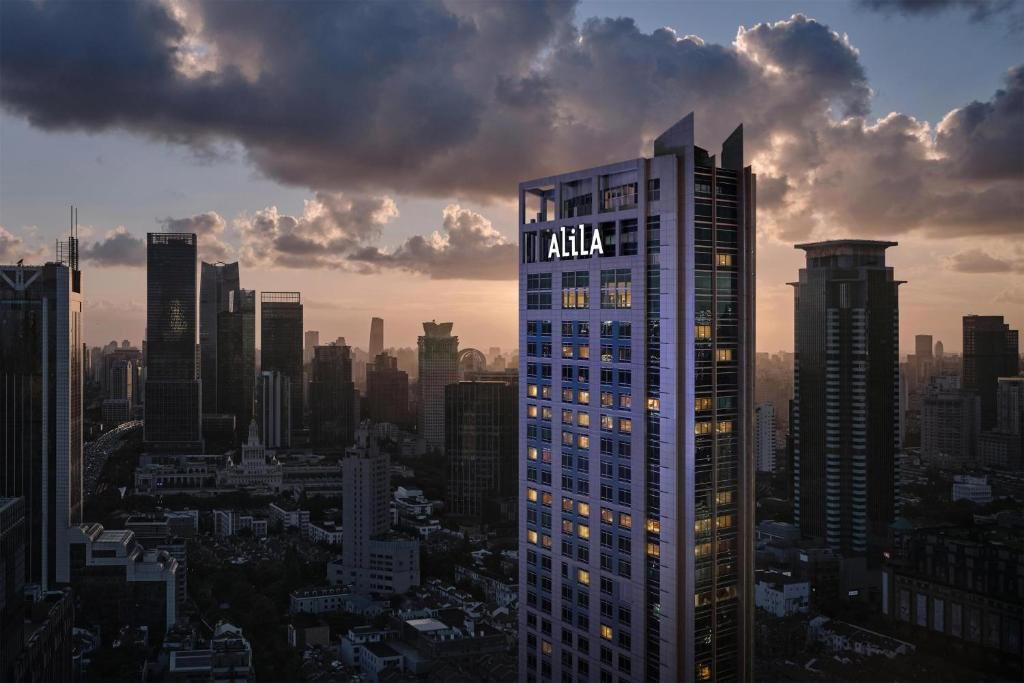
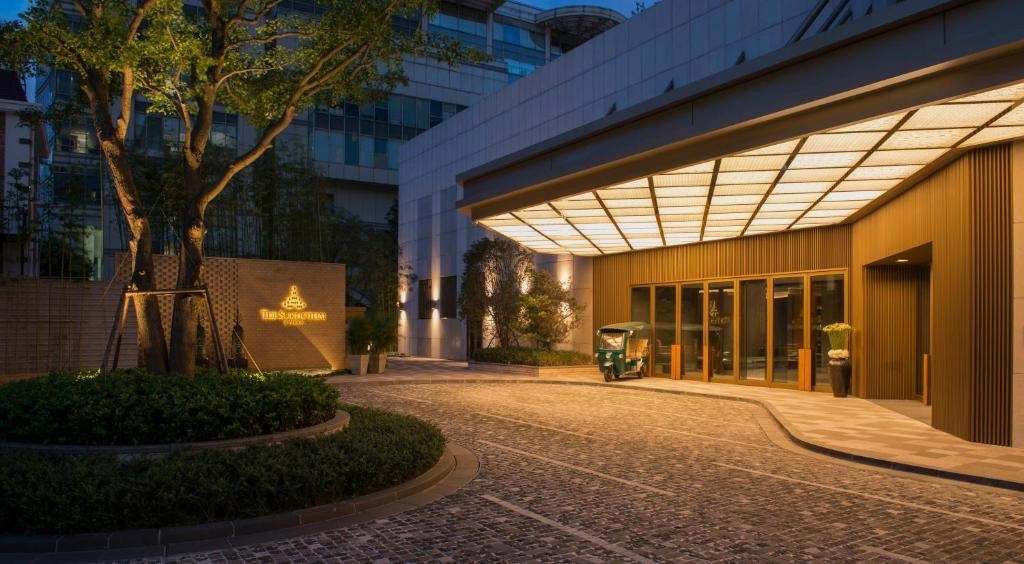
Bars in Shanghai
All bars in Shanghai →
Details
- Elegant
- Sophisticated
- Well Known
- Modern
- Business Trip
- Romantic Getaway
- Family Vacation
- Celebration
- Panoramic View
- Rooftop Pool
- Destination Spa
- Historic Building
- Design Destination
- Terrace
- Wi Fi
- Pool
- Spa
- Fitness Center
- Room Service
- Concierge
- Business Center
- Restaurant
- Indoor Pool
- Outdoor Pool
- Sauna
- Skyline
- Elevator
- Accessible Restroom
- Accessible Parking
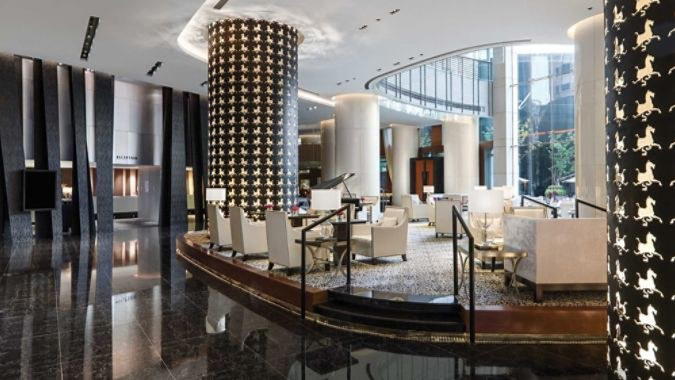
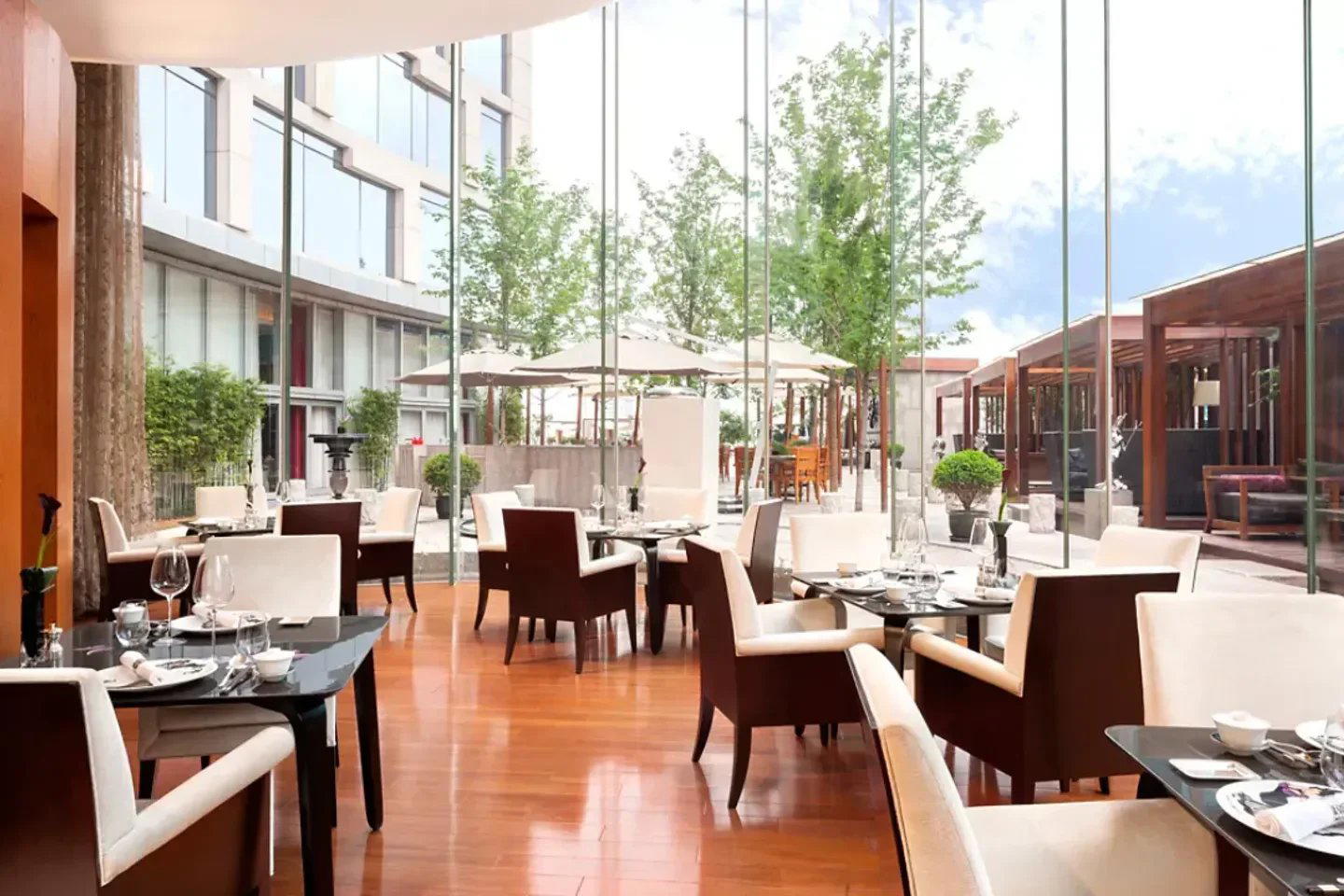
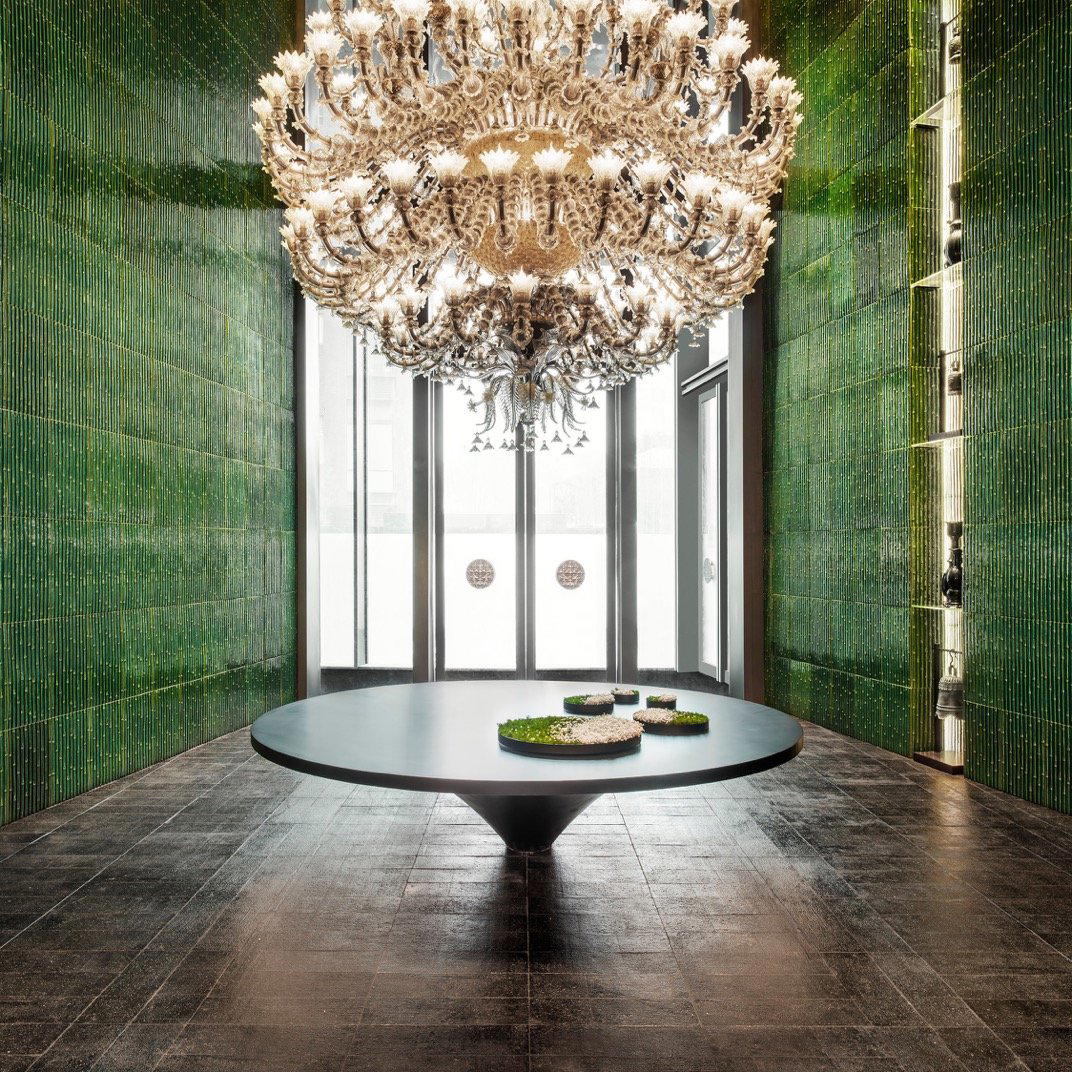
Sophisticated and contemporary with soaring ceilings, floor-to-ceiling windows showcasing panoramic city views, and refined public spaces designed for both business and leisure travelers.