
1 Michelin Key
Banyan Tree Chongqing Beibei occupies the mountainous northern outskirts of Chongqing, where natural hot springs feed the spa's baths and 96 residential-scale retreats draw on local traditional architecture. At around $289 per night, it sits in a tier that prioritises landscape immersion over urban spectacle, with three restaurants covering Sichuan, Cantonese, and international menus.

Pearl is the En Primeur Club membership app, where members save venues, book tables and use the concierge.
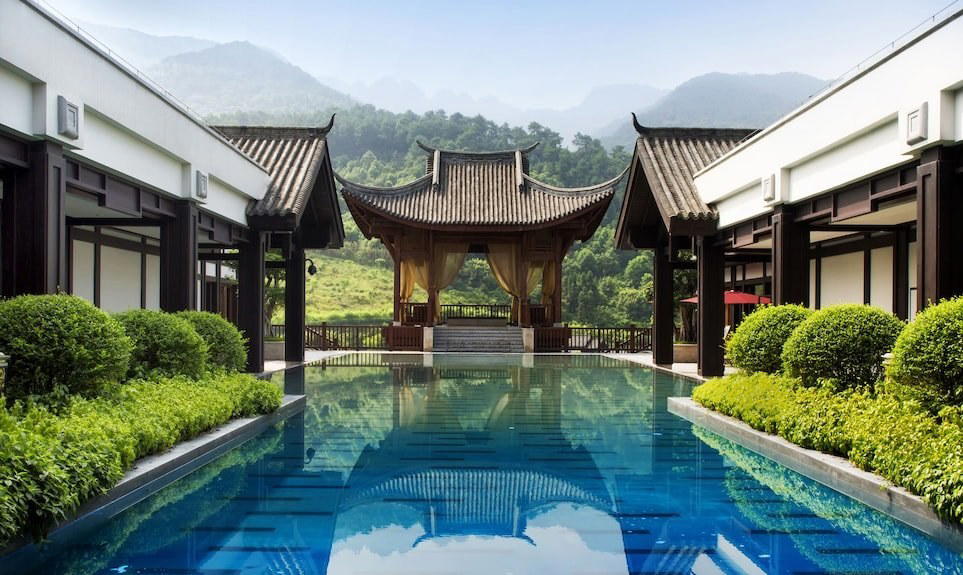
Mountain Architecture and Hot-Spring Tradition in Chongqing's Northern Reaches
Chongqing is one of China's most topographically dramatic cities, a place where rivers converge, mountains crowd the city limits, and the built environment stacks vertically out of necessity. Most of the city's luxury hotel development has concentrated in the downtown core, where properties like the InterContinental Chongqing Raffles City compete on skyline presence and urban connectivity. Banyan Tree Chongqing Beibei takes the opposite approach: it positions itself in the Bei Bei district to the north, where the terrain becomes noticeably rougher and the city's commercial density gives way to forested ridges and thermal spring activity. That geographic choice is itself an architectural and editorial statement about what kind of stay this property is designed to deliver.
Arriving at the resort, the massing of the buildings reads as deliberately low and horizontal against the mountain backdrop. The architecture draws its vocabulary from local traditional construction, with forms and materials that reference the vernacular of Chongqing's rural hinterland rather than the glass-and-steel register of the city's financial districts. This is a pattern that Banyan Tree has refined across its China portfolio, the brand now operates nearly as many properties in China as in the rest of the world combined, and in each case the brief has been to anchor the resort physically and visually to its specific region. At Beibei, that means pitched rooflines, natural material palettes, and a spatial rhythm that slows the visitor's pace almost immediately upon arrival.
Scale, Proportion, and the Logic of the Retreat Format
The 96 accommodations are classified as Retreats rather than standard hotel rooms, and the distinction carries practical weight. The smallest unit spans 80 square meters, a floor area that places it well above the average premium hotel room in most Chinese cities. That scale shifts the atmosphere from hotel-room efficiency to something closer to a serviced residence, which is consistent with how the property is designed to be used: as a place to decompress over several nights rather than a transit stop between business meetings.
The interiors work within a historically inspired framework while meeting the functional expectations of contemporary luxury travel. Handsome is the right register: the spaces are considered and coherent without leaning into ostentatious display. This balance between historical reference and modern comfort is where design-led mountain resorts across China are increasingly competing. Compare the approach to Banyan Tree Ringha in , which adapts Tibetan architecture in Yunnan, or to Amanfayun in Hangzhou, which reconstructs a village of historic teahouse buildings on the slopes of West Lake. Each represents a different solution to the same design problem: how to build a luxury resort that feels genuinely rooted in its place rather than dropped into it.
For broader context on how China's luxury mountain resort sector is developing, properties like Pushine Jinfoshan Resort in the same Chongqing municipality offer a useful regional comparison, while Conrad Jiuzhaigou and Xiamen Yunding Resort illustrate how different international brands have approached the nature-immersion format in other parts of China.
The Hot Springs as Structural Logic
Natural thermal spring activity is the geographic fact that most directly shapes the resort's programme. The Banyan Tree spa uses spring-fed baths as its central offering, which connects to a long regional tradition: Beibei's hot springs have drawn visitors from Chongqing's urban core for generations, predating the luxury hotel format by decades. When a resort is built around a pre-existing natural resource of this kind, the spa stops being an amenity list item and becomes instead the architectural and experiential centre of the property. The building layout, the relationship between indoor and outdoor space, and the sequencing of arrival all serve the logic of moving a guest toward the thermal baths rather than treating them as an optional addition.
This positions Banyan Tree Chongqing Beibei in a specific competitive tier within China's resort sector: not the urban luxury flagship model exemplified by the Mandarin Oriental Qianmen in Beijing or the JW Marriott Hotel Shanghai at Tomorrow Square, but the nature-anchored destination resort format where the surrounding environment is the primary product and the built elements serve it.
Dining Across Three Regional and International Registers
Three restaurants cover the dining programme, with Sichuan, Cantonese, and international cuisines each represented. The Sichuan option is the most contextually relevant: Chongqing sits within the broader Sichuan culinary tradition and has its own distinct register within it, particularly around hotpot and spiced preparations that are more aggressive in heat and numbing intensity than the Chengdu style. A resort-based Sichuan restaurant operating in this geography serves a different function from a Sichuan restaurant in, say, Shanghai or Beijing: it has access to local suppliers and a guest base that has often arrived specifically to experience the region, which tends to produce menus with more local specificity than those calibrated for a generalist urban audience.
The Cantonese and international options extend the range for guests who want variety across a multi-night stay, a practical consideration given the retreat-style format and the resort's distance from downtown Chongqing's restaurant scene. For those who do want to explore beyond the property, our full Chongqing restaurants guide covers the city's broader dining options across neighbourhoods and price points.
Placement in the China Luxury Resort Field
Banyan Tree's China strategy has moved faster than most international luxury brands, and the Beibei property reflects how the group approaches secondary city markets. Rather than anchoring to a first-tier city centre, this resort targets the weekend and short-break segment from Chongqing's substantial upper-middle-class and affluent population, supplemented by inbound travellers who want a nature-based experience rather than an urban one. At around $289 per night for a Retreat of 80 square meters or more, the pricing sits in a range that competes with urban luxury hotels in the same city while delivering a meaningfully different physical experience.
For comparison across the broader Chinese market, Amandayan in Lijiang operates in a similar nature-and-heritage positioning at a significantly higher price point, while 1 Hotel Haitang Bay in Sanya represents the coastal end of the sustainability-and-nature format. Further afield, Vanke Lake Songhua Yunlu Hotel in Jilin and Mohe Youran Mountain Residence in Da Hinggan Ling illustrate the range of landscape types that China's nature-resort segment now covers, from subtropical mountain to sub-Arctic forest.
Planning a Stay
The resort's address in Bei Bei district, approximately 40 kilometres north of Chongqing's main urban core, means guests should plan travel time accordingly. The distance from the city's commercial centre reinforces the resort's positioning as a destination in its own right rather than a hotel that happens to be near natural features. Booking through the Banyan Tree group's central reservations is the most direct route, with rates from around $289 per night for the base Retreat category across the 96-room inventory. The hot-spring spa programme is the primary draw, and guests planning stays oriented around the baths should consider that demand from Chongqing's domestic weekend market can affect availability, particularly during Chinese national holidays and the cooler autumn and winter months when thermal bathing is most appealing.
In Context: Similar Options
Comparable venues nearby, for context on price, style, and recognition.
| Venue | Cuisine | Price | Awards | Notes |
|---|---|---|---|---|
| Banyan Tree Chongqing BeibeiThis venue (the venue you are viewing) | Eco-luxury contemporary resort set in nature with emphasis on wellness and cultural immersion | Not listed | 1 Michelin Key | Not listed |
| InterContinental Chongqing Raffles City | Well-known horizontal skyscraper with skybridge lobby at 250m height | Not listed | 1 Michelin Key | Yuzhong District |
| Regent Chongqing | Blends modern elegance with traditional Chinese elements inspired by courtyards and cultural heritage. | Not listed | 1 Michelin Key | Jiangbeizui |
| Pushine Jinfoshan Resort | Small-scale mountain retreat emphasizing privacy and nature integration | Not listed | Leading Hotels of World Member | Nanchuan District |
| Six Senses Qing Cheng Mountain | Eco-conscious luxury mountain resort with Chinese-inspired contemporary design | Not listed | 1 Michelin Key · Mr & Mrs Smith Seal of Approval | Dujiangyanshi |
| The Temple House | Heritage-contemporary urban boutique blending Qing Dynasty architecture with modern luxury | $300–500 | 1 Michelin Key · La Liste Top Hotels | Chengdushi |
Recognition history
Dated appearances from independent guides and award organizations, with the underlying list record or original source where available.
Michelin 1 Key
Michelin
Full recognition history (2 entries)
Michelin 1 Key
Michelin
Continue exploring
More in Chongqing
Hotels in Chongqing
All hotels in Chongqing →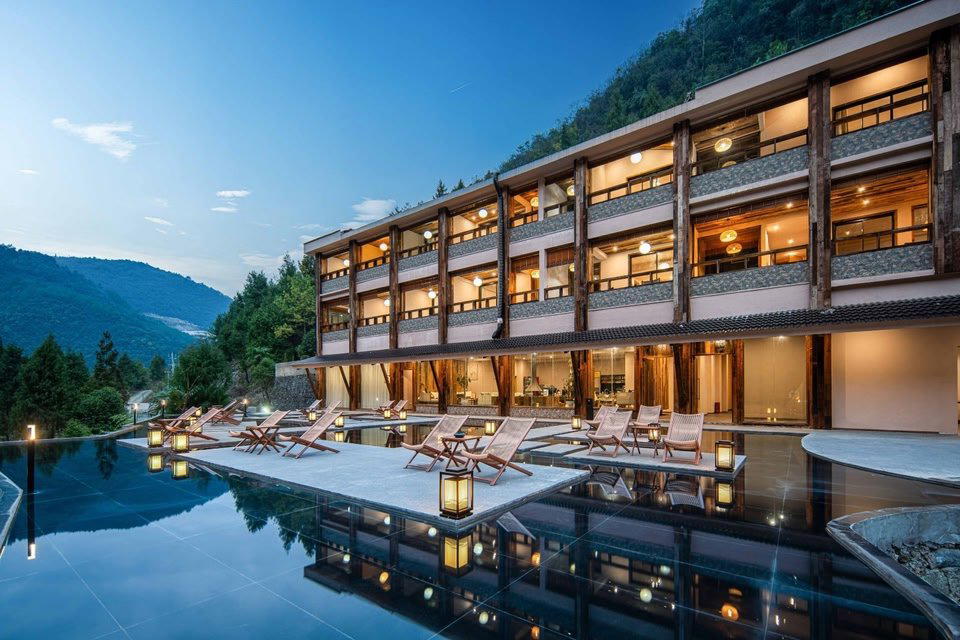
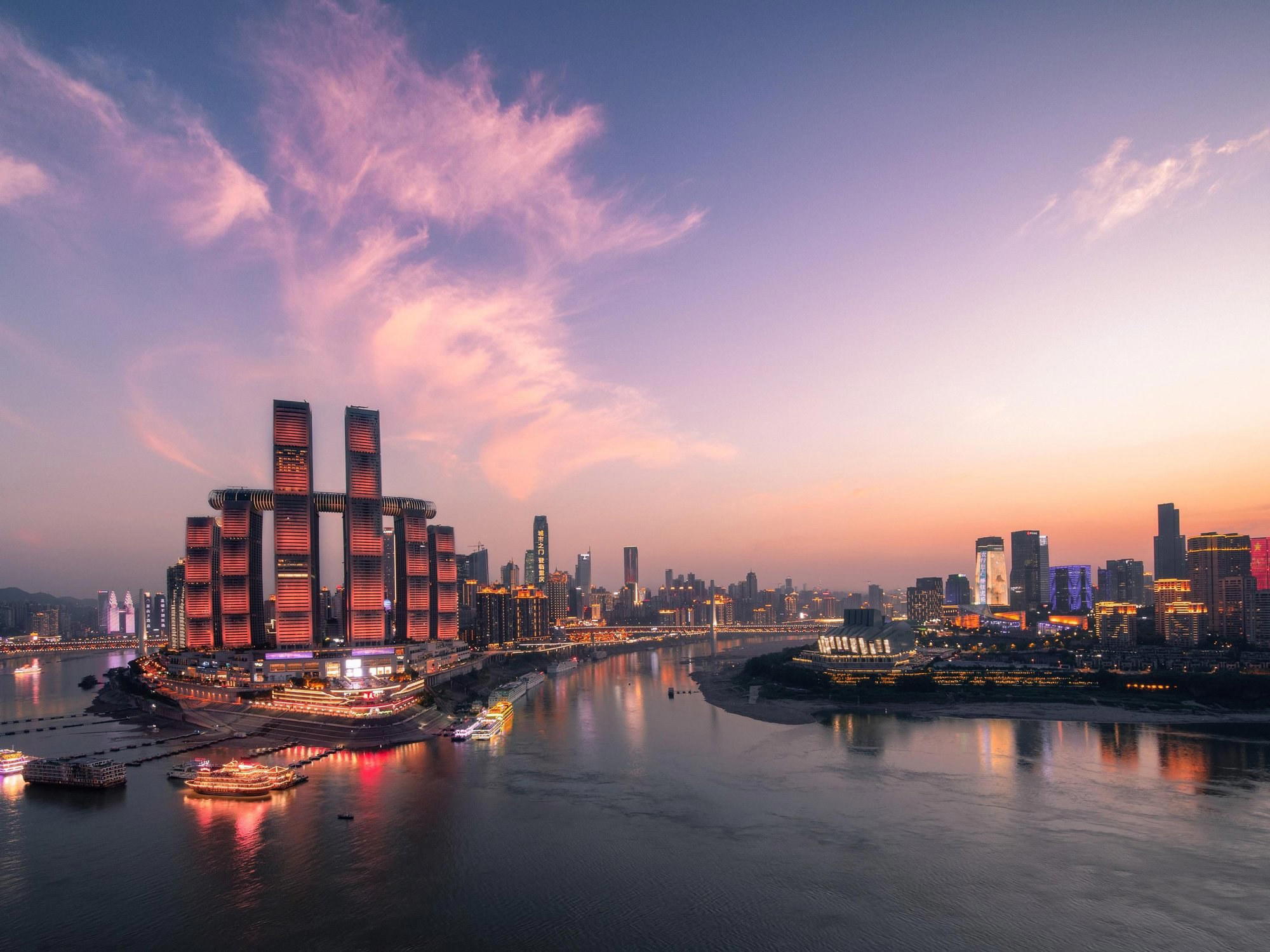
Bars in Chongqing
All bars in Chongqing →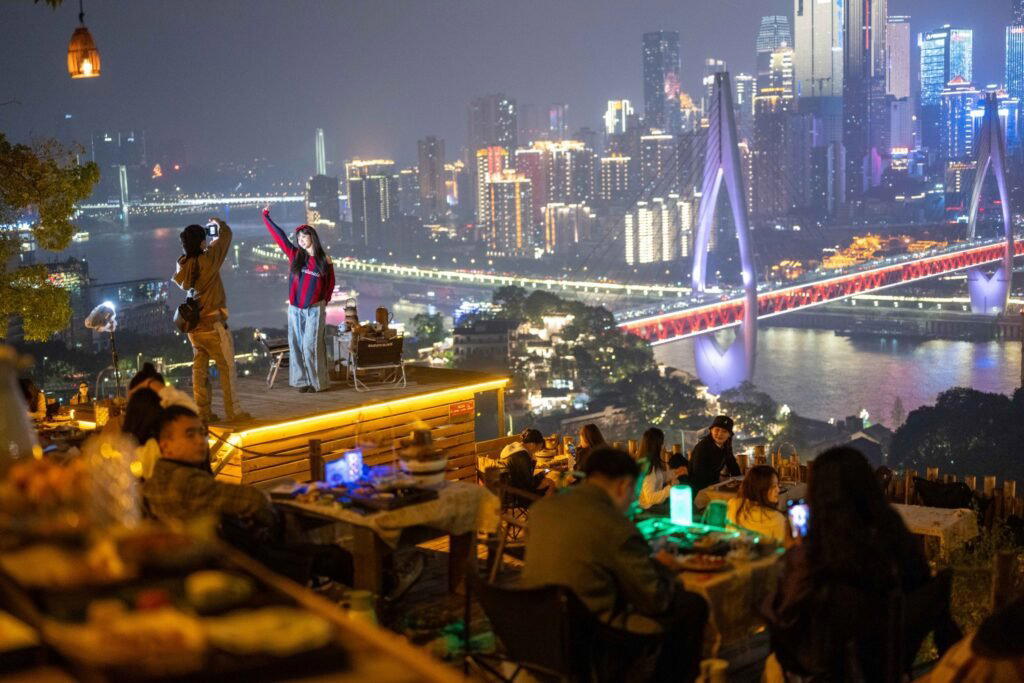

Details
- Romantic
- Scenic
- Elegant
- Quiet
- Wellness Retreat
- Romantic Getaway
- Anniversary
- Family Vacation
- Destination Spa
- Private Villa
- Butler Service
- Panoramic View
- Garden
- Terrace
- Spa
- Pool
- Fitness Center
- Restaurant
- Wi Fi
- Room Service
- Concierge
- Business Center
- Kids Club
- Mountain
- Garden
- Elevator
- Wheelchair Accessible
Serene and luxurious with warm, restorative atmosphere enhanced by natural hot spring waters, lush green surroundings, and contemporary design blending nature with upscale comfort.