On Songhua West Road in Jilin, Vanke Lake Songhua Yunlu Hotel occupies a position where northeastern China's winter resort tradition meets contemporary design thinking. The property sits alongside the Songhua River, placing guests within reach of Jilin's celebrated rime-ice scenery. For travellers seeking a considered base in one of China's most climatically distinct destinations, this is a serious option.

Pearl is the En Primeur Club membership app, where members save venues, book tables and use the concierge.
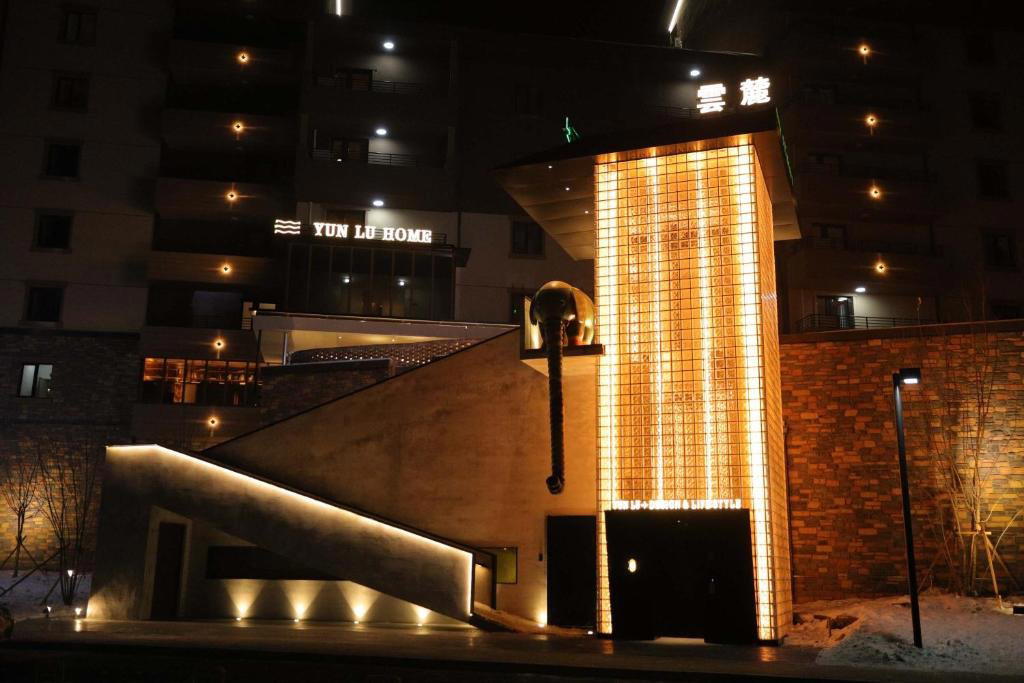
Where the Songhua River Defines the Architecture
Jilin city occupies an unusual position in China's hospitality geography. It is neither a tier-one metropolis competing on international brand density nor a remote wilderness outpost. Instead, it sits in the middle register: a northeastern city shaped by its river, its winters, and a ski culture that has grown considerably since the region hosted events during broader Asian Games infrastructure development. Hotels in this band of Chinese cities tend to split between large state-affiliated properties and a newer generation of resort-adjacent addresses designed to hold guests across multi-day leisure stays. The Vanke Lake Songhua Yunlu Hotel, positioned along Songhua West Road, belongs to the latter group. Its address on the Songhua River corridor places it within a stretch of Jilin that functions as the city's scenic and recreational edge, where frozen-river tourism in winter and forested hillside activity in summer define the visitor rhythm.
The Physical Setting as Editorial Argument
The architecture and siting of lakeside and riverside hotels in northeastern China follow recognizable patterns, and where a property diverges from those patterns tells you something useful. The dominant approach in the region is scale: large volumes, wide lobbies, and an interior design language that signals luxury through ceiling height and material accumulation. A smaller, more considered cohort of properties has emerged in recent years that takes the opposite approach, drawing spatial identity from the landscape rather than competing with it. The Vanke brand, known in China primarily as a large-scale residential and mixed-use developer, has applied resort logic to several of its leisure hotel projects, and the Yunlu format in Jilin reads as part of that experiment. Both sit at the intersection of winter sport access and refined comfort, a pairing that has become a genuine market category in Jilin province rather than a niche afterthought.
Across China's resort hotel sector, the most architecturally coherent properties tend to be those where the connection between interior design and exterior environment is deliberately maintained rather than incidental. Comparisons with Aman-affiliated properties are instructive here: Amandayan in Lijiang and Amanfayun in Hangzhou each use local material vocabulary and low-footprint siting as primary design arguments. The Yunlu Hotel's Songhua West Road placement suggests a similar ambition, though without the Aman price bracket or brand depth. For guests arriving from major Chinese cities, the contextual jump is significant: the Songhua River in Jilin freezes predictably each winter, and the riparian landscape in that season carries a visual authority that any building along its bank must either acknowledge or ignore. Properties that acknowledge it tend to organize their common spaces and room orientations around water and treeline views. Those that ignore it default to generic interior specification regardless of address.
Situating Vanke Yunlu Within Jilin's Accommodation Logic
Jilin's upper-tier hotel supply remains thinner than that of provincial capitals like Changchun. The city's appeal to premium travelers is almost entirely seasonal and activity-driven: the Songhua River rime ice phenomenon, which runs roughly from late November through early February, attracts visitors specifically for that visual experience, while the ski resorts at Beidahu and surrounding areas draw a distinct winter sport audience. Summer brings hikers and nature travelers drawn to Changbai Mountain and the surrounding forested region, though the volumes are lower. Hotels that perform across both seasons tend to do so by building physical infrastructure that supports outdoor orientation year-round: heated transition spaces, equipment storage, and food and beverage programming that responds to the activity load rather than defaulting to a static hotel-restaurant model.
For travelers comparing Jilin against other Chinese leisure destinations, the reference frame matters. The property shares conceptual DNA with landscape-led resort hotels elsewhere in China's northeast and far west, including Mohe Youran Mountain Residence in Da Hinggan Ling, which similarly anchors its identity to extreme seasonal conditions and natural spectacle. It sits at a different scale and price point from the internationally branded city hotels that anchor China's major urban markets, such as JW Marriott Hotel Shanghai at Tomorrow Square or Mandarin Oriental Qianmen in Beijing. Those properties compete on service depth and urban location. Vanke Yunlu competes on environment, and that distinction should govern how prospective guests evaluate it. For a fuller picture of what Jilin's accommodation and dining options look like across the spectrum, see our full Jilin restaurants guide.
Planning a Stay: What the Location Implies
Songhua West Road traces the river's western bank and places the hotel at practical distance from the city center, meaning guests arriving by train or from Changchun Longjia International Airport should plan for a transfer rather than a walkable arrival. The hotel's positioning as a leisure property rather than a transit or business address means that guests typically commit to a multi-night stay built around a specific activity program rather than treating it as a convenient overnight. Winter bookings around the rime ice season are the highest-demand period and should be secured well in advance given Jilin's growing profile as a winter destination. The rime ice phenomenon typically peaks in January, and that window compresses competition for accommodation along the Songhua corridor. For travelers open to the shoulder season, late September and October offer the area's autumn foliage conditions with considerably less booking pressure.
Those looking at comparable resort-adjacent properties elsewhere in China for calibration purposes might consider Xiamen Yunding Resort for a southern coastal counterpart, or Banyan Tree Ringha in for an example of how high-end Chinese resort hotels handle extreme natural environments architecturally. Both demonstrate how physical design and landscape relationship drive the perceived value of a stay in a way that amenity lists alone cannot replicate. The Vanke Yunlu property operates in that same evaluative register, where the setting is the primary credential. Additional reference points within the broader China resort category include Conrad Jiuzhaigou and 1 Hotel Haitang Bay, Sanya, which similarly position around natural spectacle and the guest's relationship to landscape rather than urban proximity.
| Venue | Cuisine | Price | Awards |
|---|---|---|---|
| Vanke Lake Songhua Yunlu HotelThis venue (the venue you are viewing) | This venue | Not listed | Not listed |
| Aman Summer Palace | Not listed | $1,000–1,500 | Forbes 4-Star |
| Amanfayun | Not listed | Not listed | Michelin Selected · La Liste Top Hotels |
| Amanyangyun | Not listed | Not listed | 2 Michelin Keys · Vogue 2026 Vogue Best Hotels in Shanghai |
| Andaz Xintiandi, Shanghai | Not listed | $100–200 | Michelin Selected · Forbes Recommended |
| Banyan Tree Hangzhou | Not listed | $300–500 | Michelin Selected · Forbes 4-Star |
Details
- Modern
- Elegant
- Scenic
- Family Vacation
- Weekend Escape
- Romantic Getaway
- Waterfront
- Garden
- Panoramic View
- Wi Fi
- Fitness Center
- Restaurant
- Bar
- Waterfront
Contemporary and elegant with a focus on creating a relaxing vacation experience; guests praise the distinctive and fresh design style.