
Michelin Selected
Hotel Milu occupies a historic address on Via de' Tornabuoni, Florence's most storied commercial street, and holds a MICHELIN Selected distinction for 2025. The property sits in a tier of intimate city-centre hotels that prioritise location and character over branded scale. For travellers whose Florence itinerary is anchored in the centro storico, the address alone does considerable work.

Pearl is the En Primeur Club membership app, where members save venues, book tables and use the concierge.

Via de' Tornabuoni and the Case for Staying Inside the Centre
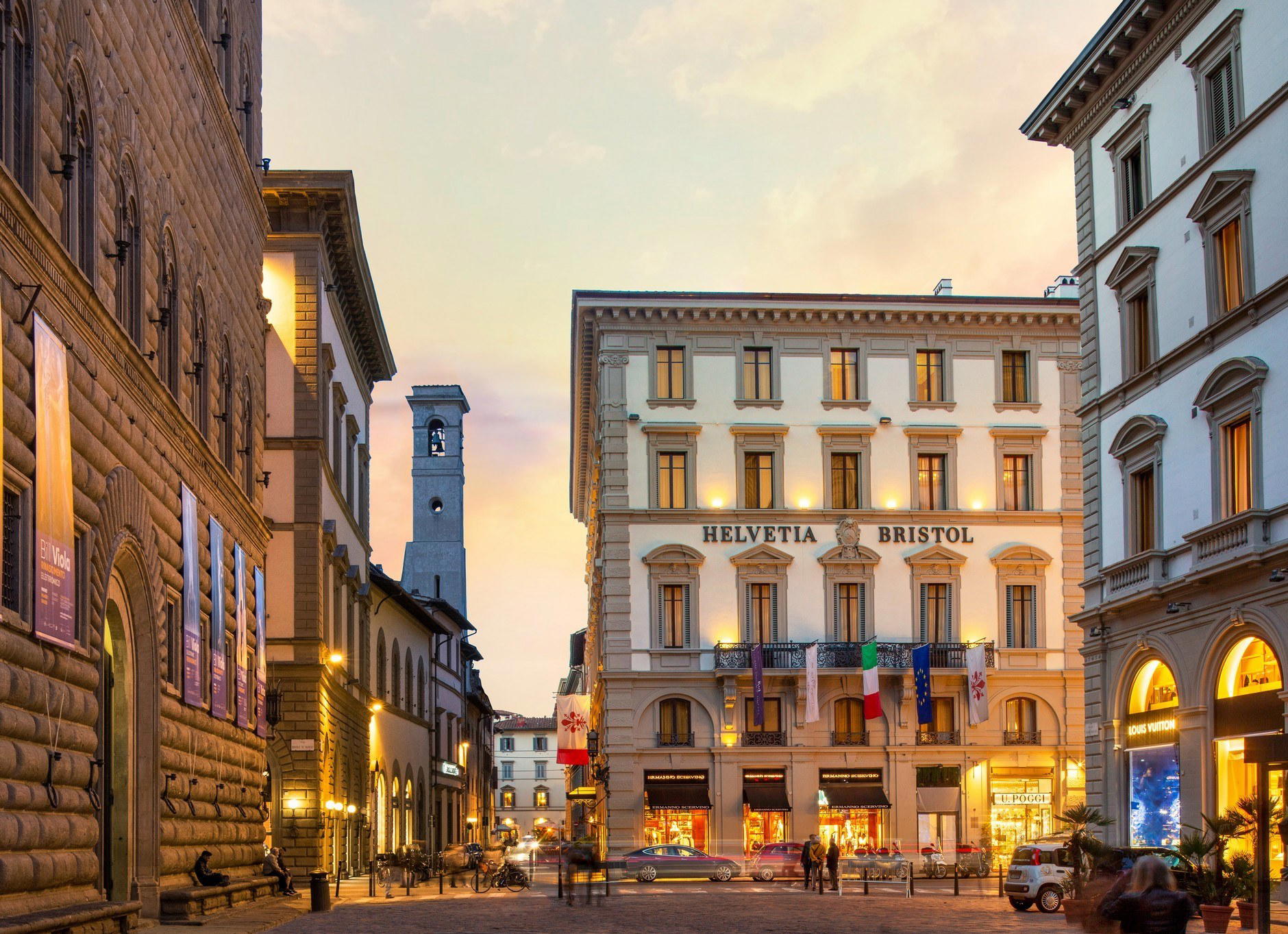
Florence's premium accommodation market has fractured into two distinct clusters over the past decade. The first is the grand-palazzo tier: properties like the Four Seasons Hotel Firenze or the Villa La Massa, which trade on grounds, scale, and historic grandeur at some remove from the city's tightest medieval grid. The second is a smaller, more particular cohort of properties that sit directly inside the centro storico, where the address is part of the offering and every cultural institution in the city is walkable. Hotel Milu belongs to the second group, positioned on Via de' Tornabuoni at number 8, a street that has functioned as Florence's most concentrated axis of luxury commerce since the Renaissance.
That address is not incidental. Tornabuoni runs between Piazza Antinori to the north and the Arno to the south, flanked by the kind of stone facades that appear in art history surveys. To stay here is to wake up inside the city's original commercial and civic core rather than at its periphery. The Hotel Lungarno works a similar logic further along the river, and the Brunelleschi Hotel deploys a comparable centro storico positioning. But Tornabuoni carries a specific density of cultural and commercial reference that few other addresses in the city can match.
MICHELIN Selected and What That Placement Signals
Hotel Milu holds a MICHELIN Selected distinction in the 2025 Michelin Hotels guide, placing it inside a curated tier that the guide reserves for properties demonstrating consistent quality in atmosphere, welcome, and overall guest experience. MICHELIN Selected is not a star rating for cuisine; it is an editorial judgment about the hospitality standard of the property as a whole. In Florence's competitive accommodation market, the distinction matters because the city is well-supplied with hotels at every price point, and third-party editorial curation from a source with Michelin's credibility functions as a filtering mechanism.
Comparable Florence properties carrying similar or adjacent Michelin recognition include the Palazzo Portinari Salviati Residenza D'Epoca and the Hotel Calimala.
The Sequence of a Stay: How the Location Structures Your Days
Thinking about a Florence stay through the lens of a tasting progression, how the days unfold, what you encounter first, how energy accumulates, is a useful exercise, and few addresses in the city configure that arc as efficiently as Tornabuoni. The street itself functions as a kind of aperitivo, an orientation to Florentine scale and texture before you have yet gone anywhere. The Palazzo Strozzi, one of the city's primary contemporary art venues, sits a short walk from the hotel's front door. The Arno and the Ponte Vecchio are similarly close. The Piazza della Repubblica, with its long-standing cafe culture, is reachable in minutes.
Where some out-of-centre Florence properties (the Villa Cora on the Oltrarno hill, for instance, or the Ad Astra) ask guests to organise their movements around a taxi or a specific walk, Hotel Milu's position lets the city happen more spontaneously. That is a meaningful distinction for travellers who want Florence as a lived-in experience rather than a curated sequence of transfers. The tourist pressure on Tornabuoni is real, the street is heavily trafficked during peak hours, but the infrastructure of the neighbourhood, including its range of restaurants, wine bars, and food markets, means that a guest can always redirect to something quieter without logistical effort. Our full Florence restaurants guide covers the breadth of options within the centro storico and beyond.
Planning the Stay: Practical Considerations
Florence draws its largest visitor volumes in spring and early autumn, April through June and September through October, which is when Tornabuoni is at its most animated and also when accommodation across the city books furthest in advance. Travellers targeting those windows should factor in lead time when considering any centro storico property, including Hotel Milu. The July and August period brings heat and thinner cultural programming in some venues, though the city never fully empties. The November-to-March shoulder runs quieter, with shorter queues at major museums and more flexibility on accommodation. Specific booking terms, current pricing, and room configurations for Hotel Milu are best confirmed through the property's own channels, as these details are subject to change.
For travellers structuring a broader Italy itinerary, Tornabuoni-based accommodation in Florence pairs naturally with train access to the wider peninsula. Rome is under 90 minutes by high-speed rail from Santa Maria Novella station, which is itself walkable from Via de' Tornabuoni. Venice is approximately two hours. This connectivity is part of what makes a Florence base, and a centro storico property specifically, work efficiently for travellers moving across multiple Italian cities. Properties worth cross-referencing elsewhere on that itinerary include Aman Venice, the Bulgari Hotel Roma, or the Portrait Milano for a northern extension. For those extending into Tuscany's wine country, Rosewood Castiglion Del Bosco in Montalcino represents a benchmark rural alternative. Coastal options from the same editorial tier include Il Pellicano in Porto Ercole and the Borgo Santandrea on the Amalfi Coast.
How Hotel Milu Compares in Florence's Mid-Scale Premium Tier
Florence's luxury accommodation tier is occupied at the leading end by properties with significant physical scale: the Four Seasons' 11-hectare garden compound, the St. Regis on Piazza Ognissanti, or the Savoy on Piazza della Repubblica. These properties trade on volume, brand infrastructure, and ceremony. Below that tier sits a set of smaller, more character-driven properties where the premium is on address specificity, architectural texture, and a lighter operational footprint. Hotel Milu operates in that second register. Compared to the Palazzo Portinari Salviati, which emphasises historic palazzo credentials, or the Hotel Calimala, which also sits within the centro storico grid, Hotel Milu's Tornabuoni position represents one of the stronger locational arguments in this peer group.
Travellers comparing across Italy's wider small-luxury hotel tier, properties such as Passalacqua on Lake Como, JK Place Capri, or Casa Maria Luigia in Modena, will find Hotel Milu occupies a similar editorial category: independently positioned, editorially recognised, and differentiated by setting rather than branded amenity infrastructure. For those considering options further afield within Umbria, Castello di Reschio in Lisciano Niccone offers a rural counterpart, while Corte della Maestà in Civita di Bagnoregio points toward the smaller-village end of the spectrum. For international reference points in the same premium-boutique tier, The Fifth Avenue Hotel in New York, Badrutt's Palace in St. Moritz, and Hôtel de Paris Monte-Carlo provide useful calibration for what editorial recognition looks like across different markets. In Trieste, the Savoia Excelsior Palace Trieste similarly anchors the premium end of a city where the address is central to the argument. In Positano, Il San Pietro deploys comparable logic on the Amalfi Coast.
Cost Snapshot
Comparable venues nearby, for context on price, style, and recognition.
| Venue | Price | Awards | Notes |
|---|---|---|---|
| Hotel MiluThis venue (the venue you are viewing) | $100–200 | Michelin Selected | Not listed |
| Gallery Hotel Art | $300–500 | Michelin Selected · Mr & Mrs Smith Seal of Approval | Santo Spirito, Contemporary design boutique hotel owned by Salvatore Ferragamo, blending high couture sensibility with modern hospitality efficiency. |
| The Social Hub Florence Lavagnini | $1–100 | Not listed | Il Romito, Hybrid hotel with co-working, event spaces, and social hubs in a historic palazzo. |
| Stella d'Italia | $200–300 | 1 Michelin Key · Mr & Mrs Smith Seal of Approval | Santo Spirito, Converted 16th-century palazzo with contemporary boutique sensibility; eclectic and artistic with individually chosen rooms. |
| La Gemma | Not listed | Michelin Selected · Mr & Mrs Smith Seal of Approval | Santo Spirito, 19th-century palazzo with modern Italian hospitality |
| Velona's Jungle Luxury Suites | Not listed | 1 Michelin Key | San Jacopino, Luxurious jungle-themed boutique B&B in a historic building with Art Deco architecture. |
Recognition history
Dated appearances from independent guides and award organizations, with the underlying list record or original source where available.
Michelin Selected
Michelin
Continue exploring
More in Florence
Hotels in Florence
All hotels in Florence →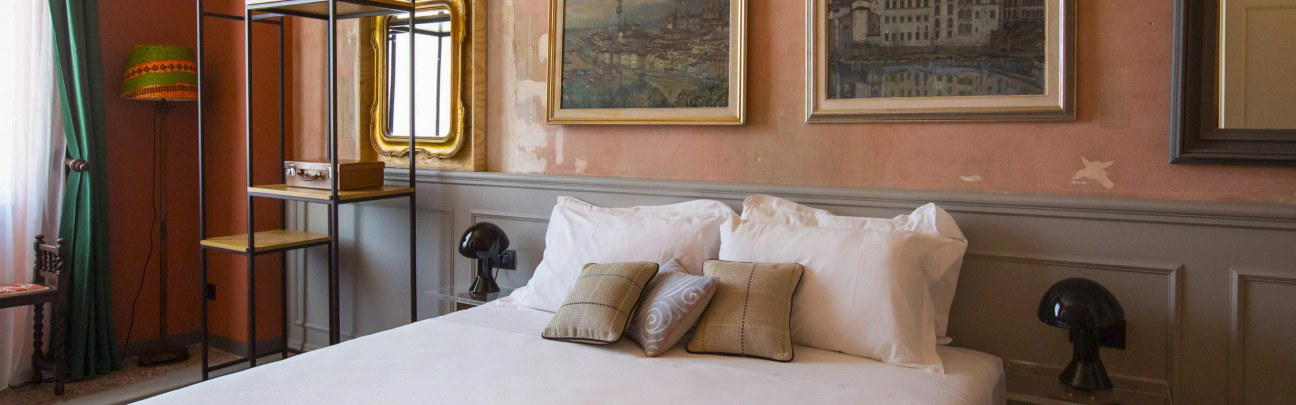
Bars in Florence
All bars in Florence →
Restaurants in Florence
All restaurants in Florence →

Details
- Elegant
- Modern
- Romantic
- Sophisticated
- Romantic Getaway
- Weekend Escape
- Business Trip
- Historic Building
- Design Destination
- Panoramic View
- Terrace
- Wi Fi
- Concierge
- Room Service
- Bar
- Valet Parking
- Airport Shuttle
- Skyline
- Street Scene
- Wheelchair Accessible
- Elevator
- Accessible Restroom
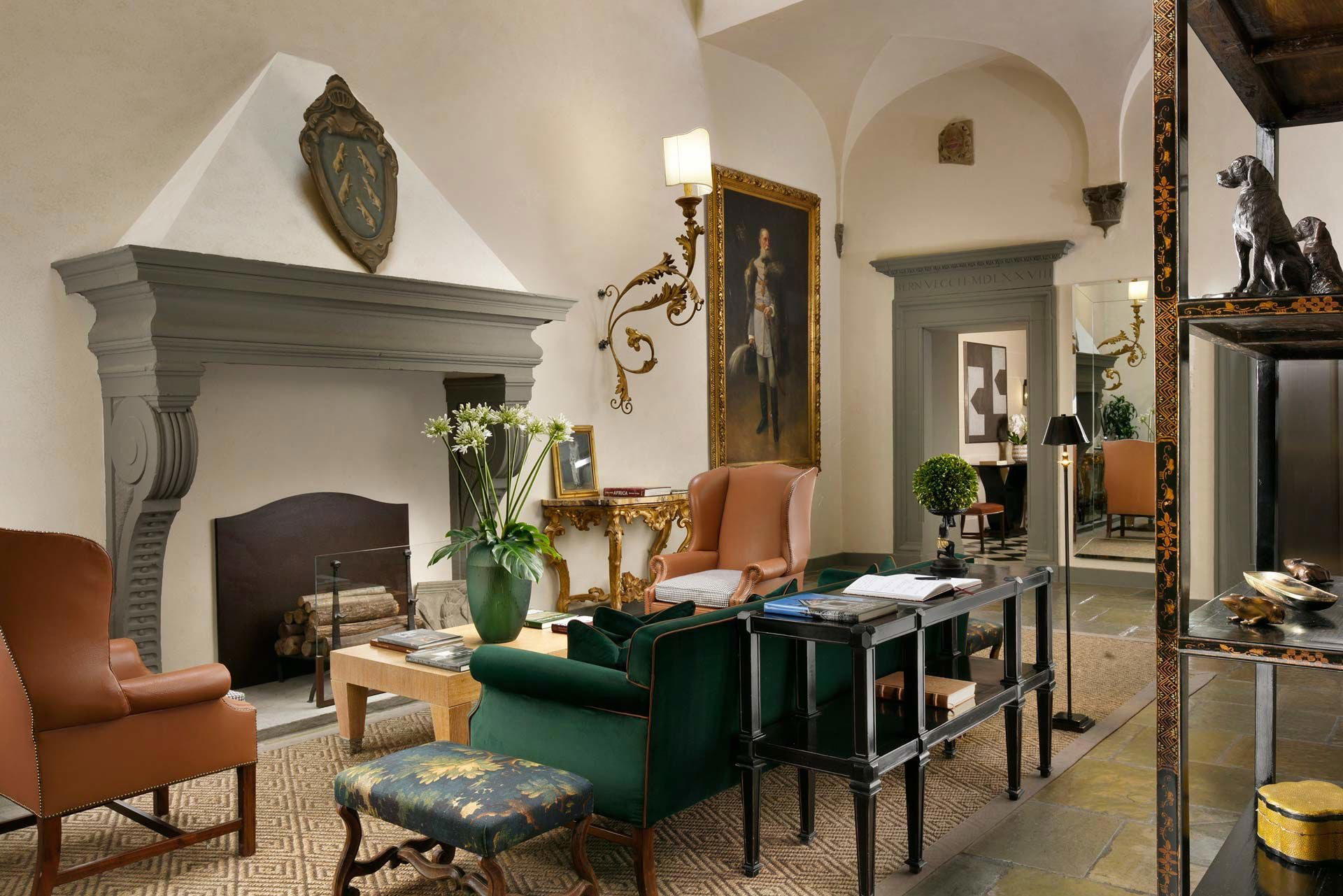
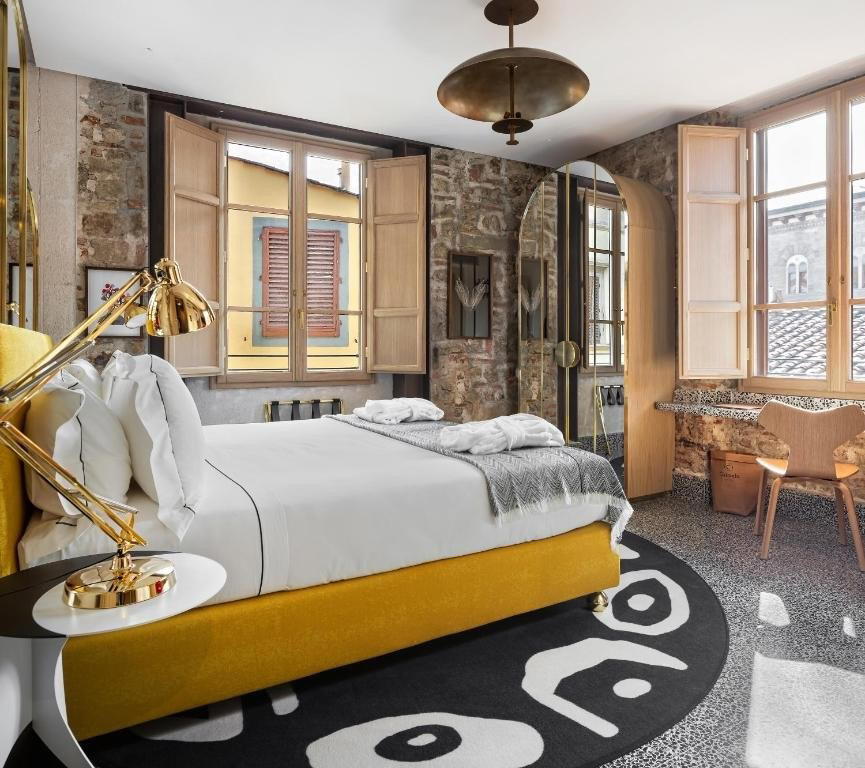
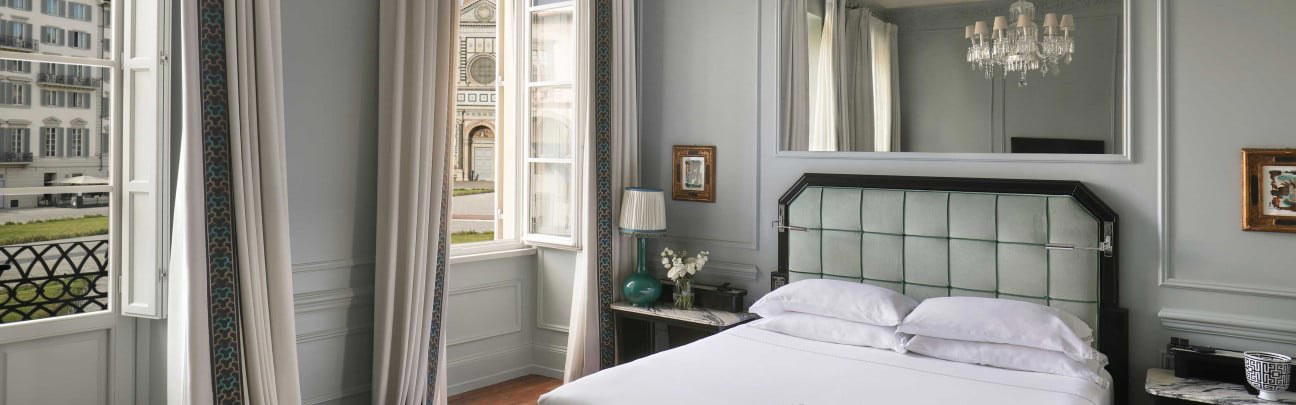
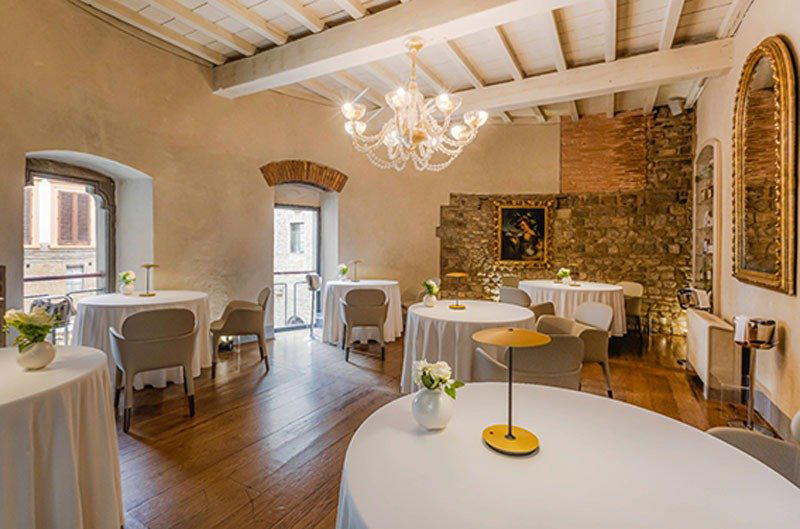
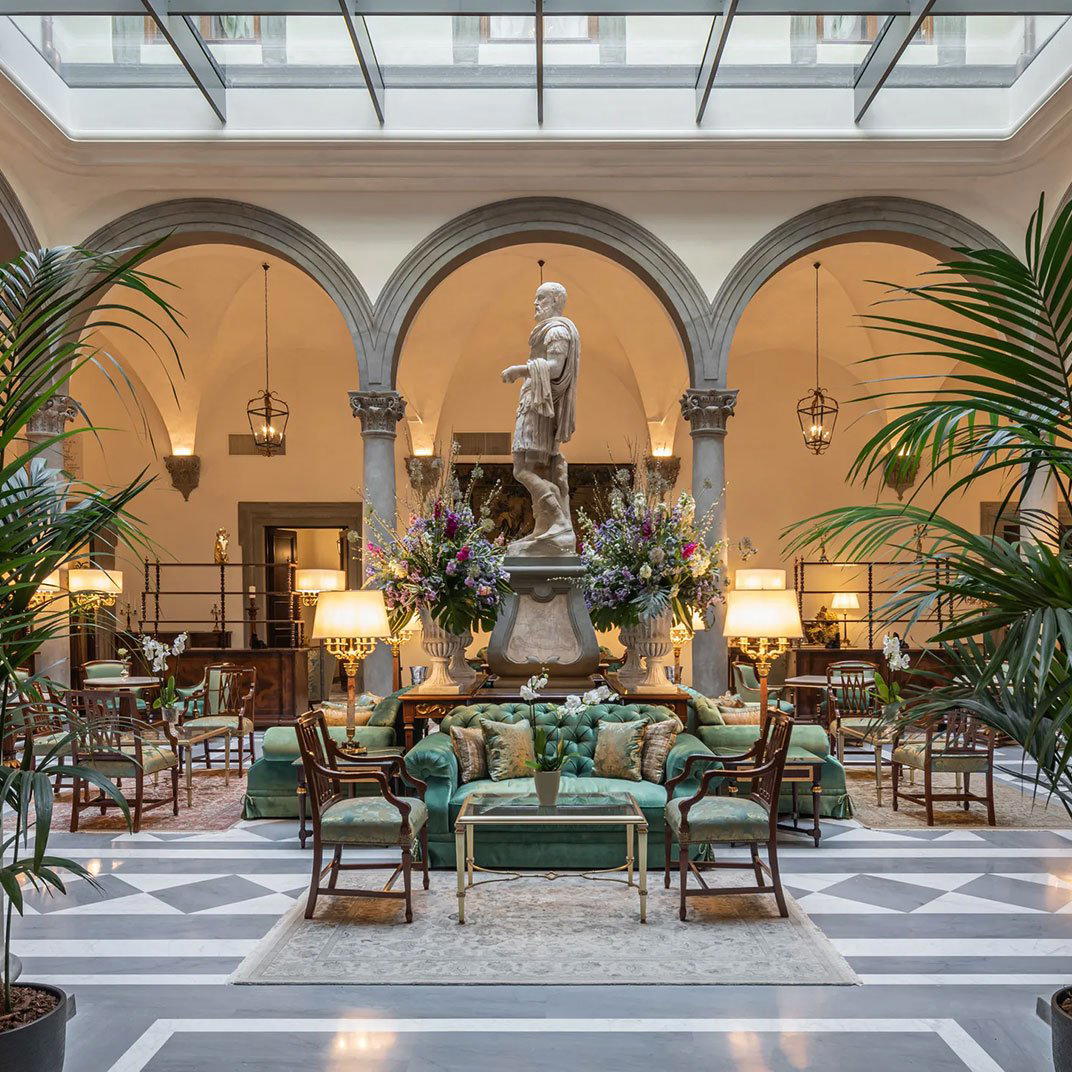
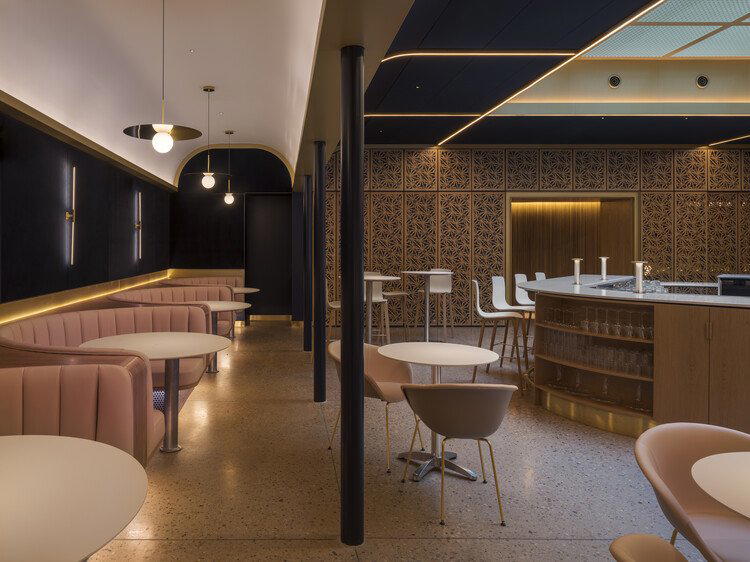
Refined and contemporary with minimalist design elements, marble fireplaces, and warm lighting; Library Lounge features spare white walls with candy-apple-red accents and oversize art books.