




2 Michelin Keys · La Liste Top Hotels · Virtuoso Luxury Hotel Partner
Set in a 15th-century estate along the Arno River, just 15 minutes from Ponte Vecchio by complimentary shuttle, Villa La Massa offers 51 rooms across six historic buildings on 22 acres of Tuscan parkland. A Michelin 2 Keys recipient and La Liste Top Hotels 2026 member (91 points), it occupies a distinct tier between countryside retreat and Florence city access, hard to replicate at this proximity.

Pearl is the En Primeur Club membership app, where members save venues, book tables and use the concierge.
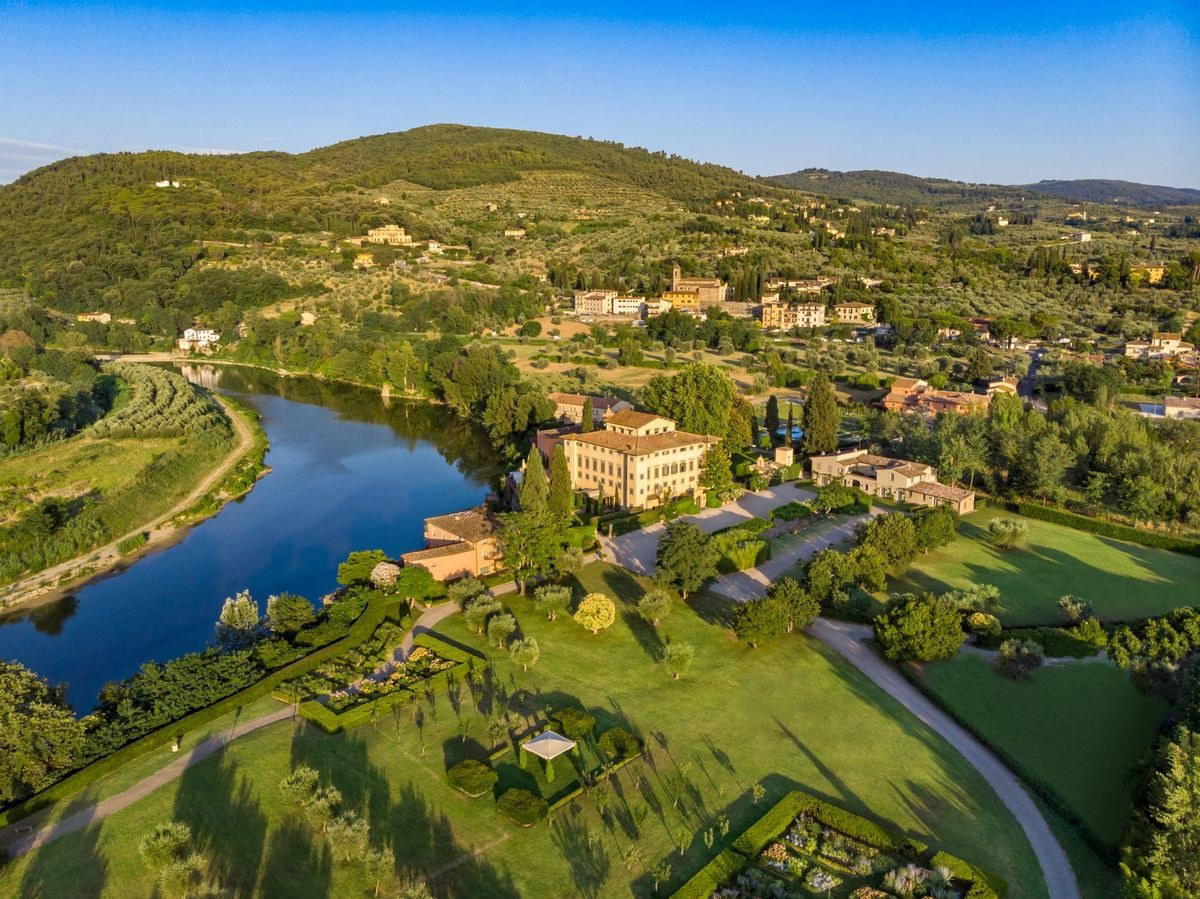
Between the River and the Renaissance City
The road from central Florence to Candeli takes roughly 15 minutes, but the shift in register is immediate. The Arno widens, the stone walls thin out, and the city recedes into something older and quieter. Villa La Massa sits at this transition point, five miles from the centro storico, positioned along the riverbank with 22 acres of parkland behind it and the Chianti Valley rising in the distance. It is an address that gives the property two identities simultaneously: a countryside estate with the character that proximity to hills and olive groves implies, and a working base for serious Florence exploration. A complimentary shuttle runs daily to and from Ponte Vecchio, which means guests are not choosing between the city and the countryside so much as holding both in one reservation.
That geographic position, close enough to Florence to make daily visits practical and far enough to feel genuinely removed from it, defines the property's competitive case. In a city where hotels like the Four Seasons Hotel Firenze and Palazzo Portinari Salviati Residenza D'Epoca make the argument for historic-center immersion, Villa La Massa makes a different argument: that the Arno view, the garden, and the territorial quiet are worth the short transit. The La Liste Leading Hotels ranking (91 points, 2026) and Michelin 2 Keys recognition confirm it is not a compromise option but a deliberate positioning within the luxury tier.
The Estate, Spread Across Six Buildings
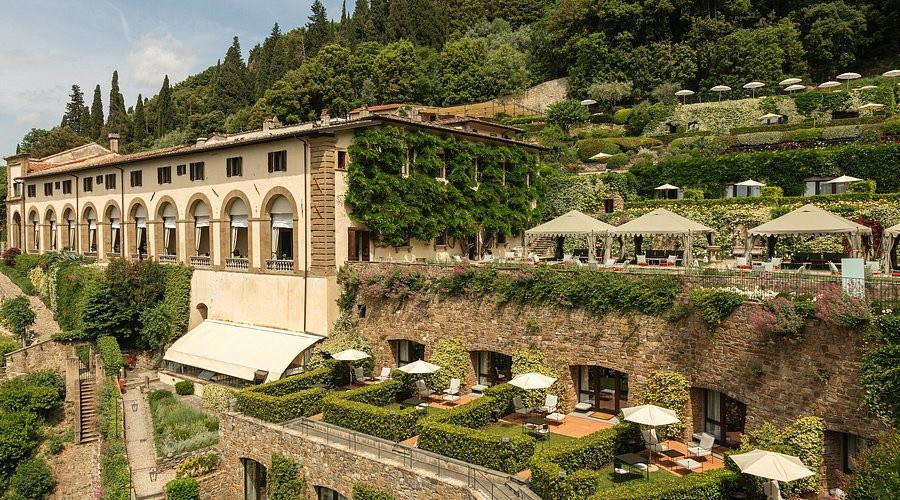
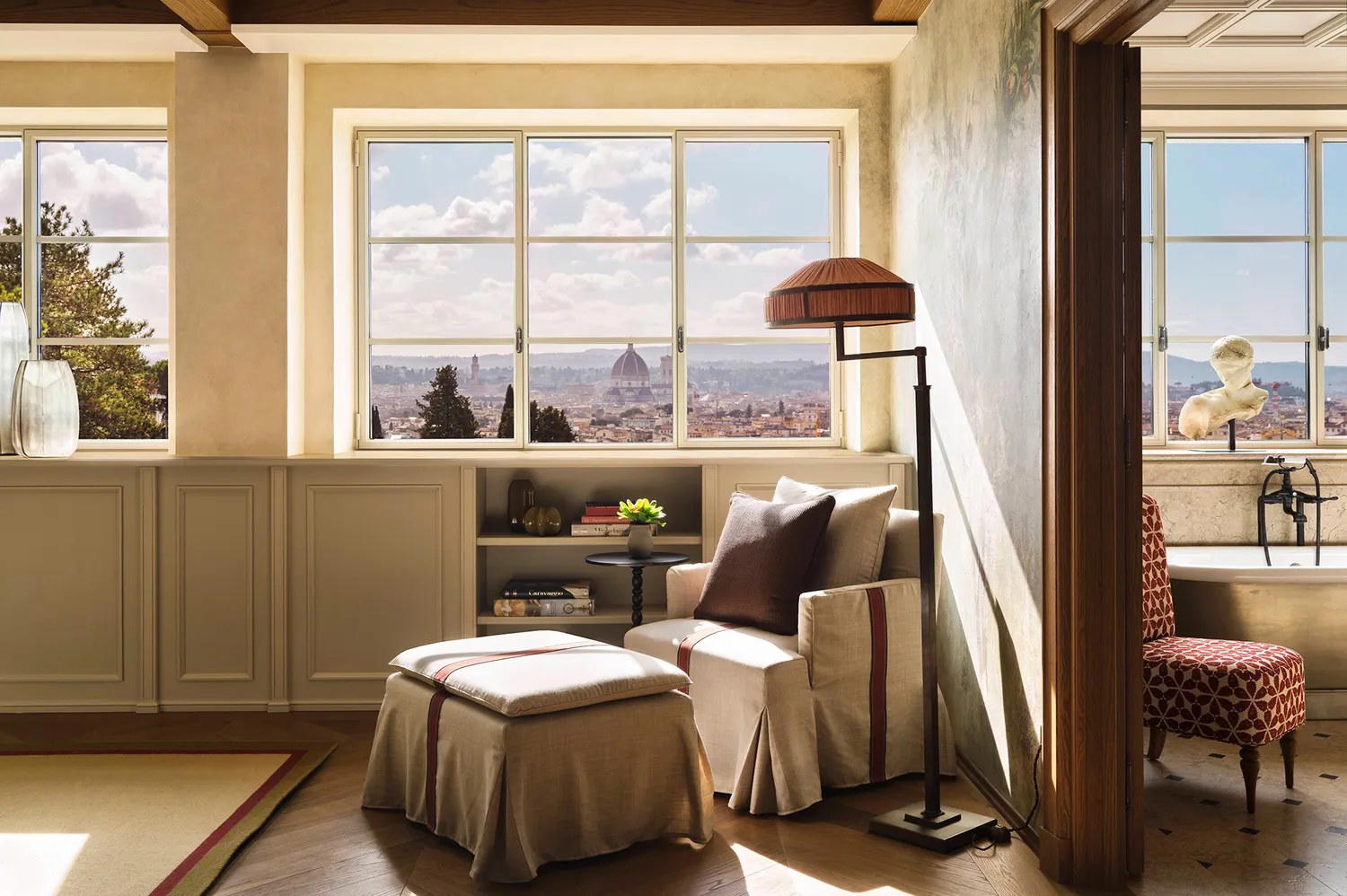
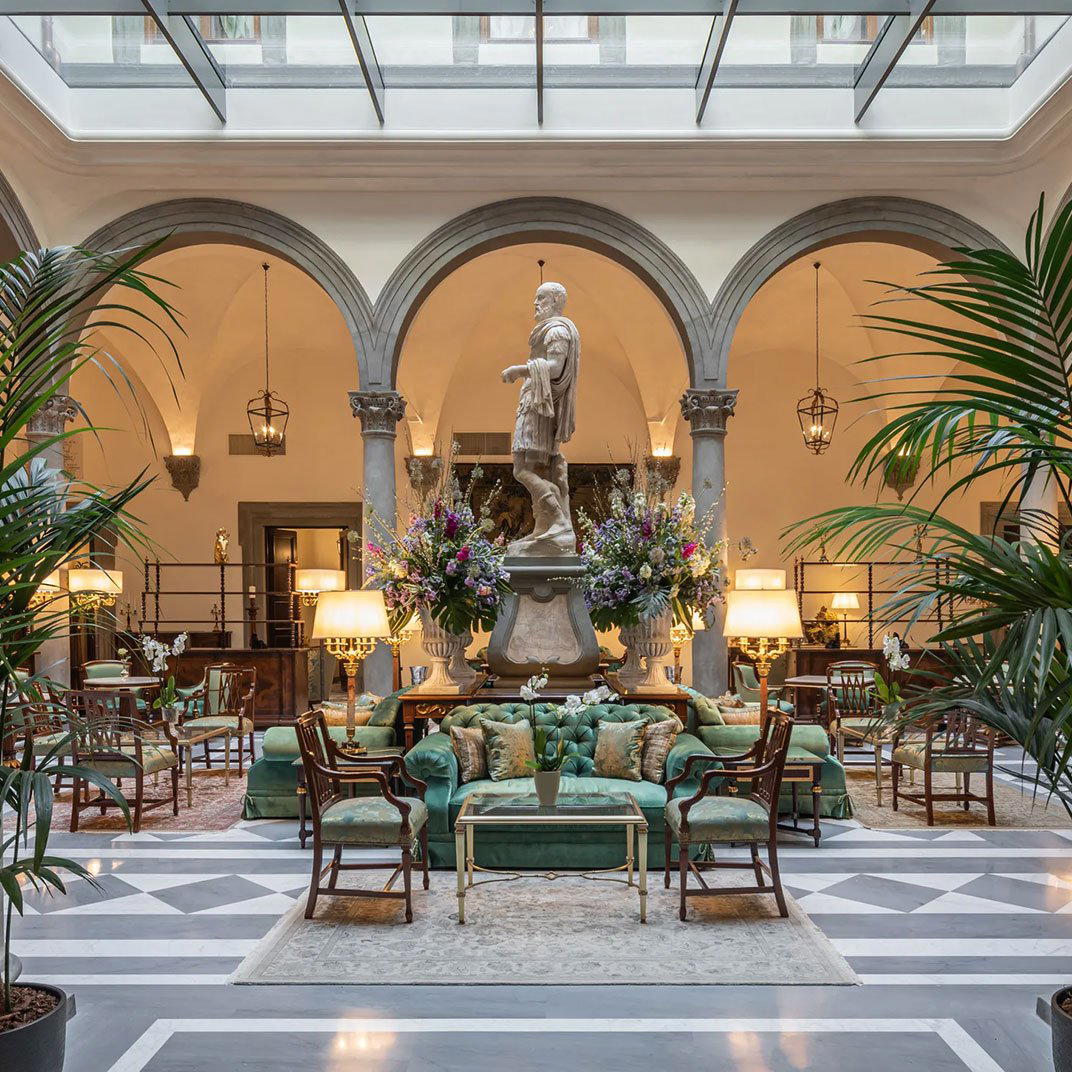
Fifty-one rooms and suites are distributed across six structures of different eras and characters. The Villa Nobile, the Mill, and the Villino carry the heavier Renaissance imprint: frescoed ceilings, canopied beds, silk and brocade textiles, the kind of detailing that reads as historical evidence rather than period pastiche. The other three buildings, the Casa Colonica, the Limonaia, and Villa Hombert, take a more contemporary Florentine approach while remaining materially consistent with the estate's character. The split matters because it gives the property two distinct atmospheres within the same address, allowing guests to calibrate the intensity of their historical immersion.
Casa Colonica, the former farmhouse, can be taken on an exclusive basis: four suites plus a private kitchen, accessed through a jasmine-laced courtyard. For those who want the estate without the shared-hotel dynamic, this is the practical configuration. The Villino suites are the better option for privacy within the main hotel structure, while the Presidential and Parco suites carry the most floor area. Compared to the interior-focused room programs at city-center properties like Villa Cora or Brunelleschi Hotel, Villa La Massa's rooms are defined as much by their garden and river context as by their interiors. Entry rates around $634 per night place the property in the upper tier of the Florence market, consistent with its Leading Hotels of the World membership.
Il Verrocchio and the Arno Terrace
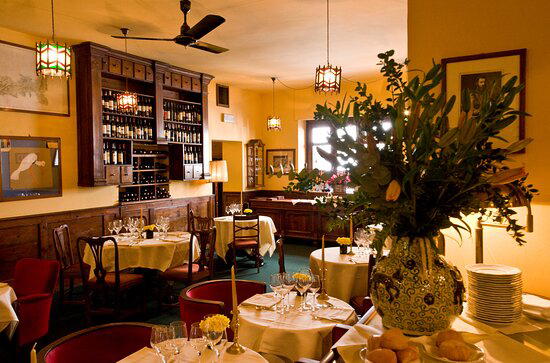
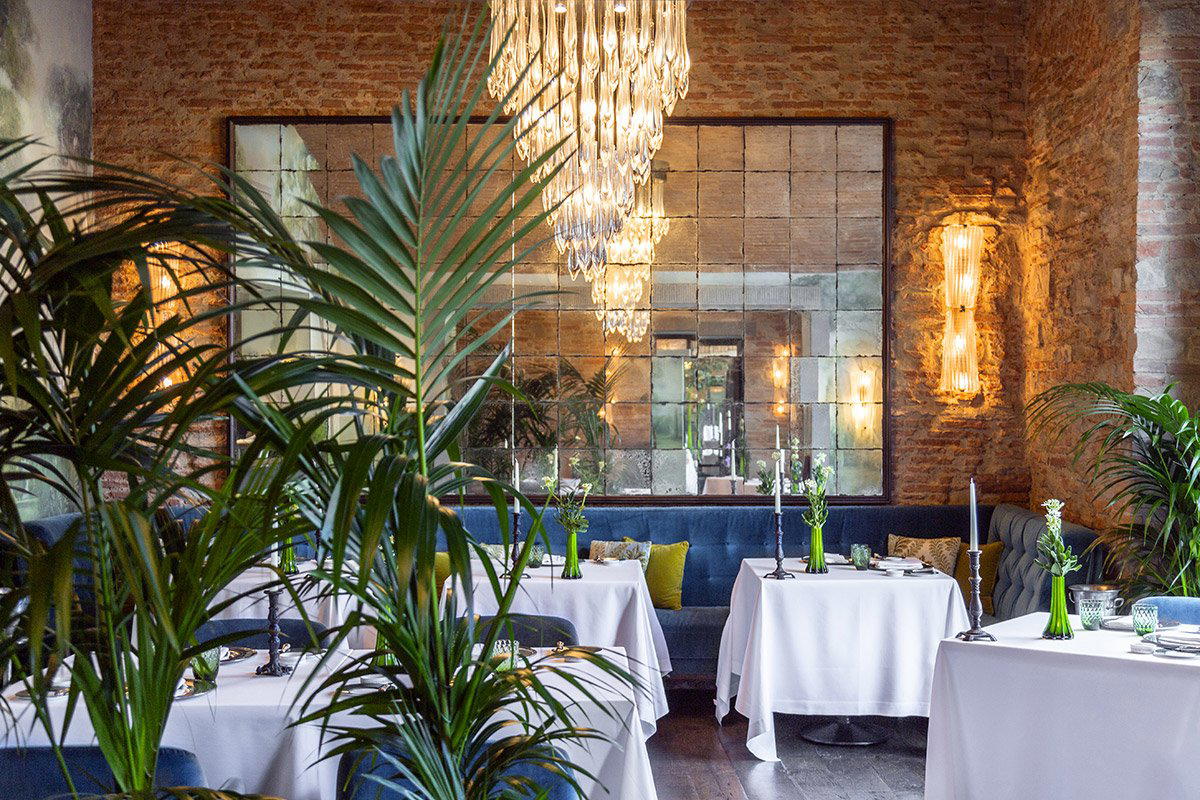
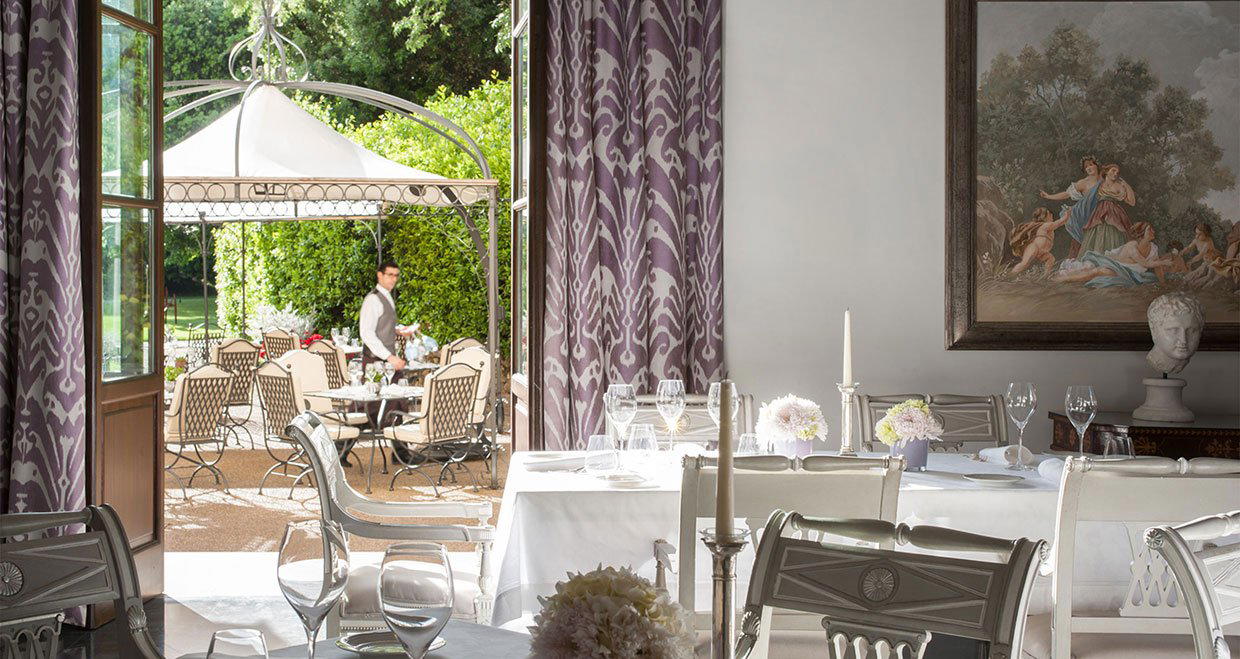
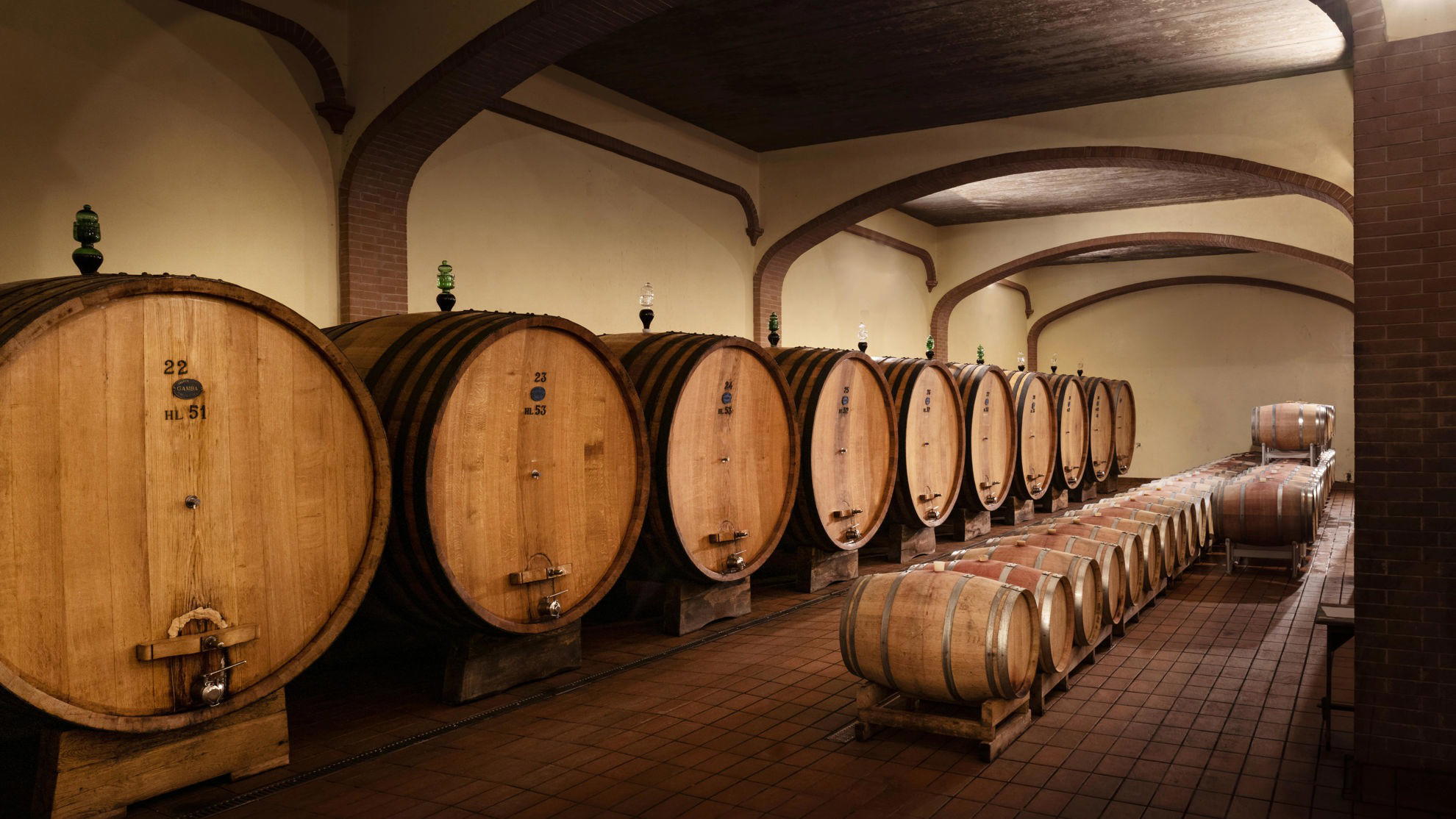
Within the Tuscan luxury hotel category, river-facing dining terraces are a repeated element, but few have the specific combination of formal restaurant credentials and direct waterline orientation that Il Verrocchio holds here. The terrace overlooks the Arno at a stretch where the river runs quietly through the Chianti foothills, well upstream of Florence's urban center. The restaurant itself carries a wine list of over 400 labels alongside traditional Tuscan cooking, the latter a category where the regional emphasis on technique, ingredient quality, and restraint carries considerable weight. The 15th-century cellar beneath the property functions as a private tasting space, offering regional wines paired with charcuterie and local cheeses in a setting that reads as genuinely aged rather than atmospherically constructed.
The L'Oliveto bistrot occupies a restored former barn and operates at lunch, taking its name from the surrounding olive trees, which the estate uses to produce its own oil. This two-format approach, a formal dinner restaurant and a more relaxed daytime option, is a structural pattern increasingly common among destination properties in Tuscany and across northern Italy, allowing the kitchen program to cover different guest rhythms without diluting either offering. Chef Stefano Ballarino oversees the bistrot. His prior position at Villa d'Este on Lake Como, a property that carries significant culinary expectations, provides verifiable context for the program's ambition, even at the more casual lunchtime register.
Guests staying for the full day would do well to note the Pool Bar as a third option: lighter fare after a swim, in the shadow of lemon trees and cypress. The Il Verrocchio terrace is, by any reasonable assessment of the combination of setting and credentials, a difficult scene to replicate within the Florence hotel category. See our full Florence restaurants guide for context on where the city's dining sits more broadly.
Gardens, Grounds, and the Running Track
The grounds are curated with purpose rather than scale for its own sake. Maria Chiara Pozzana, a landscape architect whose credits include the restoration of Florence's Villa Bardini, oversaw the garden design. Irises, Florence's official city flower, appear throughout the 22 acres, tying the estate to civic Florentine identity in a way that reads as knowing rather than decorative. For guests who want physical activity within the property, a guests-only running track runs along the Arno waterfront, offering a more textured alternative to the fitness center's standard equipment.
The hotel also organizes excursions to private gardens and estates across Tuscany, which positions it partly as a base for territory exploration rather than purely a self-contained destination. This is a different proposition from properties like Castello di Reschio in Lisciano Niccone or Rosewood Castiglion Del Bosco in Montalcino, which embed themselves more deeply in their specific territories. Villa La Massa's access to both Florence and the broader Tuscan countryside gives it a flexibility those more remote properties cannot match.
The Arno Spa and the Property's Sensory Logic
Spa program at Villa La Massa is organized around Tuscan materials and heritage context rather than the imported luxury spa aesthetics common across the international hotel category. Terra cotta, vaulted ceilings, green marble, and cream stone characterize the wet areas, which include a Turkish bath, sauna, Roman pool with hydromassage, and sensory showers. The treatment suites use products from the Officina Farmaceutica di Santa Maria Novella, the Florentine pharmacy founded in the 17th century, connecting the spa experience directly to the city's own cosmetic and herbalist tradition. This is not a generic amenity but a regionally coherent one.
Planning a Stay
Villa La Massa operates seasonally, closing around mid-November and reopening in late March or early April. The summer months, when the pool, garden terrace, and Arno-side running track all come into their own, represent the property's peak configuration. Autumn, particularly September and October, offers the wine-harvest context that makes Tuscany's seasonal calendar worth tracking: the 15th-century cellar tastings are a logical anchor for that timing. Spring openings allow access to the iris garden at its fullest.
Florence Peretola Airport sits 18 miles from the property (approximately 30 kilometers). The complimentary shuttle to Ponte Vecchio removes the need for a rental car for city access, though guests planning day trips to Chianti, Siena, or the wider Val d'Arno will benefit from independent transport. The property can be booked via its website at. Given that 51 rooms across six buildings is a limited inventory for a high-demand luxury address in one of Europe's most visited regions, booking well ahead of peak season is advisable.
For travelers comparing within the Florence luxury tier, the choice between Villa La Massa and city-center options like Hotel Lungarno, Ad Astra, or Hotel Calimala comes down to a single question of orientation: immersion in the city's streets, or access to them from a position of territorial remove. For travelers who want the Arno but with a more urban character, Riva Lofts Florence provides a contrasting format. Italy's broader luxury hotel field, from Aman Venice to Borgo Santandrea on the Amalfi Coast or Il Pellicano in Porto Ercole, runs deep on distinctive properties. Within Tuscany specifically, Casa Maria Luigia in Modena and Portrait Milano each occupy different city-based registers. Villa La Massa's distinction within all of this is narrower and more specific: Florence access from an Arno-facing Tuscan estate, with a culinary program that takes the regional tradition seriously and grounds that justify time on the property itself.
Comparable Spots
Comparable venues nearby, for context on price, style, and recognition.
| Venue | Cuisine | Price | Awards | Notes |
|---|---|---|---|---|
| Villa La MassaThis venue (the venue you are viewing) | Restored 16th-century Tuscan villas furnished in traditional Florentine style | $300–500 | 2 Michelin Keys · La Liste Top Hotels | Not listed |
| Collegio alla Querce | Timeless urban retreat blending Renaissance villa with Tuscan country estate charm. | $500–750 | 3 Michelin Keys · Virtuoso Luxury Hotel Partner | San Gervasio |
| Villa Cora | Restored 19th-century aristocratic villa blending opulence with Tuscan serenity | $300–500 | 2 Michelin Keys · La Liste Top Hotels | Bobolino |
| Palazzo Portinari Salviati Residenza D'Epoca | Historic Renaissance palace with modern luxury services | $500–750 | 2 Michelin Keys · Virtuoso Luxury Hotel Partner | San Niccolo |
| Hotel Lungarno | Intimate luxury boutique on the River Arno with art collection and Michelin dining. | $300–500 | 1 Michelin Key · La Liste Top Hotels | Santo Spirito |
| The St. Regis Florence | Luxurious historic palazzo blending Renaissance grandeur with modern opulence. | $500–750 | 1 Michelin Key · La Liste Top Hotels | San Frediano |
Recognition history
Dated appearances from independent guides and award organizations, with the underlying list record or original source where available.
Michelin 2 Keys
Michelin
La Liste Top Hotels
La Liste
Virtuoso Luxury Hotel Partner
Virtuoso
Forbes 4-Star
Forbes
Leading Hotels of World Member
Leading Hotels of World
Full recognition history (7 entries)
Michelin 2 Keys
Michelin
Michelin 2 Keys
Michelin
Continue exploring
More in Florence
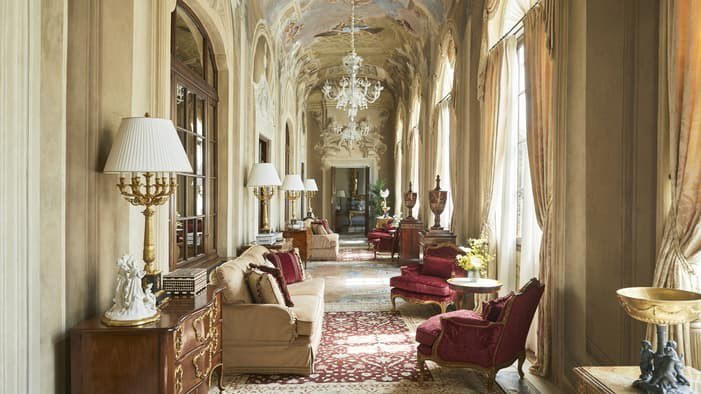
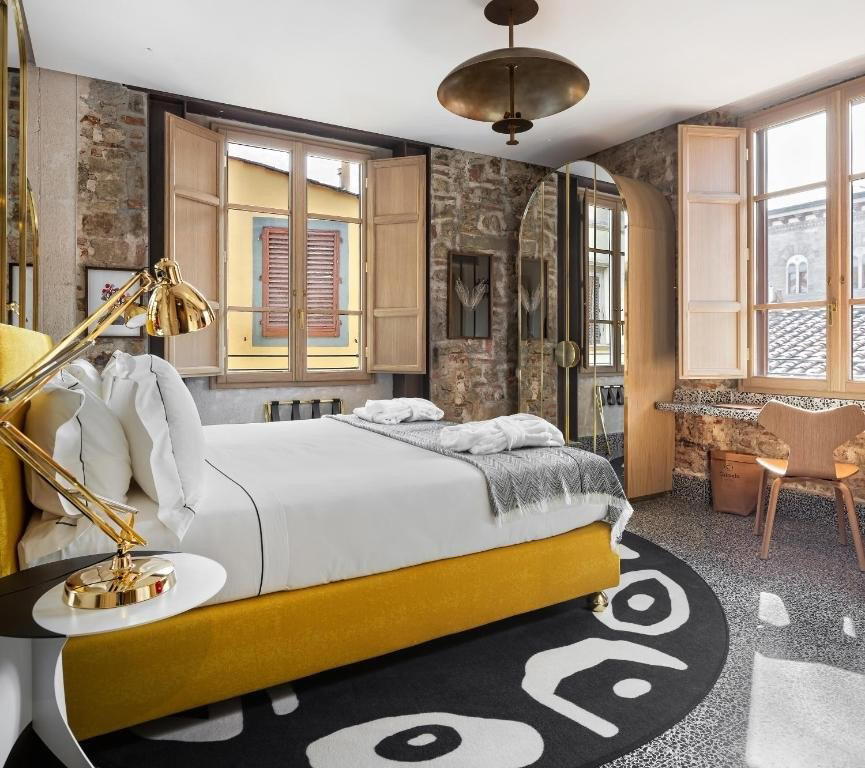
Hotels in Florence
All hotels in Florence →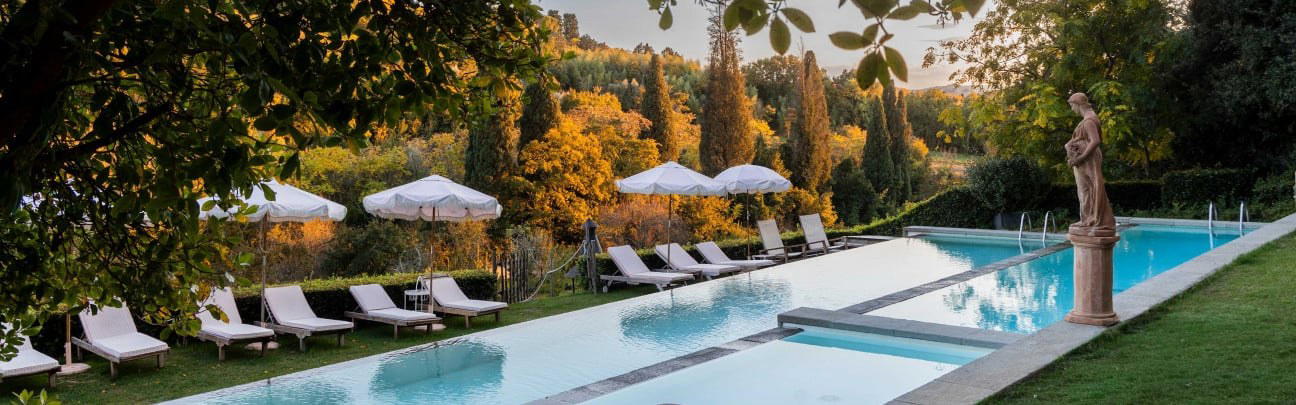
Bars in Florence
All bars in Florence →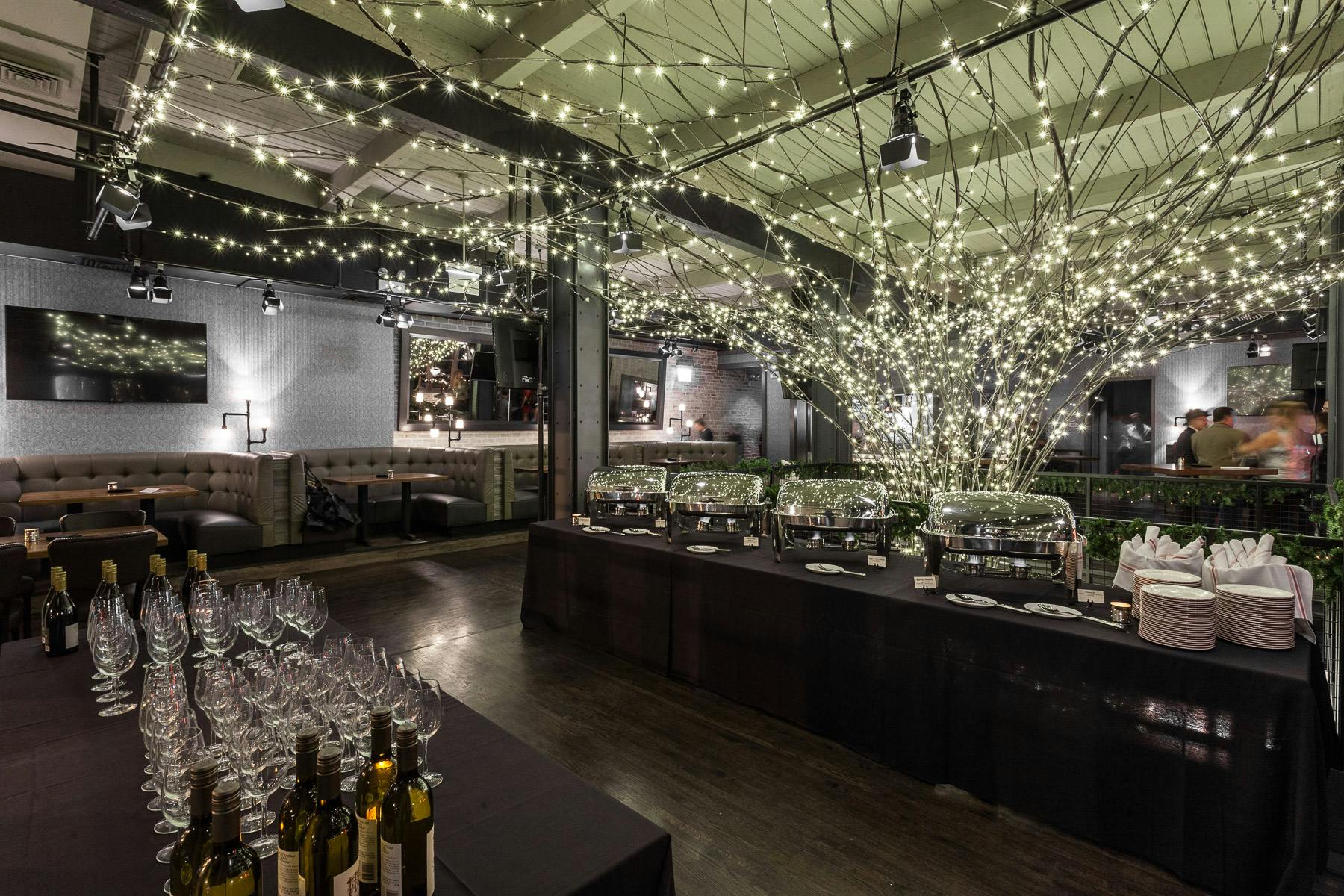
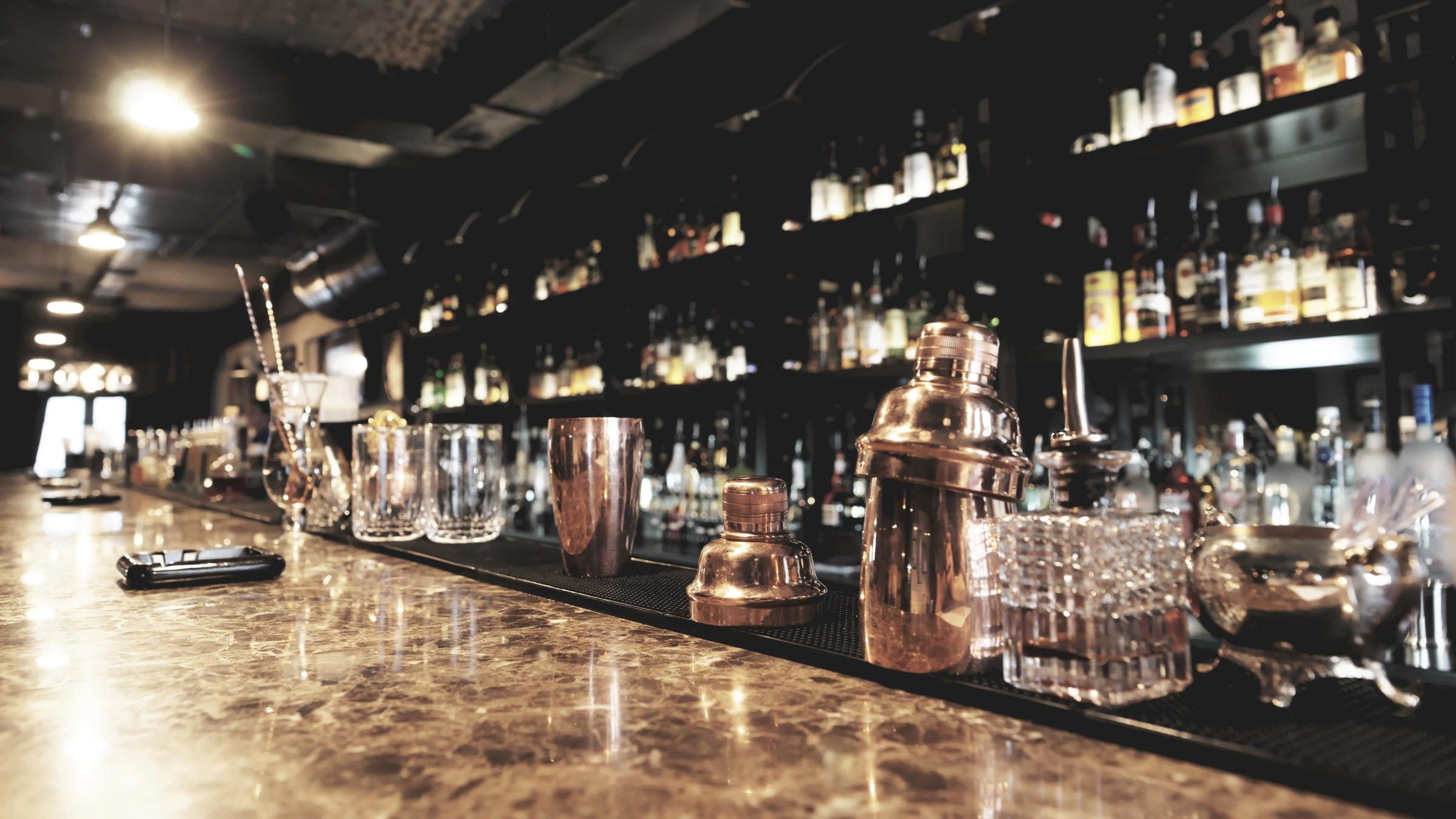
Restaurants in Florence
All restaurants in Florence →

Details
- Romantic
- Elegant
- Scenic
- Sophisticated
- Classic
- Honeymoon
- Romantic Getaway
- Anniversary
- Destination Wedding
- Garden
- Historic Building
- Panoramic View
- Terrace
- Pool
- Spa
- Fitness Center
- Room Service
- Concierge
- Wi Fi
- Restaurant
- Garden
- Tennis
- Sauna
- Hot Tub
- Garden
- Waterfront
- Elevator
- Wheelchair Accessible
Serene and elegant Tuscan atmosphere with lush gardens, calm poolside areas, and Renaissance-inspired interiors featuring frescoes, silks, and brocades.