Castello di Reschio






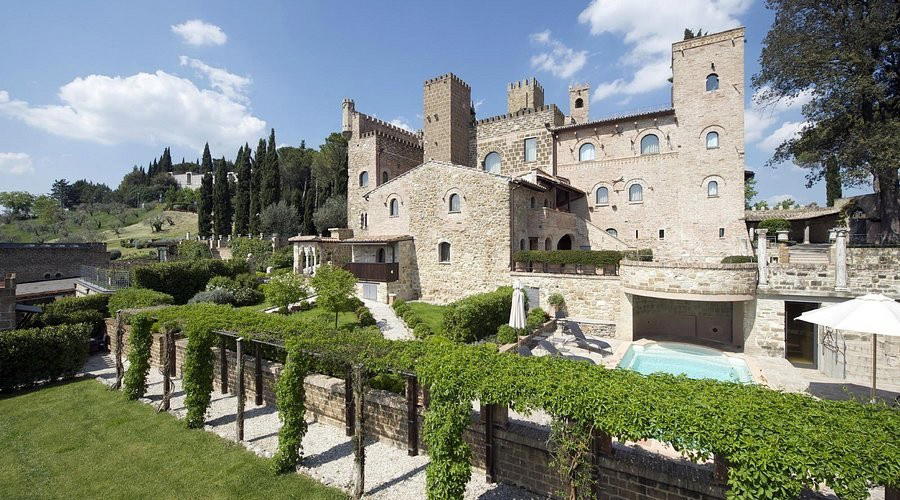
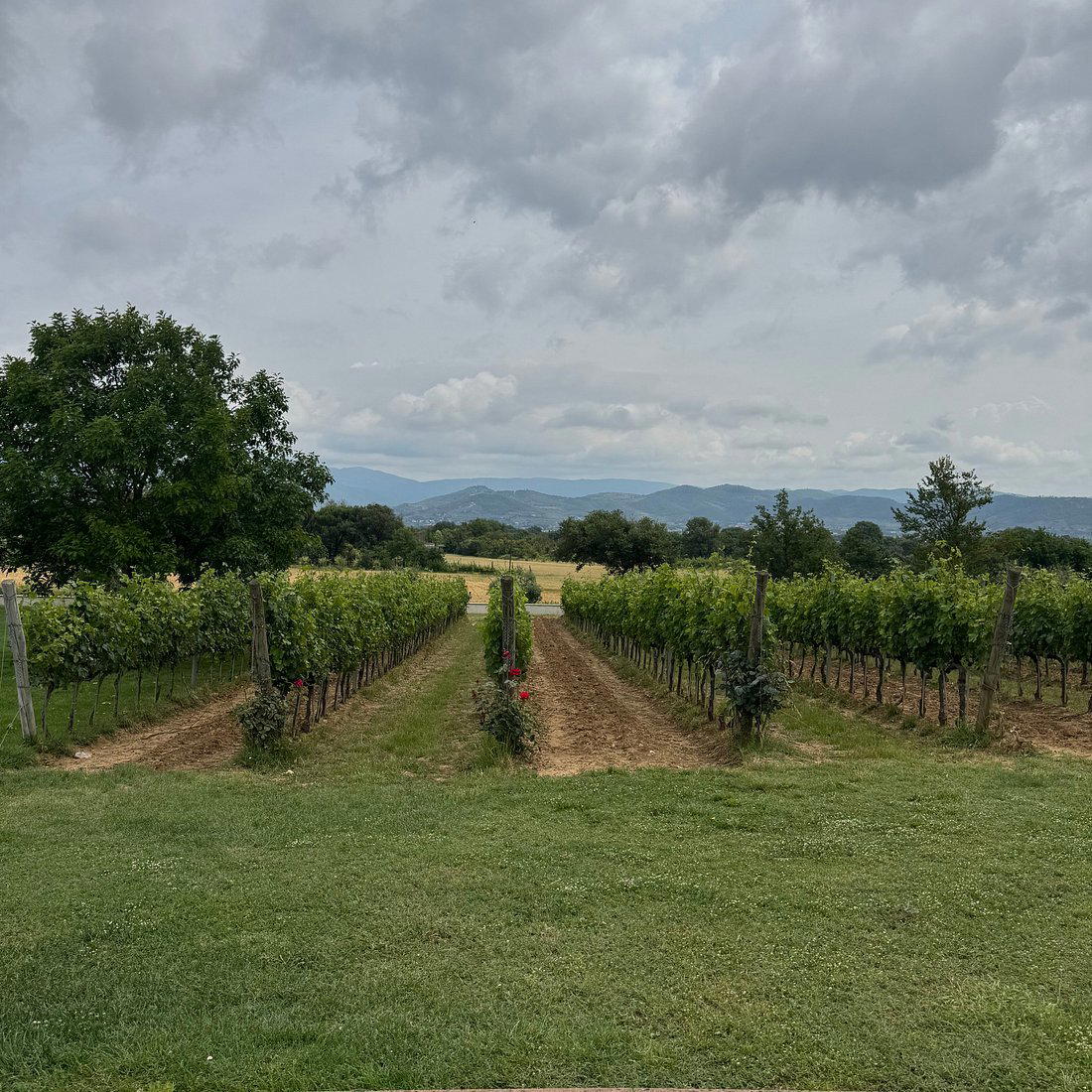
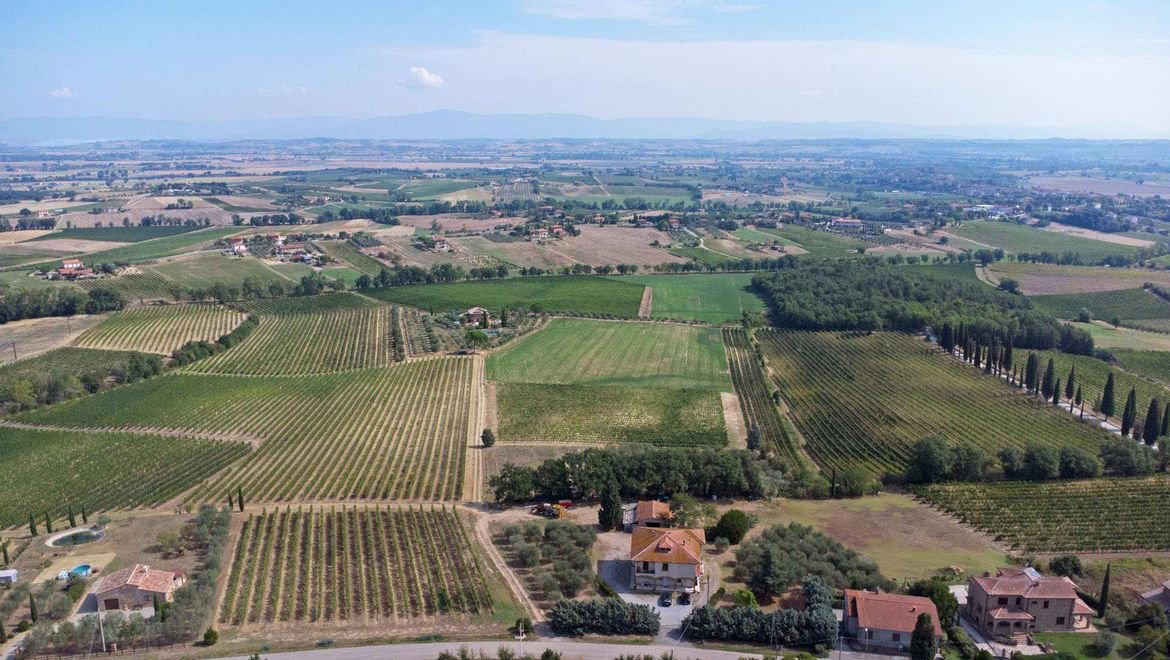
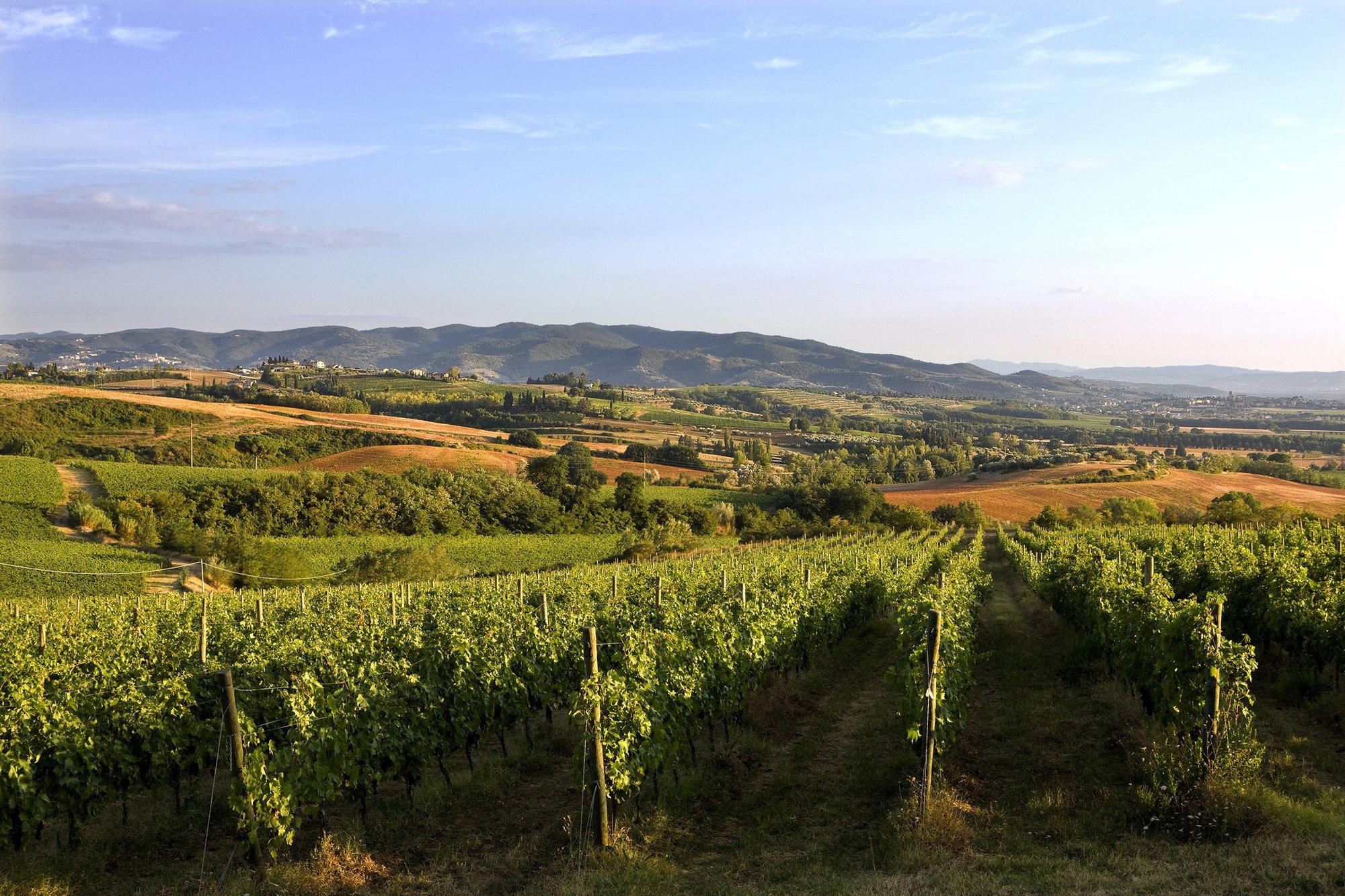
An 11th-century curtain-walled castle in the Umbrian hills, Castello di Reschio opened in 2021 as a 36-room hotel after more than a decade of restoration. Ranked 81st on the World's 50 Best Hotels list in 2025 and awarded three Michelin Keys in 2024, it sits on a 3,700-acre estate of olive groves, vineyards, and forest that functions as both context and supplier for the hotel's seasonal kitchen.
Pearl is the En Primeur Club membership app — saves, bookings, and concierge access live there. Same editors, same standards.
- Address
- Tabaccaia di Reschio, 06060 Lisciano Niccone PG
- Phone
- +39 075 844362
- Website
- reschio.com
- Directions
- Get directions
 Saves & bookings on Pearl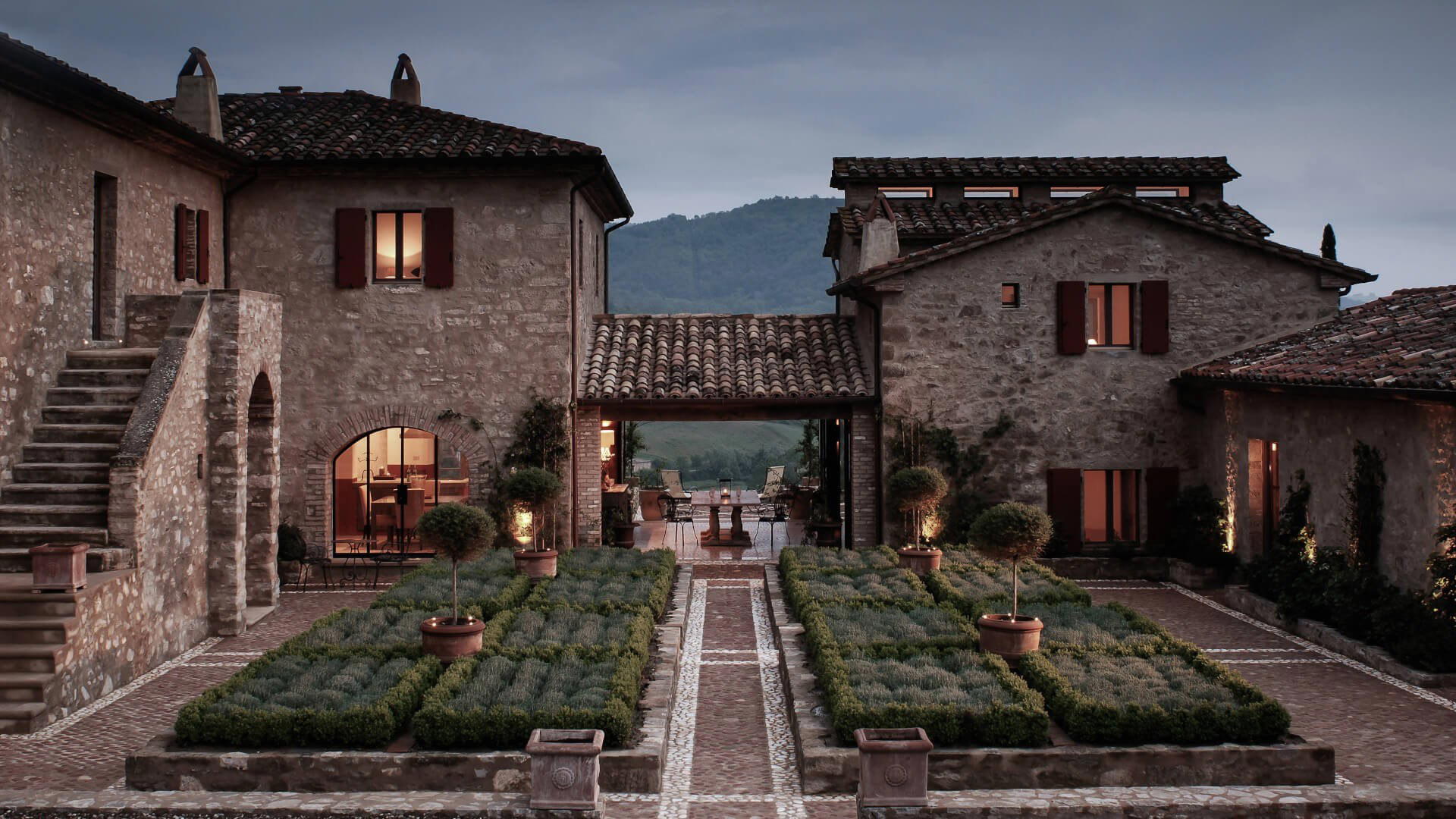
Stone, Light, and a Thousand Years of Reckoning
The approach to Castello di Reschio tells you most of what you need to know before you arrive at the door. The road climbs through 3,700 acres of Umbrian estate — olive groves giving way to vineyards, then ancient forest, then a curtain-walled silhouette that has dominated this particular ridgeline since the eleventh century. Fortresses were built to project authority from a distance, and this one still does. What changed in 2021 is the direction of travel: for the first time in roughly a thousand years, the gates opened outward.
That reversal — from defensive structure to welcoming one, is the governing idea behind the hotel's physical transformation. Italy has no shortage of heritage conversions, and the country's hoteliers are practiced at threading contemporary comfort through ancient stone. But the Castello di Reschio sits at the more demanding end of that spectrum. Working with a building that predates most European institutions requires choices that go well beyond choosing a tile supplier. The decision to treat the castle as a living design object rather than a preserved ruin is what separates this project from the majority of its peers. For a point of comparison, consider how Rosewood Castiglion Del Bosco in Montalcino handles a comparable Tuscan estate brief, or how Four Seasons Hotel Firenze in Florence balances a Renaissance palazzo's demands against a global brand's operational requirements. Reschio answers the same question with owner-led idiosyncrasy rather than institutional playbook.
Architecture as Editorial Position
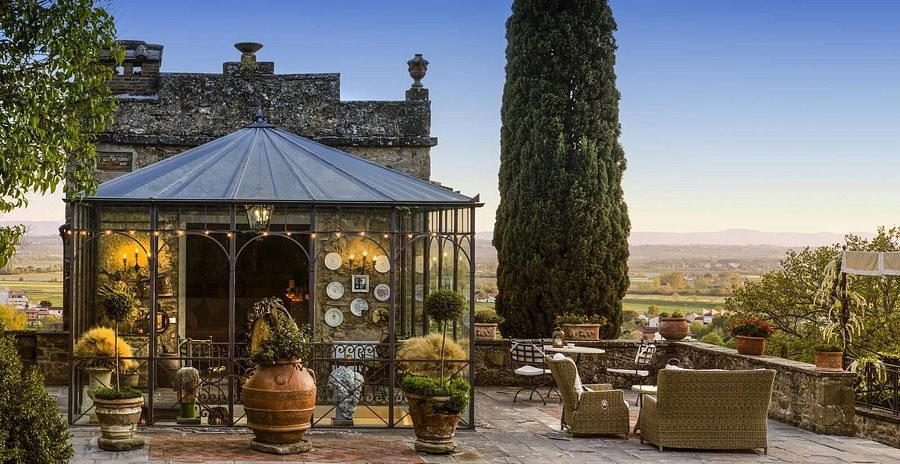
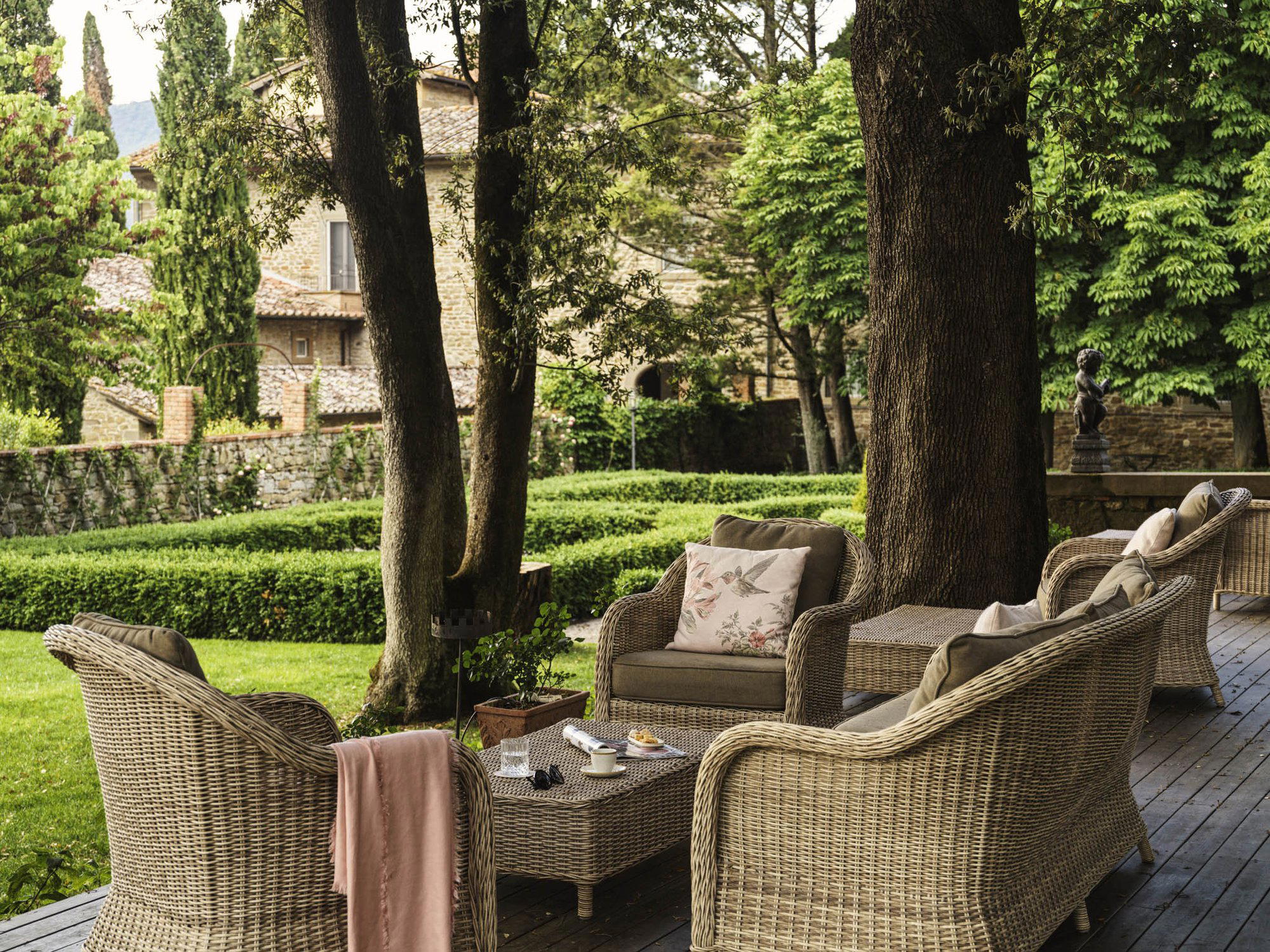
The owners, Count Benedikt Bolza, an architect by training, and Donna Nencia Corsini, an artist and environmentalist, spent over a decade on the restoration before opening to guests. The result is a hotel in which the design is inseparable from the building's biography. Materials throughout skew toward wood, stone, and bronze: substances that already existed in some form within the castle's walls. Silk, velvet, and linen appear in the rooms, but the palette remains grounded rather than theatrical. Wildflowers and works of art sit alongside objects described accurately as kooky, an editorial sensibility that deliberately resists the sanitised formality most heritage hotels default to.
This design register, personal, referential, slightly eccentric, places Reschio in a specific niche within Italian luxury hospitality. It shares certain instincts with Passalacqua in Moltrasio, a Lake Como property that similarly prioritises owner vision over brand coherence, and with Casa Maria Luigia in Modena, where the chef-patron's aesthetic permeates every material decision. What distinguishes Reschio is scale and antiquity: the building's thousand-year accumulation of stories becomes the explicit conceptual material, with rooms subtly referencing the historical figures who once occupied these spaces.
The 36 rooms and suites vary considerably in character. The most extreme is a five-floor suite spanning the castle's ancient tower, whose views take in the full spread of the Umbrian landscape. A number of the grander suites are located in a neighbouring building, once the church's vestry, which gives guests the castle's atmosphere without its most compressed internal geometries. Each room incorporates architectural details that date back centuries alongside contemporary Italian design furniture, a combination that requires calibration to avoid feeling like a museum installation. By most accounts, the balance holds.
Below the Castle: The Bathhouse
The castle's former wine cellars now house The Bathhouse, centred on what the property describes as an ethereal subterranean pool. The logic of the conversion is sound: cellars built to maintain stable temperatures and low light are naturally suited to spa programming. The space includes a hammam, Swedish-style sauna, and treatment rooms, making it a functional wellness facility rather than a decorative one. Its location beneath the castle gives it a quality that purpose-built spa buildings rarely achieve, the sense that you are inside something rather than attached to it.
This approach to adaptive reuse is worth noting in the context of what premium wellness infrastructure typically costs a hotel in architectural credibility. At properties like Borgo Egnazia in Savelletri di Fasano, the spa is a significant amenity in its own right, though conceived from the ground up rather than excavated from existing stone. Reschio's version is narrower in scope but considerably more atmospheric.
Eating on the Estate
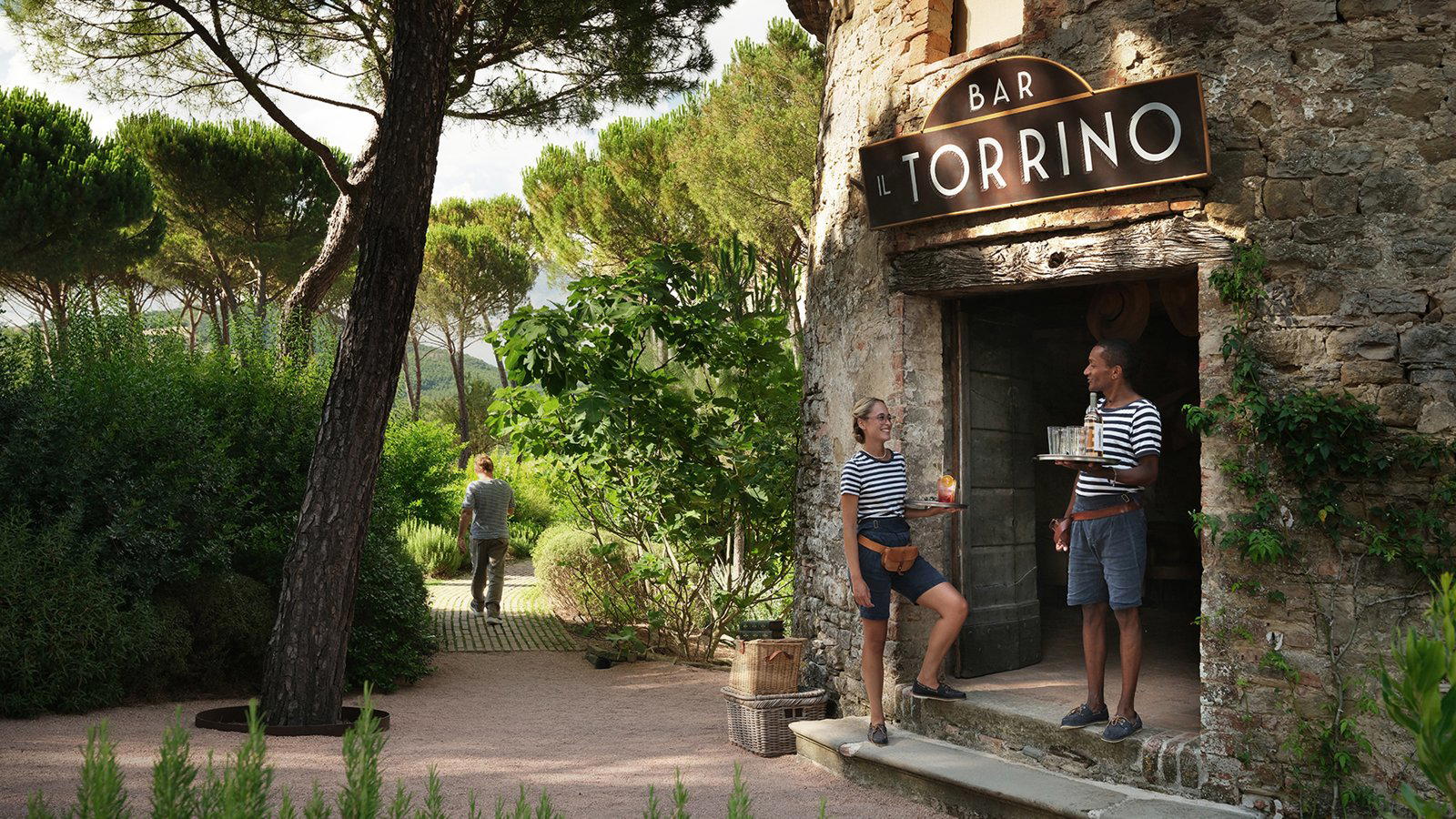
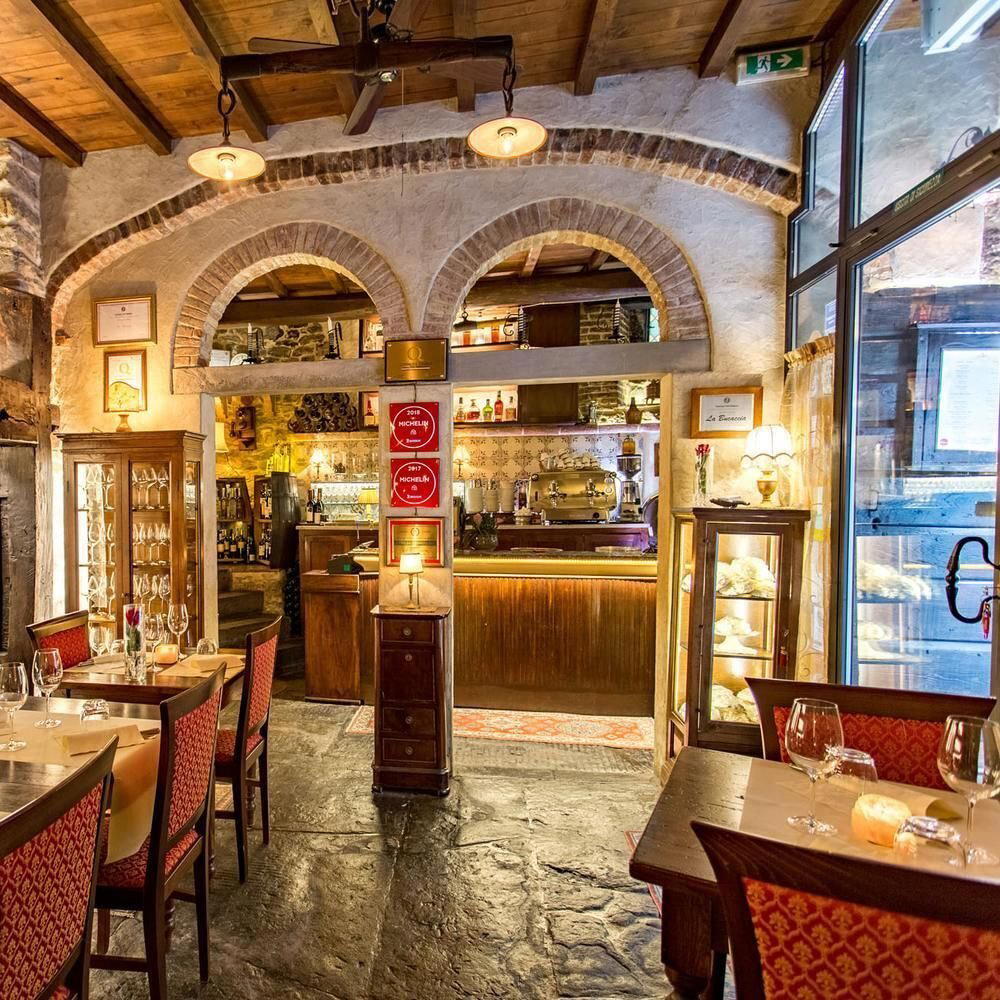
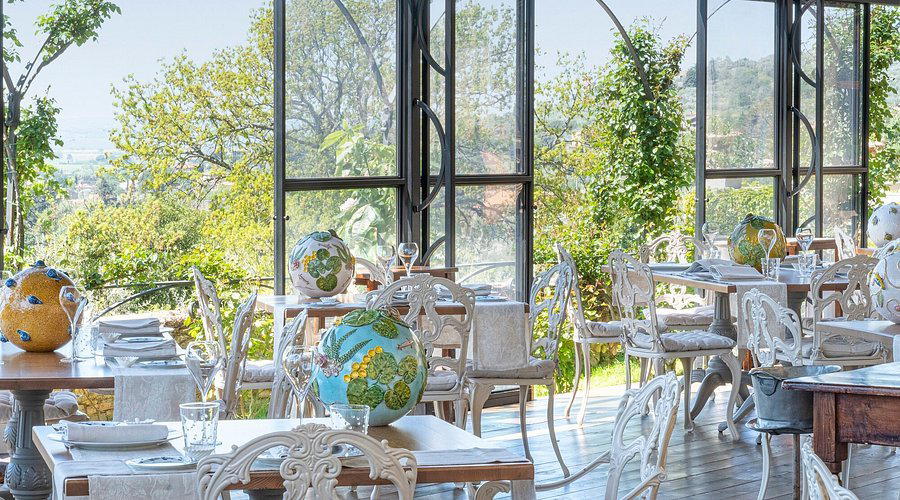
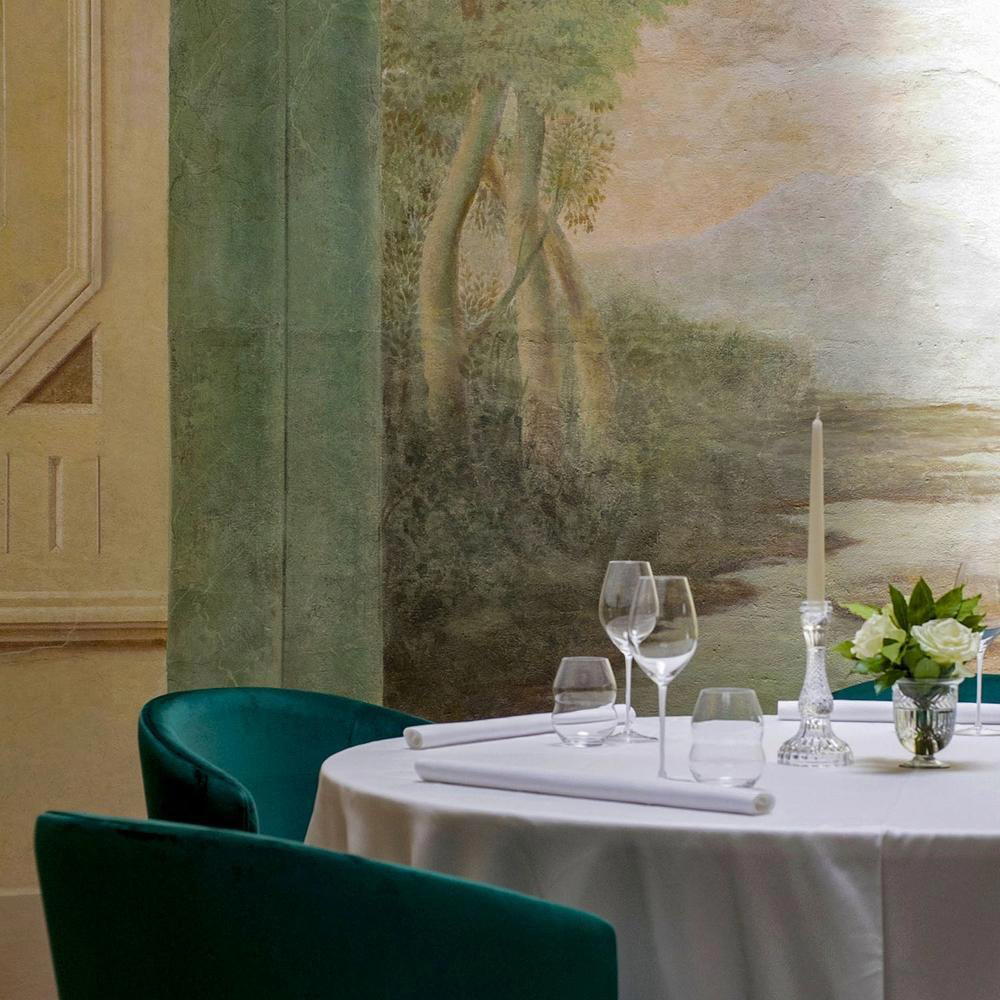
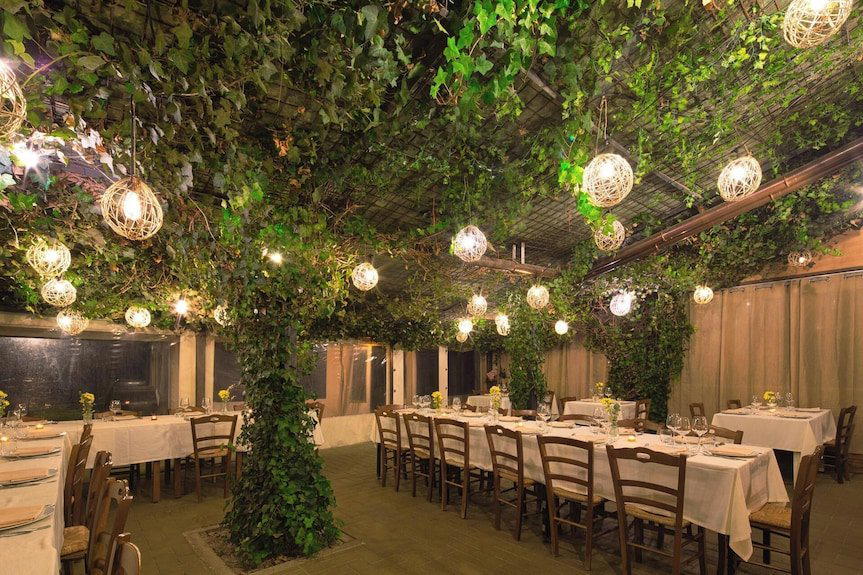
Italian hospitality in the countryside has long operated on the logic that proximity to source is a form of quality control, and Reschio pushes that logic as far as its 3,700 acres allow. Wild ingredients are foraged from the estate's grounds; the kitchen draws on an organic garden and local suppliers for the remainder. The menu at Ristorante al Castello runs to Umbrian classics, cooked from estate-grown and locally sourced ingredients and served in a dining room with far-ranging views and custom-designed furniture. The Ristorante alle Scuderie operates with its own Bar Centrale and a more casual register. Il Torrino, the pool bar in the old watchtower, handles the outdoor afternoon shift.
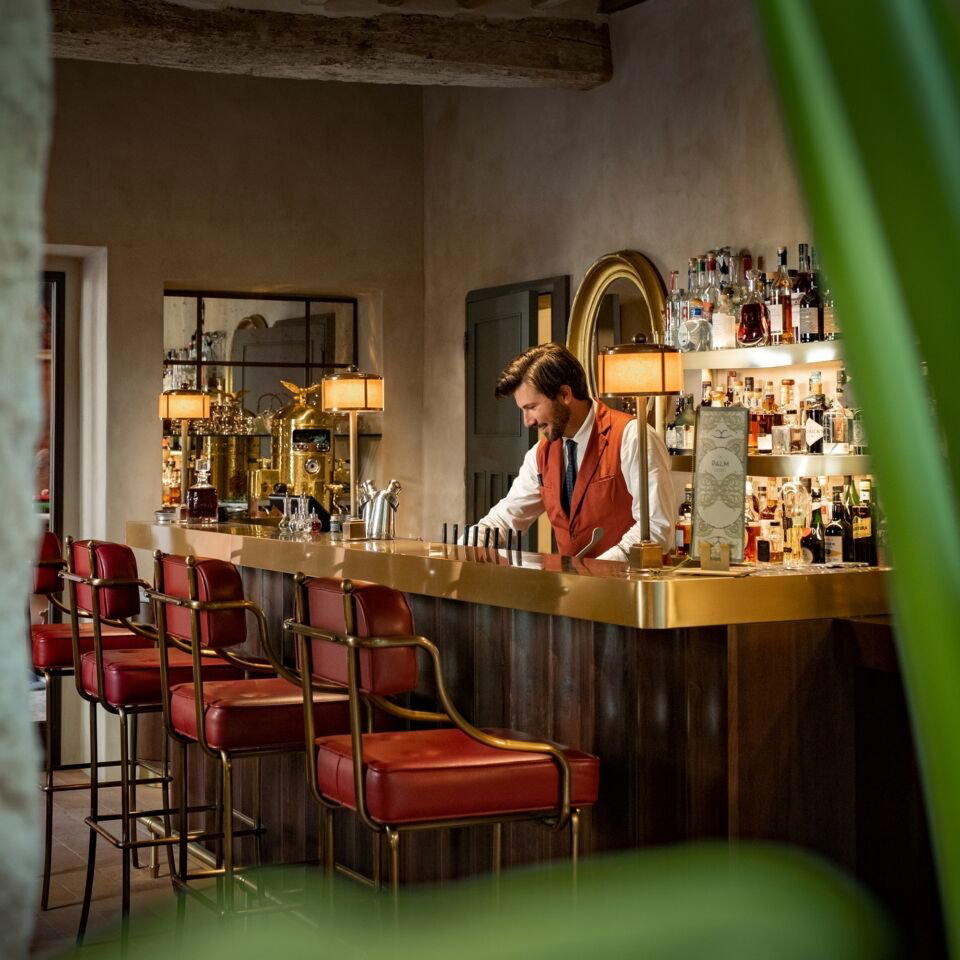
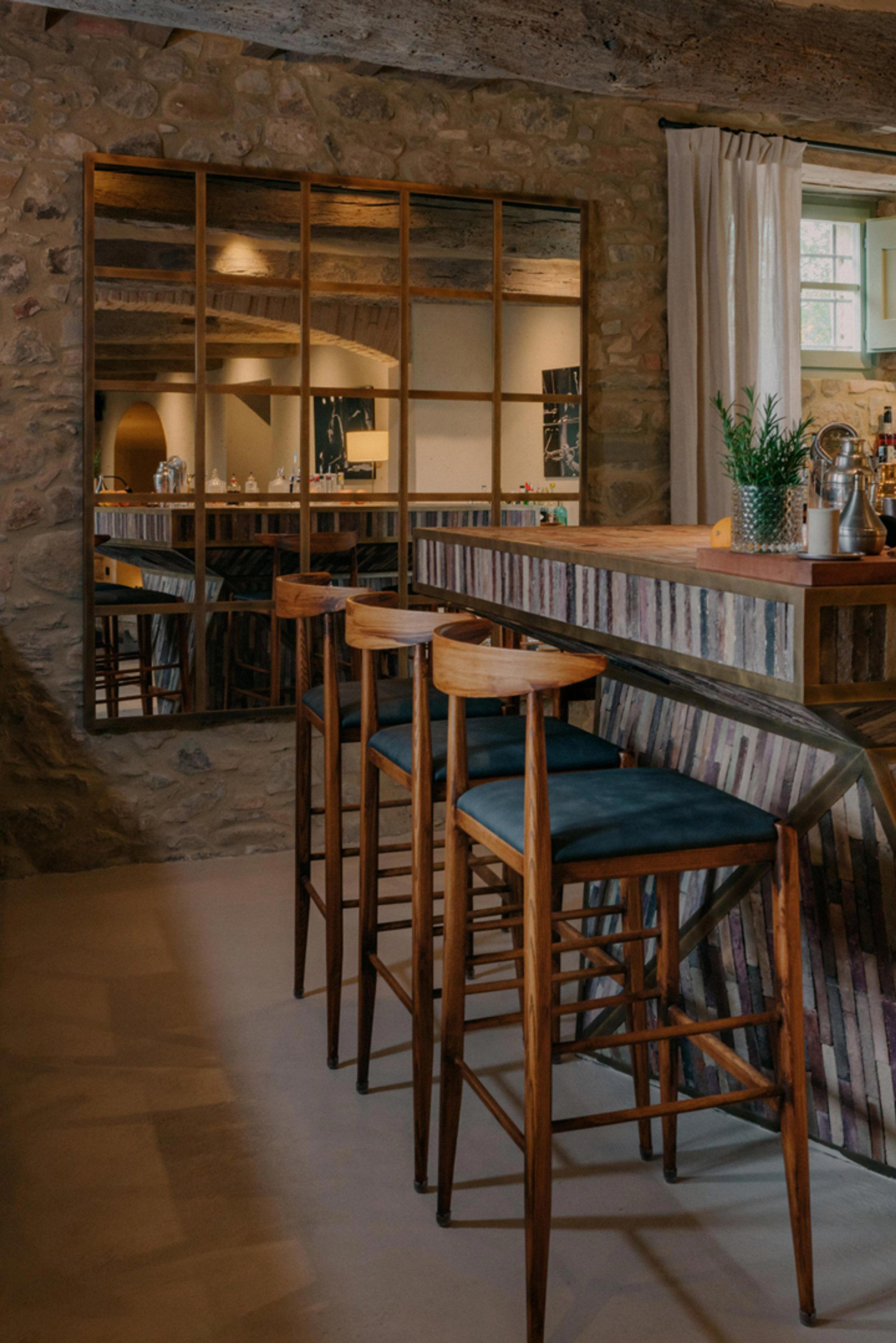
The number of distinct dining and drinking venues, Palm Court with its grand piano, the Library bar, the Old Kitchen bar, Ristorante al Castello, Ristorante alle Scuderie, Il Torrino, reflects the castle's spatial complexity. A fortified building of this size contains many distinct rooms that would otherwise sit empty; converting them into social venues is both pragmatic and hospitality-appropriate. The result is a hotel where there are genuinely different atmospheres to move between across the course of a day.
How Reschio Sits in Its Competitive Set
The World's 50 Best Hotels ranked Castello di Reschio 42nd in 2024 and 81st in 2025, a repositioning that reflects both the evolution of the list's methodology and the intensification of competition at the upper end. The 2024 Michelin three-key rating, awarded in the inaugural year of Michelin's hotel guide, places the property in the top tier of that framework. La Liste's 2026 hotel ranking scored it at 95 points. These credentials collectively position Reschio inside the same conversation as Aman Venice in Venice and Bulgari Hotel Roma in Rome, though its guest experience is categorically different, rural rather than urban, owner-led rather than brand-managed, estate-based rather than city-embedded.
Corte della Maestà in Civita di Bagnoregio offers another angle on the region's heritage accommodation. Further afield within the peninsula, Il Pellicano in Porto Ercole, Borgo San Felice Resort in Castelnuovo Berardenga, and Castelfalfi in Montaione each represent slightly different models for what a premium Italian estate hotel can prioritise. Reschio's 3,700-acre footprint and its emphasis on activities, horse riding, wild swimming, hiking, cooking lessons, places it in the resort-estate category rather than the boutique-hotel-in-a-historic-building category, despite the castle being the visual centrepiece.
What to Know Before You Go
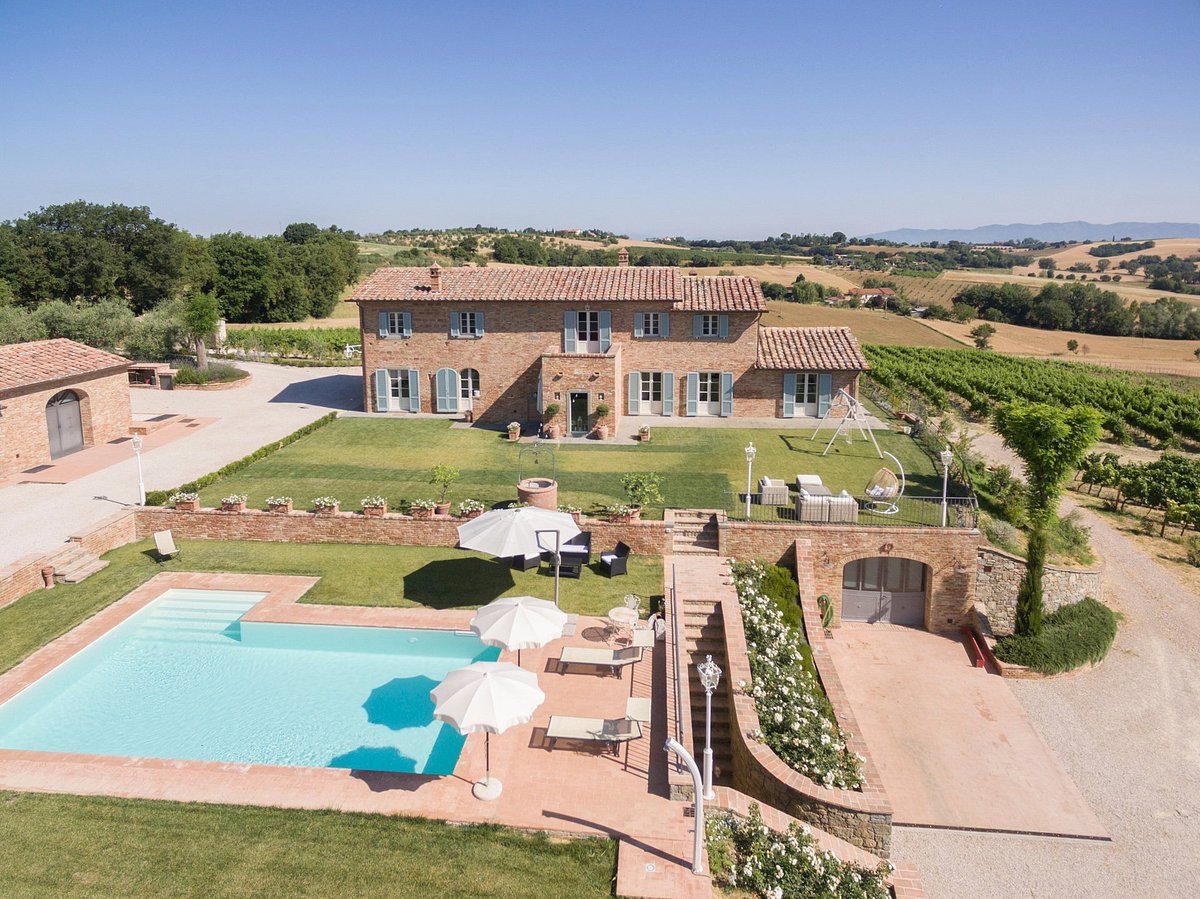
Castello di Reschio is in Lisciano Niccone, in the Umbrian province of Perugia, close to the Tuscan border. The nearest city of scale is Perugia. The estate's scale and the nature of the activities on offer, riding, hiking, swimming in the lake, mean this is a property designed for guests who intend to spend most of their time on the grounds rather than using it as a base for day trips. Membership in Small Luxury Hotels of the World provides booking infrastructure for travellers who work through that channel. The property's 36-room count keeps it small relative to its estate footprint, which shapes the density of the guest experience. For context on comparable Italian properties at different scales and settings, see our full Lisciano Niccone restaurants guide, or explore neighbouring Italy options including Portrait Milano in Milan, Borgo Santandrea in Amalfi Coast, Il San Pietro di Positano in Positano, JK Place Capri in Capri, Bellevue Syrene 1820 in Sorrento, Castel Fragsburg in Merano, EALA My Lakeside Dream in Limone sul Garda, Forestis Dolomites in Plose, Grand Hotel Tremezzo in Tremezzo, and Grand Hotel Victoria in Menaggio. For those extending their trip beyond Europe, Amangiri in Canyon Point, The Fifth Avenue Hotel in New York City, and Aman New York in New York City each represent comparable commitments to design-led hospitality in their respective markets.
How Castello di Reschio Lisciano Niccone compares with similar nearby venues.
| Venue | Awards |
|---|---|
| Castello di Reschio | Michelin 3 Keys, World's 50 Best Hotels #42 (2024) |
Recognition history
Dated appearances from independent guides and award organizations, with the underlying list record or original source where available.
La Liste Top Hotels
La Liste
Virtuoso Luxury Hotel Partner
Virtuoso
World's 50 Best Best Hotels 51-100 #95
World's 50 Best
Conde Nast Gold List
Conde Nast
Michelin 3 Keys
Michelin
Small Luxury Hotels of the World Member
Small Luxury Hotels of the World
World's 50 Best Best Hotels 51-100 #81
World's 50 Best
Michelin 3 Keys
Michelin
World's 50 Best Best Hotels #42
World's 50 Best
Continue exploring
More in Lisciano Niccone
Hotels in Lisciano Niccone
Browse all →
Bars in Lisciano Niccone
Browse all →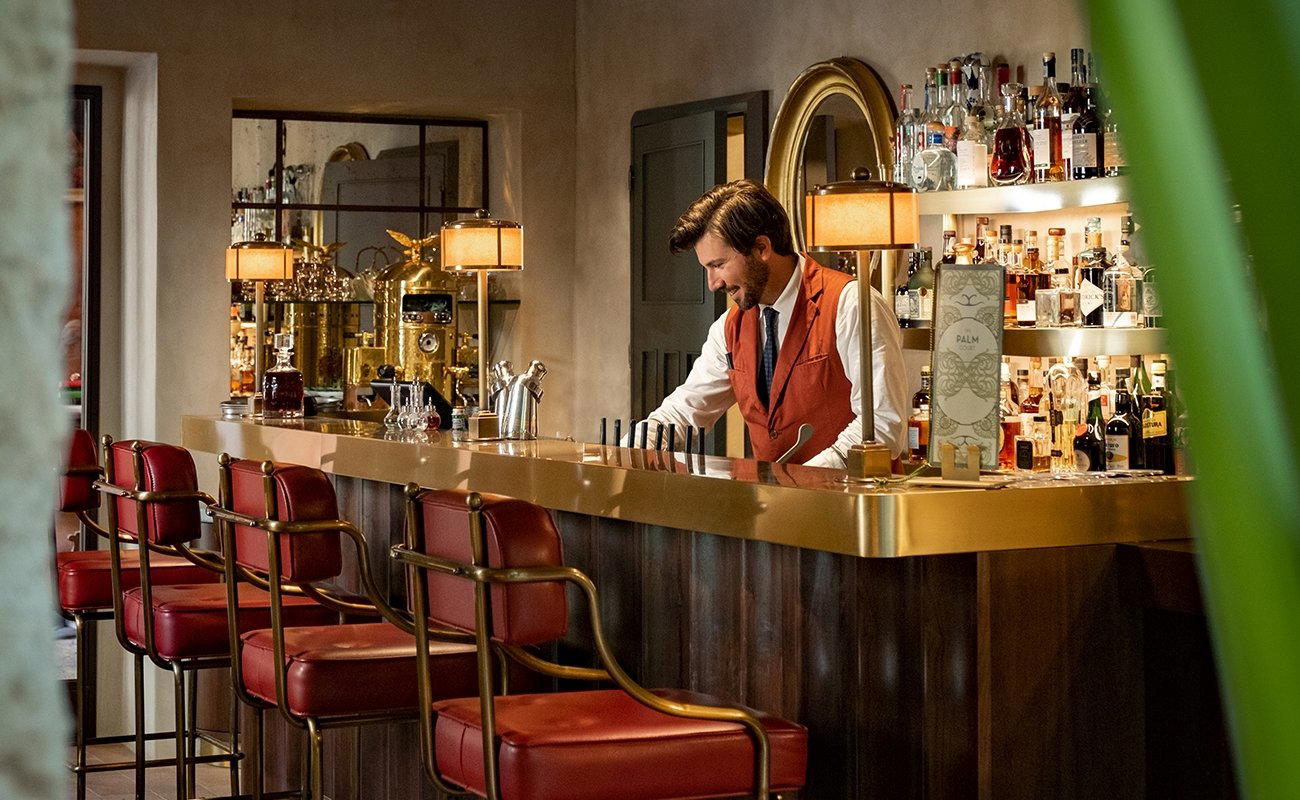
Restaurants in Lisciano Niccone
Browse all →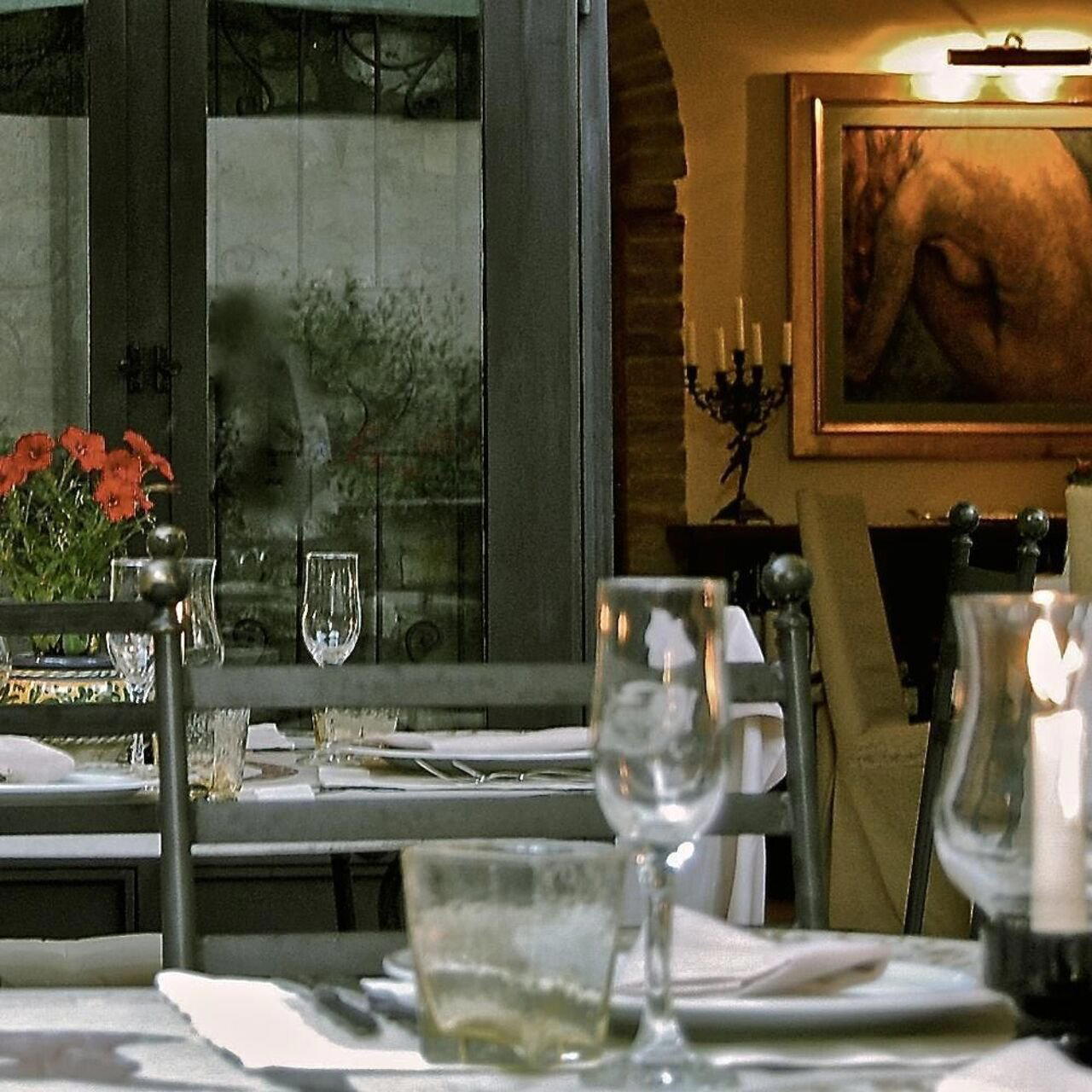
At a Glance
- Romantic
- Elegant
- Rustic
- Scenic
- Sophisticated
- Ornate
- Honeymoon
- Romantic Getaway
- Anniversary
- Wellness Retreat
- Destination Wedding
- Private Villa
- Historic Building
- Panoramic View
- Pool
- Spa
- Fitness Center
- Room Service
- Concierge
- Tennis
- Wi Fi
- Elevator
- Garden
- Mountain
- Pool
- Spa
- Fitness Center
- Room Service
- Concierge
- Tennis
- Wi Fi
- Elevator
Refined and intimate atmosphere blending historic authenticity with contemporary elegance, featuring soft natural light in Roman-inspired baths, Palm Court with wrought-iron columns, and serene courtyard spaces.
Know Before You Go
- Getting there
- Tabaccaia di Reschio, 06060 Lisciano Niccone PG