ANA InterContinental Appi Kogen Resort


A 38-room Club InterContinental property at the edge of one of Japan's largest ski resorts, ANA InterContinental Appi Kogen Resort earned a Michelin 1 Key in 2024 and sits at the smaller, more considered end of Japan's mountain luxury market. From cypress onsen baths facing the forest canopy to a top-floor Japanese whisky bar, the design frames the surrounding Iwate wilderness as the main event.
Pearl is the En Primeur Club membership app — saves, bookings, and concierge access live there. Same editors, same standards.
- Address
- 117-46 Appikōgen, Hachimantai, Iwate 028-7306
- Phone
- +81 195-68-7550
- Website
- ihg.com
- Directions
- Get directions
 Saves & bookings on Pearl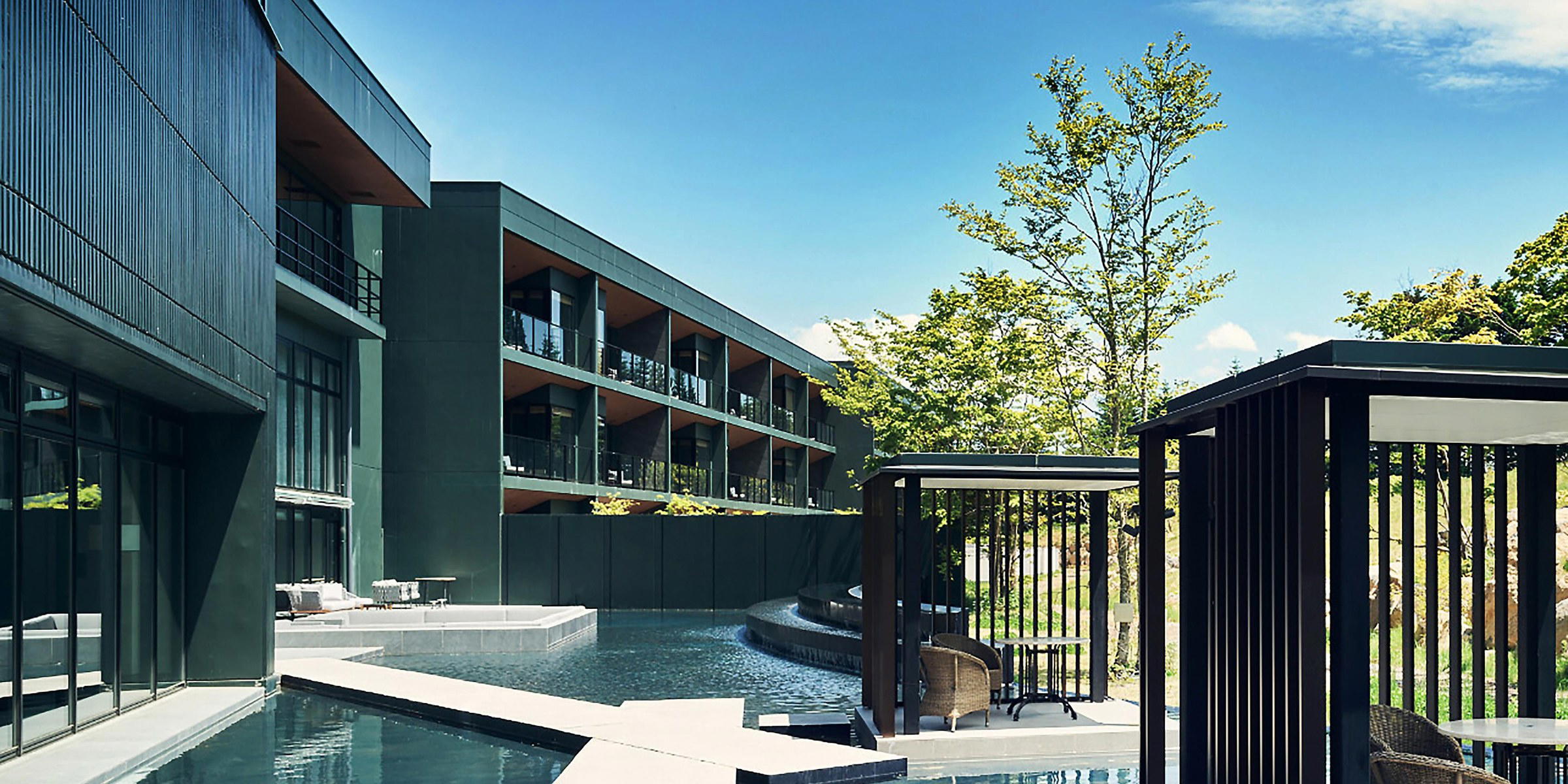
Where Scale Works Against You: Japan's Mountain Luxury Tier
Japan's alpine hotel market has sorted itself into two broad categories: large-format ski resort complexes designed around volume and convenience, and a smaller tier of properties where limited keys and design-led interiors define the offer. ANA InterContinental Appi Kogen Resort belongs firmly to the second group. At 38 rooms and suites, it occupies an unusually intimate position for a brand-name international hotel attached to one of the country's most expansive ski areas. Appi Kogen resort itself sprawls across Iwate Prefecture in the Tohoku region, a scale more typically associated with high-capacity lodging. The decision to build a 38-room Club InterContinental property here, rather than a conventional resort hotel, sets the property's competitive frame before a guest even arrives.
That positioning matters because Club InterContinental is IHG's highest classification tier, applied selectively to properties where every room meets a defined service and specification threshold. At Appi Kogen, this means the full 38-room inventory sits within that classification rather than a partial club floor within a larger building. The practical effect is a degree of service consistency that larger resort hotels rarely achieve across their entire room count. Michelin's 2024 hotel guide recognised this, awarding the property a 1 Key, a designation reserved for hotels where quality of experience is considered worth a detour. For a ski resort hotel in a region most international travellers overlook in favour of Hokkaido or Nagano, that citation carries weight.
The total journey from the capital runs to just over four hours, which places Appi Kogen in a different consideration set from Hakone or Nikko. The distance filters the guest profile: Appi Kogen draws travellers who have made a deliberate choice to go further north, into a region where the ski terrain and winter landscapes justify the journey time. For international visitors building a Japan itinerary, this is a northern Tohoku destination rather than a Tokyo day-trip extension.
The Architecture of Attention
The design approach at Appi Kogen operates on a direct principle: frame the exterior and draw attention toward it. The rooms and suites face the ski slopes and surrounding forest through expansive windows, a spatial decision that makes the Iwate wilderness the dominant visual presence in every room. This is not incidental. In Japanese design traditions that inform even international-branded mountain properties, the relationship between interior and exterior space is a considered compositional choice. The window here functions less as a view feature and more as a fourth wall that keeps nature active as a presence rather than a backdrop.
Inside the hotel, the design accumulates weight through specific, irreplaceable objects rather than surface treatments. The Club lounge contains a 400-year-old Japanese beech tree, a single element that anchors the space in deep natural time and resists the generic resort aesthetic that carpet and millwork alone cannot overcome. Art is distributed throughout the property rather than confined to public areas, which changes the spatial experience of moving between floors and spaces. These are design choices that read as deliberate within Japan's broader conversation about how luxury hotels should relate to their environment and to Japanese material culture.
The bathrooms warrant particular attention as architectural spaces in their own right. At properties that make serious design commitments, bathrooms often function as one concentrated expression of the design logic, and here they are described as spaces that invite contemplation of nature, which in the context of Japanese hospitality is a specific quality of spatial experience. The top-floor onsen completes this logic: cypress baths positioned to face the surrounding treetops, a material and spatial choice that places the guest in direct sensory relationship with the forest canopy at Iwate's elevation. Hinoki cypress is a traditional material in Japanese bath culture, its scent and grain long associated with the ritual of bathing as a deliberate, unhurried activity rather than a functional routine.
Properties across Japan have explored similar relationships between interior design and natural environment. Benesse House in Naoshima built its identity around the intersection of architecture and art on an island. Zaborin in Kutchan takes a similarly restrained approach to Hokkaido forest scenery. Amanemu in Mie frames onsen culture within a design-led context on the Ise-Shima peninsula. What distinguishes Appi Kogen is the specific combination of ski terrain and contemplative interior design at a northern Tohoku address that remains outside the standard Japan luxury circuit.
Dining and Drinking in a 38-Room Frame
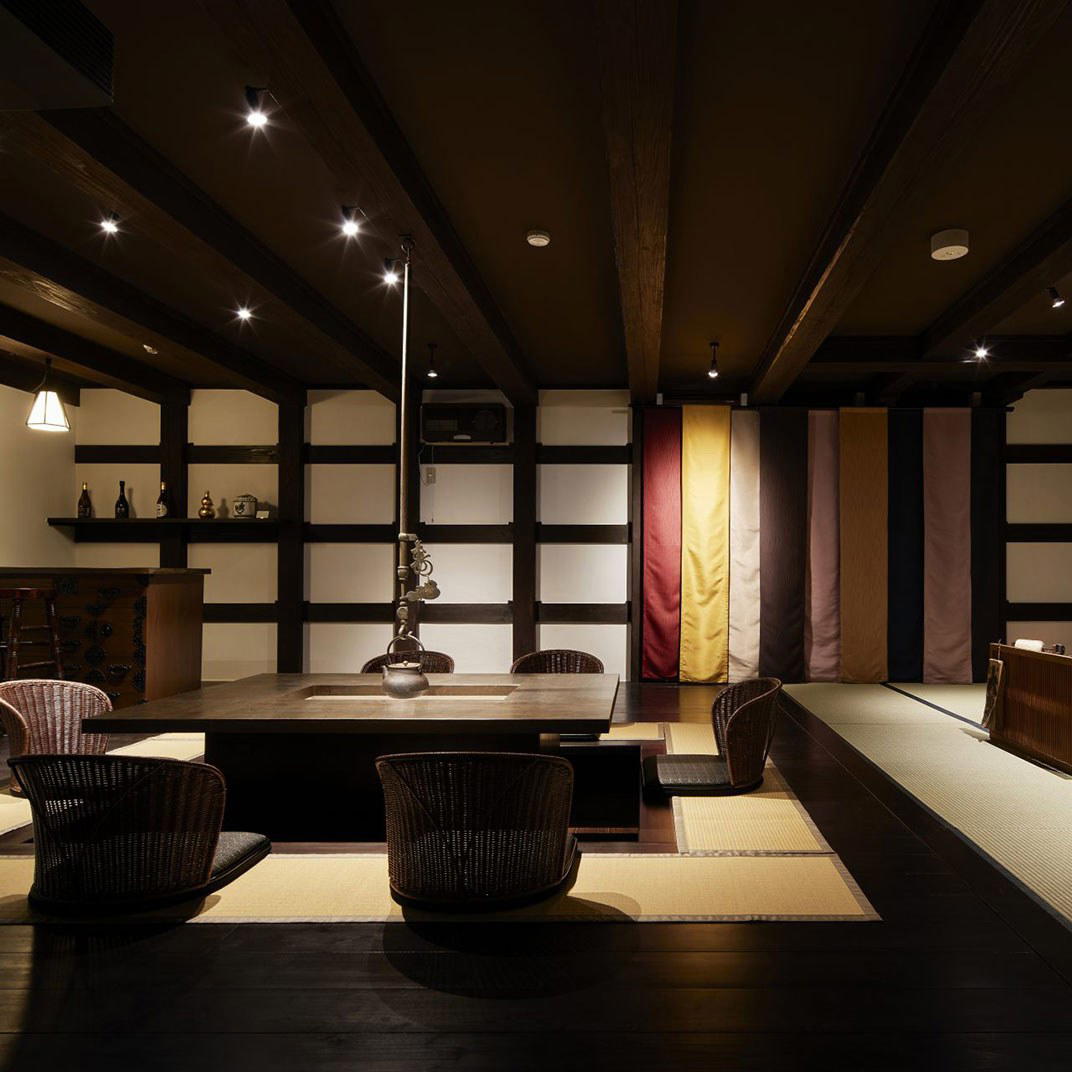
A hotel of 38 rooms has limited need for a multi-outlet dining portfolio, and the Appi Kogen property does not attempt one. Two outlets: Shiratsuyu, which applies a farm-to-table Japanese and French approach in a purpose-crafted dining room, and Mocco, the top-floor bar with a specialisation in Japanese whisky. This is an appropriate scale for the property's footprint, and it means the kitchen's attention is undivided. The Japanese-French hybrid approach that Shiratsuyu pursues has precedents in Japan's post-war culinary history, when French technique absorbed into and altered Japanese fine dining vocabularies in ways that produced a genuinely distinct cuisine rather than simple fusion. At a Tohoku ski resort, sourcing from the surrounding agricultural region gives that framework local specificity.
Mocco's focus on Japanese whisky positions it within a category that has moved from domestic specialty to international priority over the past two decades. The top-floor location, combined with the property's night-time forest and slope views, creates a context in which a considered whisky list does more work than it would in an urban bar setting. Altitude, darkness, and relative isolation tend to focus attention on what is in the glass.
For travellers comparing Japan's ryokan and luxury hotel market, the relevant points of reference include Gora Kadan in Hakone, Asaba in Izu, and ENOWA Yufu in Yufu. Each occupies a small-key, design-serious position in their respective resort regions. The ANA InterContinental flag adds international booking infrastructure and loyalty programme access that pure ryokan properties do not offer, which changes the practical calculus for internationally-mobile travellers who value programme benefits alongside design quality. The property sits in price tier 4, below the highest-end ryokan pricing but above standard resort hotel rates. IHG One Rewards members will find the property within the portfolio alongside ANA InterContinental Beppu Resort and Spa, another Club InterContinental-classified resort property in a Japanese onsen destination.
Other reference points for high-design Japanese hospitality at smaller scale include Fufu Kawaguchiko, Fufu Nikko, Nishimuraya Honkan, Araya Totoan, Azumi Setoda, Bettei Otozure, Bettei Senjuan, and Beniya Kofuyuden. For travellers whose Japan itinerary extends beyond the country, Bvlgari Hotel Tokyo, HOTEL THE MITSUI KYOTO, Halekulani Okinawa, Jusandi in Ishigaki, Sekitei, and Atami Izusan Karaku represent the wider luxury hotel conversation. For international comparisons of small-key hotel design, Aman Venice, Aman New York, and The Fifth Avenue Hotel occupy a similar premium-intimate positioning in their respective cities.
Planning Your Stay
The onsen and spa operate year-round, and the surrounding Tohoku forest has distinct character across all four seasons, which means the property is not exclusively a winter proposition, even if that is how most itineraries will approach it. The Shinkansen journey from Tokyo to Morioka is the principal access route; travellers should factor onward transfer time into arrival planning.
How It Stacks Up
Comparable venues nearby, for context on price, style, and recognition.
| Venue | Cuisine | Price | Awards | Notes |
|---|---|---|---|---|
| ANA InterContinental Appi Kogen ResortThis venue — the venue you are viewing | Alpine luxury resort with ski-in/ski-out access and personalized service. | $$$$ | Michelin 1 Key | Not listed |
| Higashiyama Niseko Village, a Ritz-Carlton Reserve | Contemporary alpine luxury with Japanese-inspired design elements and nature-centric architecture completed in 2020. | $$$$ | Michelin 1 Key | Niseko Village |
| Park Hyatt Niseko Hanazono | Luxury ski and golf resort seamlessly integrated with Niseko's natural mountain landscape. | $$$$ | Michelin 1 Key | Hanazono |
| Wanosato | traditional Gassho-zukuri ryokan | $$$$ | Michelin 1 Key | Takayama-shi |
| The Peninsula Tokyo | Classic luxury with modern Japanese touches | $$$$ | Michelin 1 Key | Chiyoda |
| Satoyama-Jujo | Renovated 150-year-old kominka ryokan fusing Japanese folk architecture with Scandinavian influences. | $$$$ | Michelin 1 Key | Minamiuonuma |
Recognition history
Dated appearances from independent guides and award organizations, with the underlying list record or original source where available.
Michelin 1 Key
Michelin
World Luxury Hotel Awards WLHA Continent Winner
World Luxury Hotel Awards
Michelin 1 Key
Michelin
Continue exploring
More in Hachimantai
Hotels in Hachimantai
Browse all →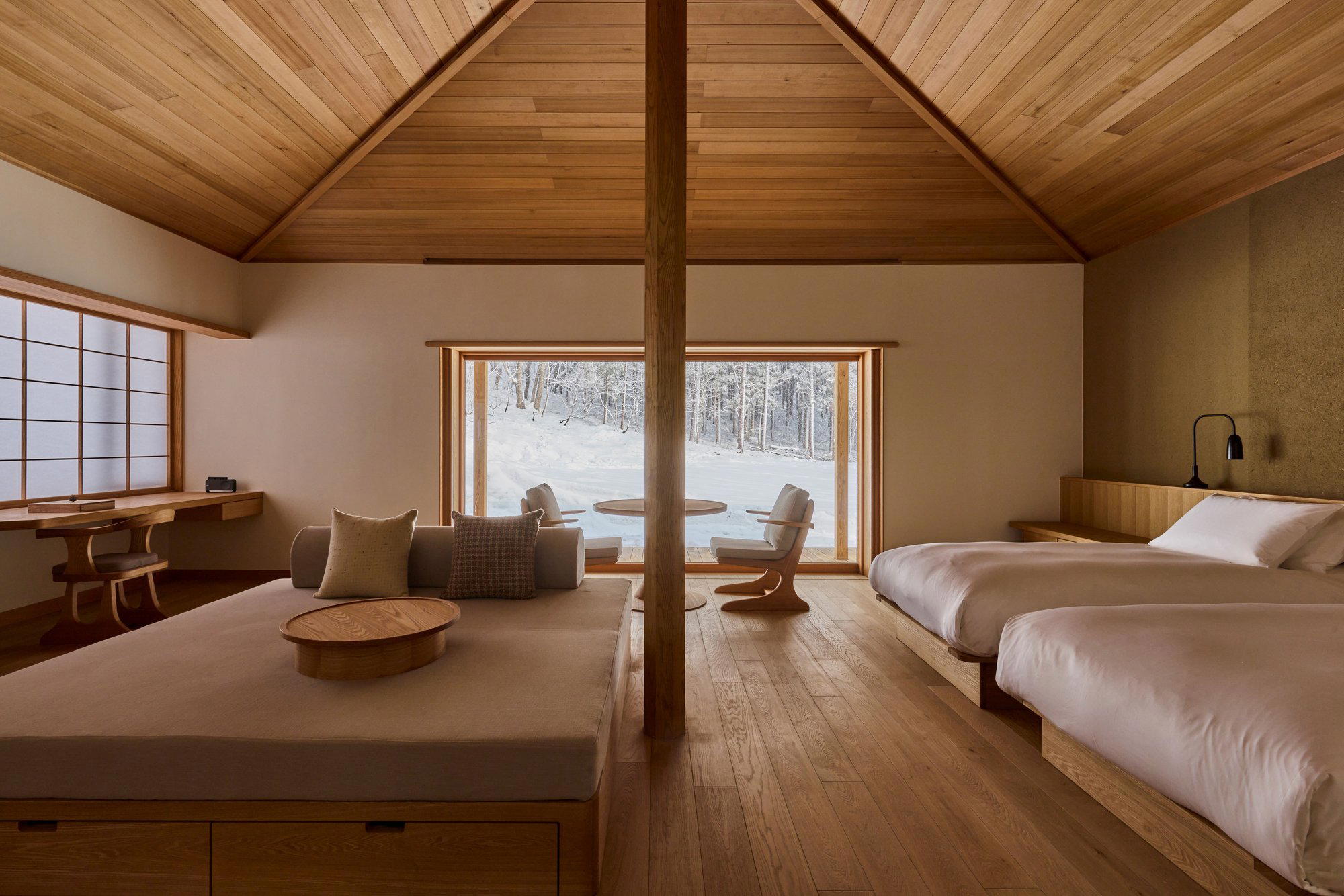
At a Glance
- Scenic
- Elegant
- Sophisticated
- Quiet
- Ornate
- Romantic Getaway
- Wellness Retreat
- Family Vacation
- Ski In Ski Out
- Golf Course
- Panoramic View
- Wi Fi
- Spa
- Fitness Center
- Room Service
- Concierge
- Restaurant
- Hot Tub
- Sauna
- Tennis Court
- Mountain
- Wi Fi
- Spa
- Fitness Center
- Room Service
- Concierge
- Restaurant
- Hot Tub
- Sauna
- Tennis Court
Refined alpine luxury with serene mountain views, elegant lobby for afternoon tea, and tranquil hot spring soaks under starry skies.