Zeppelin
Located at 1544 9th St NW in Washington, D.C.'s Shaw neighborhood, Zeppelin occupies a corner of the city where independent dining has quietly reshaped the local scene. The address places it among a cluster of destination restaurants that draw serious eaters away from the downtown corridor. Expect a dining experience that fits the Shaw template: ambitious, independently minded, and worth planning ahead for.
Pearl is the En Primeur Club membership app — saves, bookings, and concierge access live there. Same editors, same standards.
- Address
- 1544 9th St NW, Washington, DC 20001
- Phone
- +12025061068
- Website
- zeppelindc.com
- Directions
- Get directions
 Saves & bookings on Pearl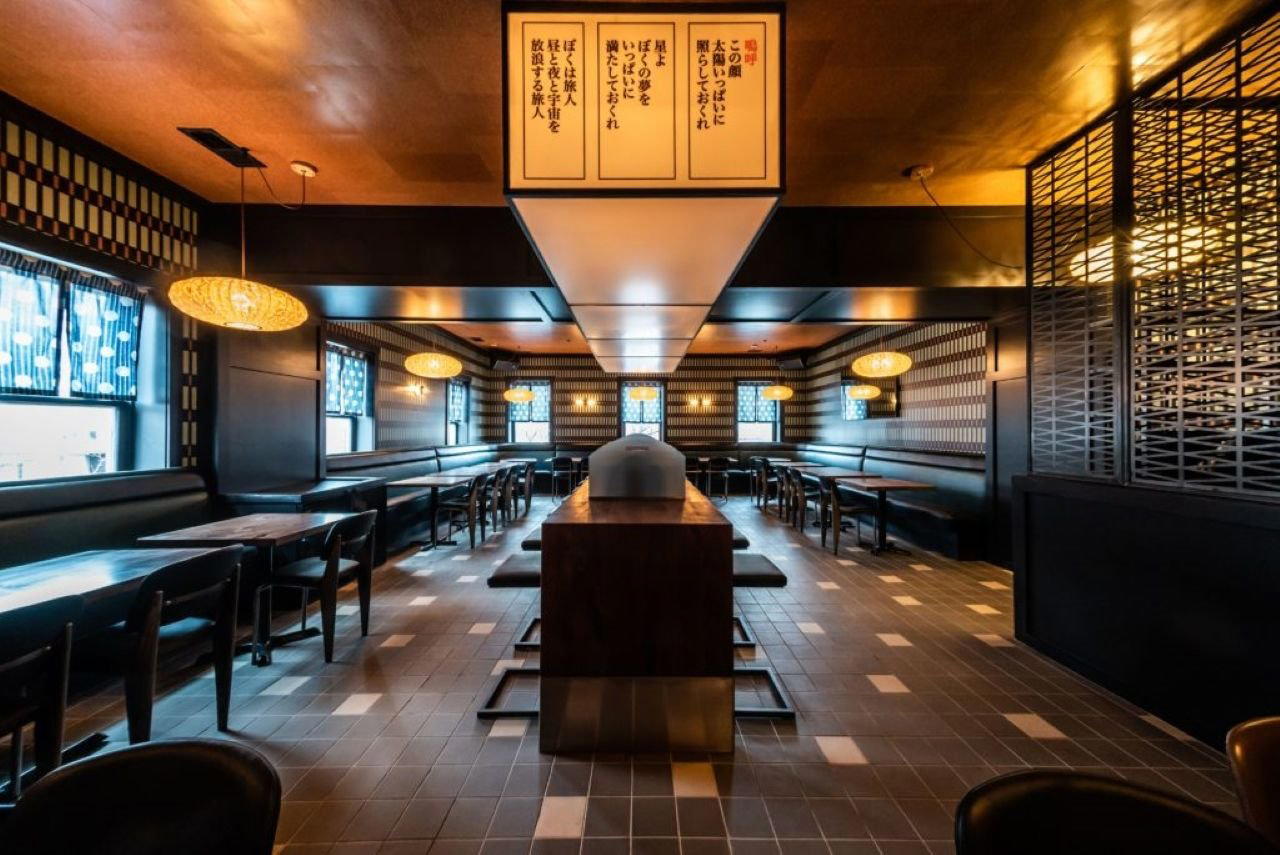
Shaw's Corner and What It Signals
The stretch of 9th Street NW running through Shaw has become one of Washington, D.C.'s more reliably interesting dining corridors over the past decade. The neighborhood sits north of the Convention Center and east of Logan Circle, close enough to both to pull from their foot traffic but distinct enough in character to have cultivated its own dining identity. What distinguishes Shaw from Penn Quarter or 14th Street is the concentration of independently operated restaurants with clear culinary points of view, places that are making an argument about food rather than filling a market gap. Zeppelin, at 1544 9th St NW, belongs to this cohort.
In the broader context of D.C. dining, Shaw operates as a proving ground. The restaurants that have established themselves here over recent years, including Albi, which put Middle Eastern cooking through a fine-dining lens, and Oyster Oyster, one of the more disciplined sustainable-focused kitchens in the city, are not attempting to replicate the formulas that work in other parts of town. The neighborhood rewards specificity. Generic doesn't survive here the way it might around a hotel corridor or a convention block.
Where Zeppelin Sits in the D.C. Dining Sequence
Washington's restaurant scene has split into a few distinct tiers. At the upper end, a handful of tasting-menu operations compete with the national fine-dining circuit: Jônt runs a progressive modern French format that draws comparisons to rooms like Lazy Bear in San Francisco or Alinea in Chicago, while minibar remains the city's most technically elaborate proposition. Just outside the Beltway, The Inn at Little Washington holds a category of its own. Below that top tier, a second layer of restaurants, more accessible in format, but no less considered in execution, has grown significantly. This is where Shaw's independent operators mostly sit: serious without the ceremony, focused without the theater.
The multi-course progression, in its more casual D.C. form, tends to reward kitchens that understand pacing. Washington diners are accustomed to restaurants that move through courses with intention, partly because the city draws a professional audience that eats out frequently and notices when a kitchen rushes a sequence or lets momentum stall between dishes. The restaurants in this middle tier that have lasted are the ones that treat a three- or four-course meal as a complete arc, not just a series of plates. Causa, running a Peruvian tasting format nearby, handles this kind of sequencing with particular precision.
The Meal as a Structure
In the current D.C. dining climate, the question of how a restaurant sequences a meal carries more weight than it might in a city with less competition at the mid-range tier. The opening moves matter: an amuse or a small first course sets the register for everything that follows, signaling whether the kitchen is interested in contrast, in building intensity, or in establishing a single flavor logic and deepening it through subsequent courses. Restaurants that open aggressively, acidic, bright, high-impact, are making a different argument from those that start quieter and let complexity arrive later.
The leading sequencing in D.C. tends to follow a model closer to the second approach: restraint early, accumulation through the middle courses, and a savory peak before the transition to dessert. Nationally, this arc shows up in kitchens like Single Thread Farm in Healdsburg and Blue Hill at Stone Barns in Tarrytown, both of which treat the meal's internal rhythm as a design problem. The difference is that those rooms operate at a higher price point and with greater operational complexity. In Shaw, the expectation is that a restaurant delivers the same thoughtfulness at a more compressed scale.
Dessert sequencing, often an afterthought in mid-range American dining, is a reliable differentiator. The kitchens that take it seriously, treating the final course as a resolution rather than an obligation, are the ones that leave a clearer impression. This is as true in D.C. as it is at rooms like Providence in Los Angeles or Addison in San Diego, where pastry programs operate with the same rigor as the savory kitchen.
Shaw in Comparison: Reading the Block
To understand any Shaw restaurant, it helps to understand the competitive pressure the neighborhood generates. The block around 9th Street NW competes internally, which tends to raise the floor on execution. Restaurants in close proximity to serious peers tend to be more precise about their own identity, what they are doing that the place two doors down is not. This dynamic has produced, over the past few years, a concentration of independently operated rooms that cover significant culinary range: Middle Eastern, Peruvian, sustainable New American, and several formats that resist simple category labels.
For visitors plotting a D.C. itinerary, this density is an asset. A neighborhood that can accommodate two or three dinners across different cuisines and price points without repetition is rare in American cities of this size. Shaw currently holds that position.
Internationally, the model Shaw is building toward, independent, neighborhood-embedded, cuisine-specific, is common in cities like London or Tokyo, where entire districts take on culinary identities that persist across multiple restaurant cycles. In D.C. that kind of neighborhood-level coherence is newer, and Shaw is one of the places where it has taken hold most visibly. It's a different model from the high-volume destination dining seen at places like Le Bernardin in New York City or Emeril's in New Orleans, and different again from the elaborate tasting formats at rooms like Atomix in New York City or 8½ Otto e Mezzo Bombana in Hong Kong. The Shaw proposition is smaller in scale and more locally embedded.
Budget Reality Check
Comparable venues nearby, for context on price, style, and recognition.
| Venue | Cuisine | Price | Notes |
|---|---|---|---|
| ZeppelinThis venue — the venue you are viewing | Shaw, Edomae-Style Sushi & Yakitori | $$$ | Not listed |
| O-Ku | Not listed | $$$ | Capital City Market, Modern Japanese Sushi & Robata |
| Koryouri Urara | Georgetown, Modern Japanese Omakase | $$$ | Not listed |
| Uchi | Georgetown, Modern Japanese Sushi | $$$$ | Not listed |
| Two Nine | Not listed | $$$$ | East Village Georgetown, Kaiseki-Inspired Japanese Omakase |
| Maru San | Not listed | $$$$ | Eastern Market, Japanese-Peruvian Nikkei Hand Rolls |
Continue exploring
More in Washington DC
Restaurants in Washington DC
Browse all →
Bars in Washington DC
Browse all →
Hotels in Washington DC
Browse all →
At a Glance
- Trendy
- Modern
- Energetic
- Date Night
- Group Dining
- Special Occasion
- Late Night
- Open Kitchen
- Sake Program
- Craft Cocktails
Current opening hours
- Monday
- 4–11 PM
- Tuesday
- 4–11 PM
- Wednesday
- 4–11 PM
- Thursday
- 4 PM–1 AM
- Friday
- 4 PM–1 AM
- Saturday
- 4 PM–1 AM
- Sunday
- 4–11 PM
Hours can change for holidays and private events. Last verified .
Cool, lively atmosphere evoking the Golden Age of airships, with ambiance music and energetic karaoke nights.