Maru San

Maru San on Capitol Hill brings Nikkei cooking to a Washington dining scene that has largely defaulted to European and American frameworks. The Peruvian-Japanese fusion format places it in a small comparable set of American restaurants genuinely working that tradition, where precision of technique and pacing tend to matter as much as ingredient sourcing. Find it at 325 7th St SE in the heart of Capitol Hill.
Pearl is the En Primeur Club membership app — saves, bookings, and concierge access live there. Same editors, same standards.
- Address
- 325 7th St SE, Washington, DC 20003
- Phone
- (202) 845-7169
- Website
- marusandc.com
- Directions
- Get directions
 Saves & bookings on Pearl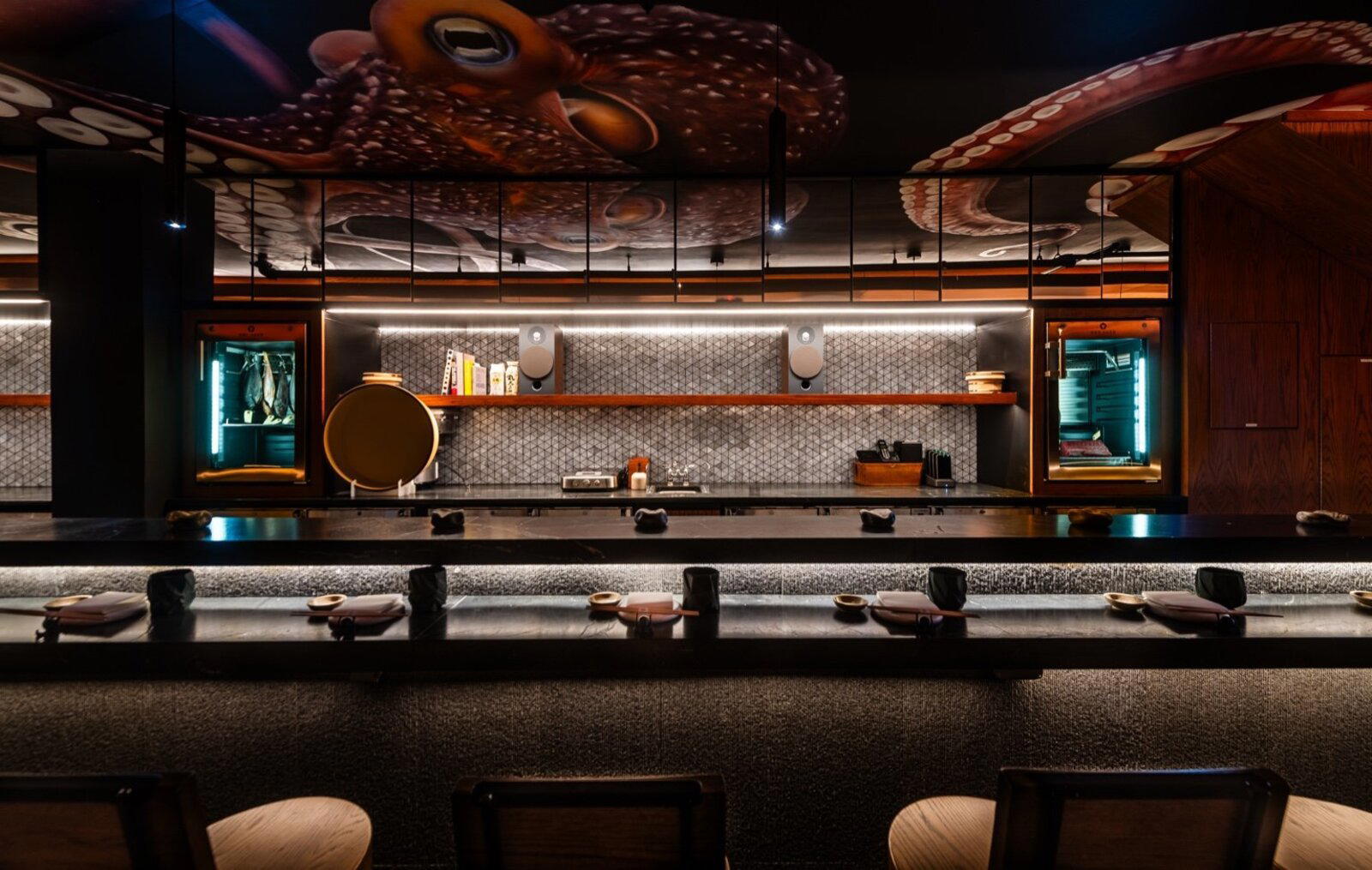
Where Two Culinary Traditions Meet on Capitol Hill
Maru San is a Japanese-Peruvian Nikkei hand-roll restaurant in Washington, DC, at 325 7th St SE. Washington's restaurant culture has spent the better part of two decades building credibility in European-influenced fine dining and regional American cooking. The emergence of Nikkei cuisine at Maru San on Capitol Hill represents something different: a format rooted in the Japanese immigrant communities of early twentieth-century Peru. In American cities, that tradition is still relatively rare. New York has a handful of serious Nikkei counters; Los Angeles has more. Washington has few, which gives Maru San a position in the city's dining scene that has little competition from within its own category.
It is a documented culinary tradition with specific techniques, a recognizable flavor grammar, and a history that predates the current wave of cross-cultural menus. The combination of Japanese knife discipline and fermentation sensibility with Peruvian acidity, aji pepper heat, and ceviche tradition produces something genuinely distinct from both parent cuisines. At its most coherent, a Nikkei meal moves through courses where umami and citrus share the structural work, where raw fish preparations carry both the restraint of Japanese service and the brightness of Peruvian cevichería. That architecture of flavors is what Maru San is working within.
The Ritual Logic of How the Meal Moves
Japanese dining at its most intentional is a study in pacing. The kaiseki tradition codifies this explicitly, with courses sequenced to build and release tension, to foreground a single ingredient at its seasonal peak, to give the diner something to consider rather than simply consume. Nikkei cooking inherits some of that sequencing instinct from the Japanese side of its lineage, even as the Peruvian side introduces a different kind of urgency, sharper, more acid-forward, less interested in restraint for its own sake. The result, when executed with care, is a meal that has momentum rather than stasis: courses that seem to argue with each other productively.
That quality of intentional pacing separates premium Nikkei from the broader category of fusion, which often amounts to little more than ingredient substitution. The distinction matters for how a diner should approach the meal. Arriving at the restaurant expecting a conventional tasting format may cause disorientation; arriving with an understanding of Nikkei's internal logic makes the sequencing legible. The physical environment of the Capitol Hill location, a neighborhood defined by nineteenth-century rowhouses and a weekend market culture centered on Eastern Market two blocks away, provides a frame that feels residential and considered rather than theatrical.
Capitol Hill as a Dining Neighborhood
The area around 7th Street SE is not where Washington's most-reviewed restaurants have historically concentrated. Georgetown, Dupont Circle, and the 14th Street corridor have absorbed the majority of the city's premium dining investment. Capitol Hill's dining identity has been shaped more by its population of Congressional staffers, long-term residents, and proximity to the Hill's working schedule than by destination-restaurant ambitions. That context makes the restaurant's Nikkei format an interesting placement choice. Destination formats built around careful pacing and specialized culinary traditions often perform better in neighborhoods with a residential base, where repeat visits matter, than in tourist-heavy corridors where novelty drives foot traffic.
For comparison, Washington's other serious format restaurants tend to cluster further west. The Inn at Little Washington operates entirely outside the city, in the Virginia countryside, built around Patrick O'Connell's long-running New American program. Alfie's and its Georgetown counterpart have brought Southeast Asian precision and natural wine to the city's more experimental dining tier. Bazaar Meat by José Andrés anchors the Spanish-influenced end of the city's high-profile dining. Canton Disco operates at the intersection of modern Chinese cooking and a more social dining register. The restaurant occupies none of those positions. It sits in a genuinely different category, and its location in Capitol Hill rather than Penn Quarter or Georgetown suggests an operation that is building a neighborhood relationship as much as a destination reputation.
Nikkei in the American Context
The American restaurants that have taken Nikkei seriously tend to share certain formal commitments: a preference for counter or intimate table formats over large-room dining; sourcing structures that treat both Japanese and South American ingredients with equal seriousness; and a willingness to let the meal unfold over time rather than optimize for table turns. That places Nikkei alongside other format-driven operations nationally, including Lazy Bear in San Francisco, which runs a similarly paced communal format built around American cooking, and Single Thread Farm in Healdsburg, which applies Japanese kaiseki structure to Northern California ingredients. Both represent American interpretations of Japanese dining ritual rather than direct Japanese restaurants, which is also a fair description of where Nikkei sits as a form.
Further along the spectrum of precision-driven tasting formats, Alinea in Chicago and The French Laundry in Napa establish the upper bracket of American destination dining, both built around the idea that the meal's architecture matters as much as any individual dish. Le Bernardin in New York City demonstrates how rigorous technique applied to a single ingredient category, in that case seafood, can sustain decades of critical credibility. The restaurant operates at a smaller scale and in a less established market than any of those, but the underlying formal argument, that cuisine built on two culinary traditions requires deliberate sequencing to make sense of itself, connects it to the same conversation.
Internationally, the Nikkei tradition has received serious attention in restaurants like 8½ Otto e Mezzo Bombana in Hong Kong, which demonstrates how non-native culinary traditions can establish genuine credibility in foreign markets through technical discipline. Alain Ducasse at Louis XV in Monte Carlo and Emeril's in New Orleans represent other models of how a defined culinary identity, held consistently over time, accumulates authority independent of trend cycles.
Planning Your Visit
The restaurant is located at 325 7th St SE, Washington, DC 20003, on Capitol Hill within easy walking distance of Eastern Market and the Capitol South Metro station on the Blue, Orange, and Silver lines. Given the specificity of the format and the absence of a large comparable comparable set in the city, booking in advance is advisable, particularly for weekend evenings when the neighborhood's residential dining culture generates its own demand independent of destination visitors.
A Credentials Check
Comparable venues nearby, for context on price, style, and recognition.
| Venue | Cuisine | Price | Notes |
|---|---|---|---|
| Maru SanThis venue — the venue you are viewing | Japanese-Peruvian Nikkei Hand Rolls | $$$$ | Not listed |
| Uchi | Modern Japanese Sushi | $$$$ | Old Town Scottsdale |
| Uchi | Modern Japanese Omakase | $$$$ | Central Business District |
| Izakaya Seki | Authentic Japanese Izakaya | $$$ | Cardozo |
| Uchi | Modern Japanese Sushi | $$$$ | Downtown |
| Omakase @ Barracks Row | Modern Japanese Sushi Omakase | $$$$ | Barracks Row |
Recognition history
Dated appearances from independent guides and award organizations, with the underlying list record or original source where available.
Star Wine List
Star Wine List
Continue exploring
More in Washington DC
Restaurants in Washington DC
Browse all →
Bars in Washington DC
Browse all →
Hotels in Washington DC
Browse all →
At a Glance
- Trendy
- Modern
- Intimate
- Casual Hangout
- Date Night
- Chefs Counter
- Open Kitchen
- Craft Cocktails
- Sake Program
Current opening hours
- Monday
- 4–10 PM
- Tuesday
- Closed
- Wednesday
- Closed
- Thursday
- 4–10 PM
- Friday
- 4–10 PM
- Saturday
- 4–10 PM
- Sunday
- 4–10 PM
Hours can change for holidays and private events. Last verified .
Casual yet sophisticated sushi counter atmosphere with efficient, intimate service focused on high-quality, quick bites.