Our verdict
Yanagiyanishiki serves Gifu Regional Cuisine in Nagoya, with a sake program, an extensive wine list, and a quiet, formal room for leisurely dinner plans.

Pearl is the En Primeur Club membership app, where members save venues, book tables and use the concierge.
A Street in Nishiki, a City Still Finding Its Dining Voice
Naka Ward's Nishiki district sits at the commercial and cultural core of Nagoya, a city that has long been underestimated on Japan's fine dining circuit. The conversation about Japanese gastronomy tends to orbit Tokyo, Kyoto, and Osaka, with Nagoya treated as a transit stop rather than a destination. That framing has been quietly eroding. Restaurants occupying serious positions in Nishiki are part of that shift, drawing an audience that now includes visitors arriving specifically to eat rather than passing through on the shinkansen. Yanagiyanishiki, addressed in the 3-chome stretch of this district, belongs to that emerging tier.
The Physical Container: What the Space Does Before the Food Arrives
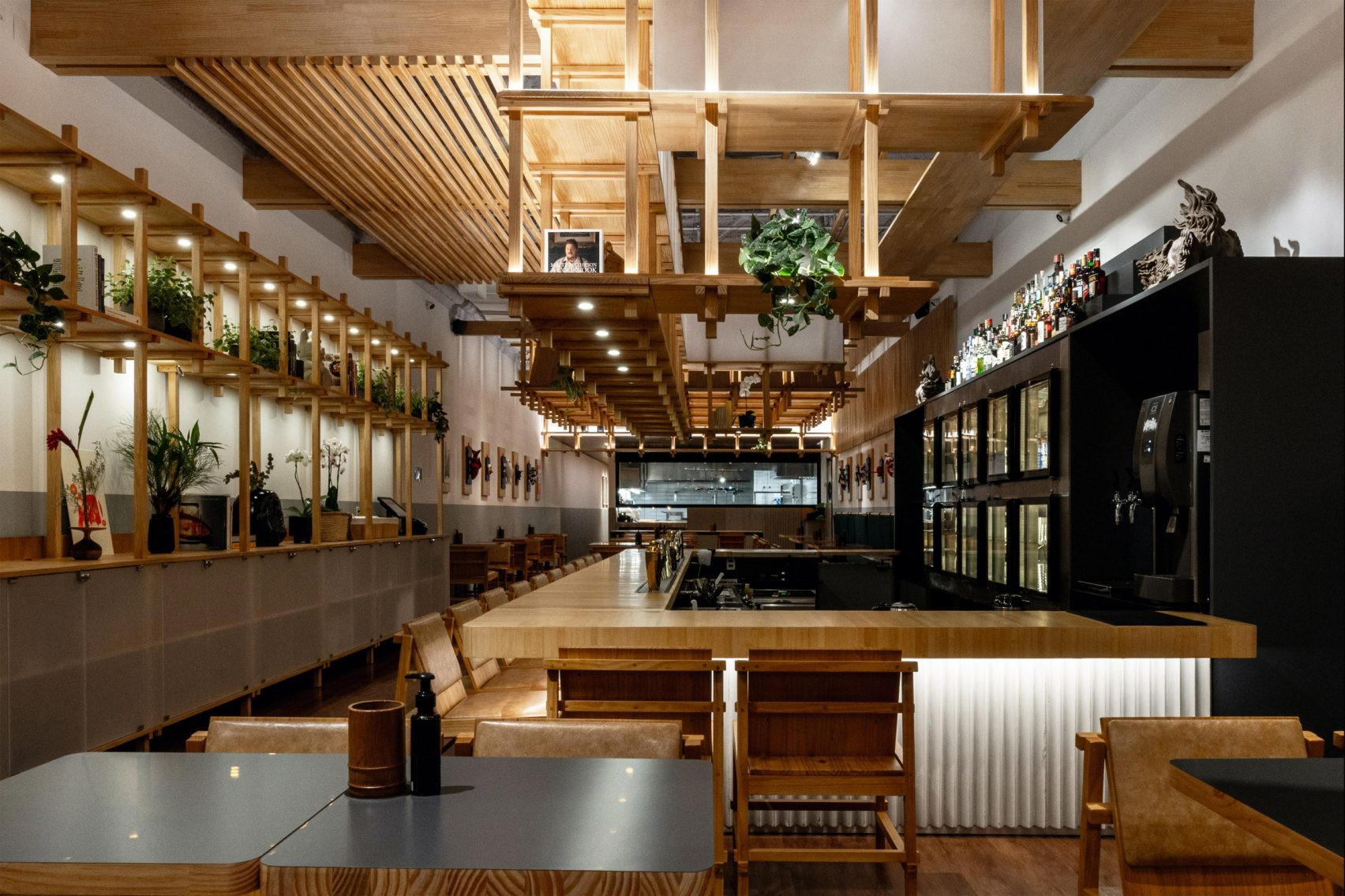
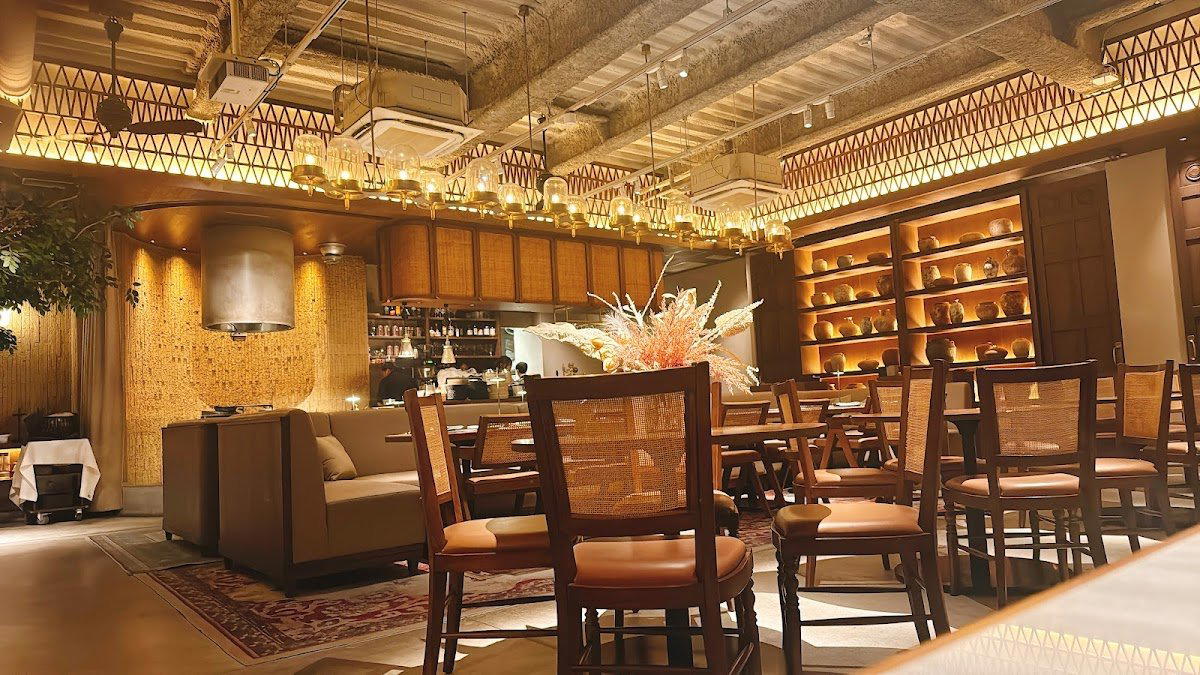
In Japanese dining culture, the room itself carries meaning. The relationship between interior architecture and the experience it frames is not incidental, it is structural. Counter seating, partition heights, the distance between guest and kitchen, the choice of wood grain or lacquer, the quality of ambient light: these decisions communicate the register of what follows before a single dish appears. Nagoya's more considered restaurants have absorbed this lesson with varying degrees of conviction. The address at the First Yanagiya-Nishiki Annex building places Yanagiyanishiki within a commercial structure, a format increasingly common for serious urban Japanese restaurants that trade the traditional machiya footprint for the logistical advantages of a modern building while maintaining interior discipline.
The spatial contrast between exterior pragmatism and interior intention is something Japanese restaurant culture has refined across decades. In Tokyo's Ginza, in Kyoto's Nakagyō, and at properties like Gion Sasaki in Kyoto, the building envelope frequently understates what waits inside. That tension between anonymous facade and deliberate interior is a recurring feature of serious Japanese dining, and it trains guests to read the room rather than the street.
Nagoya's Dining Scene: Placed in the Wider Circuit
Nagoya's culinary reputation has historically been anchored in regional specialities: kishimen, miso katsu, hitsumabushi eel over rice. Atsuta Horaiken, the city's most documented hitsumabushi institution, represents that tradition at its most codified. But alongside these regional anchors, a cohort of restaurants operating in European and Japanese haute cuisine registers has been growing, with addresses ranging from Italian Bacio and cucina Wada, to French and fusion formats. Chez Kobe and Cucina Italiana Gallura indicate how eclectic that range has become for a city its size.
That eclecticism reflects a broader pattern visible across mid-tier Japanese cities with strong industrial and commercial bases: domestic wealth concentrated among a professional class with international travel experience, generating demand for dining formats beyond regional repertoire. Nagoya, home to Toyota's global headquarters ecosystem, fits that model precisely. The city's dining options have expanded to meet a sophisticated local appetite, not merely to attract visitors. Yanagiyanishiki's positioning within Nishiki places it inside that evolution.
Across Japan's wider circuit, the standard for serious dining has continued to rise. HAJIME in Osaka, Harutaka in Tokyo, and Goh in Fukuoka each represent their city's presence at the highest recognised tier, while destinations like akordu in Nara demonstrate that Michelin-level ambition operates well beyond the major metro areas. The question for Nagoya is not whether serious restaurants exist but how quickly they accumulate the documentation and recognition that alerts the broader travelling audience. Places like Ipponsagi in Nanao and Koharuso in Takashima show that even less-visited Japanese cities carry restaurants worth redirecting an itinerary for.
Planning a Visit: What the Address and Neighbourhood Signal
The Nishiki 3-chome location is walkable from Sakae, Nagoya's central entertainment and shopping district, and within reasonable reach of Nagoya Station depending on transit preference. The neighbourhood functions as a dense commercial zone with a concentration of food and beverage operations across multiple formats and price points, which means the immediate surroundings offer pre- or post-dinner options without requiring separate planning. For visitors arriving from Tokyo on the Tokaido Shinkansen, Nagoya is approximately 90 minutes at nozomi speeds, making a single-evening visit from Tokyo operationally feasible, though the city's other dining addresses, including several in our full Nagoya restaurants guide, reward at least one overnight stay.
For visitors extending beyond Nagoya to other parts of central Japan, regional comparisons are worth framing. The cooking traditions accessible within a two-hour radius, kaiseki in Kyoto, sushi omakase in Tokyo, market-to-plate formats in Osaka, provide context for what Nagoya's own scene is calibrating against. Restaurants in smaller cities across this corridor, from established addresses in Sapporo to rural Nishikawa Machi, illustrate how dispersed serious Japanese cooking has become. Internationally, the benchmark conversation extends further: Le Bernardin in New York City and Atomix in New York City represent the kind of sustained critical recognition that serious diners use as a reference point when assessing unfamiliar addresses. Birdland in Sakai offers an example closer to home of a restaurant building its own specific reputation outside the major city halo.
Frequently asked questions
How would you describe the vibe at Yanagiyanishiki?
Yanagiyanishiki sits in Nishiki 3-chome, Naka Ward, which sets an immediate tone: this is a commercial and cultural core address in Nagoya, not a tourist-facing strip. The Nishiki district tends to attract a local, purposeful crowd rather than passing foot traffic, which shapes the room's atmosphere accordingly. Expect a space that reads as considered rather than performative.
Where is Yanagiyanishiki in Nagoya?
Yanagiyanishiki is located at Japan, 〒460-0003 Aichi, Nagoya, Naka Ward, Nishiki, 3 Chome−12−30 第2ワシントンANNEX, Nagoya.
Where exactly is Yanagiyanishiki located in Nagoya, and how easy is it to reach?
Yanagiyanishiki is at Nishiki 3-chome, Naka Ward, Nagoya, a central address within walking distance of Sakae, the city's main entertainment and retail district. Nagoya Station is also within reasonable reach, making this one of the more accessible spots on Nagoya's dining circuit for travellers arriving by Shinkansen from Tokyo or Osaka.
What's the best thing to order at Yanagiyanishiki?
Given Nagoya's regional identity, the city's better neighbourhood restaurants typically engage with local ingredients and traditions including kishimen, hatcho miso preparations, and hitsumabushi-adjacent rice dishes. Confirming the current menu directly with the venue before visiting is the practical approach.
How far ahead should I plan for Yanagiyanishiki?
In Nagoya's Nishiki district, well-regarded neighbourhood venues with limited seating often require advance reservation, particularly on weekends. Contacting the venue directly will give you the most accurate picture of availability.
What makes Yanagiyanishiki worth seeking out?
Yanagiyanishiki holds a Nishiki 3-chome address, walkable from Sakae, placing it at the working centre of Nagoya's most concentrated dining neighbourhood. Nagoya has historically been overlooked relative to Tokyo and Osaka on Japan's fine dining circuit, which means addresses here carry less international noise and more genuine local standing. For travellers tracking Japan's regional dining scene rather than its headline cities, Nishiki is a logical focus.
Is Yanagiyanishiki good for vegetarians?
Japanese restaurant menus, particularly in neighbourhood settings in Nagoya, vary considerably on this point. Confirming dietary options directly with the venue before your visit is the only way to be certain.
Cuisine-First Comparison
Comparable venues nearby, for context on price, style, and recognition.
| Venue | Cuisine | Price | Awards | Notes |
|---|---|---|---|---|
| YanagiyanishikiThis venue (the venue you are viewing) | Gifu Regional Cuisine | $100–150 | Not listed | Not listed |
| Ningyocho Imahan Nagoya middorandosukuea ten | Traditional Japanese Sukiyaki & Shabu-Shabu | Not listed | Tabelog 100 #89 | Nakamura |
| Cutlet Matsumura | Modern Tonkatsu | $20–30 | Tabelog 100 #5 | Nakamura |
| Mone | A5 Wagyu Yakiniku & Wine | $50–100 | Tabelog 100 #23 | Chikusa |
| Yakiniku Hakushu Kassai | Japanese Yakiniku | $50–100 | Tabelog 100 #9 | Chikusa |
| Sushi Yasuke | Traditional Edomae Sushi Omakase | $50–100 | Tabelog 100 #82 | Shōwa |