
Tabelog 100 #5
Our verdict
Cutlet Matsumura brings Nagoya tonkatsu into a compact, wine-aware format rather than the usual quick-set-meal lane. Its Tabelog 100 Tonkatsu selections in 2022, 2024, and 2026 place it in a national conversation about pork cutlet craft, while the sommelier presence and European framing give the room a sharper point of view than many station-area counters.

Pearl is the En Primeur Club membership app, where members save venues, book tables and use the concierge.
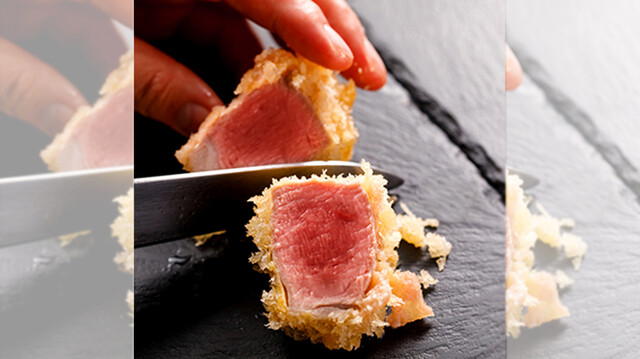
The menu
What to order
- Today's Low-Temperature Selected Pork Fillet Cutlet
- Smoked Pork Fillet Cutlet
- Matsumura Miso Cutlet
- Sea Bream Fillet Cutlet
A Nagoya restaurant setting is not where the old image of tonkatsu has to begin. It can be bright, transactional, and built for movement: office workers, rail passengers, department-store diners, and hotel guests moving through the city. In that setting, the more interesting shift is not simply well-cooked pork cutlet, but pork cutlet handled with the grammar of a focused restaurant, where a European category tag pulls the meal beyond the standard lunch-tray model.
Nagoya has long been a city of practical eating: miso katsu, kishimen, hitsumabushi, tebasaki, and dining suited to business travel and leisure. Tonkatsu fits because it is direct, structured, and satisfying without ceremony. Cutlet Matsumura enters that tradition from a narrower angle. Listed under tonkatsu, European, and creative cooking, it says more about contemporary Japanese comfort food than novelty for its own sake.
A tonkatsu counter that reads through category focus, not speed
Category focus changes the register of a cutlet meal. In many tonkatsu rooms, the rhythm is rice, cabbage, sauce, and quick turnover. Here, the tonkatsu, European, and creative listing signals a different frame. That does not make tonkatsu fine dining by decree, but it places fat, breading, acidity, and balance in the same conversation. For readers following Japan’s newer genre-specific restaurants, that is the point: single-dish expertise is increasingly supported by service details once tied to more formal meals.
The national recognition reinforces that reading. Cutlet Matsumura was selected for Tabelog’s 2026 tonkatsu Hyakumeiten, placing it among closely watched pork-cutlet specialists in that category. Tabelog’s Hyakumeiten lists matter because they are category-specific rather than broad prestige medals; a tonkatsu selection compares the restaurant with other tonkatsu houses, not sushi counters, French tasting rooms, or kaiseki restaurants. That tells the diner to judge crumb, frying control, pork quality, and balance rather than expect theatrical luxury.
The format also separates the room from nearby Nagoya alternatives. Tsubameya Dainagoya birudingu ten and New Old Style Niku Soba Keisuke Dainagoya birudingu ten sit in a more everyday comparative lane, while Solo Pizza Napoletana Da Lucio Nagoya eki ten plays a different casual role. At the other end, Setsugekka Nagoya and TANAKA YAKINIKU RESTAURANTE point toward beef-led dining. The cutlet restaurant occupies its own lane: grounded in a familiar Japanese dish, with enough category intent to be more than a convenience meal between plans.
Why Nagoya is a useful place to rethink katsu
Nagoya’s food culture rewards intensity and specificity. Miso-based seasoning, grilled eel service, and chicken-wing drinking rooms prove the city is not shy about strong signatures. Tonkatsu, however, can be misread by visitors as merely fried pork with sauce. Stronger kitchens treat it as controlled timing: how the coating insulates, how pork rests after heat, how condiments are rationed, and how side dishes keep richness from flattening the meal. A European or creative label, handled with restraint, can clarify those mechanics rather than obscure them.
The focused format matters. A compact specialist restaurant creates a different attention from a broad dining hall, especially for a dish where the margin between crisp and heavy is thin. Tonkatsu suits solo diners and pairs, useful in Nagoya, where rail schedules and hotel check-ins often shape dining plans. The experience is best understood as a focused meal rather than event dining.
There is also a useful middle-ground quality to the category. Japan’s specialist restaurants often sit between casual and formal; Cutlet Matsumura’s appeal comes from food focus rather than exclusivity. It is not simply a hushed trophy room or a loose cafeteria. It belongs to the current Japanese category of precise, compact, single-theme restaurants that take everyday dishes seriously.
Where it fits in a Nagoya itinerary
For travellers using Nagoya as a rail hub, the appeal is concentration. A city meal can feel like compromise when planned around movement, but Nagoya has become one of Japan’s serious dining cities because specialist operators sit near constant foot traffic and business travel. Cutlet Matsumura works for the diner wanting a focused Japanese meal without a long tasting format, and for the traveller who reads a tonkatsu restaurant with European and creative category signals as intent rather than decoration.
Build the surrounding plan by category rather than a single neighbourhood mood. For a broader edit of the city’s dining scene, see Our full Nagoya restaurants guide. Travellers pairing the meal with a stay can cross-check Our full Nagoya hotels guide, while later drinks belong in Our full Nagoya bars guide. The wider regional planning rails are covered by Our full Nagoya wineries guide and Our full Nagoya experiences guide.
Readers comparing Japanese specialist formats beyond Nagoya can look at other focused dining rooms, compact counters, casual specialists, and category-led restaurants across Japan and abroad. For a wider Japan and diaspora scan, compare the genre signals at unnamed beef, seafood, cafe, sake-bar, curry, and onigiri specialists in other cities without treating them as direct peers to Cutlet Matsumura.
The critical takeaway is clear: the standout quality is not a named dish or chef mythology, but the repositioning of tonkatsu inside a category-literate Nagoya format. The 2026 Tabelog tonkatsu Hyakumeiten selection gives it category credibility; the tonkatsu, European, and creative listing gives it editorial interest. For a city often read through regional staples, this reminds that Nagoya’s restaurant culture can refine an everyday form without draining its purpose.
Frequently asked questions
Where do I go for Cutlet Matsumura?
Nagoya.
What's the standout thing about Cutlet Matsumura?
The draw is Cutlet Matsumura’s focused tonkatsu format in Nagoya, listed under tonkatsu, European, and creative categories. That approach is backed by Tabelog’s 2026 tonkatsu Hyakumeiten selection, giving the place a clear category benchmark.
What It’s Closest To
Comparable venues for cuisine and category context.
| Venue | Cuisine | Price | Awards | Notes |
|---|---|---|---|---|
| Cutlet MatsumuraThis venue (the venue you are viewing) | Modern Tonkatsu | $20–30 | Tabelog 100 #5 | Not listed |
| Atsuta Houraiken Matsuzakaya ten | Traditional Nagoya eel (hitsumabushi) restaurant | $30–50 | Tabelog 100 #72 | Naka |
| Yakitori Shige Higashizakura | Nagoya Cochin Yakitori Omakase | $50–100 | Tabelog 100 #55 | Higashi |
| Gyutei | High-end Wagyu Yakiniku | $50–100 | Tabelog 100 #47 | Higashi |
| Yagumo | Traditional Nagoya Shabu-shabu & Sukiyaki (Mingei Kappo) | $50–100 | Tabelog 100 #38 | Higashi |
| Mone | A5 Wagyu Yakiniku & Wine | $50–100 | Tabelog 100 #23 | Chikusa |
Recognition history
Dated appearances from independent guides and award organizations, with the underlying list record or original source where available.
Tabelog 100 #5 · No. 5
Tabelog · Tabelog 100 - Tonkatsu - 2026
Continue exploring
More in Nagoya
Restaurants in Nagoya
All restaurants in Nagoya →




Details
- Sophisticated
- Intimate
- Quiet
- Classic
- Special Occasion
- Date Night
- Business Dinner
- Solo
- Standalone
- Beer Program
- Sake Program
- Local Sourcing
- A La Carte
- Set Menu
- Beer
- Champagne
- Glass Wine
- Non Alcoholic Drinks
Current opening hours
- Monday
- 11 AM–3 PM, 5–10 PM
- Tuesday
- 11 AM–3 PM, 5–10 PM
- Wednesday
- 11 AM–3 PM, 5–10 PM
- Thursday
- 11 AM–3 PM, 5–10 PM
- Friday
- 11 AM–3 PM, 5–10 PM
- Saturday
- 11 AM–3 PM, 5–10 PM
- Sunday
- 11 AM–3 PM, 5–10 PM
Hours can change for holidays and private events. Hours as of .
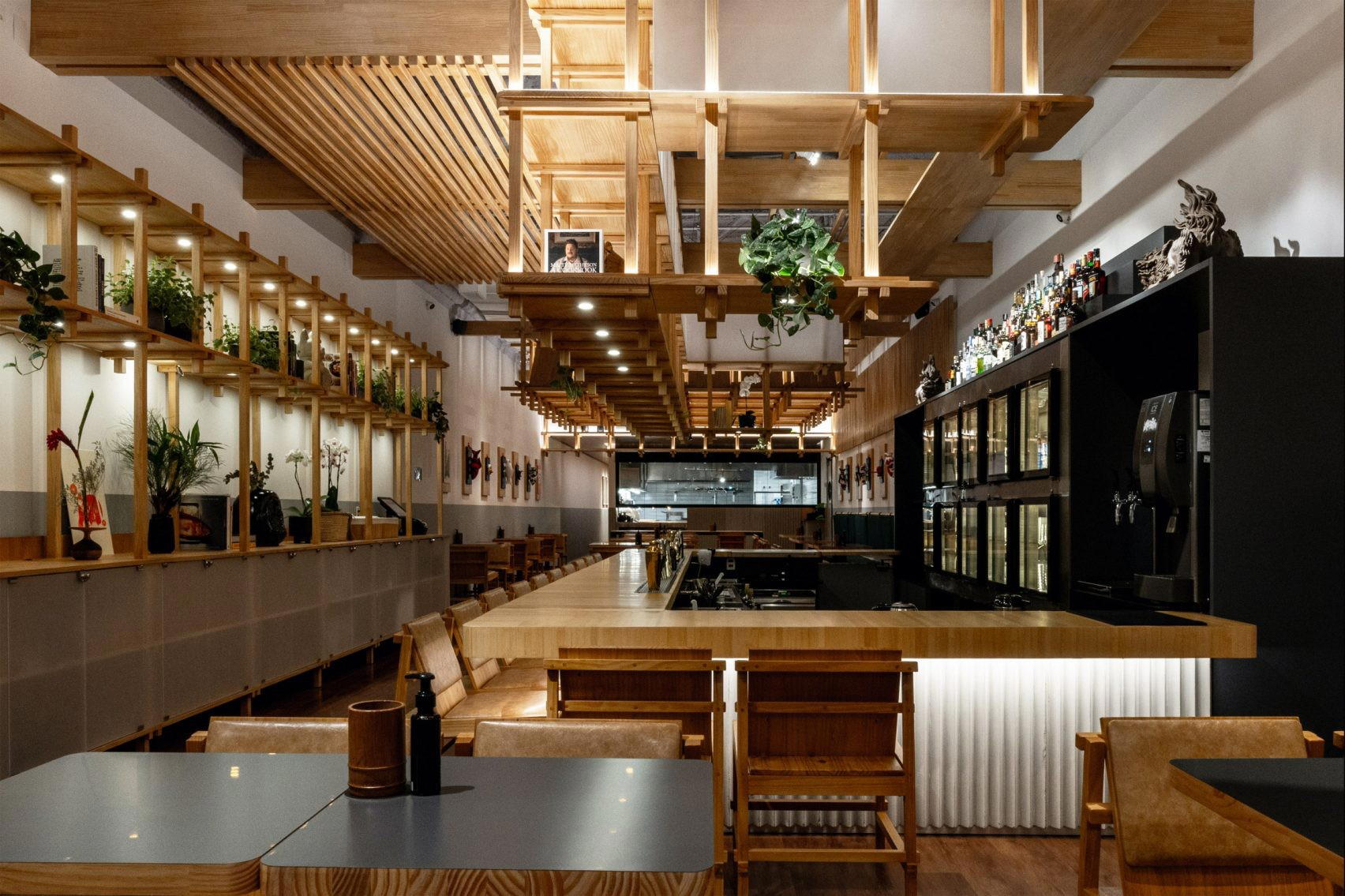
Small, special-occasion-feeling dining room with a refined, chef-driven atmosphere and an intimate 10-seat layout.