
Michelin Plate
Our verdict
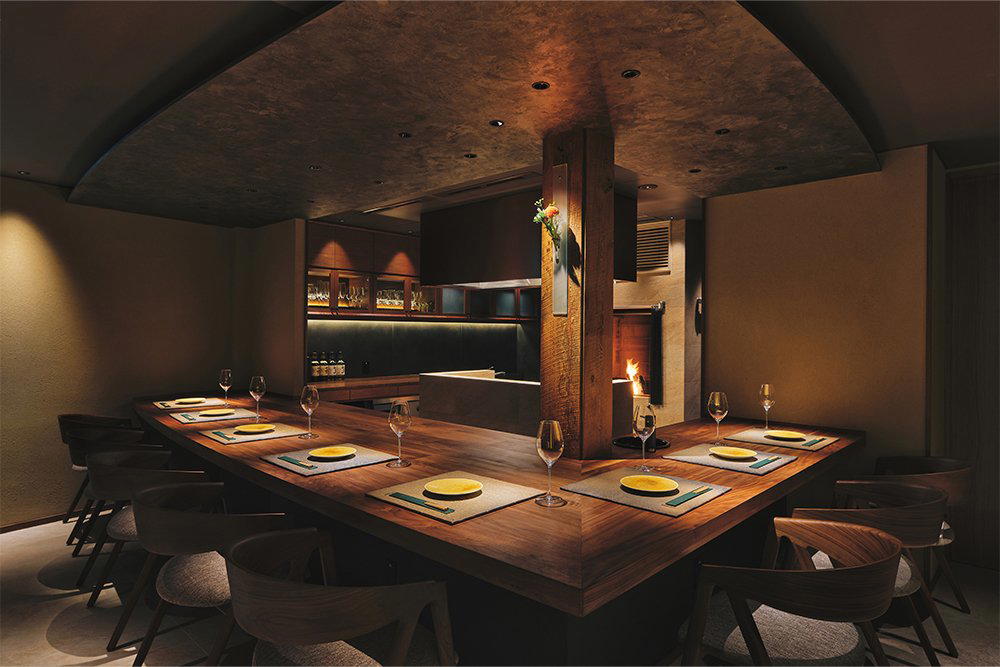
In Kyoto's Shimogyo Ward, wabiya builds its menu around fire: yakitori grilled over charcoal, joints of free-range chicken and duck roasted slowly over wood flame, and broths drawn from chicken dashi that close each meal. The kitchen's open hearth, centred around a charcoal grill and wood-fired oven, makes the cooking method as visible as the ingredient sourcing, primarily poultry raised within Kyoto prefecture.

Pearl is the En Primeur Club membership app, where members save venues, book tables and use the concierge.
The menu
What to order
- Oyakodon
- Yakitori skewers
- Duck meatballs
Fire as Method, Kyoto Poultry as Provenance
Yakitori in Japan occupies a wide spectrum. At the commodity end, skewers are grilled quickly over gas or low-grade binchōtan with industrially reared birds. At the other end, a smaller group of restaurants treats the format with the same ingredient rigour applied to kaiseki: sourcing named breeds, specifying feed, controlling the fire as carefully as any French brigade controls heat. Wabiya, in Kyoto's Shimogyo Ward, belongs to the latter tier. Free-range chicken and duck raised within Kyoto prefecture are the kitchen's primary material, and the cooking, whether over charcoal or wood flame, is calibrated around those specific birds rather than adapted from a generic grilling template.
That distinction matters in a city where fine dining is usually discussed through the lens of kaiseki and multi-course seasonal menus. Wabiya is not kaiseki. It is a fire-focused, single-protein concept that draws on yakitori tradition while incorporating wood-roasting technique more common to European kitchens. The result is a hybrid format that Kyoto's dining scene, weighted toward ceremony and subtlety, rarely produces.
The Ethical Sourcing Logic Behind a Single-Protein Menu
The sustainability case for a single-protein restaurant is easier to make than it might appear. When a kitchen commits to one primary ingredient, in this case, Kyoto-raised poultry, it can work with farmers directly, specify welfare standards, reduce the complexity of supply chains, and minimise waste by using the whole bird across multiple preparations. The shift from breast-and-thigh-only thinking to whole-bird cooking is central to responsible sourcing in any poultry-forward format.
Wabiya's menu reflects exactly that logic. Different cuts appear on skewers for charcoal grilling, while larger joints are committed to the slower, more forgiving heat of the wood-fired oven. Neither approach is decorative: each serves a functional purpose for a specific part of the bird. The kitchen's use of chicken dashi as the base for the closing ramen or curry course is the clearest signal of whole-bird thinking. Dashi made from bones and carcasses that would otherwise represent waste is both the most flavourful and the most honest way to end a meal built on a single animal.
This approach has parallels in restaurants that have reset expectations in other cities, HAJIME in Osaka applies ecological rigour to its ingredient sourcing at the fine-dining end, while akordu in Nara draws its identity from a specific regional agricultural context. Wabiya's version is more focused and less formal, but the underlying principle, know where your ingredient comes from, use all of it, is the same.
The Open Kitchen as Argument
The charcoal grill and wood-fired oven are positioned at the centre of the open kitchen, which means the cooking is not incidental theatre but a deliberate part of the dining experience. In yakitori contexts, the open hearth has always carried informational value: you can see the fire, judge its temperature by colour and height, and watch how the cook adjusts skewer position and distance. At wabiya, the addition of the wood-fired oven extends that visibility to a second cooking method with a longer time horizon. Roasting a joint over wood flame is a patience-based technique; watching it happen confirms that the kitchen is not rushing the product.
Japan's fire-focused cooking tradition is deep and technically demanding. The grade of charcoal, typically binchōtan in serious yakitori, produces a far infrared heat that penetrates protein differently than gas or standard charcoal briquettes. When wabiya adds wood flame to that tradition, it introduces both smoke character and a variable heat source that requires continuous management. The flavour outcomes are distinct from either pure charcoal or pure convection oven cooking. For a bird raised with care in Kyoto's agricultural hinterland, that distinction is worth making.
Where Wabiya Sits in Kyoto's Dining Structure
Kyoto's most discussed restaurants operate at the formal end of Japanese cuisine. Kaiseki houses like Gion Sasaki, Hyotei, and Isshisoden Nakamura define the city's international reputation. That reputation, well-earned, can obscure a parallel dining culture: smaller, more direct restaurants where a single technique or ingredient is pursued with equivalent seriousness and significantly less ceremony.
Wabiya sits in that second category. Its address in Shimogyo Ward, the commercial and transit-heavy district south of the traditional geisha quarters, positions it outside the tourist-facing restaurant belt. The format, yakitori, wood-roasted joints, a dashi-based closing course, is accessible rather than intimidating. It does not require familiarity with kaiseki sequencing or seasonal ingredient literacy to appreciate. What it does require is attention to the ingredient and to the fire. For travellers who have covered the formal kaiseki circuit, wabiya represents a different register of seriousness: quieter, more physical, less codified.
Across Japan, that register appears in various forms. Harutaka in Tokyo applies similar product-first discipline to sushi. Goh in Fukuoka draws on local ingredient culture with a comparable intensity. 6 in Okinawa and 1000 in Yokohama each demonstrate that Japan's most interesting cooking is not concentrated in its two or three most famous cities. Wabiya is a Kyoto-specific argument: that the city's culinary intelligence extends well beyond the kaiseki format that defines its export reputation.
For those comparing approaches internationally, the fire-focused, provenance-led format has counterparts in restaurants like Le Bernardin in New York City, where a single protein category is treated as the full scope of a kitchen's ambition, or Atomix in New York City, where Korean culinary rigour is applied through a format that resists easy categorisation. The comparison is not direct, but the underlying editorial question is the same: what happens when a kitchen commits fully to one idea?
Explore more of the city through our full Kyoto restaurants guide, and extend your stay with resources from our Kyoto hotels guide, bars guide, wineries guide, and experiences guide.
Know Before You Go
- Address: 554 Sangencho, Shimogyo Ward, Kyoto, 600-8097, Japan
- District: Shimogyo Ward, south of central Kyoto's tourist corridors
- Format: Yakitori and wood-roasted poultry; closing course of ramen or chicken dashi curry
- Primary ingredient: Free-range chicken and duck raised in Kyoto prefecture
- Kitchen: Open kitchen with central charcoal grill and wood-fired oven
- Reservations: Advance booking recommended; contact details not publicly listed at time of writing, check current status through Kyoto dining aggregators or your hotel concierge
- Price, hours, dress code:; verify before visiting
Frequently asked questions
What kind of recognition has wabiya received?
wabiya has received recognition including: The charcoal grill and the wood-fired oven in the centre of the open kitchen catch the eye. The chef flexes his culinary muscles with yakitori grilled over charcoal and wood flame. Fire is manipulated to smoke the poultry, which is mainly f….
What part of town is wabiya in?
wabiya is located at 554 Sangencho, Shimogyo Ward, Kyoto, 600-8097, Japan, Kyoto.
What's the must-try dish at wabiya?
The closing course makes the clearest case for the kitchen's whole-bird philosophy: ramen or curry built from chicken dashi, drawn from the same Kyoto free-range birds grilled over charcoal and wood flame throughout the meal. It is the point at which the single-protein commitment becomes most legible as a deliberate culinary argument rather than a constraint.
Do I need a reservation for wabiya?
Kyoto yakitori restaurants operating at this level of ingredient sourcing, free-range, locally raised chicken and duck, open-fire cooking, book ahead, particularly for evening sittings. Reservations in advance are advisable; walk-ins at dinner carry real risk of a full house.
What makes wabiya worth seeking out?
Wabiya holds a specific position in Kyoto's dining structure: fire-focused and built entirely around locally raised Kyoto poultry, in a city where the dominant register is kaiseki formality. The charcoal grill and wood-fired oven sit at the centre of an open kitchen, so the cooking method, smoke, char, slow wood-roasting of whole joints, is the visible proposition from the first moment you sit down.
Do they accommodate allergies at wabiya?
The menu is structured around poultry, free-range Kyoto chicken and duck, as its primary ingredient, with chicken dashi integral to the closing course. Guests with poultry allergies or strict dietary requirements should communicate these clearly at the time of booking, as the single-protein format leaves limited scope for substitution.
Recognition Snapshot
Comparable venues nearby, for context on price, style, and recognition.
| Venue | Cuisine | Price | Awards | Notes |
|---|---|---|---|---|
| wabiyaThis venue (the venue you are viewing) | Modern Kyoto Yakitori | $100–150 | Michelin Plate | Not listed |
| Gion Suetomo | Traditional Kyoto Kaiseki Omakase | $100–150 | Not listed | Higashiyama |
| Takehisa | Kyoto Kappo Kaiseki | $100–150 | Michelin Plate | Nakagyō |
| Mita | Kyoto Kaiseki | $300–500 | Tabelog Silver #78 | Nakagyō |
| Wakasugi | Traditional Japanese Kaiseki & Omakase | $100–150 | Michelin Plate | Kita |
| Sakaimachi Kamokura | Kyoto Kaiseki | Not listed | Michelin Plate | Shimogyō |
Recognition history
Dated appearances from independent guides and award organizations, with the underlying list record or original source where available.
Michelin Plate
Michelin
Continue exploring
More in Kyoto
Restaurants in Kyoto
All restaurants in Kyoto →
Bars in Kyoto
All bars in Kyoto →
Hotels in Kyoto
All hotels in Kyoto →
Wineries in Kyoto
Browse all →
Details
- Elegant
- Cozy
- Sophisticated
- Intimate
- Modern
- Date Night
- Special Occasion
- Chefs Counter
- Open Kitchen
- Sake Program
- Local Sourcing
- Omakase
- Counter Dining
- Sake Program
Current opening hours
- Monday
- 6:30–10 PM
- Tuesday
- 6:30–10 PM
- Wednesday
- 6:30–10 PM
- Thursday
- 6:30–10 PM
- Friday
- 6:30–10 PM
- Saturday
- 6:30–10 PM
- Sunday
- Closed
Hours can change for holidays and private events. Hours as of .
Calm, Japanese modern interior with brown tones, L-shaped counter seating around open kitchen, cozy villa-like atmosphere with gentle warmth from flames.