
Tabelog 100 #89
Our verdict
Ushigoro Ginza Namiki St. occupies the seventh floor of the New Ginza 5 Building on one of Tokyo's most competitive dining corridors. The address places it squarely inside the premium Ginza yakiniku tier, where grilled wagyu formats have matured into full counter-service experiences. For visitors calibrating a Tokyo itinerary around serious meat-focused dining, this is the Namiki-dori reference point.

Pearl is the En Primeur Club membership app, where members save venues, book tables and use the concierge.
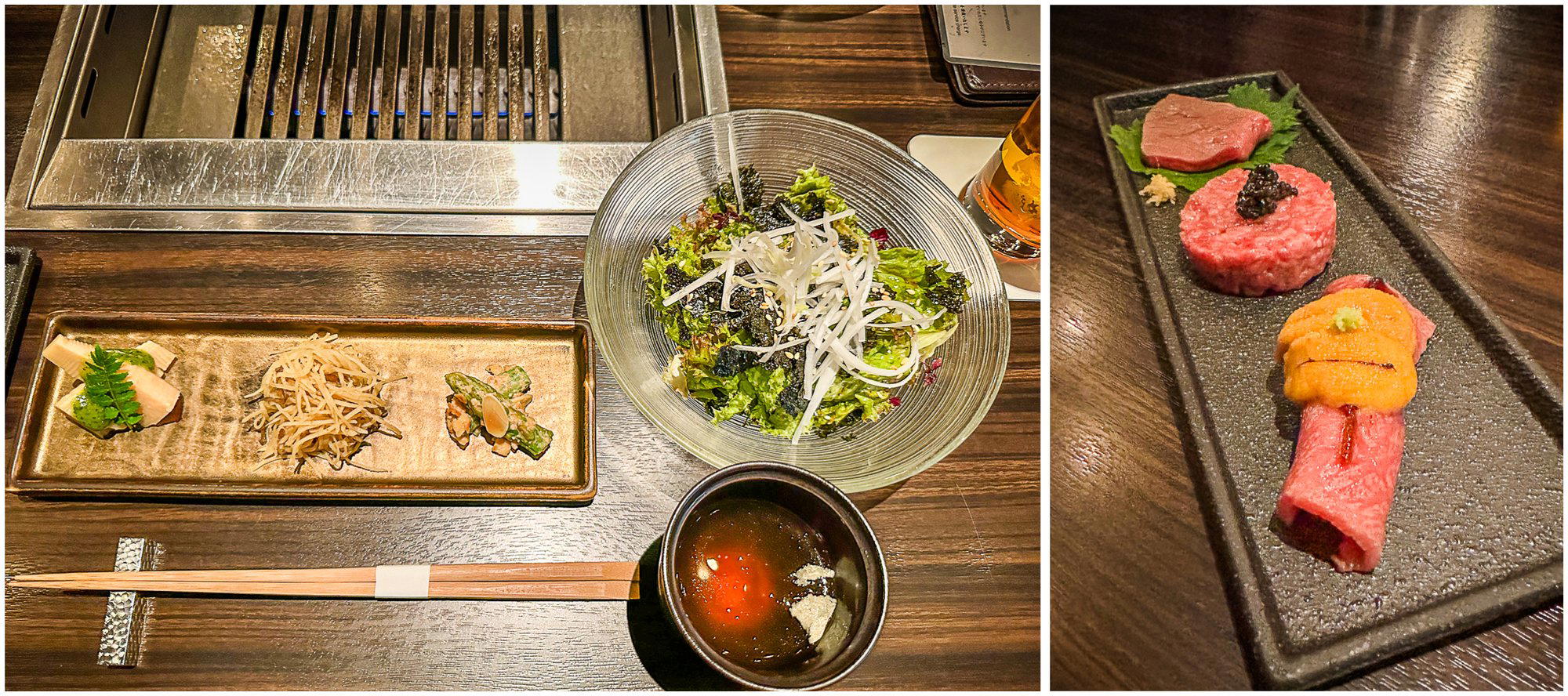
The menu
What to order
- Horumon Assorted Platter with Miso
- Ishiyaki Horumon Garlic Rice
- Assorted Wagyu Sashimi
The Ginza Yakiniku Tier: What the Address Signals
Namiki-dori in Ginza operates at a different register from the rest of Tokyo's yakiniku scene. The street and its immediate grid have absorbed enough high-end meat restaurants over the past decade that arriving at one of them now carries implicit information: you are in a competitive set defined by sourcing rigour, focused service ratios, and menus built around named cattle provenance. Ushigoro Ginza Namiki St. positioned on the seventh floor of the New Ginza 5 Building at 5-4-9 Ginza, reads its neighbourhood correctly. The Ushigoro group has built a multi-location presence across Tokyo's premium yakiniku circuit, and the Ginza Namiki address is the one calibrated for the area's concentration of expense-account and special-occasion spending.
Premium yakiniku in this district does not compete with the mid-market grilled-meat format found in Shibuya or around the major transit hubs. For context, comparable Ginza-area addresses in the ¥¥¥¥ bracket include Harutaka on the sushi side and RyuGin for kaiseki. The yakiniku format sits alongside those traditions now, not beneath them.
Menu Architecture: What Grilling in Courses Reveals
The structural logic of a serious yakiniku tasting menu differs meaningfully from an à la carte grill session. Where the latter asks guests to self-sequence, often resulting in the richest cuts arriving too early and palate fatigue setting in before the meal resolves, a curated course format imposes a progression. Lean cuts and offal preparations appear before heavily marbled loin sections. Vegetable and broth intervals reset the palate. The meal has a shape, the same way a kaiseki progression does, and that shape is the clearest signal of what distinguishes premium-tier yakiniku from the broader category.
At this level of the Tokyo yakiniku market, menus are built around specific wagyu provenance rather than a generalised grade. The distinction matters: A5 certification covers a wide range of cattle, and a restaurant competing in the Ginza upper tier typically identifies the specific ranch, prefecture, or bloodline from which its beef is sourced. The menu functions as a provenance document as much as a food list. This architecture, breed and region named, cuts sequenced deliberately, accompaniments chosen to serve the beef rather than distract from it, is the primary thing that separates this tier from accessible wagyu formats elsewhere in the city.
Japan's broader dining culture has refined the course-format yakiniku template over roughly fifteen years, with the Ginza and Azabu concentrations leading that development. The format has since travelled: Atomix in New York and Le Bernardin represent different expressions of the same underlying principle, that sequencing and editorial curation are how a restaurant signals its tier. For yakiniku specifically, the course model now functions as the de facto premium signal internationally.
Placing the Ushigoro Group in Tokyo's Yakiniku Field
The Ushigoro brand operates across multiple Tokyo locations with differentiated positioning at each address. The Ginza Namiki iteration occupies the upper end of that internal range. Multi-site yakiniku operators in Tokyo have generally followed one of two paths: broad replication of a mid-market format across many sites, or careful segmentation where each address targets a distinct spend level and occasion type. Ushigoro has taken the segmented approach, which means the Namiki St. address should not be benchmarked against the group's more accessible locations.
Within the Ginza tier, the relevant comparisons extend across categories. The French dining rooms that have defined the area, L'Effervescence and Sézanne both operate at the ¥¥¥¥ level, have raised the expectation for what a special-occasion meal in central Tokyo delivers in terms of service pacing and ingredient sourcing. Yakiniku at this address competes against that standard of experience, not just against other grill restaurants. The same pressure to justify the spend through hospitality depth and ingredient transparency applies across categories.
Beyond Tokyo, Japan's serious dining corridors show the same dynamics playing out at different scales. HAJIME in Osaka and Gion Sasaki in Kyoto illustrate how regional premium dining has developed its own gravity independent of the Tokyo circuit. For a traveller building a Japan itinerary, the meat-focused Ginza addresses sit in a national context that also includes Goh in Fukuoka and regional specialists such as 一本木 石川制 in Nanao and akordu in Nara.
The Seventh Floor and What Physical Position Means in Ginza
Upper-floor restaurant addresses in Ginza carry a specific set of trade-offs. Ground and second-floor locations maximise street-level visibility and walk-in accessibility; seventh-floor rooms sacrifice that exposure for larger footprints, the possibility of city views, and a degree of separation from the street-level foot traffic that defines the Chuo-dori and Namiki-dori ground floors. The separation functions as a mild filter: guests who arrive at the seventh floor have made a decision to be there, which affects both the atmosphere and the service dynamic.
The New Ginza 5 Building address at 5-4-9 places the restaurant in the heart of the Ginza 5-chome block, which is one of the denser concentrations of fine dining in the city. The local competition for kitchen talent, beef sourcing relationships, and front-of-house staff at this level is significant, and restaurants that sustain operations here over multiple years are doing so against meaningful pressure. Other parts of the Tokyo dining circuit worth mapping alongside a Ginza meal include the innovation-focused rooms like Crony and the broader spread of addresses covered in our full Tokyo restaurants guide.
Planning Your Visit
Premium yakiniku at the Ginza level operates in the same booking window as top-tier sushi and kaiseki: reservations should be secured well in advance, particularly for weekend evenings and public holiday periods. The Tokyo fine-dining calendar compresses sharply around Golden Week (late April to early May), the Obon period in mid-August, and the year-end season through December. Booking during these windows without advance planning significantly reduces options across all categories, not just yakiniku.
For regional context when building a broader Japan itinerary, note that comparable premium dining experiences in smaller cities, including 大地山乃幸 in Sapporo, 湖畔荘庵 in Takashima, 羽根屋 in Nishikawa Machi, Birdland in Sakai, and Bistro Ange in Toyohashi, often have more availability but require equally deliberate planning from Tokyo as a base.
| Venue | Category | Price Tier | Booking Lead Time |
|---|---|---|---|
| Ushigoro Ginza Namiki St. | Yakiniku | ¥¥¥¥ | 2-4 weeks minimum recommended |
| Harutaka | Sushi | ¥¥¥¥ | 3+ months for prime slots |
| RyuGin | Kaiseki | ¥¥¥¥ | 4-6 weeks typical |
| L'Effervescence | French | ¥¥¥¥ | 4-6 weeks typical |
| Crony | Innovative/French | ¥¥¥¥ | 2-4 weeks typical |
Frequently asked questions
Where is Ushigoro Ginza Namiki St. located?
Ushigoro Ginza Namiki St. is located at Japan, 〒104-0061 Tokyo, Chuo City, Ginza, 5 Chome−4−9 New Ginza 5 Building, 7階, Tokyo.
How does Ushigoro Ginza Namiki St. differ from other Ushigoro locations in Tokyo?
The Ushigoro group segments its addresses deliberately across Tokyo, with each location carrying a distinct positioning. The Ginza Namiki St. branch, set on the seventh floor of the New Ginza 5 Building in Chuo City, occupies the group's most prominent placement in terms of address prestige and target clientele. That positioning typically corresponds to the group's highest tier of beef sourcing and the most formal course structure across its portfolio.
What's the best thing to order at Ushigoro Ginza Namiki St.?
The course menu is the structural reason to visit this address. À la carte grilling puts the sequencing burden on the guest; a set course at a venue positioned as Ginza's premium yakiniku tier means the kitchen controls provenance, cut progression, and pacing. At the Ushigoro group's top-tier locations, that format is where the sourcing decisions become legible.
How far ahead should I plan for Ushigoro Ginza Namiki St.?
Ginza's premium dining tier runs on forward booking comparable to top-tier sushi and kaiseki counters in the city. For a seventh-floor address on Namiki-dori at this price register, two to four weeks ahead is a reasonable minimum for midweek seatings; weekends and holiday windows warrant booking earlier. Same-week availability at walk-in is unlikely.
What's the signature at Ushigoro Ginza Namiki St.?
In premium yakiniku, the concept of a signature attaches to sourcing and provenance rather than a single named dish. The Ushigoro group built its Tokyo reputation across multiple differentiated locations, and the Ginza Namiki St. address represents the brand's most prominent placement, meaning the sourcing standards here sit at the top of the group's own internal hierarchy.
A Credentials Check
Comparable venues nearby, for context on price, style, and recognition.
| Venue | Cuisine | Price | Awards | Notes |
|---|---|---|---|---|
| Ushigoro Ginza Namiki St.This venue (the venue you are viewing) | Premium Yakiniku Wagyu and Horumon | $100–150 | Tabelog 100 #89 | Not listed |
| Fukuji (ふぐ福治) | Fugu (Pufferfish) Fine Dining | $300–500 | Not listed | Ginza |
| Yakatabune Izanagi | Wagyu Omakase on Tokyo Bay Yakatabune | $500+ | Conde Nast Hot List Restaurants | Shinagawa |
| Trois Fleches | Japanese Steakhouse | $300–500 | Tabelog 100 #27 | Chiyoda |
| Kobikicho Tomoki | High-End Edomae Sushi Omakase | $300–500 | Tabelog 100 #51 | Chūō |
| Tsuruhachi | Classic Edomae Sushi | $100–150 | Tabelog 100 #12 | Minato |
Recognition history
Dated appearances from independent guides and award organizations, with the underlying list record or original source where available.
Tabelog 100 #89 · No. 89
Tabelog · Tabelog 100 - Yakiniku - TOKYO - 2025
Continue exploring
More in Tokyo
Restaurants in Tokyo
All restaurants in Tokyo →
Bars in Tokyo
All bars in Tokyo →


Details
- Elegant
- Sophisticated
- Business Dinner
- Special Occasion
- Group Dining
- Open Kitchen
- Sake Program
- A La Carte
- Set Menu
- Sake Program
Current opening hours
- Monday
- 5–10:30 PM
- Tuesday
- 5–10:30 PM
- Wednesday
- 5–10:30 PM
- Thursday
- 5–10:30 PM
- Friday
- 5–10:30 PM
- Saturday
- 11:30 AM–10:30 PM
- Sunday
- 11:30 AM–10:30 PM
Hours can change for holidays and private events. Hours as of .
Sophisticated urban grill atmosphere with focus on premium meat dining.