Google: 4.3 · 768 reviews

On Kiyamachi's canal-side stretch in central Kyoto, Tousuiro occupies a position that few restaurants in the city attempt: a classical Japanese kitchen built around vegetables, with a fully plant-based path available through the Rokuhara menu. The seasonal presentations are precise and visually coherent, though the We're Smart Green Guide — which lists the restaurant — notes that a more personal culinary voice would sharpen its case further.
 Discover on Pearl
Pearl is the En Primeur Club membership app — saves, bookings, and concierge access live there. Same editors, same standards.
Kiyamachi's Vegetable Counter in Context
Kiyamachi-dori runs along the narrow Takase Canal in Nakagyo Ward, and the restaurants that line it tend toward the conventional end of Kyoto's dining spectrum: kaiseki houses, izakayas, and the occasional French-influenced room. Against that backdrop, Tousuiro Kiyamachi takes a position that is less common than it should be in a city whose culinary identity was built, in large part, on shojin ryori — the Buddhist vegetable cuisine that shaped how Japan thinks about plant-based cooking. A kitchen that places vegetables at the centre of a multi-course format, rather than treating them as accompaniment to fish or meat, is working within a long tradition here. The execution at Tousuiro, however, is contemporary rather than monastic.
Across Kyoto's upper dining tier, the kaiseki format dominates. Counters like Gion Sasaki, Hyotei, Kikunoi Honten, and Mizai all operate within a framework where seasonal produce matters deeply, but the protein — fish, seafood, sometimes meat , typically anchors the progression. Tousuiro's decision to restructure that hierarchy is not fringe behaviour; it reflects a wider shift among fine-dining kitchens in Japan and abroad toward menus that treat vegetables as the main event rather than the supporting cast. That shift is traceable at places as different as HAJIME in Osaka, where a single restaurant-garden relationship drives the whole menu philosophy, or at akordu in Nara, where local produce anchors a European framework. In Kyoto itself, few kitchens commit as directly as Tousuiro does.
The Rokuhara Menu: Format and Flexibility
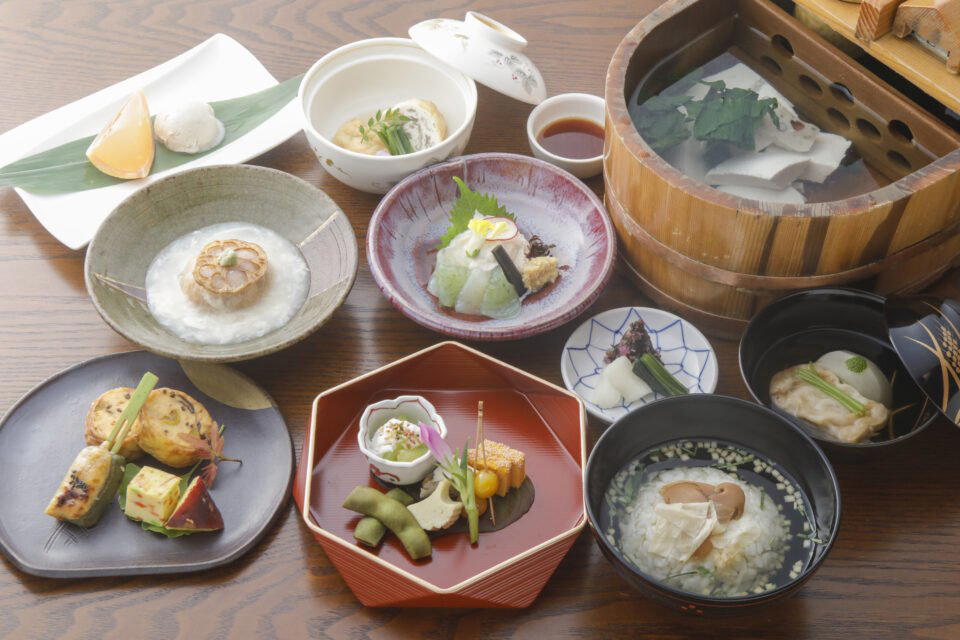
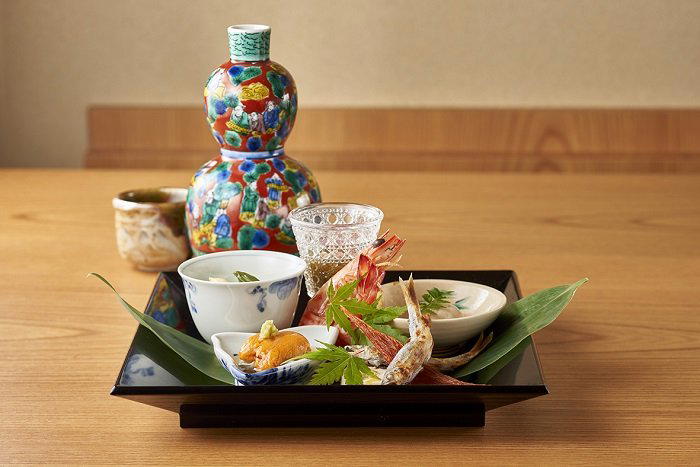
The defining structural feature of the dining experience here is the Rokuhara menu, which allows guests to choose a 100% plant-based path if they wish. In markets where plant-based fine dining is still treated as a concession or a modification, that kind of built-in optionality signals genuine intent rather than reluctant accommodation. The menu draws on seasonal ingredients rendered through preparations that are immediately readable , the visual language is classical Japanese, organized around the colours and textures of whichever season is underway. Autumn brings root vegetables in deeper tones; spring menus would logically lean toward shoots, blossoms, and the pale greens that define the Kyoto kitchen calendar.
The We're Smart Green Guide , a specialist resource for vegetable-forward and plant-based restaurants , lists Tousuiro Kiyamachi, which places it within a curated international set of kitchens recognized specifically for their approach to vegetables rather than their broader prestige. The Guide's assessment notes that the presentations are recognizable and seasonally coherent, while also observing that a more personal culinary touch is absent. That is a considered criticism worth taking seriously: in a city where culinary identity is often inseparable from the specific sensibility of a head chef or a founding family, a kitchen that reads as technically correct but impersonal occupies an interesting middle ground. It is capable enough to satisfy, and accomplished enough to warrant the listing, but it has not yet developed the voice that would place it in the conversation alongside, say, Isshisoden Nakamura or the other Kyoto rooms where decades of accumulated identity are visible in every course.
Lunch vs. Dinner: How the Rhythm Changes
In Kyoto's multi-course restaurant culture, the lunch and dinner services often behave as distinct propositions. Dinner is typically the fuller commitment: longer menus, higher price points, and a formality that suits the kaiseki tradition's roots in the tea ceremony. Lunch , even at serious kitchens , tends to offer a compressed format that allows access to the kitchen's core vocabulary at lower cost and shorter duration. This pattern holds broadly across the city and is particularly worth considering at a restaurant like Tousuiro, where the menu's vegetable-centred architecture already distances it from the conventional kaiseki pacing.
A lunch visit at Tousuiro allows the seasonal vegetable preparations to land without the extended ceremonial weight that dinner service carries in comparable rooms. The canal-side setting on Kiyamachi gains something specific at midday: the light quality along the Takase Canal, with its low stone banks and overhanging trees, reads differently at noon than it does under evening lanterns. For guests whose Kyoto itinerary includes heavier evening commitments at high-end kaiseki counters, lunch at Tousuiro functions as a different register entirely , lighter in format, cleaner in focus, and proportionally easier to book. For the full immersion into what the kitchen is attempting with the Rokuhara menu, dinner remains the more complete experience.
Visitors travelling beyond Kyoto who are drawn to vegetable-focused fine dining will find points of comparison at Goh in Fukuoka, Bleston Court Yukawatan in Nagano, and giueme in Akita, each of which uses regional produce as a primary structural argument. Further afield, the commitment to vegetables as a fine-dining subject has international precedents , from Le Bernardin in New York City, where seafood serves as the organising principle in a comparable way, to Emeril's in New Orleans, where regional produce identity shapes the menu's character. And for Tokyo visitors considering similar territory, Harutaka in Tokyo shows how a focused kitchen can achieve strong identity within a narrow set of ingredients.
Planning a Visit
Tousuiro Kiyamachi sits at 517-3 Kamiosakacho in Nakagyo Ward , a central location that places it within easy reach of both the Kawaramachi and Sanjo transport hubs, making it accessible without requiring advance logistical planning beyond the reservation itself. The restaurant's address puts it in the quieter residential and dining pocket between Shijo and Sanjo along Kiyamachi-dori, away from the denser tourist movement around Gion. For broader orientation across Kyoto's dining, drinking, and accommodation options, see our full Kyoto restaurants guide, our full Kyoto hotels guide, our full Kyoto bars guide, our full Kyoto wineries guide, and our full Kyoto experiences guide.
The Minimal Set
Comparable venues for orientation, based on our database fields.
| Venue | Notes | Price |
|---|---|---|
| Tousuiro Kiyamachi | This venue | |
| Gion Sasaki | Kaiseki, Japanese, ¥¥¥¥ | ¥¥¥¥ |
| cenci | Italian, ¥¥¥ | ¥¥¥ |
| Ifuki | Kaiseki, ¥¥¥¥ | ¥¥¥¥ |
| Kyokaiseki Kichisen | Japanese, ¥¥¥¥ | ¥¥¥¥ |
| SEN | French, Japanese, ¥¥¥¥ | ¥¥¥¥ |
Continue exploring
More in Kyoto
Restaurants in Kyoto
Browse all →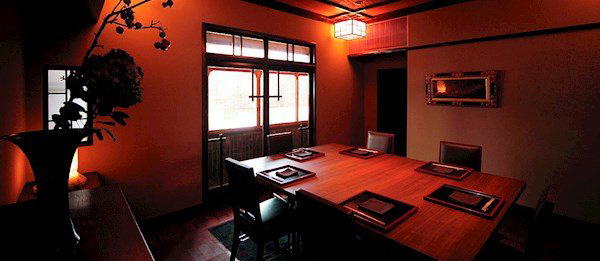
Bars in Kyoto
Browse all →

Hotels in Kyoto
Browse all →


Wineries in Kyoto
Browse all →
At a Glance
- Quiet
- Elegant
- Classic
- Intimate
- Scenic
- Date Night
- Special Occasion
- Waterfront
- Terrace
- Historic Building
- Sake Program
- Local Sourcing
- Waterfront
- Street Scene
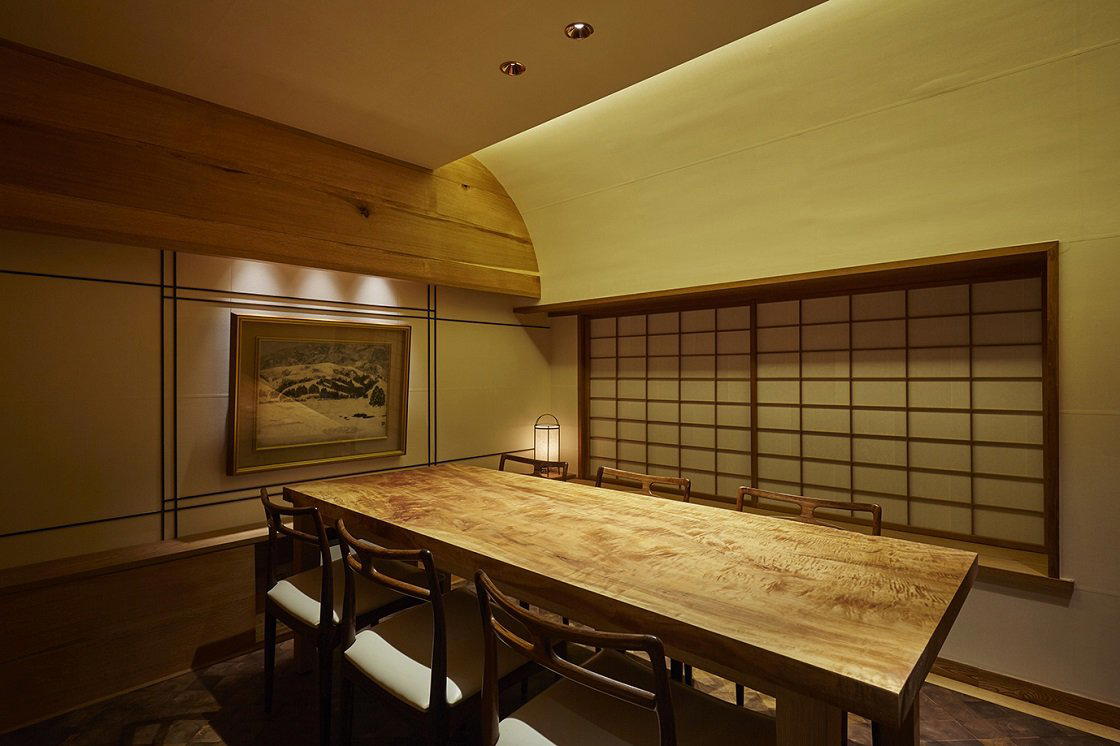
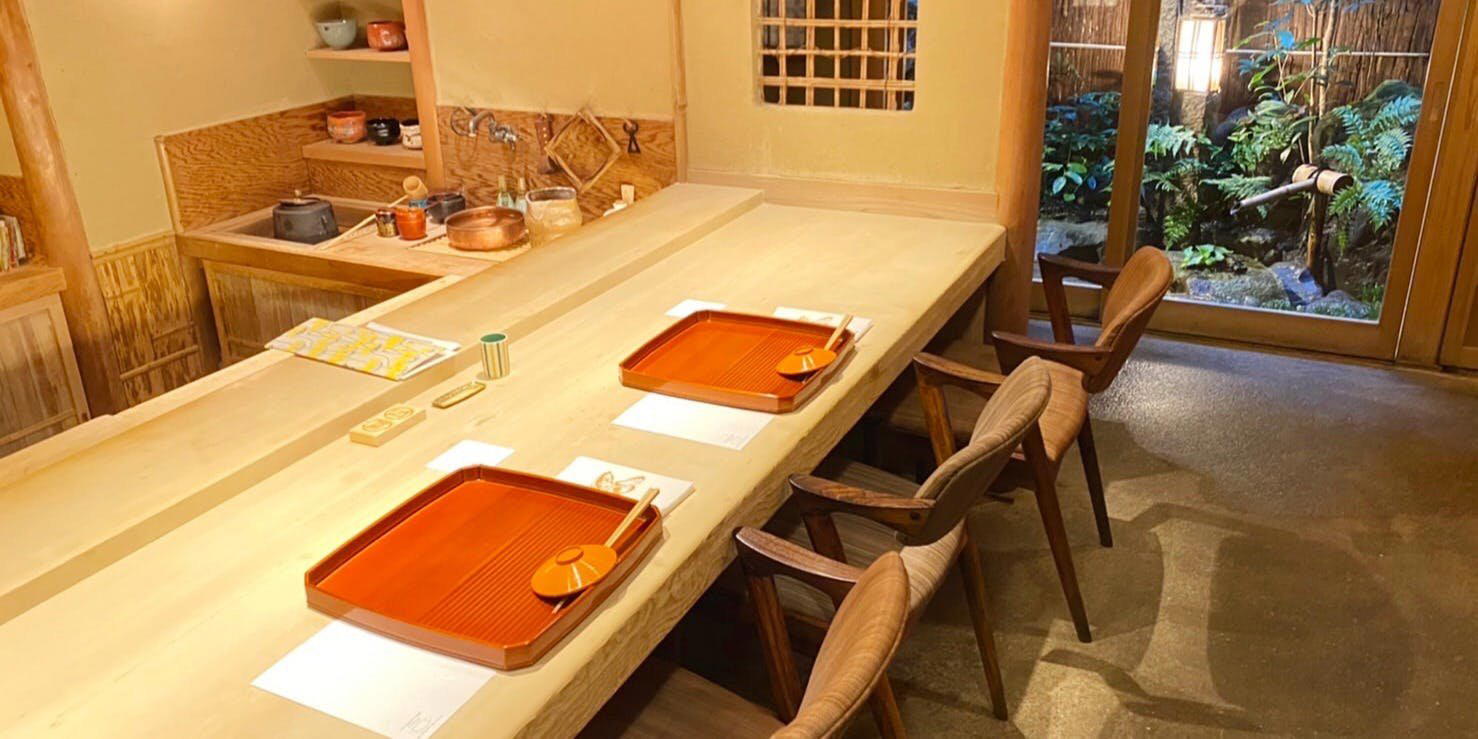
Traditional tatami mats, peaceful riverside terrace with cool breezes, and classically Kyoto atmosphere with artful presentation.