Our verdict
Toranoana Ebisu Ten occupies a ground-floor address in Ebisu, one of Tokyo's quieter residential-commercial pockets south of Shibuya. The venue sits in a neighbourhood that has gradually accumulated a serious dining roster alongside its established café culture, positioning it within a tier of Tokyo restaurants where local reputation carries more weight than tourist footfall. Practical details remain sparse, making an advance inquiry essential before visiting.

Pearl is the En Primeur Club membership app — saves, bookings, and concierge access live there. Same editors, same standards.
- Address
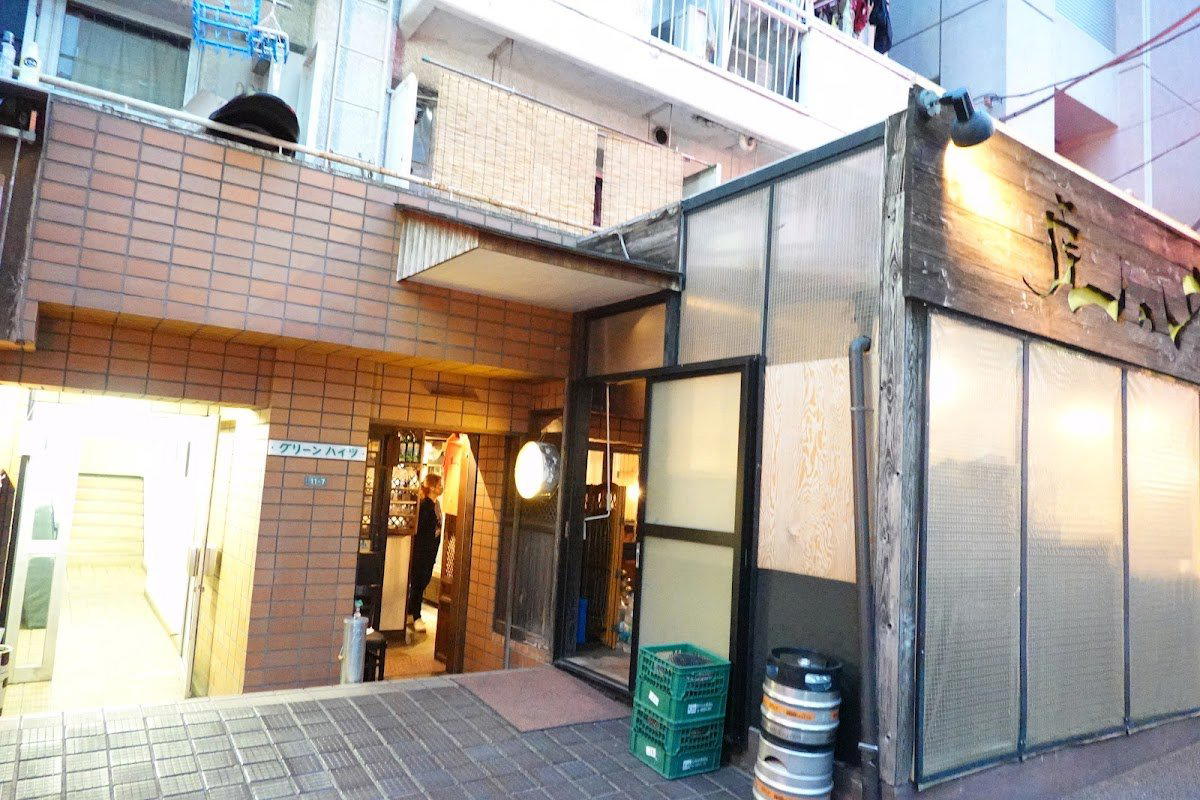
- Japan, 〒150-0013 Tokyo, Shibuya, Ebisu, 2 Chome−11−7 グリーンハイツ 101
- Phone
- +81 3 3440 0029
- Hours
- Daily 5–11 PM
- Directions
- Get directions
- Booking
- Book on TableCheck
The menu
What to order
- Harami
- Thick-cut tongue
- Tsurami skewers
Ebisu and the Quiet Side of Tokyo's Dining Map
Tokyo's dining geography tends to get flattened by the familiar shorthand: Ginza for sushi, Roppongi for French, Shinjuku for late-night everything. Ebisu sits outside that easy categorisation. The neighbourhood occupies a band of Shibuya Ward that runs south from the department-store density of Daikanyama, softer in pace, residential in texture, and home to a dining scene that has grown steadily without the self-promotional noise that surrounds the city's more publicised addresses. Toranoana Ebisu Ten is located at 2 Chome-11-7 Green Heights, a ground-floor position in a low-rise residential building on a street that reads as distinctly neighbourhood rather than destination. That address context is not incidental. It places the venue inside a category of Tokyo restaurant that earns its audience through repetition and word of mouth rather than through award-cycle visibility.
For context on how Tokyo's broader restaurant tier operates, see our full Tokyo restaurants guide, which maps the city's dining by neighbourhood, price tier, and format.
What the Address Signals About Format
In Tokyo, a ground-floor unit inside a residential building in Ebisu carries specific implications about scale and operating model. The city's most reservation-pressured counters, from the sushi counter at Harutaka in Ginza to the kaiseki rooms at RyuGin in Roppongi, tend to operate in purpose-built or high-specification commercial spaces. Addresses like Toranoana Ebisu Ten's Green Heights unit tend to belong to a different operational logic: smaller seat counts, lower overhead, and a relationship with guests that prioritises depth over volume. That structural choice, where it applies, usually means the kitchen has latitude to work at a more deliberate pace and that the experience is shaped around a specific audience rather than maximised for throughput.
What the address and neighbourhood context support is a reading of where the venue sits in Tokyo's layered dining topology, and what that position typically implies for the visiting diner.
The Progression Logic of Tokyo's Smaller Rooms
Tokyo's smaller neighbourhood restaurants have developed a particular relationship with meal structure that larger, more tourist-facing venues rarely replicate. Where a destination restaurant in Ginza or Marunouchi might organise its menu around legibility for an international clientele, a neighbourhood address in Ebisu operates on a different social contract. The diner is expected to arrive curious, unhurried, and willing to follow the kitchen's sequencing rather than customise against it. This is the city-wide context into which Toranoana Ebisu Ten's address places it.
That progression logic, where it holds, typically means courses arrive in an order governed by the kitchen's reading of texture, temperature, and flavour arc rather than by conventional Western starter-main-dessert scaffolding. Japanese neighbourhood restaurants of this type tend to begin with something restrained, often cold and precisely cut, before moving through warming and umami-forward stages toward a rice or noodle course that functions as a structural resolution. The meal ends lighter than it peaks, which is the inverse of French service logic and part of what makes Tokyo's smaller rooms feel disciplined rather than in construction. For comparison, the kaiseki sequencing at Gion Sasaki in Kyoto represents one formal codification of this arc; neighbourhood rooms in Tokyo tend to apply the same underlying grammar more loosely.
Ebisu in the Context of Tokyo's Mid-Tier Dining Belt
The stretch of Tokyo between Shibuya and Meguro, which includes Ebisu, Daikanyama, and Nakameguro, has accumulated one of the city's more coherent mid-to-upper dining belts over the past decade. It is a zone where French-influenced creativity, as seen at addresses like L'Effervescence and Crony, coexists with neighbourhood Japanese formats that draw a largely local clientele. The area lacks the symbolic density of Ginza but compensates with a certain operational seriousness: kitchens here are cooking for regulars who return often enough to notice when standards slip.
That competitive context matters for how a diner should calibrate expectations. A venue in this belt is not competing for the attention of the traveller doing a four-night sweep of Michelin-flagged addresses. It is competing for the loyalty of the Ebisu resident who has twelve other serious options within a fifteen-minute walk. That distinction tends to produce kitchens that are technically steady and personally engaged in a way that destination restaurants, rotating through a global clientele, can struggle to sustain.
Japan's regional dining network extends this logic further afield. The same neighbourhood-first rigour that defines Ebisu's dining culture appears at addresses like Goh in Fukuoka, akordu in Nara, and HAJIME in Osaka, each operating inside a local ecosystem where reputation is built through sustained consistency rather than a single media moment. Further along Japan's geography, affetto akita in Akita, aki nagao in Sapporo, Abon in Ashiya, Aji Arai in Oita, Ajidocoro in Yubari District, and Akakichi in Imabari each reflect the same pattern at different scales and in different culinary registers.
For international reference points on how tasting-progression formats work outside Japan, Le Bernardin in New York City and Lazy Bear in San Francisco represent how the structured multi-course model operates under different cultural assumptions, where the arc of the meal is similarly deliberate but anchored in Western sequencing conventions.
Planning a Visit
Given the neighbourhood context and the operational scale implied by a residential-building address in Ebisu, capacity is likely limited, and walk-in availability on preferred evenings cannot be assumed. Arriving with a reservation inquiry rather than an expectation of same-day seating is the appropriate posture for any serious neighbourhood room in this part of Tokyo.
Ebisu Station on the JR Yamanote Line and the Tokyo Metro Hibiya Line is the practical arrival point, placing the address within a short walk east of the station's main exit. The neighbourhood is walkable and well-served by transit, which removes the logistical friction that sometimes surrounds more remote Tokyo dining destinations. For the broader context of how Toranoana Ebisu Ten fits within Tokyo's dining tier, and how it compares to Sézanne and other addresses operating at different price and format points across the city, the EP Club Tokyo guide provides a fuller map.
Frequently asked questions
What's Toranoana Ebisu Ten's location?
Toranoana Ebisu Ten is located at Japan, 〒150-0013 Tokyo, Shibuya, Ebisu, 2 Chome−11−7 グリーンハイツ 101, Tokyo.
What kind of dining experience does Toranoana Ebisu Ten offer compared to other Ebisu restaurants?
Toranoana Ebisu Ten occupies a ground-floor unit inside a residential building in Ebisu, a format common among Tokyo's neighbourhood-focused rooms that prioritise repeat local custom over tourist footfall. Ebisu sits within the Shibuya-to-Meguro corridor alongside Daikanyama and Nakameguro, an area that has developed a coherent mid-tier dining identity distinct from Ginza or Roppongi. That address context suggests a smaller, quieter operation rather than a high-volume or showcase venue.
What's the signature dish at Toranoana Ebisu Ten?
In Tokyo's smaller residential-format venues, menus frequently rotate with season and availability, meaning a single signature dish rarely defines the offering. The most reliable way to understand what the kitchen is currently focusing on is to check the venue's official channels once booking details are confirmed.
Should I book Toranoana Ebisu Ten in advance?
Ground-floor units inside Ebisu's residential buildings almost always mean compact seating, and in Tokyo that format correlates strongly with limited covers and advance reservation requirements. Checking via Tabelog, Google Maps, or a concierge familiar with Tokyo's Ebisu dining circuit is the most direct path to securing a table.
The Essentials
Comparable venues nearby, for context on price, style, and recognition.
| Venue | Cuisine | Price | Awards | Notes |
|---|---|---|---|---|
| Toranoana Ebisu TenThis venue — the venue you are viewing | Yakiniku Horumon | $50–100 | Not listed | Not listed |
| 鳥かど | Yakitori Omakase | $50–100 | Not listed | Shinagawa, Yakitori Omakase |
| 乃木坂 しん | Modern Kaiseki with Wine Pairings | $200–300 | 1 Michelin Star · Star Wine List | Minato, Modern Kaiseki |
| o/sio | Yoshoku-Italian Fusion | $50–100 | Not listed | Chiyoda, Yoshoku-Italian Fusion |
| Ningyocho Imahan Nihombashi Takashimaya S.C. Restaurant | Traditional Japanese Wagyu Sukiyaki & Shabu-Shabu | $50–100 | Not listed | Chūō, Traditional Japanese Wagyu Sukiyaki & Shabu-Shabu |
| Yakiniku Toka | Modern nostalgic Wagyu yakiniku | $50–100 | Tabelog 100 #4 | Chūō, Modern nostalgic Wagyu yakiniku |