In Kamata, one of Tokyo's least-heralded working neighbourhoods, Tonkatsu Maruichi has served the fried pork cutlet tradition with the kind of consistency that builds multi-decade neighbourhood loyalty. The restaurant sits outside the usual circuits of food tourism, making it a useful reference point for understanding how tonkatsu culture functions at the local, non-destination level in Tokyo.
Pearl is the En Primeur Club membership app — saves, bookings, and concierge access live there. Same editors, same standards.
- Address
- 蒲田5-28-12, 大田区, 東京都, 144-0052
 Saves & bookings on Pearl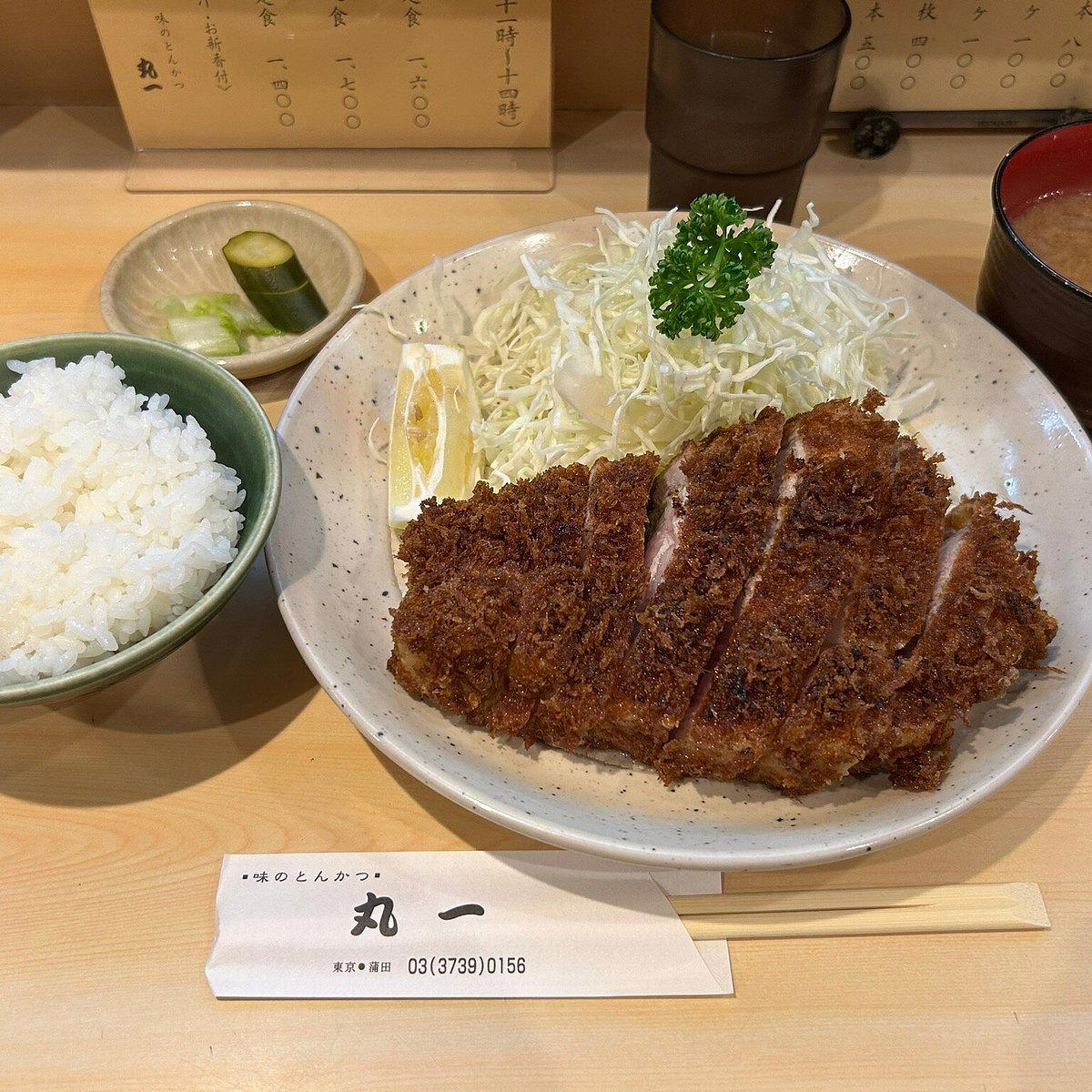
Where Tokyo Eats When Nobody Is Watching
The approach to Kamata from Keikyu Kamata or JR Kamata station runs through a neighbourhood that food tourism has largely passed over. There are no tasting-menu corridors here, no clusters of venues angling for international press. What Kamata has instead is the kind of accumulated, workaday dining culture that sustains a city of Tokyo's scale: places where the same families have been eating for decades, where lunch queues form not because of a publicist but because the food is reliable and the value is real. Tonkatsu Maruichi sits at 蒲田5-28-12 in Ota Ward, Tokyo, and is a casual Tonkatsu Specialist with a walk-in-friendly policy and an average spend of about $15 per person.
Tonkatsu itself is a category worth understanding on its own terms before arriving anywhere that serves it. The dish, a breaded, deep-fried pork cutlet, most commonly either hire (tenderloin) or rosu (loin), has a compressed but serious history in Japan, arriving in the late Meiji era through Western yoshoku influence and gradually developing its own codified standards. Panko breadcrumbs, specific frying temperatures, precise oil management, and the quality of the pork breed now define the upper tier of the category in much the same way that rice sourcing and aging define premium sushi counters. At the neighbourhood level, the standard is less about premium Berkshire pork and more about execution consistency: the crust-to-meat ratio, the absence of greasiness, the timing of the fry.
A Neighbourhood Institution and What That Means
The evolution of a neighbourhood tonkatsu-ya follows a recognisable pattern across Tokyo. In the first generation, a shop opens to serve the immediate local population, pricing modestly and building a regular clientele. In later years, the question becomes whether the kitchen adapts to shifting ingredient costs and pork breed premiumisation, or holds its original positioning. Tonkatsu Maruichi's address in Kamata 5-chome places it in a part of Ota Ward that has not undergone the gentrification pressure seen in areas closer to Daikanyama or Yanaka, which means the competitive and pricing environment has remained relatively stable. Neighbourhood tonkatsu shops in these areas tend to operate within tight parameters: set-meal formats with rice, miso soup, and shredded cabbage, with the pork cutlet as the fixed centre of the proposition.
That format, largely unchanged across decades at restaurants of this type, is itself a study in Japanese dining conservatism. Unlike the restless reinvention cycles visible at Crony or the seasonal recalibration at L'Effervescence, the neighbourhood tonkatsu format treats consistency as the primary virtue. The menu does not change to reflect the chef's current interests. The room does not get redesigned to match a new aesthetic moment. The measure of quality is whether the dish arriving at the table today is identical in execution to the one that built the restaurant's reputation fifteen years ago.
The Tonkatsu Category in Context
Tokyo's tonkatsu spectrum now runs from destination-level operations, where premium Kagoshima kurobuta or Iberian pork at ¥3,000 to ¥5,000 per set has become standard, down to the neighbourhood shops where the set meal price sits well below that threshold and the pork is commercial rather than heritage breed. This price and ingredient stratification mirrors what has happened in ramen, tempura, and soba: a bifurcation between a premium tier targeting food-focused visitors and a neighbourhood tier serving its surrounding community. Maruichi in Kamata operates in the second register, which is not a deficit. It is a different set of values, and for many Tokyo residents, the more important one.
For comparison, the high-end tonkatsu houses now operate with the same brand logic as omakase sushi counters: limited seating, advance booking, premium sourcing narratives. That model, while producing genuinely excellent food, is structurally different from what a long-standing neighbourhood shop represents. Restaurants like Harutaka or RyuGin operate in a formal, reservation-led tier where the meal is an event. A place like Maruichi is where people eat on a Tuesday.
Kamata's Position in the Broader Tokyo Food Map
Ota Ward, and Kamata within it, is worth understanding as a food district on its own terms. The ward is one of Tokyo's most populous, with a strong manufacturing and small-business heritage that has historically supported dense, practical dining culture. The concentration of teishoku-ya, ramen shops, izakaya, and specialist single-dish restaurants in Kamata is high relative to its profile in food media, which tends to focus on Shinjuku, Shibuya, Ginza, and the areas that index more heavily toward tourism and expense-account dining.
This dynamic is not specific to Tokyo. Cities like Osaka, where venues such as HAJIME represent the formal fine-dining pole, contain entire ward-level ecosystems of affordable specialist cooking that rarely cross into international food press. The same is true in Fukuoka, where Goh draws destination traffic while dozens of neighbourhood operations sustain the city's daily food life. Kamata occupies that latter role within Tokyo's internal geography.
The Evolution Angle: Staying Still as a Strategic Choice
The editorial angle of evolution is complicated at a venue where the dominant story may be deliberate continuity. Not every restaurant's evolution is a pivot or reinvention. For long-standing neighbourhood shops in Japan, the decision not to change, not to premiumise the pork, not to extend hours for the late-night bar crowd, not to introduce a social media-friendly visual dish, is itself a form of active positioning. The tonkatsu shops that have survived multiple decades in Tokyo's residential wards have done so by resisting the pressure to become something else.
That resistance has its own logic in a city where dining trends cycle quickly. While Sézanne recalibrates its French-Japanese synthesis seasonally and destination restaurants in Kyoto like Gion Sasaki or Nara's akordu respond to shifting kaiseki expectations, the neighbourhood tonkatsu shop's refusal to trend-chase is what makes it structurally legible to its regulars. The menu is the menu. The price is the price. The room is the room.
Planning Your Visit
Tonkatsu Maruichi is located at 蒲田5-28-12 in Ota Ward (postal code 144-0052), within walking distance of Kamata station, which is served by both JR Keihin-Tohoku Line and Keikyu Line trains. For visitors arriving from central Tokyo, Kamata is approximately 20 minutes from Shinagawa by local train. Walk-in service is the operating model, consistent with the neighbourhood teishoku format across this category. Visiting during off-peak lunch hours (before noon or after 1:30pm) is one reliable approach to avoiding a queue. The setting is casual by design.
For visitors building a broader Tokyo itinerary around dining, EP Club's coverage extends across the full spectrum of the city's restaurant scene. The full Tokyo restaurants guide maps venues from Kamata-level neighbourhood institutions to destination counters. Additional regional context is available through coverage of Bistro Ange in Toyohashi, Birdland in Sakai, and further afield at Le Bernardin in New York City or Atomix for cross-referencing Japan's influence on international fine dining.
Quick reference: Tonkatsu Maruichi, 蒲田5-28-12, Ota Ward, Tokyo 144-0052. Walk-in friendly. Nearest station: Kamata (JR/Keikyu).
Style and Standing
Comparable venues nearby, for context on price, style, and recognition.
| Venue | Cuisine | Price | Notes |
|---|---|---|---|
| Tonkatsu Maruichi (とんかつ丸一)This venue — the venue you are viewing | Tonkatsu Specialist | $$ | Not listed |
| cuud Terminal 1 | Modern curry udon noodle bar | $$ | Ōta |
| Yakiniku Akira Hongou honten | Japanese Yakiniku (BBQ Beef) | $$ | Bunkyō |
| Hinadori Sonoda | Japanese chicken izakaya specializing in deep-fried young chicken | $$ | Shinagawa |
| Takeno | Traditional Tsukiji seafood shokudo / izakaya | $$ | Chūō |
| Tsukiji Nagaya 6-7-7 | Fugu-focused Japanese Tachinomi | $$ | Chūō |






At a Glance
- Classic
- Lunch
- Sake Program
Casual counter-service spot with a bustling queue atmosphere focused on quick, high-quality lunches.