
Tokyo yakiniku is shifting toward tighter, more accountable beef cooking, where cut selection and grill discipline matter as much as luxury. Yakiniku Akira Hongou honten fits that conversation through Kuroge Wagyu, tripe and beef dishes, with Tabelog 100 Yakiniku Tokyo recognition in 2025 anchoring its place in the city’s serious grill circuit.
Pearl is the En Primeur Club membership app — saves, bookings, and concierge access live there. Same editors, same standards.
- Address
- Japan, 〒113-0033 Tokyo, Bunkyo City, Hongo, 1 Chome−10−12 カルム本郷 2F
- Phone
- +81 50-3066-8929
- Website
- skco.co.jp
 Saves & bookings on Pearl
The approach to a Tokyo yakiniku room is rarely theatrical. The point is the table: ventilation-managed smoke, tongs within reach, and short bursts of heat rather than a long kitchen procession. In Hongo, that format has charge. This is not Ginza’s polished beef-counter culture or Shinjuku’s late-night grill rooms; it is a university-and-stadium district where dining must be serious enough for beef obsessives and easy enough for social groups.
Yakiniku Akira Hongou honten belongs to the contemporary Tokyo category that treats beef less as excess than controlled allocation. The signal is range: yakiniku, tripe and beef dishes sit together, important in a city where grilled-meat culture rewards diners who read texture, fat and offal as one vocabulary. A menu with tripe is not automatically a sustainability manifesto, but it points to a less wasteful way of eating beef than ordering only headline cuts.
Tokyo yakiniku is becoming a lesson in restraint, not volume
Yakiniku can look simple to outsiders: raw beef, hot grill, sauce. In Tokyo, the better version is sequencing. Leaner cuts, fattier pieces and offal behave differently over heat, and the diner partly determines the result. That shared responsibility checks waste: pieces are cooked as needed, not sent out finished in large portions, and the table paces itself by appetite rather than ceremony.
That is where Yakiniku Akira Hongou honten’s category mix becomes editorially interesting. Kuroge Wagyu is the luxury anchor, but tripe and other beef dishes move the meal beyond marbling. Tokyo beef culture has always had a practical streak beneath the glamour: horumon shops, sukiyaki rooms and yakiniku counters made different parts of the animal desirable. The modern premium version often narrows that story to brand beef and fat grade. A grill room that keeps offal visible reminds diners that beef culture is stronger when it values the animal beyond prized slices.
The 2025 Tabelog 100 Yakiniku Tokyo selection gives the restaurant a public benchmark in one of Japan’s most competitive dining categories. Tabelog scores are not Michelin stars, nor the same judgement. They reflect a domestic audience fluent in small differences between grill rooms. In Tokyo yakiniku, diners compare ventilation, cut handling, tare balance, rice quality, drink pairing and value with the seriousness sushi diners apply to shari temperature and fish aging.
Against Tokyo comparison points, pricing and format place the restaurant in a more accessible beef tier than high-ceremony specialist counters. Soba Kiri Morino operates in a higher evening spend band, while Menya Suzuharu sits in an everyday ramen bracket; yakiniku in this middle space has a different job. It needs enough precision to justify planning, without turning dinner into a hushed tasting-menu exercise. That middle position is often where Tokyo dining is strongest.
Hongo gives the grill room a different rhythm from central Tokyo luxury
Neighbourhood context changes how yakiniku reads. Hongo and Suidobashi sit between academic Tokyo, office traffic and Tokyo Dome crowds, so restaurants serve mixed-purpose evenings: post-work groups, families, date-night pairs and destination diners crossing town for a category. That mix suits yakiniku because the format is communal without being lazy-casual. The grill makes the table active, while serious sourcing and cut selection keep the meal composed.
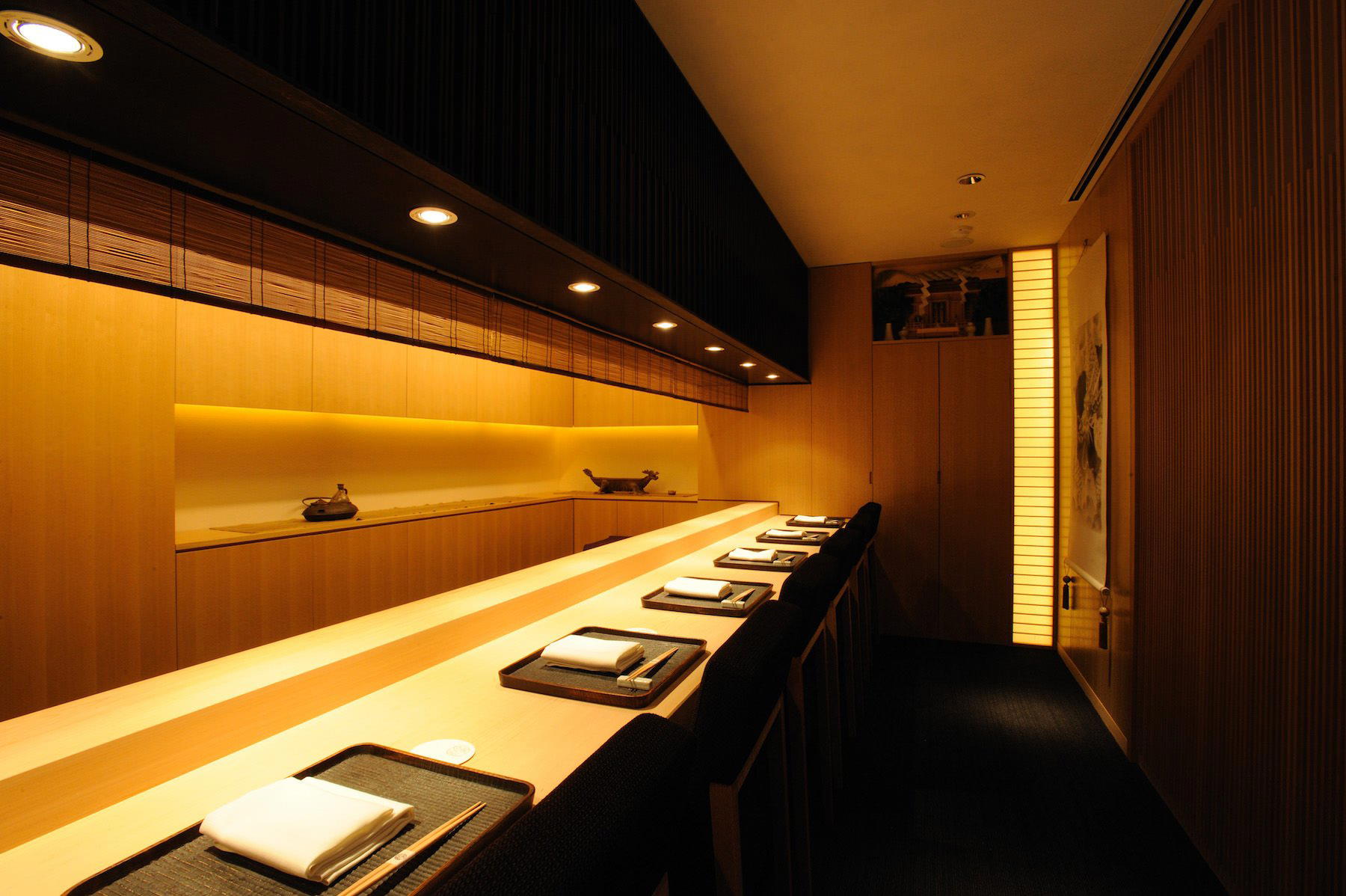
The room reinforces that social function. It is table-led rather than counter-led, and private rooms are not part of the format. For some diners, that is a limitation; for yakiniku, it can be an advantage. The genre depends on heat, timing and exchange across the table. A polished private-room version can feel detached from watching pieces cook and negotiating the next round. Here, read it as a shared beef meal with enough recognition to draw specialists, not a sealed-off luxury appointment.
The sustainability angle in beef dining needs precision. No serious critic should pretend premium wagyu is low-impact. The honest question is whether a restaurant encourages a fuller, less careless relationship with meat. Yakiniku does that when portioning, offal and pacing become part of the pleasure. Tripe and beef dishes expand the frame; self-grilling makes diners confront timing and doneness; a table format discourages passive consumption of an overlong menu. Environmental virtue is not the claim. Better meat literacy is.
Drinks matter too. Sake, shochu, wine and cocktails are all listed, placing the meal closer to a flexible Tokyo grill night than a narrow wagyu shrine. Sake and shochu work with fat and char because they reset the palate without heavy wine-service formality. Wine broadens the table for richer pairings, but the Japanese spirits signal that the restaurant’s natural grammar remains local.
How to read it in the wider Tokyo dining map
Tokyo rewards category focus. A diner wanting breadth can cross-reference grill rooms with yakitori, curry, seafood and sake-led formats across the city, from 124. KAGURAZAKA (Yakitori) to 3 Chome no Curry Ya San and . 鮪と炭火焼き うお炭 秋葉原店. Tokyo is not one dining scene but a grid of specialist traditions, each with its own measures of seriousness. Yakiniku should be judged by cut range, grill control, ventilation, rice, sauces and how well the meal holds after the first rush of fat.
For a broader eating plan, Our full Tokyo restaurants guide gives the wider map, while nearby category detours might include 12/10 Shinjuku ten, 2D Cafe, canade, hide mode, Katsuzen or Menya Suzuharu depending on appetite. The useful comparison is not which venue is grander, but what Tokyo meal is required: grill-led beef, soba precision, tonkatsu formality, ramen speed or visual café culture.
For travellers building a fuller itinerary, dining sits alongside the city’s hotel, bar and cultural circuits. Our full Tokyo hotels guide, Our full Tokyo bars guide, Our full Tokyo wineries guide and Our full Tokyo experiences guide help separate restaurant planning from the rest of the trip. Beyond Tokyo, beef-focused readers may look to -Grilled beef Sukiyaki- KAMAKURA TANUKIAN 鎌倉 たぬき庵 in Kamakura, while the national spread of casual and specialist formats runs from.cafe in Osaka and.know in Kumamoto to (Shoku) Vietnam in Kawasaki, [Curry Senmon Ten] Maruyama Kyoju. in Sapporo and [ki:] in Kyoto. Overseas Japanese drinking and rice culture have reference points including Jōdo Saké Bar in Los Angeles and Onigiri Time in Pasadena.
The critical case for Yakiniku Akira Hongou honten is not reinvention. It sits in a Tokyo grill tradition where recognition, offal, wagyu and table control converge. For diners who care about beef but dislike wasteful luxury theatre, that combination is more persuasive than another room built only around status cuts.
Peers Worth Knowing
Comparable venues side-by-side for orientation.
| Venue | Cuisine | Price | Notes |
|---|---|---|---|
| Yakiniku Akira Hongou hontenThis venue — the venue you are viewing | Japanese Yakiniku (BBQ Beef) | $$ | Not listed |
| Tenfusa (天房) | Tempura & Tendon | $$ | Toyosu |
| Okonomiyaki Kiji Marunouchi ten | Osaka-style okonomiyaki | $$ | Chiyoda |
| Iriya Kishimojin Monzen no Daya | Japanese Unagi | $$ | Taitō |
| 銀座寿司幸本店 | Traditional Japanese Sushi Omakase | Not listed | Chūō |
| 銀座 上瀧 | japanese | Not listed | Chūō |
Recognition history
Dated appearances from independent guides and award organizations, with the underlying list record or original source where available.
Tabelog 100 #10 · No. 10
Tabelog · Tabelog 100 - Yakiniku - TOKYO - 2025





At a Glance
- Modern
- Cozy
- Sophisticated
- Group Dining
- Casual Hangout
- Business Dinner
- Standalone
- Beer Program
- Local Sourcing
- Street Scene
Current opening hours
- Monday
- Closed
- Tuesday
- 5–11 PM
- Wednesday
- 5–11 PM
- Thursday
- 5–11 PM
- Friday
- 5–11 PM
- Saturday
- 11:30 AM–3 PM, 5–11 PM
- Sunday
- 11:30 AM–3 PM, 5–10 PM
Hours can change for holidays and private events. Last verified .
An open, airy dining room overlooking street trees, with a non-smoking, contemporary feel centered on premium grilled meat.