


Michelin Plate · Tabelog 100 #27
Our verdict
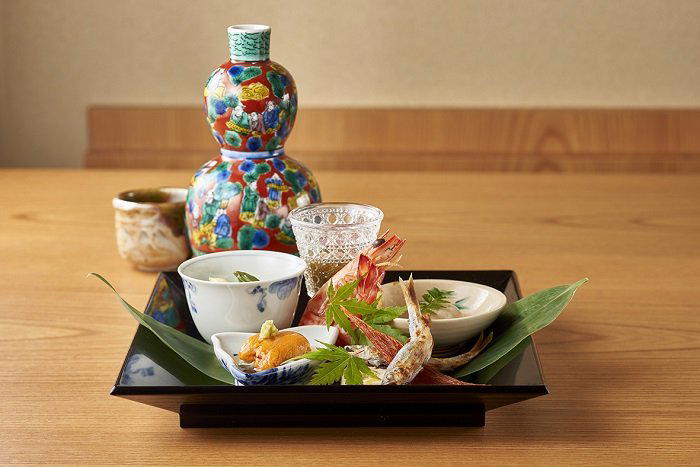
In Taito City's working-class Asakusa district, Tempura Shimomura holds a Michelin Plate and consecutive Opinionated About Dining recognition for a menu rooted in Edo tradition. The kitchen fries fish and vegetables in strict alternation, with shrimp, sillago, and conger eel as the consistent anchors. At lunch, tendon of vegetable tempura and kakiage remain on offer at a time when most tempura houses have moved away from the format.

Pearl is the En Primeur Club membership app, where members save venues, book tables and use the concierge.
The menu
What to order
- Satsumaimo Tempura
- Anago Tempura Rice Bowl
The Ingredient Logic Behind Edo-Style Tempura
Edo-style tempura has always been defined by proximity to water. The tradition developed along the Sumida River, where fishermen and street vendors turned freshly landed seafood into fast, hot food sold from outdoor stalls. The fish came in daily, the oil was hot, and the timing was everything. That sourcing discipline, catching and frying within a short window, is what separated Edo tempura from the blander, heavier versions that developed elsewhere in Japan. What arrives at the fryer determines what the diner actually eats, and in the leading kitchens working within this tradition, the menu is effectively dictated by whatever the market offered that morning.
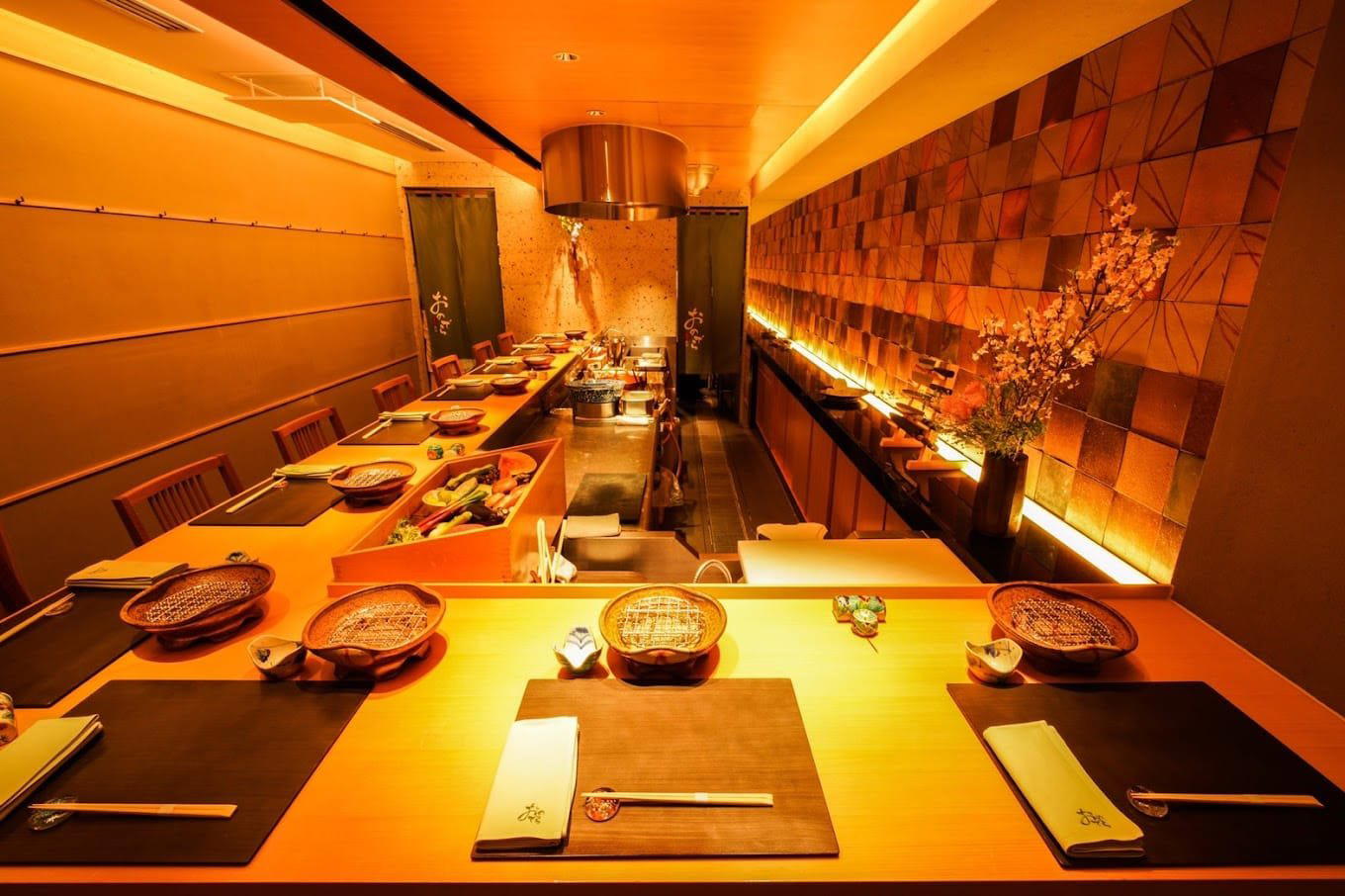
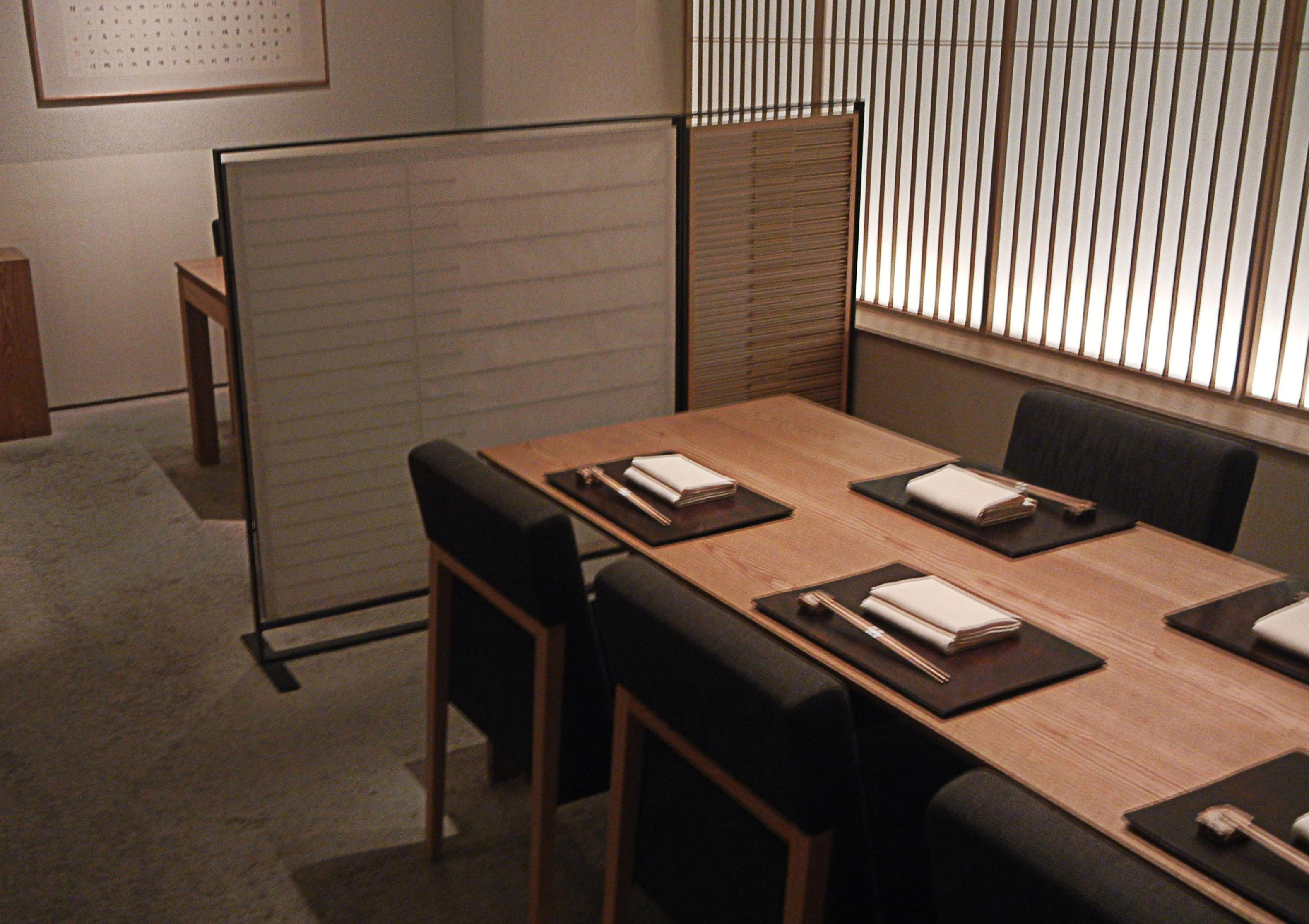
Tempura Shimomura operates from the ground floor of a building in Misuji, Taito City, a few streets removed from the tourist corridor of Asakusa but rooted in the same low-city geography that gave Edo tempura its original character. The restaurant's design signals its orientation: woodblock prints on the walls and an icebox referencing the pre-refrigeration era when fish quality was managed through ice delivery rather than cold storage. These are not decorative choices made for atmosphere alone. They situate the kitchen inside a specific tradition, one where the sourcing constraints of the past still shape how the menu is built today.
What the Kitchen Prioritises and Why
The menu at Shimomura sequences fish and vegetables in strict alternation, a structure that reflects Edo practice rather than contemporary omakase convention. The primary proteins are shrimp, sillago (kisu), and conger eel (anago), three ingredients that have anchored Tokyo tempura menus for generations. Sillago, in particular, is a summer fish with a delicate, sweet flesh that handles the batter-and-fry method precisely because its moisture content is low enough to produce a clean, crisp result without releasing steam that softens the coating. Conger eel, by contrast, is fatty and requires a different frying temperature and batter thickness to avoid greasiness. The fact that these two fish sit on the same menu speaks to technical range, not just ingredient diversity.
For context on how Tokyo's tempura houses occupy different tiers, Tempura Kondo and Tempura Motoyoshi operate at the counter-omakase end of the spectrum, where the chef controls sequence and pacing entirely. Tempura Ginya and Fukamachi sit in a middle register that allows more guest flexibility. Shimomura's approach, with an extensive menu that accommodates diner preference while maintaining regional roots, places it in that second tier: structured by tradition but not rigidly fixed in sequence.
The Case for Tendon in 2025
One of the more telling aspects of Shimomura's offer is what it has kept. Tendon, a bowl of rice topped with tempura, was the original street format through which most Tokyoites encountered the dish. As tempura restaurants moved upmarket over the past few decades, tendon largely disappeared from serious menus in favour of tasting courses served piece by piece. The logic was direct: tendon suggests casual dining, and premium pricing required a premium format. Shimomura resists that drift. At lunchtime, the kitchen offers tendon of vegetable tempura and kakiage, the latter being an all-in-one blend of seafood and vegetables fried together as a single unit rather than individually battered components.
Kakiage, done well, is technically harder than single-piece tempura. The ingredients must be cut to a consistent size and moisture level, the batter must hold them together without becoming dense, and the frying time must account for the fact that the centre of a kakiage takes longer to cook than its edges. A kitchen willing to put kakiage on a lunch menu alongside individual-piece tempura is making an argument about range and confidence rather than simplifying its offer. Diners can also add seafood items to the vegetable set at lunch, which allows some of the same flexibility as a full à la carte menu without abandoning the set structure entirely.
Recognition and Where It Places the Restaurant
Shimomura holds a Michelin Plate in both the 2024 and 2025 Tokyo guides, the tier below a star that Michelin uses to indicate good cooking. On the Opinionated About Dining survey of Japanese restaurants, it ranked 459th in 2025, up from an unranked recommendation in 2023 and a rank of 339th in 2024, suggesting a trajectory rather than a static position. OAD rankings reflect the aggregated opinions of a community of serious diners rather than a single critic, which makes movement within the list a reasonable signal of sustained quality over time.
Edomae Shinsaku operates nearby in a similar register, rooted in Edo technique and recognised by the same critical infrastructure. Both sit apart from the ¥¥¥¥ tier occupied by venues like Harutaka (sushi) or RyuGin (kaiseki), where price and prestige converge at the top of Tokyo's dining pyramid. Shimomura's ¥¥¥ positioning makes it accessible relative to the leading counter experiences while remaining well above casual dining.
Timing, Access, and Planning Your Visit
The kitchen opens for lunch from 12 to 2 pm and for dinner from 5:30 to 9:30 pm, Tuesday through Saturday, with Wednesday and Sunday closed. The lunch service, which includes the tendon and kakiage options, is the more flexible entry point for first-time visitors. The Taito City location, specifically the Misuji address in the area between Asakusa and Akihabara, is served by several subway lines, making it accessible from most central Tokyo hotels without complicated transfers.
Given the OAD ranking trajectory and consistent Michelin recognition, advance reservation for dinner is advisable rather than assumed to be unnecessary. Lunch tends to turn over faster and may carry less lead time, but the same caution applies during peak travel periods in spring (cherry blossom season, late March to early April) and autumn (November), when Tokyo's mid-range recognised restaurants absorb significantly higher reservation demand.
For broader Tokyo planning, our full Tokyo restaurants guide maps the city's dining across price tiers and neighbourhoods. Those extending their Japan trip will find relevant context in HAJIME in Osaka, Gion Sasaki in Kyoto, akordu in Nara, Goh in Fukuoka, 1000 in Yokohama, and 6 in Okinawa. The tempura tradition extends beyond Japan: Mudan Tempura in Taipei and Numata in Osaka offer points of comparison across different markets. For accommodation and other Tokyo planning, our full Tokyo hotels guide, bars guide, wineries guide, and experiences guide cover the full picture.
Frequently asked questions
When is Tempura Shimomura open?
Hours at Tempura Shimomura: Hours: Monday 12–2 pm, 5:30–9:30 pm Tuesday 12–2 pm, 5:30–9:30 pm Wednesday Closed Thursday 12–2 pm, 5:30–9:30 pm Friday 12–2 pm, 5:30–9:30 pm Saturday 12–2 pm, 5:30–9:30 pm Sunday Closed.
Where is Tempura Shimomura located?
Tempura Shimomura is located at Japan, 〒111-0055 Tokyo, Taito City, Misuji, 1 Chome−11−13 1F, Tokyo.
Is Tempura Shimomura award-winning?
Tempura Shimomura has received recognition including: The menu is extensive to cater to diners’ tastes but has strong regional roots. Fish and vegetables are fried in alternation, with the accent on shrimp, sillago and conger eel. Recently, few tempura places offer tendon only, but here, tendo….
City Peers
| Venue | Cuisine | Price | Awards | Notes |
|---|---|---|---|---|
| Tempura ShimomuraThis venue (the venue you are viewing) | Michelin-Starred Tempura Omakase | $100–150 | Michelin Plate · Tabelog 100 #27 | Not listed |
| Harutaka | Edo-Style Omakase Sushi | $200–300 | 3 Michelin Stars · World's 50 Best #76 | Sushi |
| RyuGin | Modern Kaiseki | $500+ | 3 Michelin Stars · World's 50 Best #41 | Kaiseki, Japanese |
| L'Effervescence | Modern French with Japanese Influences | $200–300 | 3 Michelin Stars · World's 50 Best #69 | French |
| HOMMAGE | Modern French with Japanese Influences | $150–200 | 2 Michelin Stars · World's 50 Best #78 | Innovtive French, French |
| MAZ | Innovative Peruvian-Japanese Fusion | $150–200 | 2 Michelin Stars · World's 50 Best #28 | Innovative |
Recognition history
Dated appearances from independent guides and award organizations, with the underlying list record or original source where available.
Michelin Plate
Michelin
Opinionated About Dining Top Restaurants in Japan Recommended
Opinionated About Dining
Tabelog 100 #27 · No. 27
Tabelog · Tabelog 100 - Tempura - 2025
Full recognition history (8 entries)
Michelin Plate
Michelin
Opinionated About Dining Top Restaurants in Japan Ranked #459
Opinionated About Dining
Michelin Plate
Michelin
Opinionated About Dining Top Restaurants in Japan Ranked #339
Opinionated About Dining
Opinionated About Dining Top Restaurants in Japan Recommended
Opinionated About Dining
Continue exploring
More in Tokyo
Restaurants in Tokyo
All restaurants in Tokyo →





Details
- Intimate
- Elegant
- Quiet
- Classic
- Special Occasion
- Date Night
- Chefs Counter
- Sake Program
- Omakase
- Counter Dining
- Sake
- Beer
- Wine
Current opening hours
- Monday
- 12–2 PM, 5–9:30 PM
- Tuesday
- 12–2 PM, 5–9:30 PM
- Wednesday
- Closed
- Thursday
- 12–2 PM, 5–9:30 PM
- Friday
- 12–2 PM, 5–9:30 PM
- Saturday
- 12–2 PM, 5–9:30 PM
- Sunday
- Closed
Hours can change for holidays and private events. Last verified .
Serene and intimate counter seating with relaxing traditional Japanese hospitality and no background music.