


Tempura Motoyoshi holds two Michelin stars and a steady position in the Opinionated About Dining Top 100 for Japan, operating from a third-floor address in Ebisu, Shibuya. Chef Kazuhito Motoyoshi applies a batter technique that incorporates two types of water and liquid nitrogen, extending the formal vocabulary of tempura well beyond its classical foundations. Open Tuesday through Saturday from 5:30 pm; closed Sundays.
Pearl is the En Primeur Club membership app — saves, bookings, and concierge access live there. Same editors, same standards.
- Address
- Japan, 〒150-0021 Tokyo, Shibuya, Ebisunishi, 2 Chome−8−11 Granbell Ebisu IV, 3階
- Phone
- +81 3-6455-0200
- Website
- motoyoshi-1120.com
- Directions
- Get directions
 Saves & bookings on Pearl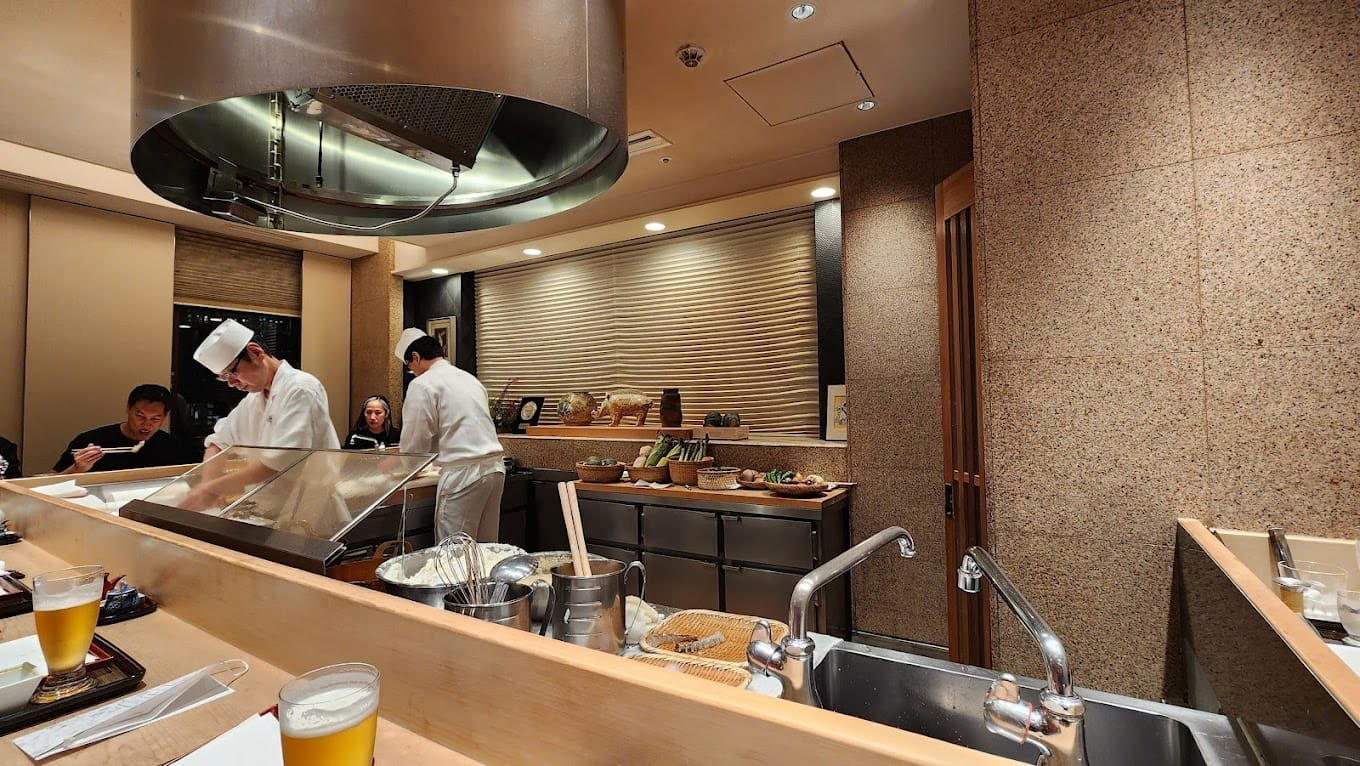
Tempura as a Serious Discipline
Particularly demanding tempura counters in Tokyo share a structural challenge with soba and ramen at their highest register: the ingredient list is short, the technique is exposed, and there is nowhere to hide. Batter, oil, temperature, timing, and the quality of what goes inside, these are the only variables. That constraint is precisely what separates a competent tempura kitchen from one that earns two Michelin stars. Tempura Motoyoshi, operating from a third-floor space in Granbell Ebisu IV on Ebisunishi, sits in the latter tier, with consecutive two-star recognition from Michelin in 2024 and 2025.
The parallel with comfort-food mastery is instructive. A bowl of ramen earns respect when the broth represents forty-eight hours of labour that the diner never sees. Tempura earns the same respect when the batter disappears into the fried piece, leaving only a clean, greaseless shell that amplifies rather than obscures the ingredient beneath. The craft, in both cases, is about making the technique invisible. What distinguishes Motoyoshi from the broader Ebisu and Daikanyama dining belt is a refusal to stop at technical invisibility.
A Batter That Breaks from Convention
Tokyo tempura has two broad schools. The classical approach, thin batter, cold water, minimal mixing, sesame or cottonseed oil at precise temperatures, defines the counter experience at houses like Tempura Kondo and Fukamachi. The second school retains the classical form but applies contemporary technique to the variables the classical masters already isolated as critical: water temperature, aeration, and batter density.
Motoyoshi belongs to the second school. The kitchen uses two types of water in the batter preparation alongside liquid nitrogen, a combination that achieves degrees of chill and aeration that ice water alone cannot. The practical effect is a batter that behaves differently at the fry stage, thinner, more controlled, with a texture at the table that reflects the precision applied before the piece ever reached the oil. This is not technique for its own sake. In a discipline where the batter is one of only a handful of variables, controlling it more precisely than the competition is a substantive advantage.
That orientation toward technical depth places Motoyoshi in an interesting comparable set. Among Tokyo tempura houses, Tempura Ginya and Seiju operate in the same tier, where the debate is less about whether the tempura is correctly executed and more about which interpretation of the form you find most compelling. Motoyoshi's answer to that question involves a willingness to introduce dishes that sit outside the standard tempura sequence entirely.
Contrast as a Menu Principle
One of the documented items from the kitchen pairs chilled sea urchin with deep-fried perilla leaf. The temperature contrast, cold ingredient, hot vessel, is deliberate, and it captures something important about how the menu is structured. In a conventional tempura omakase, the pacing follows a logic of escalation: lighter seafood pieces early, richer ingredients later, rice or noodles to close. Motoyoshi maintains that underlying architecture but inserts inventive dishes at intervals that shift the pace and reset the palate.
The effect is closer to what kaiseki achieves through seasonal variety than what most tempura counters attempt. The sea urchin and perilla dish is not a novelty interlude; it is a structural device. In that sense, the menu draws on the same principle that makes a well-constructed ramen course memorable: the bowl you thought you understood delivers something you did not expect, and the surprise clarifies rather than distracts. At Motoyoshi, that principle operates at the course level rather than within a single dish.
The range of tempura pieces across the menu is deliberately extensive. More pieces means more decisions, about oil temperature adjustments for different ingredients, about batter weight relative to what is being coated, about sequencing so that the diner's experience of each piece is not diminished by what preceded it. An extensive range is, in this format, a harder assignment than a tightly edited one. Michelin's two-star recognition in consecutive years suggests the kitchen handles that assignment consistently.
Where Ebisu Places This
Ebisu sits between the density of Shibuya to the north and the quieter residential character of Daikanyama immediately west. The neighbourhood draws a dining crowd that skews toward settled professionals rather than tourists, and its restaurant stock reflects that: fewer flashy flagship openings, more establishments that reward repeat visits. A third-floor counter on Ebisunishi fits that register, the address requires intention, and the ¥¥¥¥ price bracket filters for diners who have decided in advance what they want from the evening.
The operating schedule runs Tuesday through Saturday, 5:30 to 11 pm, with Sundays and Mondays closed. That five-night week is standard for counter-format restaurants at this level and means the kitchen maintains a consistent prep and service rhythm without the degraded Friday-to-Sunday staffing that affects larger operations. For visitors building an itinerary around Tokyo's premium dining, Motoyoshi sits alongside Edomae Shinsaku as part of a broader range of counter-format options worth considering in the same trip. Those planning a wider Japan itinerary can benchmark against the comparable set in other cities: HAJIME in Osaka, Gion Sasaki in Kyoto, akordu in Nara, Goh in Fukuoka, 1000 in Yokohama, and 6 in Okinawa each define the top tier in their respective cities.
For those comparing tempura specifically across the region, Mudan Tempura in Taipei and Numata in Osaka offer points of contrast with Tokyo's approach to the format. The differences are instructive: Tokyo's leading counters operate with a level of technical rigour, booking discipline, and price expectation that reflects the city's status as one of the densest concentrations of Michelin-starred restaurants globally.
Planning a Visit
At this price tier and booking profile, the variance in diner satisfaction is usually driven by format fit rather than execution quality, counter dining rewards guests who arrive without a predetermined preference for any specific piece, and who are prepared to follow the kitchen's sequence rather than direct it.
Reservations should be treated as the primary planning step. Counter-format restaurants at two-star level in Tokyo typically book weeks to months ahead, and Motoyoshi's combination of a closed Sunday-Monday schedule and a finite number of seats per service means availability concentrates in a narrow window. The address is Granbell Ebisu IV, third floor, at 2 Chome-8-11 Ebisunishi, Shibuya. Ebisu Station on the JR Yamanote Line is the practical access point. For broader context on planning across Tokyo's dining, drinking, and hotel options, the wider city guides cover the full range.
Price Lens
Comparable venues nearby, for context on price, style, and recognition.
| Venue | Cuisine | Price | Awards |
|---|---|---|---|
| Tempura MotoyoshiThis venue — the venue you are viewing | Tempura | $$$$ | Michelin 2 Star |
| Hakuun | Minato, Modern Kaiseki Omakase | $$$$ | Michelin 2 Star |
| Kutan | Chūō, Modern Classic Kappo-Kaiseki | $$$$ | Michelin 2 Star |
| Nishiazabu Sushi Shin | Minato, Edomae Omakase Sushi | $$$$ | Michelin 2 Star |
| Sushi Kanesaka | Chūō, Edomae Omakase | $$$$ | Michelin 2 Star |
| Shunji | Minato, Modern Edomae Sushi Omakase | $$$$ | World's 50 Best #63 |
Recognition history
Dated appearances from independent guides and award organizations, with the underlying list record or original source where available.
Michelin 2 Stars
Michelin
Opinionated About Dining Top Restaurants in Japan Ranked #53
Opinionated About Dining
Michelin 2 Stars
Michelin
Opinionated About Dining Top Restaurants in Japan Ranked #77
Opinionated About Dining
Tabelog 100 #48 · No. 48
Tabelog · Tabelog 100 - Tempura - 2025
Michelin 2 Stars
Michelin
Opinionated About Dining Top Restaurants in Japan Ranked #79
Opinionated About Dining
Opinionated About Dining Top Restaurants in Japan Ranked #89
Opinionated About Dining













At a Glance
- Intimate
- Elegant
- Cozy
- Sophisticated
- Date Night
- Special Occasion
- Chefs Counter
- Sake Program
Current opening hours
- Monday
- 5:30–10:30 PM
- Tuesday
- 5:30–10:30 PM
- Wednesday
- 5:30–10:30 PM
- Thursday
- 5:30–10:30 PM
- Friday
- 5:30–10:30 PM
- Saturday
- 5:30–10:30 PM
- Sunday
- 5:30–10:30 PM
Hours can change for holidays and private events. Last verified .
Warm, relaxing counter seating space with stylish decor including ceiling trees and cherry blossoms, creating an intimate and hospitable atmosphere.