On the second floor above Soemon-cho's entertainment strip, Namba-Beef occupies a position where yakiniku grilling and hamburger ramen share a single menu, an unusual pairing even by Osaka's freewheeling standards. The restaurant sits at the junction of two separate trajectories in Japanese beef culture: the precision-graded world of wagyu yakiniku and the more recent ramen-hybrid trend that has taken hold across Dotonbori's dining corridor.
Pearl is the En Primeur Club membership app — saves, bookings, and concierge access live there. Same editors, same standards.
- Address
- 2F, 3-5 Souemoncho, Chuo Ward, Osaka, 542-0084, Japan
- Phone
- +818082219371
- Directions
- Get directions
 Saves & bookings on Pearl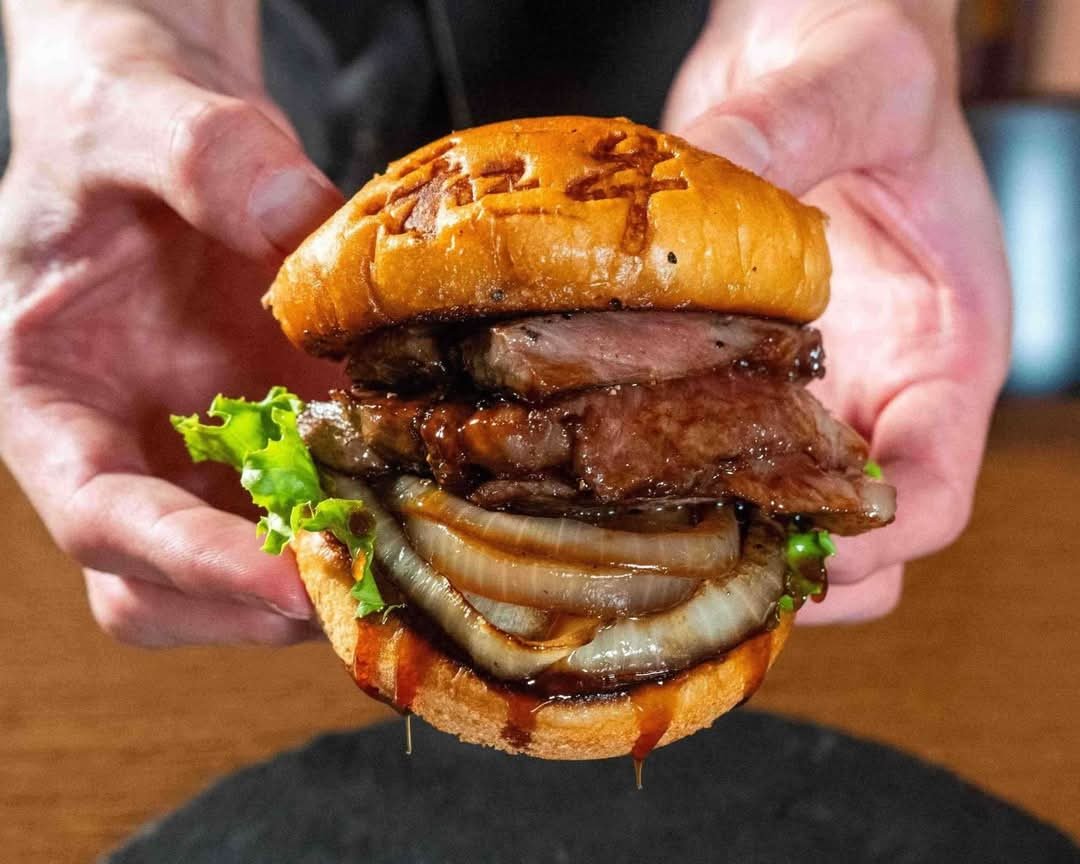
The smell reaches you before the sign does. Soemon-cho, the canal-side strip that connects Dotonbori's theatre of neon to the quieter alleys of Namba, has long functioned as Osaka's pressure valve, the street where the city's appetite for noise, theatre, and meat over charcoal finds its densest expression. Climbing to the second floor at 3-5 Souemoncho, Chuo Ward, the environment shifts from street spectacle to the focused heat and smoke of a yakiniku room, where the cooking happens at the table and the produce is the argument.
Where Two Traditions Meet on One Menu
Yakiniku as a format has evolved considerably since its post-war origins in Osaka, a city that has a longer and more documented claim to the style than Tokyo. The early version was democratic and improvisational, built around offcuts and communal grilling. The contemporary version, particularly in the wagyu-centric tier, operates on a different logic entirely: grading systems, cut-specific resting temperatures, and a sequencing discipline that owes as much to omakase thinking as it does to the grill tradition. Namba-Beef sits at the intersection of those two histories, the popular-facing Dotonbori address and the premium-ingredient positioning that wagyu branding implies.
The hamburger ramen component is its own editorial statement about where Japanese casual dining has been travelling. Across the last decade, the ramen category in Osaka has fractured into an expanding number of hybrid formats: tsukemen counters that borrowed from French sauce logic, broth programs built on single-protein obsession, and the more recent wave of mash-up concepts that treat ramen as a base layer for cross-category experimentation. A wagyu hamburger ramen sits comfortably inside that evolutionary arc, combining the structural language of a ramen bowl with the grilled-beef vocabulary that the yakiniku counter occupies in the same room.
The Dotonbori Context
Dotonbori rewards a specific kind of attention. The area's reputation for excess, the running man sign, the crab claws rotating above seafood houses, the takoyaki counters doing continuous service, can obscure the fact that the streets directly adjacent to the canal, including Soemon-cho, carry a more layered dining identity. Theatres, jazz bars, and establishments that have been operating under the same concept for decades exist alongside the newer, concept-driven openings that target a visitor audience. A second-floor restaurant on this strip occupies an interesting middle position: visible enough to catch foot traffic from the canal, removed enough from the ground-level noise to function as a destination rather than an impulse stop.
For broader context on how Osaka's dining scene distributes itself across neighbourhoods and price tiers, the full Osaka Shi restaurants guide maps the city's range from counter kaiseki to street-level kushikatsu. At the precision end of Osaka's restaurant spectrum, HAJIME in Osaka and Ajikitcho Bunbuan represent the city's highest-formal tier. Namba-Beef operates in a different register entirely, beef-forward, accessible in format, and positioned to capture both the domestic izakaya crowd and visitors working through Dotonbori's dining corridor.
The wagyu category itself has been through its own evolution in how it is presented to consumers. A decade ago, the dominant mode was table-service yakiniku where the restaurant's staff did the grilling; the shift toward customer-controlled grills, paired with more transparent provenance language around grading and breed, reflects a broader move in Japanese dining toward informed participation rather than passive service. A restaurant name that foregrounds both the ingredient (wagyu) and the format (yakiniku, hamburger, ramen) is making a deliberate legibility choice, particularly for an audience that may not be fluent in the distinctions between Japanese beef-grade tiers.
The Hybrid Format as a Strategic Position
Combining yakiniku with a ramen hybrid in a single concept is less unusual in Osaka than it would be in cities with more segmented dining cultures. The city's eating habits have historically tolerated, and often encouraged, formats that cross categorical lines. Kushikatsu houses that also serve curry, okonomiyaki spots that carry a substantial sake list, yakiniku counters with a full noodle program: the pattern of layering categories is embedded in how Osaka conceptualises what a restaurant should offer. Namba-Beef's dual concept fits that tradition while also responding to the current moment, when single-concept restaurants face pressure to broaden appeal across multiple meal occasions and visitor profiles.
Elsewhere in Japan's dining geography, the category discipline is stricter. At omakase sushi counters like Harutaka in Tokyo or kaiseki rooms like Gion Sasaki in Kyoto, the format is fixed and the deviation from it is the exception rather than the rule. Osaka's more permissive dining culture, documented in how the city's restaurant economics have historically prioritised turnover, generosity, and categorical flexibility, creates space for concepts like Namba-Beef that would read as unfocused in a different culinary geography.
For comparison across different expressions of Japanese and Korean beef culture in a global context, Atomix in New York City shows how Korean culinary tradition has been formalised at the premium end of Western dining; the contrast with Dotonbori's approach to the same ingredients is instructive. Among Osaka's own mid-range options, Aka to Shiro, Ajihei Sonezaki, Az, and Calendrier each represent a distinct approach to the city's dining offer, from French-influenced technique to ingredient-led Japanese formats. Further afield in the Kansai region, akordu in Nara offers a point of contrast on how regional produce is framed at a more formal dining register. Other notable restaurants across Japan, including Goh in Fukuoka, 一本杉 川島酒造 in Nanao, 夕方仙人之 in Sapporo, 湖畔荘厨 in Takashima, 鶴羽屋 in Nishikawa Machi, and Birdland in Sakai together illustrate how Japan's dining vocabulary spreads well beyond its urban centres.
Planning Your Visit
Namba-Beef is located on the second floor at 2F, 3-5 Souemoncho, Chuo Ward, Osaka, a two-minute walk from Namba Station and directly on the Soemon-cho entertainment corridor. The second-floor position means the entrance requires attention on a busy street; look for the building number rather than relying on a ground-level frontage. Dotonbori dining operates at volume in the evenings, particularly on weekends and national holidays, when the canal area draws both domestic and international visitors at high density. Arriving earlier in the dinner window, before 7pm, typically reduces wait times at walk-in yakiniku concepts in this district, though specific booking policies for Namba-Beef were not available at time of publication. For particularly current hours and reservation options, checking directly via Google Maps or a local concierge service is the practical route.
Recognition Snapshot
Comparable venues nearby, for context on price, style, and recognition.
| Venue | Cuisine | Price | Notes |
|---|---|---|---|
| Wagyu Japanese BBQ Yakiniku & Hamburger Ramen Dotonbori Restaurant Namba-BeefThis venue — the venue you are viewing | Halal Wagyu Yakiniku & Ramen | $$$ | Not listed |
| Wayōshusai Hide | Japanese Izakaya | $$$ | Chūō |
| 新町あだち | Seasonal Japanese Omakase | $$$ | Nishi |
| 鮓 きずな | Edomae-style Omakase Sushi | $$$ | Miyakojima |
| Konishi | Kappo | $$$ | Kita |
| Aka to Shiro | Modern Omakase Sushi with Red and White Vinegared Rice | $$$$ | Kita |
Continue exploring
More in Osaka
Restaurants in Osaka
Browse all →




Bars in Osaka
Browse all →


Hotels in Osaka
Browse all →




Wineries in Osaka
Browse all →
At a Glance
- Lively
- Trendy
- Family
- Casual Hangout
- Open Kitchen
- Sake Program
Current opening hours
- Monday
- 11 AM–11 PM
- Tuesday
- 11 AM–11 PM
- Wednesday
- 11 AM–11 PM
- Thursday
- 11 AM–11 PM
- Friday
- 11 AM–11 PM
- Saturday
- 11 AM–11 PM
- Sunday
- 11 AM–11 PM
Hours can change for holidays and private events. Last verified .
Lively atmosphere in the bustling Dotonbori district, ideal for families and food enthusiasts.